
Huanglong Without the Suffering: Altitude, Cable Car, Five-Colour Pool (2026)
Admission 170 yuan in high season, cable car 80 up and 40 down, closed 16 December to 31 March. A four-hour plan: ride…
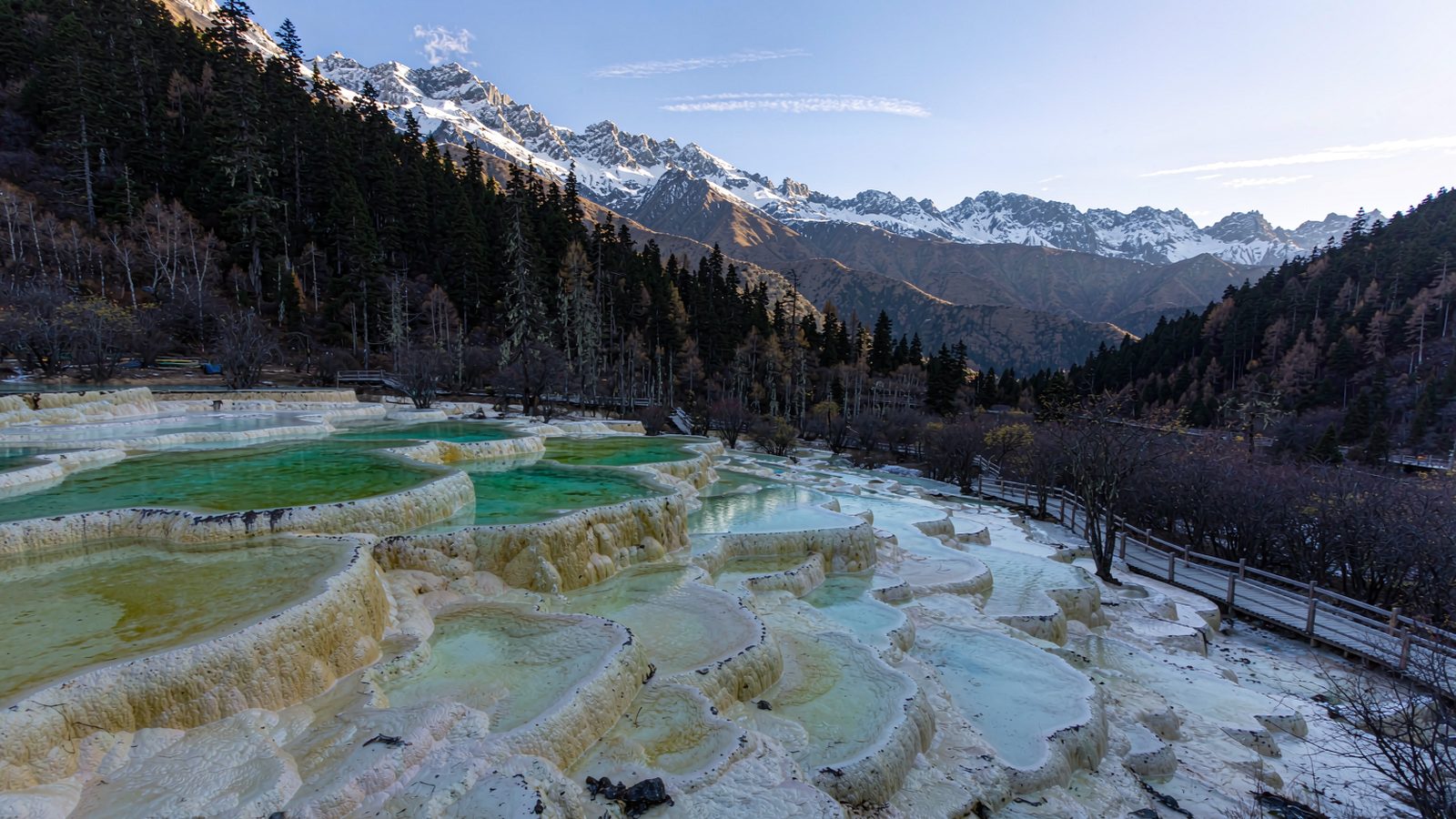
Admission 170 yuan in high season, cable car 80 up and 40 down, closed 16 December to 31 March. A four-hour plan: ride up, walk down, plus altitude advice and booking rules.
The question with Huanglong is never whether it is worth seeing. It is how to see it without suffering. The site usually gets bolted onto a Jiuzhaigou itinerary almost as an afterthought: leave the valley in the morning, drive two and a half hours, arrive at lunchtime, and be back on the bus by four. Three hours to walk from 3,100 metres to 3,576 metres and back down. Most people come away unable to remember what colour the Five-Colour Pool actually was, only that their temples were throbbing.
That is not a fitness problem. It is a scheduling problem. Huanglong is a 3.6-kilometre travertine valley climbing from the gate to the Five-Colour Pool, a rise of more than 470 metres, entirely on boardwalk. There is essentially one sensible way to do it: cable car up, boardwalk down. Reverse it and you are asking your body to climb 470 metres at 3,500 metres of altitude, which is a different activity altogether.
Everything below reflects the rules in force in November 2026. Ticket, cable car and shuttle prices and operating seasons were checked against the reserve's own notices; the altitude section uses the risk groups the reserve itself names; the transport times reflect the railway line that now reaches the park.
1. Altitude, stated plainly
| Location | Altitude | Note |
|---|---|---|
| Chengdu | about 500 m | Where most visitors start |
| Huanglong Jiuzhai station (Chuanzhusi) | about 2,977 m | Railway stop, with an oxygen lounge |
| Huanglong valley gate | about 3,100 m | The visit starts here, not lower down |
| Hongyanguan cable car top | about 3,400 m | Where the boardwalk begins |
| Huanglong Rear Temple | about 3,560 m | Ming-dynasty temple below the top pool |
| Five-Colour Pool | 3,576 m | Highest point, 693 individual pools |
| Jiuzhaigou valley gate | about 2,000 m | For comparison |
| Lhasa | about 3,650 m | For comparison |
The important relationship is between the third row and the first: Huanglong starts at 3,100 metres. You do not climb gradually from 2,000. The train drops you at 2,977 metres, a bus takes thirty-five minutes to the gate, and your body has had almost no time to adjust. Jiuzhaigou's gate sits at 2,000 metres. Sleep a night at each and you will feel fine at one and quite possibly not at the other.
The Five-Colour Pool at 3,576 metres is actually seventy metres lower than Lhasa. But in Lhasa you stay put and adapt; at Huanglong you go from 3,100 to 3,576 and back inside four hours. Same altitude, different pace, completely different physiology. That is why plenty of people feel nothing in Lhasa and get a tight head at Huanglong.
One detail people miss: descending is not the easy half. From the top pool to the gate is 3.6 kilometres of continuous downhill boardwalk, which loads the knees far more than flat ground. If you have old knee trouble, a trekking pole is not optional equipment.
2. Cable car up, boardwalk down: three options, one that works
| Approach | Climb and distance | Time | Who it suits |
|---|---|---|---|
| Walk up and down | 3.6 km up, about 470 m of gain; same back | 4.5 to 5.5 hours | Regular high-altitude walkers with a free day |
| Cable car up, walk down (recommended) | 8 minutes by cable car; about 2 km of gentle climb to the top pool, roughly 170 m; then 3.6 km all downhill | 3.5 to 4.5 hours | Almost everyone, including families with older relatives or school-age children |
| Cable car both ways, top section only | About 4 km return between the cable car top and the pool | 2.5 to 3 hours | When you genuinely have under three hours |
Three reasons support the middle option. First, it gives 300 metres of climbing to a machine. Walked, those 300 metres happen between 3,100 and 3,400 metres, where oxygen is roughly seventy percent of sea level — the worst possible place to spend effort. Second, the 3.6 kilometres downhill is the entire sight list. Five-Colour Pool, the Rear Temple, Zheng Yan Pool, Golden Sand Beach, Bonsai Pool, Mirror Pool, Suoluo Pool, the Body-Washing Cave, Flying Waterfall and the Welcome Pool all sit along that descending boardwalk. Nothing requires backtracking. Third, it makes the day predictable. Eight minutes of cable car removes the only uncertain leg; the rest is a steady descent with a calculable exit time.
The both-ways option needs one honest sentence: it saves you three-quarters of Huanglong along with the effort. Between the cable car top and the Five-Colour Pool there is exactly one sight. The gold of Zheng Yan Pool, the whole travertine fan of Golden Sand Beach, the old trees standing in the water at Bonsai Pool, the curtain of water at the Body-Washing Cave — all of it is on the lower boardwalk. Ride back down the way you came and you have spent a 170-yuan ticket on a single pool.
3. A four-hour timetable, gate to gate
| Time | Where | What |
|---|---|---|
| 08:00 | Valley gate | Scan your ID and enter. The gate opens at 08:00 in high season; arriving half an hour early means the shortest queue |
| 08:10 | Eco shuttle | 20 yuan return, about 8 minutes each way, to the cable car base |
| 08:30 | Hongyanguan cable car | Eight minutes up. After 09:00 in high season the queue grows noticeably |
| 08:45 | Cable car top | Start the boardwalk; about 2 km of gentle ascent |
| 09:30 | Five-Colour Pool | The high point. Allow 40 minutes, working down from the upper terrace |
| 10:15 | Rear Temple | Ming-dynasty temple at about 3,560 m; a good place to sit |
| 10:35 | Zheng Yan Pool | More than five hundred pools in a chain, busier in colour than the top |
| 11:05 | Golden Sand Beach | Over a kilometre of travertine sheet flow; in sun it genuinely looks gilded |
| 11:35 | Bonsai Pool, Mirror Pool | Trees growing out of the water; flat calm turns them into mirrors |
| 11:55 | Body-Washing Cave, Flying Waterfall | Travertine falls with a cave behind the curtain |
| 12:15 | Welcome Pool, exit | Out in time for lunch |
This is the unhurried version. With only three hours, cut the temple stop and the Bonsai Pool stretch, but keep 30 minutes at the top pool — better to see two fewer pools than to take one rushed photograph at the highest point and leave.
With five hours, do the opposite: sit at the Five-Colour Pool and wait for the cloud shadow to pass. The colour changes with the light. The same water is grey-blue under cloud and peacock blue the instant the sun returns. The most expensive thing at Huanglong is not the ticket, it is the patience to wait five minutes.
4. Tickets, cable car and shuttle: the 2026 rules
| Item | Price | Note |
|---|---|---|
| High-season admission (1 June to 15 December) | 170 yuan | Main valley |
| Low-season admission (16 December to 31 May) | 60 yuan; concession 30 yuan | Gate opens later, at 09:00 |
| Hongyanguan cable car, up | 80 yuan | Requires an admission ticket |
| Hongyanguan cable car, down | 40 yuan | Not needed if you walk down |
| Eco shuttle | 20 yuan return | Gate to cable car base, about 8 minutes |
| Muni Valley, Zhaga Waterfall | 70 yuan | About an hour away, separate ticket |
| Muni Valley, Erdao Lake | 70 yuan | Currently closed for conservation; confirm before travelling |
| Muni Valley combined ticket | 100 yuan | Covers both sites |
The cable car stops running from 16 December to 31 March, and the shuttle stops with it. That matters far more than the price. In winter you walk from 3,100 to 3,576 metres on a path that may be icy. Do not bring older relatives or small children to Huanglong in winter; if you come anyway, turn around at Zheng Yan Pool.
Booking is not optional: the reserve sells online only, with real-name registration, and there is no ticket window on site. You must book through the Aba Tourism mini-program or the Huanglong official account before 18:00 on the day before you visit, and you enter on your ID. For National Day, summer weekends and the autumn colour season, book two or three days ahead; when it is sold out, it is sold out. Driving to the gate without a booking means turning around.
Concessions follow national policy. Free admission: children under six or under 1.2 metres, visitors aged 65 and over, serving and retired military personnel and their entitled relatives, disabled visitors, and registered religious personnel. Half price: minors aged 6 to 18, and full-time students at undergraduate level or below with a student card. Visitors aged 60 to 64 enter free on non-holiday days and pay half on statutory holidays. For the over-sixties there is also a combined "free ticket plus 80-yuan upward cable car" product, which is simpler than buying separately. Every concession covers admission only — cable car and shuttle are always extra.
Three traps. First, the ticket is valid for the day and does not allow re-entry, so do not plan to leave for lunch and come back. Second, upward cable car tickets stop selling at 16:30, boarding closes at 17:00, and the downward service ends at 17:30; arrive after three in the afternoon and you will barely reach Zheng Yan Pool before turning around. Third, last entry is 17:00 — Huanglong is not an afternoon stop.
5. Altitude sickness: who is at risk and what to do
Start with the numbers. Huanglong begins at 3,100 metres and tops out at 3,576. At that height the air holds roughly 65 to 70 percent of the oxygen at sea level. Serious altitude illness is uncommon, but headache, breathlessness, a racing heart and poor sleep are all normal, particularly when you walk fast, climb steps or stand up suddenly.
The reserve names its own risk groups, and the list is worth repeating: cor pulmonale, poorly controlled diabetes, uncontrolled grade-three hypertension, coronary heart disease, heart failure at NYHA class II to IV, and previous cerebral infarction. For these travellers this is not a "be careful" matter; it is a question for a doctor before booking. Pregnant travellers, anyone within six months of surgery, and anyone with a fever or active infection should postpone.
Five practical actions. First, set your pace at the gate: walk deliberately slowly for the first twenty minutes and let your breathing settle instead of charging off the bus. Second, stop every twenty minutes, stand still, take five deep breaths — far more effective than pushing through. Third, drink warm water, not cold; dehydration magnifies headache at altitude. Fourth, do not hold your breath to frame a shot, and stand up slowly — plenty of people crouch over a pool, straighten up and see stars. Fifth, if something feels wrong, walk down. Every hundred metres of descent eases symptoms faster than any pill.
On equipment: there are free oxygen lounges along the route where you can sit and breathe, and there is no reason to feel awkward about using them. Portable oxygen cans are sold at the gate and at the cable car station, usually 30 to 60 yuan for a small canister, enough for an emergency. What is not advisable is taking a preventive puff at the entrance — that teaches your body to stop regulating itself, and the afternoon gets worse. Save the oxygen for when you actually need it.
One rule the reserve states plainly: travertine is brittle, you may not leave the boardwalk, and you may not step on the terraces or into the water. This is not only conservation. The travertine shell is hollow, with water beneath it, and people have gone through. It has happened more than once around the Five-Colour Pool.
6. When to come: winter has no cable car
| Period | What you get | What it costs |
|---|---|---|
| April to May | Snow line still low, pools well filled, few visitors | Tail of low season; the cable car only restarts on 1 April; unsettled weather |
| June to August | Maximum water, most saturated travertine colour, deepest green | Rainy season with afternoon showers; peak prices |
| September to October | The best window of the year: clear air, transparent light | Busiest around National Day; book tickets and rooms early |
| Late October to November | Autumn colour against the pools, snow line coming down | Near zero at dawn and dusk; frost on the boardwalk |
| 16 December to 31 March | Snow-covered travertine terraces, almost nobody there | Admission drops to 60 yuan, but cable car and shuttle stop: you walk |
If you can only come once, come in mid-September to mid-October. Three conditions line up at the same time: enough water, the best light, the most comfortable temperature. Avoid the National Day week, when visitor numbers are three to four times normal and the cable car queue alone can cost an hour.
Winter Huanglong is genuinely beautiful — snow lying in the terraces, tier upon tier of white. But be clear about the trade: the cable car stops from 16 December to 31 March, the shuttle stops with it, and admission falls to 60 yuan. That means walking the full 470 metres of climb from 3,100 metres, possibly on ice. This is not a budget trick; it is a different grade of hike. Do not bring older relatives or children in winter. If you must come, stop at Zheng Yan Pool.
7. Getting there: four options and their real timings
| Mode | Route | Time | Note |
|---|---|---|---|
| High-speed rail (recommended) | Chengdu East to Huanglong Jiuzhai station, then park shuttle | 1 h 39 min + about 35 min | Second class 130 to 143 yuan; shuttle 28 yuan |
| Air | Chengdu, Chongqing, Xi'an and others to Jiuzhai Huanglong airport, then road | About 1 hour flying + 40 minutes driving | Airport sits at 3,448 m, so you land high; weather cancellations are common |
| Self-drive | Chengdu, Dujiangyan, Wenchuan, Mao, Songpan, Huanglong | About 390 km, 6.5 to 7.5 hours | Paved throughout, many bends; not a day trip |
| Long-distance bus | Chengdu Chadianzi or Xinnanmen to Songpan or Chuanzhusi, then transfer | 7 to 8 hours | About 150 yuan, few departures, book ahead |
Rail is now the reliable option. Chengdu East to Huanglong Jiuzhai takes as little as 1 hour 39 minutes, second class 130 to 143 yuan, roughly thirty trains a day between six in the morning and nine at night. The station sits in Chuanzhusi at 2,977 metres; turn right out of the exit to the forecourt and take the park shuttle, 28 yuan and about 35 minutes to the gate, timed to meet the trains. The station was expanded this year to hold 1,600 people and now includes an oxygen lounge and a nursing room — a detail that tells you altitude problems here are routine, not exceptional.
Flying is faster but less predictable. Jiuzhai Huanglong airport sits at 3,448 metres, one of China's three high-altitude airports, so you are above three thousand metres the moment you land — a harsher arrival than the train. Winter weather also causes diversions and cancellations. If your return date is tight, do not make the flight your only plan. The airport is about 40 minutes from Huanglong by road, measured after the Xueshanliang tunnel opened; the reserve's older guide still quotes 55.8 km, which is the old road.
Connecting with Jiuzhaigou needs stating clearly: the Jiuzhaigou gate is about 128 km from Huanglong, two and a half hours via the G544 through Chuanzhusi. So "Jiuzhaigou in the morning, Huanglong in the afternoon" does not work, and neither does the reverse. The workable shape is: sleep at Chuanzhusi or Songpan, enter Huanglong at opening, leave around midday, and move to Jiuzhaigou for the night. Chuanzhusi to the Huanglong gate is about 40 km, under an hour.
8. Photography: the pools need sun, not filters
Whether your photographs work depends almost entirely on one thing: whether direct sun is reaching the water. The colour comes from light scattering through layers of calcium carbonate on the pool floor. Put a cloud in front and peacock blue turns grey; no amount of editing brings it back. So plan backwards — put the Five-Colour Pool between 10:30 and 14:00, when the light is highest and most direct.
Three specifics. First, shoot from the upper terrace before walking down. The classic position is the platform above the pool group, at roughly a thirty-degree angle, which stacks all 693 pools into layers; once you descend you can only photograph fragments. Second, bring a polariser, which cuts surface glare and thickens the colour instantly; on a phone, tap to meter on the water and pull exposure down slightly. Third, on overcast days switch to detail — the grain of Golden Sand Beach, tree roots standing in the Bonsai Pool, travertine crystals beside the boardwalk. None of that needs sun.
Two prohibitions: drones and aerial cameras are banned without prior approval, and leaving the boardwalk for the terraces or water is forbidden. The first gets you escorted out; the second is both dangerous and destructive, since a damaged travertine surface takes decades to regrow.
9. Five common mistakes
- "Two hours is enough for Huanglong." Two hours gets you up by cable car, a look at the top pool, and back down. To walk the whole descent takes four hours minimum.
- "Returning by cable car is the easy option." It is easy, and it also deletes Zheng Yan Pool, Golden Sand Beach, Bonsai Pool, the Body-Washing Cave and Flying Waterfall — three-quarters of the site.
- "I am young, altitude does not apply to me." Altitude illness tracks ascent speed far more than fitness. Plenty of twenty-somethings end up sitting down at the top pool with their head in their hands.
- "Winter tickets are cheap, so let's go." They are cheap because the cable car is closed. A 470-metre climb on an icy boardwalk is not a discount, it is a different difficulty setting.
- "We will buy tickets at the gate." There is no ticket window. Without a booking made before 18:00 the previous day, you will be turned around at the entrance.
10. How Jadetour runs this route
Jadetour has worked western Sichuan for years and we never schedule Huanglong for the afternoon. The reason is straightforward: its best content is at the highest point, and the highest point is exactly what suffers when you are rushed. Our standard shape is to sleep at Chuanzhusi or Songpan, enter at 08:00 opening, ride up, walk down, leave around 12:30 for lunch, and move on to Jiuzhaigou or back to Songpan. That puts the top pool in the best light and keeps the clock off your back.
For international guests we do four things: complete the real-name booking in advance using passport details (the Huanglong system requires non-Chinese documents to be entered separately and cannot be fixed at the gate); provide an English-speaking driver-guide; buy the upward cable car ticket together with admission so you queue only once; and carry a portable oxygen can and a pulse oximeter in the vehicle, checking blood oxygen before departure — below 90 percent and we spend half a day acclimatising in Chuanzhusi first.
One thing stated up front: we do not promise that you will see a peacock-blue Five-Colour Pool. The colour is decided by the sun, and if cloud arrives, it arrives. What we can guarantee is the timing window, the order of viewpoints and a fallback. On an overcast day we walk the boardwalk first and come back if the sky clears, rather than standing at the rail waiting. Plan a western Sichuan trip
If you are building the Jiuzhaigou and Huanglong section, send us your dates, group size, ages and any medical conditions. We will tell you which morning Huanglong should get, which day is snow only, and whether the cable car is running on your dates — all of which takes one check, and all of which ruins a day if you get it wrong.
Need help planning this trip?
Tell us your travel dates and group size — we reply within 24 hours.
WhatsApp +86 183 1705 8017 · WeChat 18317058017
More Guides
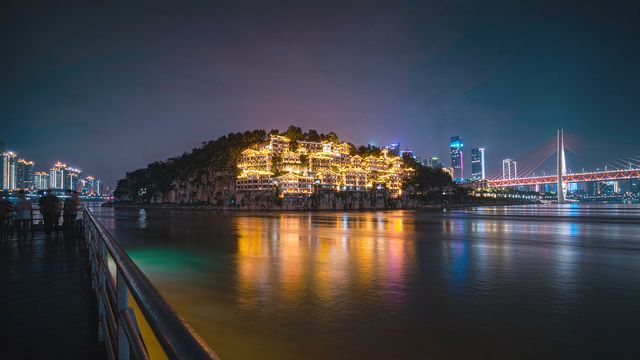
Chongqing Two Rivers Night Cruise: Which Pier, Which Ticket, Which Departure (2026)
November 2026: three piers with non-transferable tickets, night cruises from CNY 138, and Hongyadong lit from 18:30. Routes, departures, refunds and what winter actually feels like on deck.
11/11/2026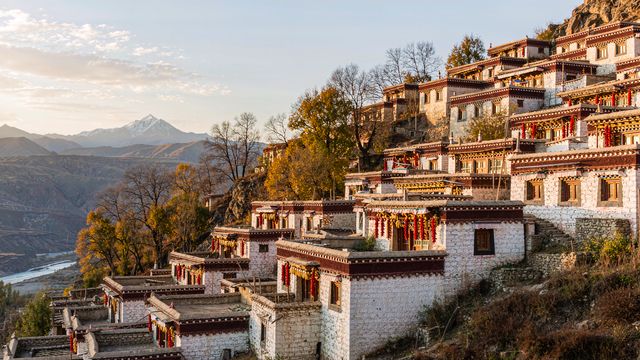
Jiaju Tibetan Village, Danba: Five Viewpoints and Where to Sleep (2026)
Tickets 50 yuan for three days, shuttle 35 yuan, private cars allowed in. Which of the five viewpoints to use at which hour, and why sleeping in the village decides whether you see the dawn mist.
11/11/2026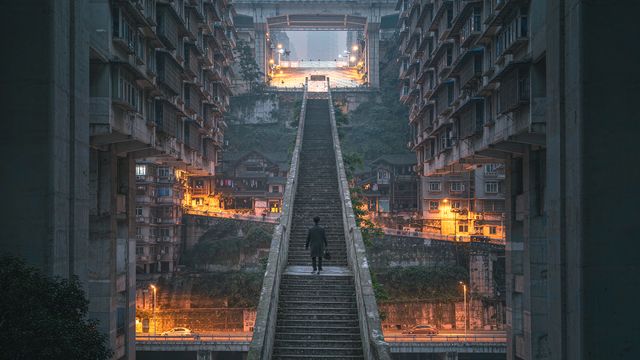
Chongqing's 8D Terrain: Upper and Lower Towns, Escalators, and How to Beat a Broken Map App
Two-yuan escalators, a 1986 heritage lift and a 30-yuan cableway: how the three vertical levels work, why your map app fails, and three ready routes.
11/10/2026