
Flower Lake and the First Bend of the Yellow River, Zoige: Best Months, Sunset Spots and a Two-Day Route (2026)
Flower Lake costs 105 yuan including the shuttle and closes for the season on 14 November. The First Bend ticket is 105…
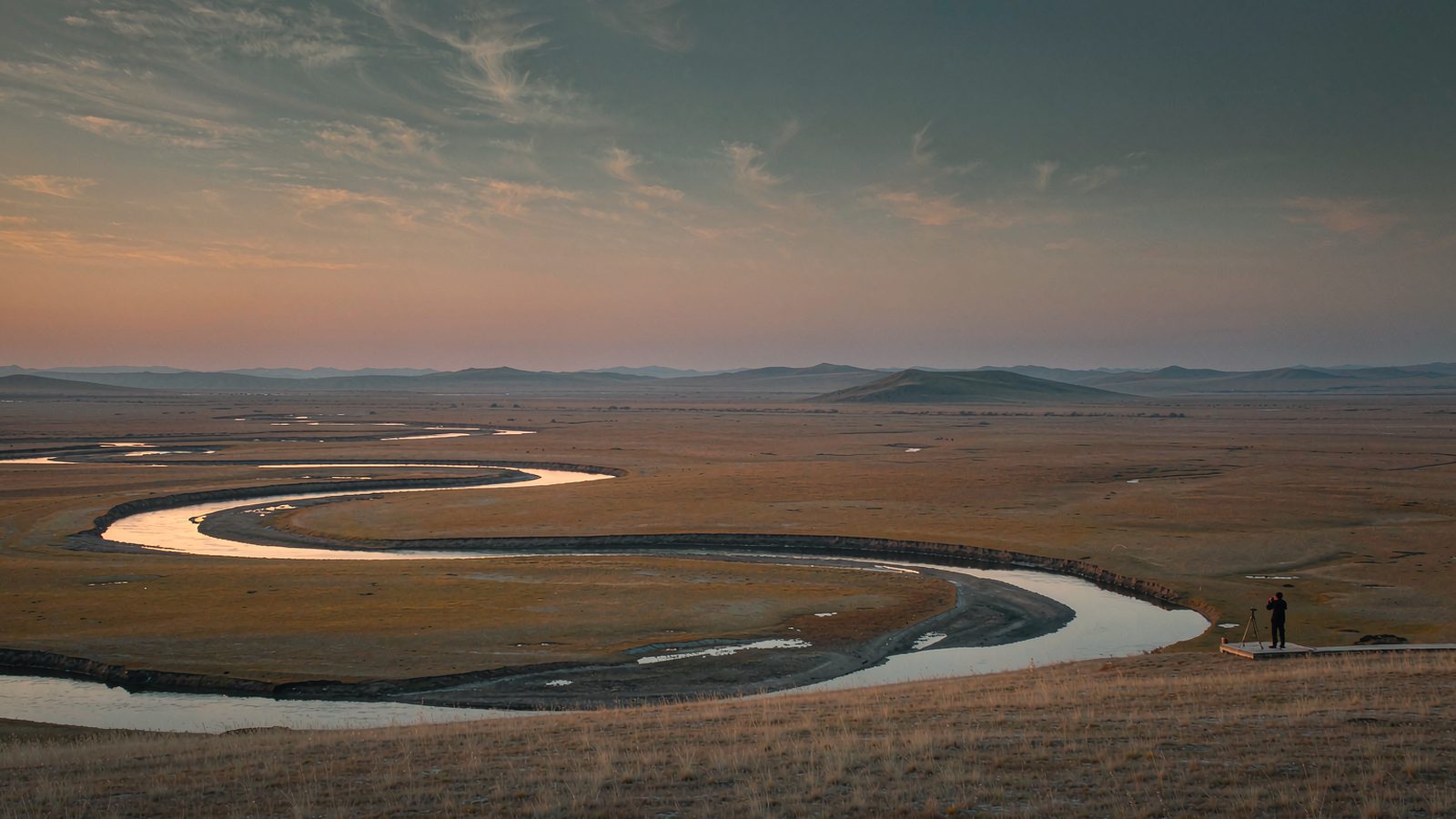
Flower Lake costs 105 yuan including the shuttle and closes for the season on 14 November. The First Bend ticket is 105 yuan with the uphill escalator; summit 3,610 m, sunset 18:06.
On most Sichuan itineraries Zoige is just a name at the end of a line: Jiuzhaigou, Huanglong, Zoige, then back. People put it there to fill a day. What almost nobody explains before they arrive is that Flower Lake and the First Bend of the Yellow River are not the same destination at all. They are a hundred kilometres of grassland apart, and they work on completely different principles. One is about water. The other is about light.
This guide is written to the situation on 14 November 2026. In Zoige today it is partly cloudy, 11°C by day and minus 4°C at night, sunrise at 07:39, sunset at 18:06. From tomorrow, 15 November, the forecast turns to sleet and then moderate snow, daytime temperatures drop to around zero, and nights fall to minus 7 or minus 10. That timing matters, because Flower Lake's main season ends today, and the First Bend switches to its winter timetable tomorrow. Every time and price below has been checked against that boundary.
1. Two places, two jobs: Flower Lake for water, the First Bend for light
Treat these as one "Zoige scenic area" and your itinerary will fall apart. The geography has to come first.
Flower Lake (Huahu) lies north of Zoige town, on the G213 road towards Langmusi, 45 to 49 km out, about an hour by car. It sits in the heart of the Reldahba grassland, 3,468 m above sea level, the second-largest grassland in China after Hulunbuir and the largest alpine peat marsh in the country. The First Bend of the Yellow River is west of town at Tangke, 68 km and roughly 1 hour 15 minutes away, with the gate another 9 km beyond the village. Drive from Flower Lake to the First Bend via town and you cover about 110 km and two hours.
In other words, there is no such thing as "stopping by" one on the way to the other. Anyone who schedules both in a single afternoon will rush the lake and miss the sunset.
The division of labour is clean. Flower Lake is a wetland: water, reeds, birds, and the long wooden walkway running out into the marsh. It works in flat grey weather, and it is best in the morning. The First Bend is a hilltop viewpoint, and what you came for is the enormous S-curve the Yellow River carves across the plain. It only works on a clear evening. Arrive at any other time and you are looking at a grey-green mudflat. Once that is clear, the order of your two days sets itself: the First Bend on the first evening, Flower Lake on the second morning.
2. When to come: flowers in June, colour in October, a hard line in November
Online advice on the "best month" is a mess, some of it saying May to July, some June to August. Those numbers describe three different things.
| Period | What you get | What to watch |
|---|---|---|
| Late May to early June | Grass turning green, migratory birds back, fewest visitors | Windy, flowers not out yet, lake reads cold blue |
| Mid-June to mid-July | Peak bloom at Flower Lake, floating flowers and meadows in flower | The best window of the year, and the most expensive |
| Late July to August | Rainy season, low cloud, water shifting to a pale rose tint, grass at its thickest | Frequent showers; a clean sunset at the First Bend becomes luck |
| September to mid-October | Grass turning gold, marsh reddening, snow line coming down | The most comfortable light of the year for photography |
| Late October to 14 November | First snow on dry grass, almost nobody there | The tail of the main season; winter mode starts after |
| 15 November to March | Snow plain, ice, migrating birds heading south | Flower Lake in winter mode or closed; First Bend closes at 18:30 |
If you come once, choose late June to mid-July. The bloom at Flower Lake lasts about three weeks and then you wait a year. The sunset is also at its latest, around 20:15, so an afternoon transfer from the lake costs you nothing. The second-best window is late September to mid-October: gold grass, transparent air, and photographs with far more depth than high summer.
Two periods to avoid: the National Day holiday in the first week of October, and the rainy stretch from late July into early August. The first is crowds. The second is the absence of light, and at the First Bend no light means no reason to be there.
3. Flower Lake: what the 105 yuan actually buys
Start with the money, because the ticketing here is easy to misread.
- Adult ticket: 105 yuan. That is the gate ticket and the internal shuttle combined. Some platforms still split it as 75 yuan admission plus 30 yuan shuttle; the total is identical, so do not let the two numbers confuse you.
- Student ticket: 70 yuan, full-time school, college or university students with a valid student card.
- 30 yuan for holders of disability cards grade 4 and above, disabled veterans, serving military personnel and firefighters, with documents.
- Admission waived for children under 1.2 m; for visitors 65 and over; and for visitors aged 60 to 64 on non-public-holiday days. The shuttle is still charged.
- Parking: 10 yuan per car, 20 yuan for vehicles above seven seats. Cheap by western Sichuan standards.
The shuttle is not optional in any practical sense. The core wetland is about 7 km from the gate, return; walking one way takes over an hour, and there is nothing to look at on that road. The bus takes ten minutes and drops you at the start of the 3.6 km boardwalk.
So what does 105 yuan buy? 650 hectares of alpine lake and a 3.6 km wooden walkway pushed out into the marsh. The lake has not always been that size: in 2009 the water shrank to 215 hectares, and it took ecological embankments and a restoration programme to raise the water level by 0.52 m and bring the surface back to what you see now. The small white flowers on the water are amphibious knotweed; in bloom the lake looks dusted with broken snow, which is where the name comes from.
The birds matter more than the flowers. This is the largest black-necked crane habitat in China. The population has grown from a little over 400 to more than 2,000, and 149 bird species have been recorded here, with bar-headed geese, ruddy shelducks and common terns all easy to see. There are observation platforms along the boardwalk with interpretation panels, which makes the lake a decent half-lesson in ecology for children.
One detail worth knowing: 20 yuan of every ticket goes back to the herders living around the reserve, covering 854 people. This is not marketing language; it is a published ecological compensation scheme, and it is part of why the wetland still exists.
4. Opening times, booking, and the boardwalk you must not step off
Opening times: 14 November is this year's dividing line
Flower Lake runs a seasonal calendar, not a single year-round timetable.
- 21 March to 14 November (main season): 06:30 to 19:30, with ticket sales and entry stopping at 19:00. Today is the last day of that window.
- 15 November to 20 March (winter): most booking platforms list 09:30 to 17:00, but in some years the wetland closes entirely for maintenance of the boardwalk and viewing decks, leaving only the surrounding grassland open.
Those two statements conflict, and I am not going to pretend otherwise on the reserve's behalf. The honest position is this: between mid-November and March, whether Flower Lake opens, and which part of it opens, changes year by year. If you plan to come in winter, call before you go: ticketing on +86 837 2299555 or +86 837 2291088. One phone call beats ten blog posts.
Booking: there is no ticket window
Flower Lake is real-name booking only, and the reserve does not operate an on-site ticket window except in special circumstances. Book through the official WeChat account or mini-programme for the reserve, or through authorised platforms such as Aba Tourism. Entry is by scanning your original ID card at the gate; there is no paper ticket to collect.
For international visitors this is a real obstacle. Passport details have to be entered separately in the online system, and cannot be fixed at the gate. When we bring foreign groups we sit down the day before departure and check the spelling of every name, the passport number and the date of birth, character by character. One wrong letter and the gate will not open. Groups of ten or more should contact the reserve in advance so that guiding and parking can be arranged.
The boardwalk: three and a half kilometres, and stay on it
The walkway runs 3.6 km from the shuttle stop into the heart of the wetland, with several platforms and pavilions extending over the water. Walking the full length and back takes 1.5 to 2 hours at a normal pace; if you only photograph the first section, forty minutes is enough.
One rule needs stating plainly: never step off the boardwalk onto the grass. Under the green surface is peat bog. What looks like solid meadow can take you to the knee, and rescue is difficult. A layer of alpine peat takes centuries to form; one bootprint is permanent damage. The reserve enforces this strictly, and being asked to leave is the mild outcome.
For photographs, aim for 08:00 to 10:00. The wind is down, the lake is close to a mirror, reflections are complete, and there are few people. After midday the light hardens, the surface glares, and the colours go flat. Do not give up on an overcast day: reed texture, silhouettes of waterfowl and the long convergence of the walkway all photograph better in soft light than in hard sun.
Two practical notes. July and August bring mosquitoes; pack a repellent with DEET and wear long sleeves, which is simpler than fighting them. And at 3,468 m the UV is severe even under cloud, so sunscreen and sunglasses are not optional. There is no shade along the lake.
5. The First Bend: the 105 yuan combi ticket and fourteen escalator sections
Head west from Flower Lake, through Zoige town, and continue 68 km to Tangke. The village is small: one main street, a few filling stations, guesthouses and restaurants. Nine kilometres further west is the gate.
The landform deserves a sentence of explanation. The Yellow River comes down from Qinghai heading south-east, hits the mountains of northern Sichuan at Tangke, turns back north-west, and meets the White River coming up from the south, tracing an enormous S across the plain. The apex of that bend is Tangke. This is not a marketing name; it is the first genuine great bend of the upper Yellow River.
Tickets and hours, as of November 2026
- Combi ticket 105 yuan: admission plus the uphill escalator. This is what almost everyone buys.
- Concession combi around 90 yuan for students and visitors aged 60 to 64, with documents.
- Admission only, walking up, is also possible: roughly 1,400 steps, about 20 minutes. You save the escalator fare and spend the energy instead. At 3,500 m, 1,400 steps is not a trivial debt.
- Free admission for children under 1.3 m or under six, visitors 65 and over, serving and retired military personnel, disabled visitors and guiding licensed guides, with documents. Visitors aged 60 to 64 enter free on non-public-holiday days.
- Parking: about 10 yuan per hour. Set your navigation to the P2 car park, which sits beside the escalator entrance and saves a long uphill walk.
Opening hours run on two seasons, and they change tomorrow:
- 16 April to 14 November: 06:30 to 21:30.
- 15 November to 15 April: 09:00 to 18:30.
The reserve number is +86 837 2291558. Real-name booking applies, with capacity limits in peak season. Winter opening is real, but an 18:30 close means you must already be on the summit before sunset. In November sunset is at 18:06, which leaves you half an hour. Arrive late and you will watch the sky go dark from the car park.
The Sky Ladder: up only, and that is the point
The escalator entrance carries four characters meaning "ladder to the horizon". It is made of 14 graded sections, 538 m long in total, rising 158 m vertically, with an operating height difference of about 165 m. It is the highest scenic-area escalator in China, and it takes about ten minutes to reach the top.
It only goes up. You walk down the wooden staircase, about 15 minutes. Plenty of visitors do not know this and spend ten minutes on the summit looking for a down escalator. In practice it is a gift: the descent gives you a different angle on the bend with every switchback, which is worth more than the ride.
The summit viewing structure is called the Conch Tower, also known as the Bayankala platform: three storeys, glazed on all sides, a full 360 degrees, shaped like an inverted conch shell. It stands at 3,610 m, 140 m higher than Flower Lake. That number is worth knowing before you climb.
6. Sunset: build the day backwards
Nine tenths of a good photograph at the First Bend depends on what time you are standing on the summit. Most people get it wrong because they apply lowland habits to a high plateau.
Zoige sits near 103 degrees east but keeps Beijing time, so solar noon falls between 12:50 and 13:10, and sunset comes far later than in eastern China. Measured locally:
| Period | Sunset (approx.) | Be on the summit by |
|---|---|---|
| Mid-June | 20:15 | 18:30 |
| Mid-August | 19:50 | 18:10 |
| Mid-September | 19:15 | 17:40 |
| Mid-October | 18:35 | 17:00 |
| Mid-November | 18:06 | 16:30 |
| Mid-December | 18:05 | 16:30 |
The rule is simple: go up one and a half to two hours early. Not because the road is long, but because the top platform is small. Forty minutes before sunset there are already two rows of people and no room to open a tripod. In November, 16:30 at the escalator is the hard limit. Later than that and you have bought a 105 yuan ticket to watch the dark.
Viewpoints, in order of priority:
- The third-floor terrace of the Conch Tower. The core position, and the only one that frames the whole S. You need wide angle: 24 mm is marginal, 14 to 16 mm fits it; on a phone, use 0.5x.
- The eastern side of the outer ring. Half the people, a slightly oblique angle, and it compresses the bend against the far mountains nicely on a short telephoto.
- The gilded roofs of Suokezang Monastery at the foot of the hill. Monastery, white stupas and prayer flags as foreground with the river bending behind: the only shot here with a human layer. Allow forty minutes to get down.
- The middle of the descending boardwalk. In the blue hour after sunset the water still holds a gold thread, and from here you can catch the river's continuous reflection.
Three practical warnings. First, do not leave at sunset. There are another twenty minutes of blue hour, the sky moving from orange to violet to deep blue, and those frames are usually better than the sunset itself. Second, the cold arrives faster than you expect. Once the sun is gone the temperature drops five or six degrees in ten minutes; a November evening is minus 2 to minus 5, with wind coming off the water. Down jacket, gloves and hat, all three. Third, drones are restricted. Height limit 120 m, no flying from the third-floor terrace, and the crosswind on that ridge will flip a small aircraft. Ask staff before you take off.
7. Two days, three ways: pick by the time you have
The conclusion first: this route works in two days, but two days covers only these two places. Do not add Jiuzhaigou. Chengdu to Zoige is seven to eight hours each way; squeeze in a third destination and everyone sleeps through it.
Option one: self-drive or private car, three days (smoothest)
Day 1: Chengdu via Dujiangyan, Wenchuan, Li County, Miyaluo and Hongyuan to Tangke, about 550 km and eight hours. Be inside the gate by 16:00 for the 20:15 summer sunset. Sleep in Tangke. Day 2: back to Zoige town in the morning, then north on the G213 for an hour to Flower Lake while the light is still good; leave around midday, continue 36 km and 40 minutes to Langmusi for the Kirti Monastery and the village, and sleep there or return to town. Day 3: Langmusi to Zoige to Hongyuan to Chengdu, or cut across to Songpan and join Jiuzhaigou.
The virtue of this order is that the hardest day ends with the best light, and there is a night of acclimatisation between the two long drives.
Option two: high-speed rail plus private car, three days (least tiring)
Take the Chengdu-Qinghai railway from Chengdu East to Huangshengguan station, about two and a half hours, a little over 100 yuan for second class. Pick up a car at the station: roughly 100 km and two hours to Flower Lake, or two and a half hours to Tangke. This swaps 400 km of mountain road for a train, which is the right call with children, older travellers, or a three-day limit.
Two constraints to accept. Huangshengguan has only five or six services a day; miss one and you lose hours. And you still need a private car: attractions here are fifty or sixty kilometres apart and no public transport connects with sunset.
Option three: two days, these two places only
Day 1: leave Chengdu early, or stay the previous night in Dujiangyan or Wenchuan; reach Tangke by 15:00, go up for sunset, sleep in Tangke. Day 2: leave at 07:00 for Flower Lake, enter at 09:00, out by 11:00, lunch, then start back. The only risk is how brutal day one is. If you are prone to altitude sickness, do not schedule it this way.
About the buses, honestly
Zoige bus station runs services to Tangke and Langmusi for around twenty yuan, but the departures are fixed in the afternoon. The Tangke bus leaves around 15:00 and arrives at 16:30, an hour before sunset; Langmusi has one at 07:00 and one at 14:30. Add the fact that no bus reaches Flower Lake and that the First Bend gate is 9 km beyond Tangke, and doing this route by scheduled bus effectively means giving up the sunset. Take a private car. It is the one cost not worth saving.
8. Tangke or the county town: a real decision
Three choices, each with a price.
| Where | Altitude | Advantage | Cost |
|---|---|---|---|
| Tangke village | about 3,430 m | 9 km from the gate; sunset and star photography without a night drive | Limited choice, basic rooms, sold out in peak season; many guesthouses close after November |
| Zoige town | about 3,406 m | More hotels, oxygen-supplied rooms, hospital, fuel, supermarkets; one hour to Flower Lake | 1 hour 15 minutes to the First Bend, and the return after sunset is a night drive |
| Langmusi | about 3,300 m | Lowest altitude and the best sleep; 36 km from Flower Lake; monastery to visit | 130 km from the First Bend, so it only works on day two |
My advice: if you are chasing the sunset, sleep in Tangke that night. Do not gamble on the night road. The G248 stretch has no street lighting and livestock wander onto it after dark. With children or older travellers, or after November, the county town is safer: oxygen rooms and a plateau hospital are real insurance. If your schedule is loose, spend the second night in Langmusi, sleep well at lower altitude, and see the monastery on the way out.
Two questions when booking: is there heating or an electric blanket (nights are below zero after October, and air conditioning does not heat well at this altitude), and is there room oxygen, as opposed to a canister. Both matter more than a view.
9. Coming after November: snow, black ice, and what to pack
This year is a textbook example. On 14 November the daytime high is still 11°C; on 15 November it turns to sleet and moderate snow, and the following week runs 0 to 4°C by day with minus 7 to minus 10 at night. Early December settles at 5 to 9°C by day and minus 4 to 6 at night. In other words, snow is not a possibility. It arrives tomorrow.
Zoige under snow is a different place: the grassland goes white, the Yellow River becomes a dark line across it, and the photographs are exceptionally clean. But be clear about the costs.
- Flower Lake may be inaccessible. Whether it opens in winter, and which section, varies each year. Call. Do not trust a platform listing that says 09:30 to 17:00.
- The window at the First Bend shrinks. Gates close at 18:30 and sunset is 18:06, so arriving after 17:30 is pointless.
- Black ice on the road. The tunnel sections around Galitai and Shibanpeng on the G213 sit above 3,500 m, and shaded stretches freeze early and thaw late. Temporary closures follow snow; check the Sichuan traffic police and Aba transport feeds before setting out.
- Day-night temperature swings above 15 degrees. You will take your coat off in the sun and need a down jacket within minutes of it setting. Three layers works best: quick-dry base, fleece mid, windproof shell.
Packing, in order of importance: a real down jacket, windproof gloves, a wool hat, sunglasses (snow glare burns the eyes), SPF 50 sunscreen, lip balm, a thermos, a portable oxygen canister, glucose. Bring a spare camera battery; cold drains them faster than you think.
Altitude deserves plain speaking. This whole route sits above 3,400 m, and the First Bend summit is 3,610 m. Altitude sickness has little to do with fitness and a great deal to do with how fast you ascend. Coming straight up from Chengdu in one day, headache, poor sleep and a racing heart are common. People with heart or lung conditions, anyone with an untreated cold, pregnant travellers and children under three should not attempt it. On the first night, no shower, no alcohol, no exertion. If your blood oxygen reads below 90 per cent, spend half a day in town before going higher. Zoige town has a hospital and an emergency station, and Tangke has a clinic, but both are a drive from the viewpoints. If something goes wrong out here, time is measured in hours.
10. Five things people get wrong
- "Flower Lake and the First Bend are on the way to each other; one afternoon covers both." They are 110 km and two hours apart. One afternoon covers one of them.
- "Flower Lake is open all year." The main season runs 21 March to 14 November. From 15 November it moves to winter operation, and in some years the wetland closes entirely for restoration.
- "Take the escalator up and the escalator down." The Sky Ladder is uphill only. You walk down, about 15 minutes.
- "The high-speed train goes to Zoige." In 2026 the Chengdu-Qinghai railway ends at Huangshengguan. Zoige station is still under construction, and the blogs claiming a direct train are wrong. From Huangshengguan there is still 100 km of road.
- "It is empty grassland, driving off the road for a photo is harmless." Under the turf is peat bog; a two-wheel-drive car sinks, and recovery starts in the thousands of yuan. Damaged pasture also means a claim from the herders. This is not a small matter.
11. How Jadetour runs this route
We have been running western Sichuan for years, and we have one fixed rule on this section: the First Bend on the first evening, Flower Lake on the second morning. It is not an aesthetic preference; light and stamina decide it. The First Bend is worth nothing outside that forty minutes of sunset, and day one on the plateau is when people still have energy. Flower Lake's mist and mirror surface exist before nine in the morning; later you get glare.
For international guests we do four things. We complete the real-name bookings for both sites in advance using passport details, because neither system accepts foreign documents at the gate. We provide an English-speaking driver-guide, since there is no ride-hailing and no usable public transport out here. We carry oxygen, a pulse oximeter and a thermos in the car, checking blood oxygen every morning and rerouting if it drops below 90 per cent. And we build the day backwards from sunset rather than forwards from a list of attractions.
One thing we will not promise: we do not guarantee black-necked cranes, and we do not guarantee a sunset. The birds are wild and the weather is the weather. What we can guarantee is the time window, the order of viewpoints and a fallback plan. If the cloud is too thick, we move the First Bend to the following dawn for mist instead of leaving you on a platform in the wind for two hours. Plan a western Sichuan trip
If you are putting this section together, send us your dates, group size, ages and any medical conditions. We will tell you whether Flower Lake is actually open on those days, what time the sun goes down, and whether there is ice on the road. It takes one check. Getting it wrong costs you the whole trip.
Need help planning this trip?
Tell us your travel dates and group size — we reply within 24 hours.
WhatsApp +86 183 1705 8017 · WeChat 18317058017
More Guides
Dazu Rock Carvings: Baodingshan or Beishan, Tickets and Whether You Need a Guide (2026)
November 2026 prices: Baodingshan CNY 115, Beishan CNY 70, combo CNY 140 with shuttle. How to read the 830-handed Guanyin, the 31-metre reclining Buddha and Cave 136.
11/14/2026
Zigong, Sichuan: Dinosaurs, a 1,000-Metre Salt Well and the Lantern Fair (2026 Guide)
The dinosaur museum reopened on 28 July 2026: 40 yuan, real-name booking only. Shenhai Well is 25 yuan and now closes at 17:00 for winter. No lantern fair in November - the 33rd edition opens January 2027. Trains from Chengdu take 50 minutes.
11/13/2026
Zhangjiajie in Four Days: Forest Park, Tianmen Mountain and Fenghuang (2026)
November 2026 prices: Wulingyuan four-day pass CNY 228 to 240, Tianmen CNY 278, Fenghuang combo CNY 128. The order, the lodges, the bookings, the luggage and the wet-weather plan.
11/13/2026