
How to Pay for a China Trip: Five Channels, Fees and Payment Milestones
Where the 3% Alipay fee comes from, how the PayPal rate is locked, and when deposits and balances fall due: paying for…
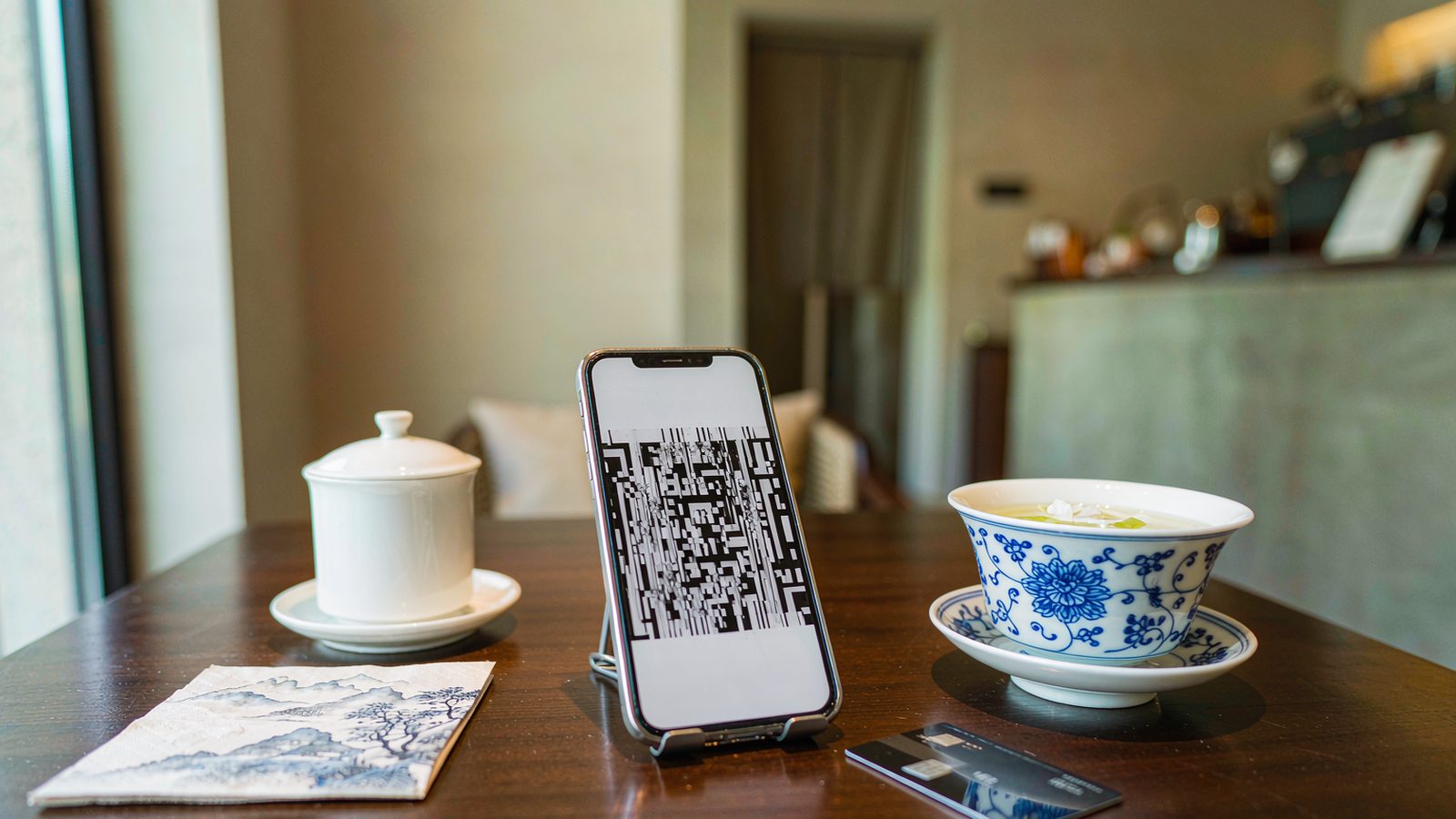
Where the 3% Alipay fee comes from, how the PayPal rate is locked, and when deposits and balances fall due: paying for a China trip in 2026.
Paying for things in China in 2026 looks nothing like it did five years ago. Five years ago the first task after landing was finding a bank to change cash; now it is connecting to airport Wi-Fi and installing Alipay. The change came fast, and so did a new set of traps: a card that will not link, a per-transaction limit too low for a hotel bill, and persistent confusion over who pays the processing fee.
This guide splits payment into three layers: paying in shops, paying a travel agency, and claiming tax back on the way out. All limits, rates and policy figures were verified in October 2026. Rates are commercial terms and do change, so treat your contract and your bank statement as final.
1. The short answer: three situations, three tools
- Small daily spending (meals, metro, water, shuttle buses inside scenic areas): Alipay or WeChat Pay with a linked foreign card. Transactions of CNY 200 or less carry no platform service fee, which makes this the cheapest option.
- Large payments (hotel deposits, tour balances, luxury goods): use the agency's online card checkout (international cards, Apple Pay) or PayPal. This avoids both the per-transaction cap and the 3 percent cross-border fee.
- Backup: a debit card that works at ATMs plus CNY 500 to 1,000 in cash. A dead phone, a failed scan and a cash-only shop all happen.
2. Alipay: linking, limits and that 3 percent
Alipay accepts Visa, Mastercard, JCB, Discover and American Express, as well as UnionPay cards issued outside mainland China. The flow is: install the app, switch language, register with a foreign mobile number, open "Bank Cards", enter card number and expiry, set a payment password. Limits rise after passport verification.
The numbers worth memorising:
- Per transaction: USD 5,000 equivalent.
- Per year: USD 50,000 equivalent.
- Platform fee: none at CNY 200 or below; above that the platform charges roughly 3 percent as a cross-border service fee. This is charged by Alipay, not by the merchant.
- Issuer fees may apply: your own bank typically adds 1 to 3 percent for foreign transactions, depending on the card.
So "scanning is cheaper" has a boundary. A CNY 30 bowl of noodles costs almost nothing to scan; a CNY 5,000 hotel bill is better paid by card or transfer. Getting this right saves real money over a two-week trip.
3. WeChat Pay: broadly symmetrical
WeChat Pay's linking logic and limits are close to Alipay's: USD 5,000 per transaction and USD 50,000 per year equivalent for foreign cards, no platform fee under CNY 200 and roughly 3 percent above it. The difference is coverage. WeChat is stronger in smaller cities, county towns, street stalls and wet markets; Alipay is steadier in chain stores, airports, hotels and ticket offices.
Practical advice: install both and link both. This is not indecision. It is very common in China for a shop to display only one of the two QR codes. Since September 2026 WeChat Pay has also offered a dedicated product for inbound travellers with a smoother linking flow; follow the in-app guidance after arrival.
4. PayPal: the least friction for large agency payments
If you are paying for a tour, from a few thousand to tens of thousands of dollars, PayPal's advantages are real: no Chinese phone number, no Chinese bank account, and a platform that will mediate a dispute. The trade-off is cost — exchange rate spread plus processing fees — and that cost has to land somewhere.
Our approach is to absorb it rather than pass it on:
- Quotes are priced in RMB. On payment the amount is converted to US dollars at the agreed rate, locked at order confirmation and recorded in the order notes, so the figure does not move on the payment page.
- No payment surcharge is added for the customer. The merchant-side PayPal cost, roughly 4.4 percent plus a fixed USD 0.30 per transaction, sits with us.
- You pay exactly the dollar figure you are shown. If your issuing bank adds a foreign transaction fee in your market, that is the bank's charge; we neither set it nor can refund it.
One caveat worth stating: under PayPal's rules, the original transaction fee is not returned on a refund. So a "pay in full now, cancel later" pattern costs us a real fee even when the refund is complete. That is precisely why cancellation terms are tiered by date rather than set as a single flat rule.
5. International card checkout, including Apple Pay
For travellers who prefer neither PayPal nor a Chinese app, the simplest route is a secure payment link from us: it opens a hosted checkout, you choose the card scheme, enter card details, complete 3-D Secure, done. Visa and Mastercard are supported, and Apple Pay works.
This channel settles in the original or settlement currency, and the roughly 1 percent processing cost is also absorbed by us. It suits deposits, balances and on-trip additions. It does not suit very small amounts, where a minimum fee makes the cost disproportionate.
Security note: a checkout page is only ever sent by your consultant after the order is confirmed, on a fixed domain. Any "new payment link" that appears mid-conversation, and any email asking you to resend funds "because the rate changed", should stop you long enough to verify through a contact detail you already hold. This pattern of fraud exists across the global travel industry and the scripts are near-identical.
6. Cash, ATMs and cards: still needed, different role
Cash in China has shifted from primary payment method to fallback. Still worth carrying:
- CNY 500 to 1,000, enough for two days of small spending and surprises.
- A card that works at ATMs. Major bank ATMs generally accept foreign cards, with per-withdrawal limits usually CNY 2,000 to 3,000 and a CNY 15 to 30 fee. One larger withdrawal beats four small ones.
- Declaration thresholds: CNY 20,000 in RMB, or foreign currency equivalent to USD 5,000, must be declared when entering or leaving.
Card terminals work well in large hotels, malls and airports, but rarely at street stalls, in taxis or in markets. Do not assume "they take cards" as a default.
7. Fees and settlement times in one table
| Channel | Currency | Cost to the customer | Settlement | Best for |
|---|---|---|---|---|
| Alipay / WeChat Pay | RMB | Free at or below CNY 200; about 3% platform fee above, plus issuer fees | Instant | Daily small spending, transport, food |
| PayPal | USD | Absorbed by us, no surcharge; issuer fees on you | Confirmed immediately | Tour payments, deposits, balances |
| International card checkout | Original or settlement currency | About 1% processing absorbed by us | 1 to 3 business days | Deposits, balances, additions |
| Bank transfer | RMB or foreign currency | Sending and intermediary bank charges on you | 1 to 5 business days | Large amounts, corporate clients |
| Cash / ATM | RMB | CNY 15 to 30 per ATM withdrawal | Instant | Backup, small amounts, remote areas |
The rule is simple: scan for small amounts, use checkout or PayPal for large ones, keep cash as backup. Do not try to solve every situation with one method.
8. Deposits, balances and refunds: timing beats percentages
Most payment disputes are about timing, not amounts. Writing milestones into the contract is far more effective than arguing later.
- Deposit: within three working days of signing, usually 20 to 30 percent. Under Article 586 of China's Civil Code a statutory deposit may not exceed 20 percent of the contract value, and any excess does not carry deposit effect.
- Inventory payment: 45 to 30 days before departure. Hotels, vehicles and real-name-booked tickets require supplier prepayment, normally settled at this point.
- Balance: 30 days before departure, or 45 in peak season. If it is late, suppliers are entitled to release rooms and vehicle slots.
- Refunds: returned to the original payment method. Card and PayPal refunds usually land in 3 to 7 business days, bank transfers in 5 to 15. Visa fees already incurred, airline cancellation charges and hotel cancellation fees follow supplier rules and are not within the agency's discretion.
One practical habit: keep a receipt for every payment. Transfer screenshots, checkout receipts and PayPal transaction IDs, saved in one folder, resolve almost any on-trip dispute faster than a verbal explanation.
9. Three safety rules for large payments
- Verify the payee. The payee name must match the company on the contract. Any request to pay a personal account should be verified before a single yuan moves.
- Trust only the fixed domain. Open checkout links from your consultant's official email or a chat window you have already verified, never from a search result.
- Ask for the invoice. A legitimate agency can issue a Chinese VAT invoice with the same entity name as the contract. It is not paperwork; it is proof of who you paid.
10. Claim the tax back on the way out
Departure tax refunds are widely overlooked. Since April 2025 the "refund on purchase" model has been rolled out nationwide, the minimum spend has dropped to CNY 200 and the cash refund cap has risen to CNY 20,000. The essentials:
- Shop at stores displaying the tax-refund sign and ask for the refund form and invoice.
- Some stores offer immediate refund on the spot, usually to a card or in cash; customs verification at departure is still required.
- Complete the refund at the airport counter with passport, refund form, goods and boarding pass. Do not check the goods in before verification.
- Refund rates vary by category, commonly 11 percent and 8 percent, with a handling deduction from the gross amount.
11. Five common questions
- Can I link a card without a Chinese phone number? Yes. Both Alipay and WeChat Pay accept foreign numbers, and limits rise after passport verification.
- What if a QR payment fails? Check the per-transaction limit first, then whether the merchant accepts foreign cards at all. If both are fine, use cash.
- Paid by PayPal but the order has not updated? Callbacks can lag by a few minutes. If it is over 30 minutes, send the transaction ID to your consultant for manual reconciliation.
- Can I pay a person in RMB and have them pay for me? Not advisable. No contractual relationship, no invoice, no recourse if something goes wrong.
- What about tipping? China has no mandatory tipping culture. Tips for good guiding and driving are welcome but not an obligation, and should never be implied as required.
12. Settle the money before you fly
The best way to handle payment is to finish it before departure and only spend small amounts on the road. Deposit and balance settled in advance, mobile wallets linked before boarding, cash withdrawn once in an amount that covers two days. Then leave your attention for the scenery.
If you have a question about a channel's fee or settlement time, send us the order number and we will reconcile it line by line. If your itinerary is not fixed yet, browse the route skeletons in our travel guides, or tell us your budget range and let us build a tailor-made proposal.
Need help planning this trip?
Tell us your travel dates and group size — we reply within 24 hours.
WhatsApp +86 183 1705 8017 · WeChat 18317058017
More Guides

How to Book a Jadetour Trip: Six Steps from Enquiry to Departure
Enquiry, finalising, contract, deposit, entry documents, pre-departure: six steps that explain how booking a private China tour actually works in 2026.
10/20/2026
Chengdu Travel Guide 2026: Panda Base Booking, Dujiangyan, Qingcheng and a Five-Day Route
Panda Base CNY 55 and booked ahead, Dujiangyan and Qingcheng CNY 80 each. A 2026 Chengdu guide to booking, routing, hotpot and common mistakes.
10/19/2026
Guilin Travel Guide 2026: Li River Cruises, Longji Rice Terraces and a Three-Base Route
Li River cruises from CNY 215, Longji terraces CNY 80, Elephant Trunk Hill free but booked. A 2026 guide to piers, tickets, routes and common mistakes.
10/19/2026