
Siguniang's Three Valleys: Shuangqiao, Changping or Haizi — Which One Fits You
One valley is a bus ride past snow peaks, one a gentle forest walk, one a horse trail into empty meadows. Tickets, hour…
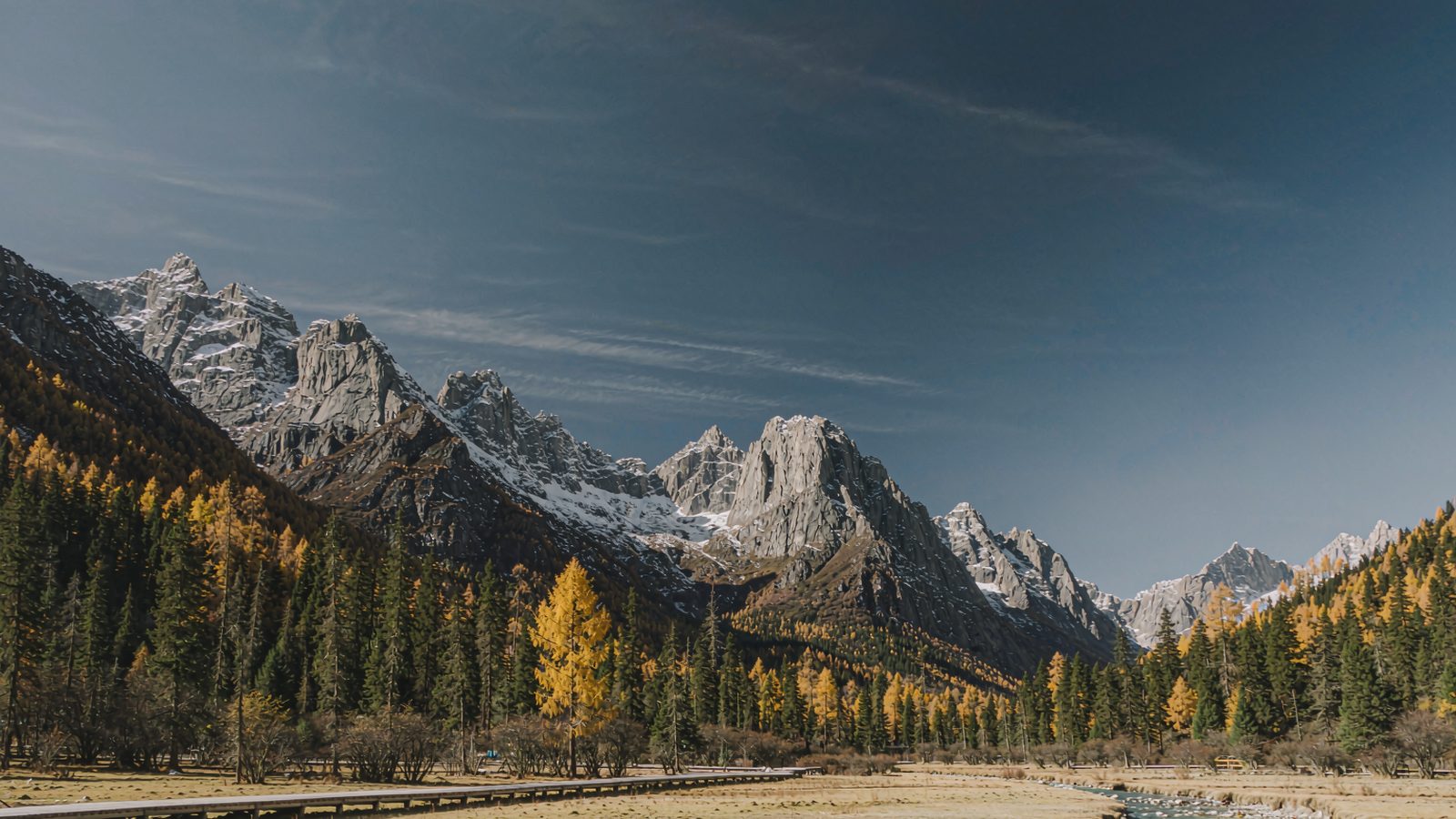
One valley is a bus ride past snow peaks, one a gentle forest walk, one a horse trail into empty meadows. Tickets, hours and fitness demands compared.
The most common mistake at Mount Siguniang is not altitude sickness and not the weather. It is choosing the wrong valley. Shuangqiao, Changping and Haizi all sit inside the same scenic area, but they deliver completely different days: one is a bus ride past snow peaks, one is a gentle walk up a forest stream, and one is a horse trail into empty meadows. Pick badly and you can spend two nights at 3,200 m and go home thinking the place was overrated.
This guide is organised around a single question: which valley is right for you. Prices, opening hours, fitness demands and transport are all covered, using the figures published by the Siguniang Mountain Scenic Area Administration for 2026.
The short answer
| Valley | Style | Effort | Time | Best for |
|---|---|---|---|---|
| Shuangqiao | Sightseeing bus + boardwalks | Low | 4–5 hrs | Families, older travellers, short trips, first visit |
| Changping | Bus + walking or horse | Medium | 5–7 hrs | Travellers who want to walk a little, photographers |
| Haizi | Hiking or horse only | High | 6–8 hrs | Outdoor travellers, camping, night skies |
One day only: Shuangqiao. Two days: Shuangqiao plus Changping. Three days and good legs: add Haizi. Do not try two valleys in one day — last entry is 15:00 and transfers eat the rest.
The basics (2026)
- Where: Siguniangshan Town, Xiaojin County, Aba Prefecture, Sichuan; about 220 km from Chengdu.
- The four peaks: Da Feng 5,025 m, Er Feng 5,276 m, San Feng 5,355 m, and Yaomei Feng 6,250 m — the highest point of the Qionglai range, known as the Queen of Sichuan's mountains.
- Town altitude: roughly 3,200 m. This is not a number to shrug at; many people sleep badly on the first night.
- Tickets: Shuangqiao ¥80 + bus ¥70; Changping ¥70 + bus ¥20; Haizi ¥60 with no bus. These are peak-season rates (1 April – 30 November); off-season prices follow the scenic area's notices.
- Last entry: Shuangqiao 15:00; Changping and Haizi 14:30. Arrive in town in the afternoon and you will not get in that day.
- Booking: buy through the official WeChat accounts (Siguniang Scenic Area or Aba Tourism) with your passport details. In peak season, walk-up tickets may be gone.
- Outdoor activities: climbing, through-hikes and camping must be registered at the Outdoor Sports Centre; the outdoor permit is ¥150 per person. Horses are managed by the scenic area's horse company, official guide price from ¥320 per horse depending on distance.
Shuangqiao Valley: the easy one, and that is the point
Shuangqiao runs about 34.8 km and is the most developed of the three. The bus goes all the way to the terminal stop at Hongshanlin (Redwood Forest), calling at Renshenguo Meadow, Jueyuba, Penjingtan, Longzhucuo and Budala Peak, and you can hop on and off. That means you can see snow peaks, meadows, sea-buckthorn woods and a glacial valley without walking any distance at all.
Its value is not wilderness but density: dozens of viewpoints onto 5,000 m peaks packed into one valley, plus a rock wall nicknamed Budala Peak because it genuinely resembles the Potala Palace. Come in November and the larches turn gold while the snow line drops to mid-mountain — the easiest photography of the year.
How to do it well
- Ride to the end, then work backwards. The bus takes about 40 minutes to Hongshanlin; then stop at each site on the way back so you never retrace your steps.
- Three stops you should not skip: Renshenguo Meadow for meadow-and-peak reflections, Longzhucuo for the lake reflection, Hongshanlin for the old-growth boardwalk.
- Jueyuba runs rafting in summer. The water is glacial; if you feel the cold, skip it.
- Bring a real jacket. The gate sits at 3,200 m and the terminal is close to 3,840 m, with far more wind than in town.
Changping Valley: the one where you choose the distance
The bus stops at Lama Temple and after that it is walking or riding. That is the essential difference from Shuangqiao: you decide how far you go.
- To Kushutan (Dead Tree Beach): about 3 km on boardwalk, 2.5–3 hours return. Dead firs standing in the stream against a wall of snow peaks — the signature image of Changping.
- To Muluozi: about 12 km, 6–7 hours return, the second half through old-growth forest and meadow. Only for travellers with real stamina.
- Horses: available at the gate, priced by distance, official guide price from ¥320. Horse trails partly overlap the walking trail; if you dislike being bounced around, walk.
Changping is also the start of the classic Changping–Bipeng through-hike, which needs a guide and outdoor registration. Most visitors will not do it, but knowing it explains the people carrying large packs up the valley.
Haizi Valley: no bus, no shortcuts
Haizi is the wildest of the three: no sightseeing bus, only horse trails and meadows, last entry 14:30, and you must be out before dark. The draw is not close-up peaks but alpine lakes — Dahaizi and Huahaizi — plus the meadow at Guozhuangping where all four peaks line up at once.
- Guozhuangping: about an hour of climbing from the gate, one of the best panorama points, closer than Maobiliang.
- Dahaizi: 6–8 hours return, above 3,800 m, with almost no supplies on the way.
- Huahaizi: further still, usually done as an overnight; register at the Outdoor Sports Centre and buy the outdoor permit in advance.
- Horses: the trail is steeper than Changping's — first-time riders should be ready for it.
Do not schedule Haizi for your second day. Going from 3,200 m to 3,800 m and walking six hours raises the odds of altitude problems well above the other two valleys.
Getting there
| Option | Time | Notes |
|---|---|---|
| Self-drive | About 3 hrs | Chengdu – Dujiangyan–Wenchuan expressway – Yingxiu – Wolong – Balang Pass tunnel – Siguniangshan Town. The old Balang Pass is 4,487 m and icy in winter; the tunnel stays open |
| Public bus | About 4 hrs | From Chadianzi or Dujiangyan bus station toward Xiaojin, alight at Siguniangshan Town. Few departures — buy a day ahead |
| Private car | 3–4 hrs | Door pickup in Chengdu, good with luggage or a group; stop at Maobiliang on the way back |
Maobiliang, about ten minutes from town on provincial road 303, is the classic free viewpoint for all four peaks in a row. On a clear morning the sunlight hits Yaomei Feng first, then San Feng, Er Feng and Da Feng in order — worth the early alarm.
Where to stay
Almost everyone stays in Siguniangshan Town, which has everything from guesthouses to boutique hotels, roughly ¥200–1,000, doubling in peak season (mid-October to early November, National Day, May Day).
- In town: easy food, oxygen and gear rental; all three valley gates are 10–20 minutes away.
- At the gates: guesthouses near the Shuangqiao and Changping entrances save the morning drive, but food options are thin.
- Two things to check when booking: whether the room has oxygen supply (some hotels pipe it in) and whether there is real heating. November nights are below freezing and air-conditioning struggles at altitude.
Altitude and kit
The town sits at 3,200 m, Shuangqiao's terminal approaches 3,840 m and Haizi goes above 3,800 m. For most people this is not dangerous, but it does affect sleep and energy.
- First night: no shower, no alcohol, no hard exercise. These three cause most altitude problems.
- Walk slowly, about 30 percent slower than usual; on climbs use a three-steps-then-rest rhythm.
- Oxygen: portable cans are sold in town pharmacies and hotels, ¥20–40. Buy before the headache starts.
- Kit: shell jacket plus a light down, sunglasses (snow glare is strong), sunscreen, hat and gloves, thermos. From November to March add gaiters and grippy boots.
- Drones: controlled in the scenic area — ask before flying.
Seasons change what you actually see
| When | What you get | Watch out |
|---|---|---|
| May–June | Alpine rhododendrons, low snow line | Big day-night swing, afternoon rain |
| July–August | Meadow flowers, deepest green | Rainy season, peaks often clouded |
| Mid-Oct – early Nov | Golden larches, colour plus first snow | The best window, and the busiest |
| Dec–March | Clearest peaks, fewest people | Cold, icy sections, off-season tickets |
If you only get one shot, take late October. The larches turn solid gold, the snow line sits just above the treeline, and you get snow, gold and green stacked in layers. The trade-off is the highest room rates and queues for the bus.
Four myths
- Any valley will do — no: Shuangqiao is about peaks, Changping about stream and forest, Haizi about lakes and meadows.
- You can enter in the afternoon — no: last entry is 15:00, and 14:30 for two of the valleys.
- 3,200 m is not high — for someone living at sea level it is, and a bad first night is normal.
- Altitude pills solve everything — they relieve symptoms, they do not make you immune. An over-packed itinerary will still hurt.
How Jadetour would route it
Siguniang usually joins Chengdu, Dujiangyan and Danba on a western Sichuan loop: Chengdu – Siguniang – Danba – Xinduqiao – Kangding, five to seven days. The advantage is gradual acclimatisation: from 500 m in Chengdu to 3,200 m in town, with a night in Dujiangyan or Wolong in between. The cost is three to five hours of driving a day, which suits active travellers rather than those who want to lie still.
If Siguniang is the only goal, two days works: leave Chengdu in the morning, settle in and catch sunset at Maobiliang, then take Shuangqiao the next morning and drive back in the afternoon. We run this route often and can loosen or tighten it around your fitness and holiday. Send us your travel month and group size and we will build a version around real road conditions and what is actually in season.
Need help planning this trip?
Tell us your travel dates and group size — we reply within 24 hours.
WhatsApp +86 183 1705 8017 · WeChat 18317058017
Destinations in this guide
Related Tours
Sichuan & Chongqing 9 Days 8 Nights · Jiuzhaigou Grand Tour
5-10 Days
Mountains of Ba, Waters of Shu · Chengdu, Jiuzhaigou & Wulong 9 Days (Jiuzhaigou + Huanglong + Wulong Karst + Furong Cave + Wujiang Gallery + Mountain City Nights)
5-10 Days
Chengdu & Chongqing 8 Days · A Journey of Ethnicity and Culture
5-10 Days
More Guides
How Big Can a China Tour Group Be: Seat Limits, Guide Ratios and Three Thresholds
Group size is the smallest of three ceilings: seats, guide attention, site capacity. Four bands, cost steps and the 8, 16 and 24 guest thresholds.
10/22/2026
Private, Group or Budget Tour: What the Price Difference Really Buys
The same route can differ by more than double. Four measurable cost drivers, three tour formats, and eight questions to ask before booking.
10/22/2026
Choosing a Guide in China: Licences, Commentary, Tipping and Unlicensed Guides
Only 8.4 percent of China 660,000 licensed guides speak a foreign language. How to verify credentials, why fees differ threefold, and the legal lines on tips and shops.
10/21/2026