
Leshan Giant Buddha: Cruise or Cliff Stairway, and How to Beat the Three-Hour Queue
Mountain ticket 80 yuan, cruise 70 — two routes that barely overlap. Tickets, time slots, the 8,000-a-day stairway quot…
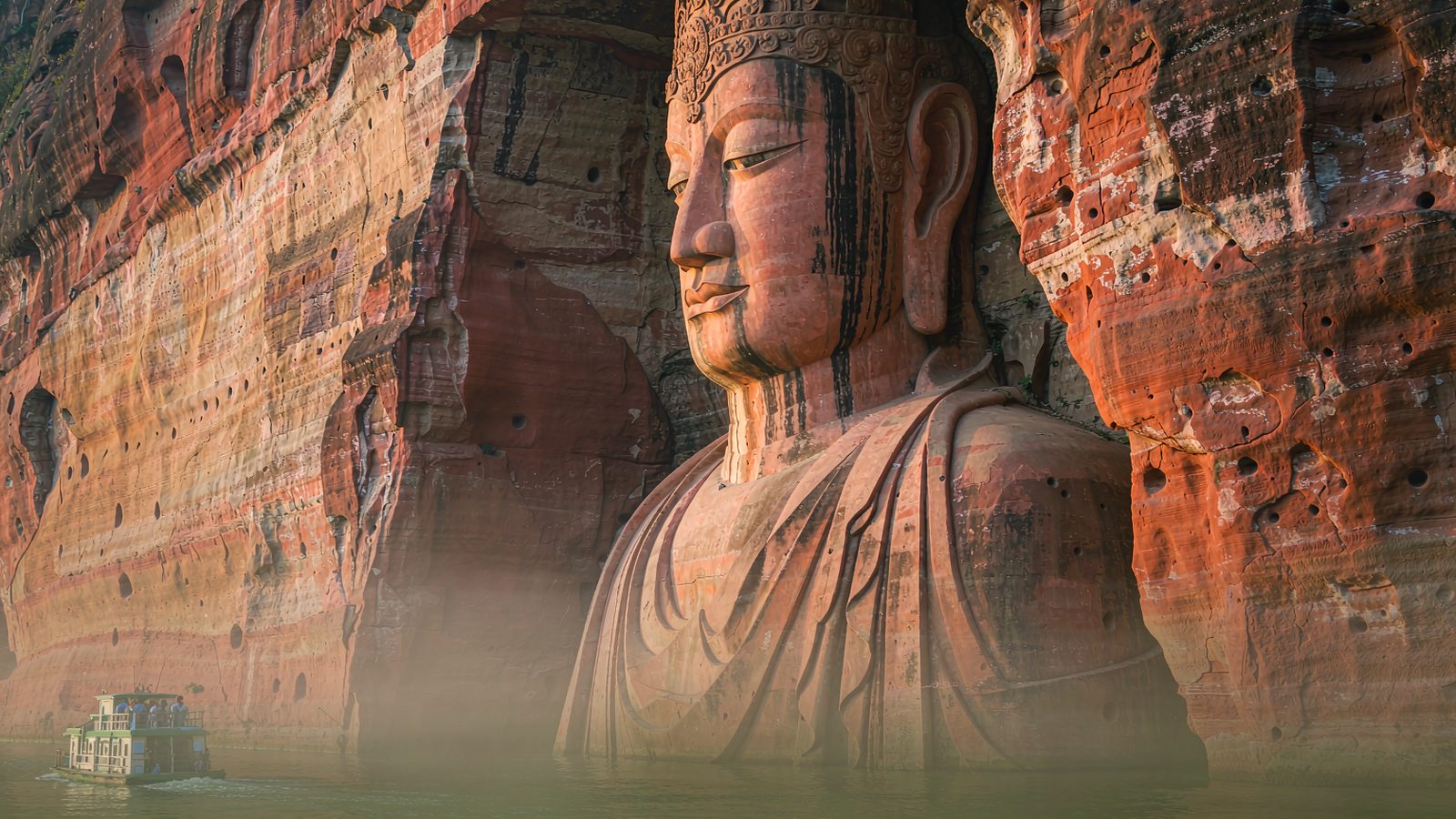
Mountain ticket 80 yuan, cruise 70 — two routes that barely overlap. Tickets, time slots, the 8,000-a-day stairway quota and how to avoid the queue.
Leshan Giant Buddha is a scenic area built around one decision. The mountain ticket costs CNY 80, the river cruise CNY 70 — a difference of ten yuan, yet the two routes barely overlap. One takes you down a Tang-dynasty cliff stairway to the Buddha's feet, where you look up at a 71-metre seated Maitreya carved out of red sandstone. The other puts you on a boat in the middle of the confluence, where thirty to forty minutes is enough to fit the Buddha, the cliff and the meeting of three rivers into a single frame.
Choose wrong and the usual outcome is two hours in a queue at the head platform, followed by a view of other people's heads. This guide sets out the tickets, the time slots, why the queues form and how to avoid them. All ticketing figures follow the official schedule published by the Leshan Giant Buddha Scenic Area (Sichuan Development and Reform Commission price document No. 406 of 2018) and were checked for November 2026.
The short answer: boat or stairs
| Your situation | Choose | Why |
|---|---|---|
| Travelling with parents over 65 or children under 6 | Boat only | The stairway has 217 steps and narrows to 60 cm; the feet platform is slippery when wet |
| Limited mobility, fear of heights, heart or blood-pressure conditions | Boat only | The park explicitly advises against descending for these visitors |
| Half a day only, or continuing to Emeishan the same day | Boat only | Cruise is 30-40 minutes; allow 1.5 hours with boarding. The stair route takes 2-3 hours even when smooth |
| First visit, reasonable fitness, want to touch the Buddha's foot | Stairs | Only from the feet platform do you feel what 71 metres actually means |
| Primarily photographing | Both | Boat for the frontal full-body shot, mountain for upward angles and detail. CNY 150 total |
| Public holiday, one day only | Boat plus temples | Queues of 1.5-3 hours for the feet platform are normal during peak dates |
2026 tickets and opening hours
| Item | Price | Notes |
|---|---|---|
| Mountain ticket, full | CNY 80 | Covers the Buddha, Wuyou Temple and Mahao Cliff Tombs; valid the same day |
| Mountain ticket, concession | CNY 40 | Age 7-17; full-time undergraduates and below; age 60-64 on statutory holidays |
| Daytime river cruise | CNY 70 | Guides and children under 1.2 m free, but tickets must be issued at the counter. No other discounts |
| Night cruise on three rivers | CNY 138 | Departs 20:00, extra sailings with demand; children under 1.2 m half price at 69; infants under one free |
| Night walk on Lingyun Mountain | CNY 158 / 80 | Full ticket including the Oriental Buddha Capital basement 158; without it 80; entry 19:30-21:30 |
| Shuttle bus | CNY 10 per ride, 15 per day | South to North Visitor Centre, stopping at north gate, east gate, Huhuawan, Oriental Buddha Capital, south gate |
Opening hours run on two seasons. From 1 April to 7 October the park is open 07:30-18:30. From 8 October to 31 March it is 08:00-17:30. In other words, between November and March last entry is 17:30, a full hour earlier than in summer — and that hour often decides whether you can still reach Emeishan the same day.
Free admission applies to children under 1.2 m or under six; visitors aged 65 and above; visitors aged 60-64 on non-holiday weekdays; serving military, disabled veterans and veterans; disabled visitors, with one companion free for blind visitors and those with severe physical, intellectual or mental disabilities; Buddhist clergy; and accredited journalists. Free admission applies to the mountain ticket only — there is no concession on the cruise apart from children under 1.2 m and guides.
Booking. Use the official WeChat account, the official mini-program, or major platforms. Cruise tickets are sold only through the official mini-program and the official short-video account; no third party is authorised. Tickets offered at a markup elsewhere should be treated with suspicion — the gate checks the ticket, not the seller.
The boat: thirty minutes of the whole picture
Boats leave from Jiazhou Ferry or Wuyou Temple pier, run to the water directly in front of the Buddha, hold position for a few minutes, and return. The entire product is one sentence long: a frontal, full-body view from the middle of the river.
That angle is undervalued. The Buddha is carved into the Lingyun cliff, so from the mountain you see a part, from below; from the water you see the whole — the seated posture, the two guardian figures flanking it, and the proportion of the entire cliff face behind. On clear days you can also make out the so-called reclining Buddha: Wuyou Mountain as the head, Lingyun as the body, Dongyan as the feet. It is a local reading rather than a formal claim, but the river angle makes it far easier to see.
Choosing between the two piers
- Jiazhou Ferry sits beside the North Visitor Centre, convenient if you arrive from the north gate. It is more sensitive to water levels and may suspend during flood or dry season.
- Wuyou Temple pier sits beside the South Visitor Centre, about 1,000 metres or 10-15 minutes on foot. Sailings are more reliable, which is why most group tours use it.
- Sailings run 08:00-18:30, every 30 minutes or as soon as the boat fills. Peak season releases tickets in batches; off season you can usually buy on the day.
- Documents. Mainland visitors tap their ID card at the gate. Holders of Hong Kong, Macao and Taiwan travel permits, residence permits or foreign passports must exchange for a paper ticket at the counter first.
One caveat worth planning around: cruises suspend or shorten when water levels and weather turn. Both flood conditions and unusually low water can close the route. Call ahead on the day. This is also why a boat-only plan should never be scheduled for your final day — if sailings stop, you have no fallback.
The stairway: 217 steps and a one-way rule most people misread
The descent to the Buddha's feet is the most misunderstood part of the site. The Jiuyu stairway was cut in the Tang dynasty at the same time as the statue, as the builders' access and a pilgrim route: roughly 500 metres of path, 217 stone steps, 1.45 metres wide at its widest and only 60 centimetres at its narrowest, zigzagging down the cliff. The first turn still carries a Tang-era narrative carving, valuable evidence for Tang architecture and stonework.
The rule that matters: the stairway is one-way, upward only. You descend by the Lingyun cliffwalk from the Suoluo gully side, arrive at the feet platform, and climb back up the Jiuyu stairway. That long queue at the head platform is largely people waiting to go down a route that does not run downward — the single biggest cause of wasted time here.
What changed in 2026: the Jiuyu stairway was closed for rock-stability works and fully reopened on 24 May 2026, with time-slotted real-name booking and one-way flow introduced at the same time. The daily quota is now capped at 8,000 people, split into morning and afternoon sessions, and you must descend within your booked slot. No reversing, no stopping to photograph inside the stairway. The feet platform holds 200-300 people at a time; those outside wait for people to come out. That is why the queue appears not to move.
How to walk it efficiently
- Enter by the north gate. The North Visitor Centre is about 1,500 metres from the north gate checkpoint, 15-20 minutes along the corridor of carved blessings. Take the shuttle if you would rather not walk.
- Go to the head platform first for the wide view, then descend by the Lingyun cliffwalk from the Suoluo gully entrance. Do not join the queue at the head platform.
- Do not linger on the feet platform. It is small and slippery; photograph from the edge and keep moving, or staff will turn you back.
- Return via the Jiuyu stairway — 217 steps up, with landings to rest. If you dislike heights, keep to the inner side.
- Allow 2-3 hours, excluding queues. With elderly companions, drop the descent entirely and stay on the head platform and in Lingyun Temple; you lose surprisingly little.
Where the three-hour queue actually comes from
To be clear, this is not mismanagement. It is physical capacity. Four factors stack up, and only when all four combine do you get the holiday extremes.
- Direction confusion. People assume the Jiuyu stairway runs downward and queue at the head platform for nothing.
- Slot collision. Coach groups arrive in the 10:30-14:30 window, filling the feet platform instantly. Independent travellers who pick the same slot join the worst of it.
- Hard capacity limit. 200-300 people on the platform at once, 8,000 a day. The numbers do not flex, so the queue simply waits.
- Narrow stairway. At 60 centimetres at the pinch point, one person stopping to photograph halts everyone behind.
Four measures that genuinely work
- Take the first slot, 07:30-10:30 (08:00 in winter). The first hour after opening is essentially queue-free, and the light is raking, which suits photography.
- Take the last slot, after 16:30. Groups have largely left; the trade-off is a tight window and a 17:30 last entry in winter.
- Split boat and mountain. First sailing at 08:00 is the quietest, then enter the mountain after 10:00. Or reverse it: mountain in the morning, boat in the afternoon.
- Skip the stairway. Buy the cruise only, then visit Lingyun Temple, the Lingbao Pagoda, Wuyou Temple and the Mahao Cliff Tombs. That route carries more cultural content than two hours of queueing to touch a toe.
There is also an underrated window: November to early December. After National Day and before the winter holidays, this is the most comfortable stretch of the Leshan year — 10-18 degrees, often mist on the water, and stairway queues of 20-40 minutes. If your dates are flexible, this is the answer.
Getting there from Chengdu
| Mode | Time | Cost | Notes |
|---|---|---|---|
| High-speed rail | 46-60 minutes | CNY 51-54 second class | Frequent departures from Chengdu East and Chengdu South; 20 minutes onward transfer from Leshan station |
| Self-drive | About 2 hours | Tolls around CNY 60 | About 140 km on the Chengdu-Leshan expressway; car parks at north gate, south gate and Jiadingfang |
| Coach | About 2 hours | CNY 32-50 | From Xinnanmen and Chadianzi; fewer departures than rail |
Leshan station to the park is about 10 km. A taxi to the north gate costs CNY 20-25 and takes 20 minutes. Bus K1 goes direct to the North Visitor Centre for CNY 2, and there is a park shuttle from the station square at roughly CNY 10 per person. For three or four people a taxi beats the bus on both time and cost.
Combining with Emeishan the same day
Emeishan is close: 15 minutes by high-speed rail, CNY 10-11 second class, or about 40 km and 50 minutes by road. So "Leshan in the morning, Emeishan in the afternoon" is a common plan — but accept one reality: arriving in the afternoon, you will not reach the Golden Summit. The summit requires a shuttle to Leidongping and then a cable car, well over two hours each way.
Two workable versions:
- Half-day Leshan plus Emeishan foothills. Enter Leshan at 08:00, leave by 11:30, reach Emeishan at 13:00, and spend the afternoon at Baoguo Temple, Fuhu Temple and the Emeishan Museum. Relaxed, good with older travellers.
- Full day Leshan, sleep at the foot of Emeishan. Boat in the morning, stairway plus Wuyou Temple and Mahao Cliff Tombs in the afternoon, evening train to Emeishan, summit the next morning. The most sensible two-day combination.
Emeishan prices for 2026: admission CNY 160 in high season (16 January to 14 December) and CNY 110 in low season (15 December to 15 January); Golden Summit cable car CNY 65 up and 55 down in high season, 30 and 20 in low season; full-mountain shuttle CNY 90 return. The low-season cable car costs less than half the high-season fare, which makes mid to late December genuinely good value.
Five misconceptions
- "I will buy at the gate." Peak season runs on time-slotted real-name booking. Counters exist but stock is not guaranteed. Every holiday, people reach the entrance and find nothing left.
- "One ticket covers boat and mountain." Two systems, two piers, two gates. Both experiences means two tickets, CNY 150.
- "The Jiuyu stairway goes down." One-way, upward only. You descend by the Lingyun cliffwalk.
- "Seniors are free from 70." The threshold is 65. Ages 60-64 are also free outside statutory holidays, and pay half price during them.
- "Half a day is plenty, the summit is easy afterwards." Leshan stops entry at 17:30 in winter, and the Emeishan summit is over two hours one way.
Practical checklist
- Documents. Original ID card for the gate; Hong Kong, Macao and Taiwan visitors bring the travel or residence permit; foreign visitors bring the passport and use the manual lane.
- Footwear. The stone steps are polished smooth and treacherous after rain. Flat soles with grip; leave the leather dress shoes at the hotel.
- Carry. A light rain shell rather than an umbrella — the river wind makes umbrellas useless — water, and a little cash for small stalls.
- Sun. The head platform has no shade and the river doubles the glare. You can burn on an overcast day.
- Numbers. Ticketing 0833-2355557; tourism complaints 0833-6116666.
How Jadetour handles Leshan
We rarely sell Leshan as a standalone destination. It works best as the first stop on the Chengdu-Leshan-Emeishan line, for a practical reason: Leshan delivers half a day of World Heritage, and only inside a linked route does the transport cost amortise. Going out and back for it alone puts too much of the day on the road.
Two patterns we use most. One day from Chengdu: morning train, boat plus stairway, back to Chengdu in the afternoon. Two-day link: Leshan and an overnight at the foot of Emeishan, summit the next morning, Chengdu in the evening. For groups with older travellers or young children we default to replacing the descent with the cruise plus Lingyun and Wuyou temples — slower, but nobody spends half an hour stuck on a 60-centimetre stairway.
If your Sichuan dates are set, send us the number of travellers, the age mix and the cities you want, and we will build an hour-by-hour plan against that season's crowd patterns and opening hours — which entry slot, what time to take the boat, whether to sleep at the foot of Emeishan. Those details matter far more than the question of whether the Buddha is worth seeing.
Need help planning this trip?
Tell us your travel dates and group size — we reply within 24 hours.
WhatsApp +86 183 1705 8017 · WeChat 18317058017
Destinations in this guide
Related Tours
Sichuan & Chongqing 9 Days 8 Nights · Jiuzhaigou Grand Tour
5-10 Days
Mountains of Ba, Waters of Shu · Chengdu, Jiuzhaigou & Wulong 9 Days (Jiuzhaigou + Huanglong + Wulong Karst + Furong Cave + Wujiang Gallery + Mountain City Nights)
5-10 Days
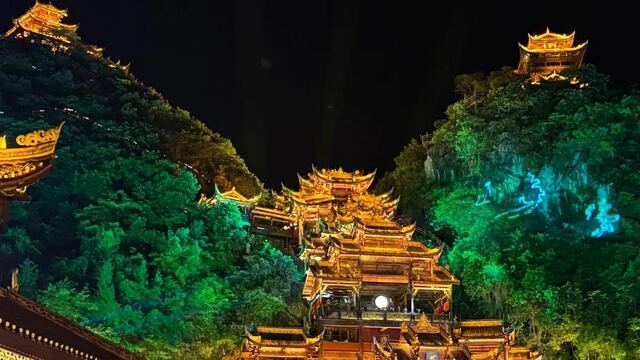
Chengdu & Chongqing 8 Days · A Journey of Ethnicity and Culture
5-10 Days
More Guides
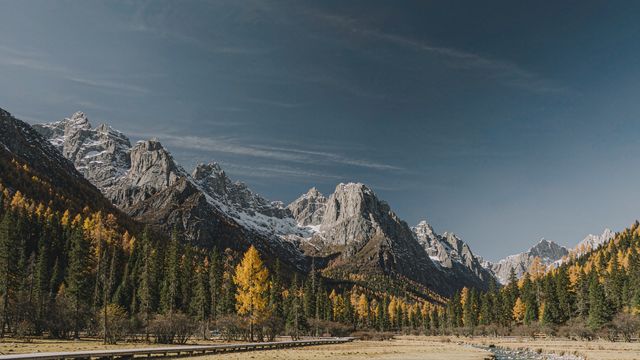
Siguniang's Three Valleys: Shuangqiao, Changping or Haizi — Which One Fits You
One valley is a bus ride past snow peaks, one a gentle forest walk, one a horse trail into empty meadows. Tickets, hours and fitness demands compared.
11/07/2026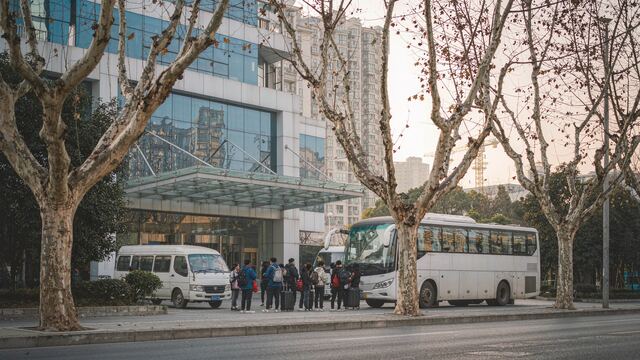
How Big Can a China Tour Group Be: Seat Limits, Guide Ratios and Three Thresholds
Group size is the smallest of three ceilings: seats, guide attention, site capacity. Four bands, cost steps and the 8, 16 and 24 guest thresholds.
10/22/2026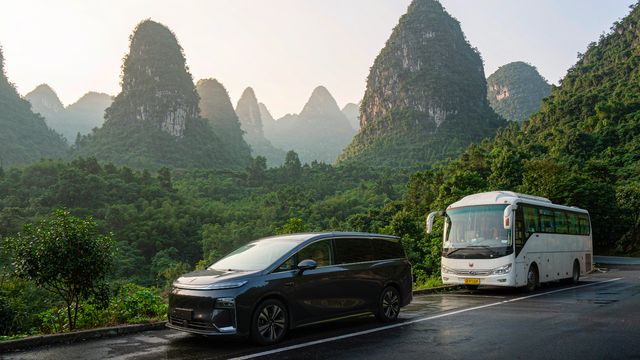
Private, Group or Budget Tour: What the Price Difference Really Buys
The same route can differ by more than double. Four measurable cost drivers, three tour formats, and eight questions to ask before booking.
10/22/2026