
Sanxingdui Museum 2026: Ticketing, Three Halls and the Objects That Matter
Tickets are 72 yuan, released at 20:00 five days ahead, none sold on site. Under-18s enter free but still need a bookin…
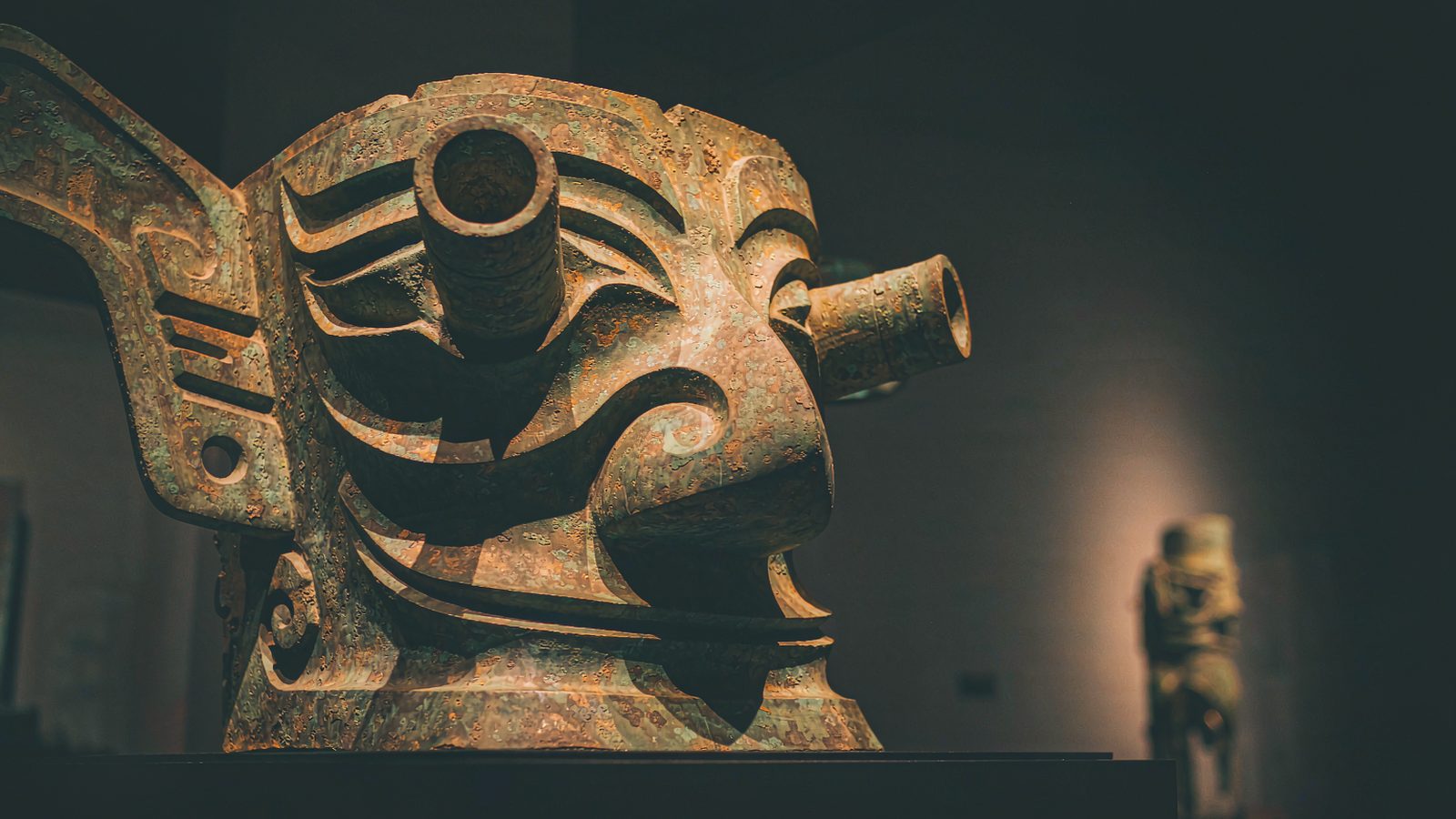
Tickets are 72 yuan, released at 20:00 five days ahead, none sold on site. Under-18s enter free but still need a booking. The right order for the three halls, what the star objects really are, and nine mistakes to avoid.
The hard part of Sanxingdui is not the walking and not the labels. It is the ticket. This is one of the most difficult museums in China to get into: nothing is sold at the gate, tickets are released five days ahead at 20:00 in a single drop, and one ID can book once per day and twice per week. Plenty of visitors fly into Chengdu, open the mini-program, and find the next three days completely greyed out.
So this is not another list of treasures. It starts with how to get a ticket and what to do when you cannot; then explains why the order of the three halls cannot be reversed; and finally unpacks the numbers that get repeated most often but explained least - a tree of roughly 3.96 metres, a figure of 2.62 metres, a 72 yuan ticket and a 0 yuan minor ticket.
Everything below reflects the rules in force on 12 November 2026. The ticketing policy changed on 4 November, and a great deal of what is online still describes the situation three years ago.
1. The ticket is the only real barrier
One official channel
The museum's official WeChat account and its mini-program, both named Sanxingdui Museum. The museum states plainly that it has authorised no third party to sell admission or guiding tickets. The "ticket plus guide plus AI photo" packages on Ctrip and Tongcheng do include a real ticket, but that ticket comes from the official channel - what you are paying extra for is service and queue handling, not access. Do not assume a package lets you skip the release time.
Release schedule and limits
- Tickets are released daily at 20:00, covering the date five days ahead. Day tickets and extended-hours tickets drop together.
- Per ID: one booking per day, maximum two per week.
- Each ticket permits one entry only. Leave the building and you cannot re-enter.
- No admission tickets are sold on site. The visitor centre counter handles only park-only tickets, which exclude the exhibition halls, and statutory concession tickets.
- Entry is by original physical ID card. A phone screenshot usually will not work.
The weekly cap catches people out. Some visitors book a safe date first, planning to "try again for a better slot" - and burn their second allowance, leaving them unable to book the day they actually wanted. Decide the date, be online at 20:00, book once, and do not experiment.
In practice, weekdays often still have availability three to five days out. Weekends, public holidays and school holidays sell out on release. November is shoulder season, but the summer extended-hours programme has only recently ended, so keep to the five-day rhythm.
Prices and free entry (from 4 November 2026)
- Standard ticket, 72 yuan: age 18 to under 60.
- Minor ticket, 0 yuan: Chinese citizens under 18. This took effect on 4 November and is a long-term policy, not a promotion - but the free ticket still requires a booking. It is not walk-in entry.
- Student ticket, 36 yuan: Chinese students aged 18 and above enrolled in full-time programmes at undergraduate level or below, excluding adult education, in-service and online programmes. Student card required at the gate.
- Veterans concession, 65 yuan: original veterans certificate required.
- Free entry: Chinese citizens aged 60 and above (ID card, direct gate entry), children under 6 or 1.3 metres and under, disabled visitors (blind and severely disabled visitors may bring one carer), serving and disabled military personnel, families of martyrs and fallen servicemen, and firefighters and rescue workers.
One rule causes the most trouble for families: children under 14 must be accompanied by a guardian, and one guardian may bring at most three. The guardian must book their own ticket in advance and pass the gate first - only then does the free minor ticket in the same order activate. Get the sequence wrong and the child is stopped at the turnstile while the parent steps out of line to fix it, with a queue behind them.
For foreign visitors travelling on a passport: book using the passport details on the official channel, and bring the physical passport for manual verification at the gate. If the ID-type field does not offer a passport option, do not try to solve it at the entrance - confirm with your ground handler or the museum the day before. Making a group wait while one person fills in a form is never a good start.
2. Three halls, and the order matters
The new building opened in July 2023: 54,400 square metres of floor area and more than 1,500 objects on display, roughly 600 of them excavated from the pits found after 2020 and shown publicly for the first time. The route through the three floors is fixed.
Level 1 - Century of Pursuit (30-40 minutes)
This hall is about archaeology itself: the jade and stone pieces turned up by a farmer digging an irrigation ditch at Yanjia Courtyard in 1929, the two sacrificial pits found in 1986, and the six new pits excavated between 2020 and 2022. It reads like background. It is actually the coordinate system for everything else - dates, functions, and why so much of this material was deliberately broken, burned and buried.
Level 1 - The Flourishing Capital (60-75 minutes)
The Shu kingdom's capital, its craft workshops and its social structure. The great bronze standing figure, the gold staff and the gold masks are all here. This hall answers a question the objects themselves cannot: who organised all of this? Somebody on the Chengdu Plain three thousand years ago could secure copper from distant sources and keep a corps of specialist bronze casters fed.
Level 2 - Heaven, Earth, Man and Gods (60 minutes, the climax)
Belief and sacrifice. The bronze tree, the protruding-eye mask and the sun-wheel disc. This hall answers what they believed. If you have only an hour, spend it here. If you want to understand rather than photograph, save it for last.
Going in reverse - straight up to level 2 on entry - is right in exactly one case: you are through the door at opening time and you want empty frames. After about 10:30 the tree and the standing figure are effectively unphotographable, because the tour groups arrive and the glass fills with heads and phones. If this is your only visit and you want to make sense of the place, follow the sequence. Seeing the tree before the archaeology is reading the conclusion before the argument; you leave remembering only that it was big and strange.
A realistic time budget is three to four hours: 60 to 75 minutes for each of the two ground-floor halls, 60 on level 2, and an hour left for the temporary exhibition downstairs, the shop and a rest. You will comfortably walk more than fifteen thousand steps. Wear flat shoes.
3. The star objects, and why each one matters
Bronze tree, about 3.96 metres
Among the tallest bronze vessels known from the Shang period. Three tiers, three branches on each, nine branches in total, nine birds perched at the tips, and a dragon sliding down the trunk. It was cast in sections and fitted together - there was no welding equipment three thousand years ago, only piece moulds, core supports and mortise joints. Look at two things: whether the curves of the branches match (they do, which means standardised moulds and a fixed sequence of work), and the joint between trunk and base, where you can still see how it was assembled.
Bronze standing figure, 2.62 metres, about 180 kilograms
Cast hollow in sections - figure, base and headdress made separately and combined. The most compelling detail is the ring-shaped hands: the grip is empty, and what it once held is still undecided. Ivory, a staff, or some organic object long since decayed. Do not believe any guide who states the answer with total certainty. This remains an open question in the literature.
Bronze mask with protruding eyes, about 1.32 metres wide
The eyeballs project forward as cylinders and the ears flare out to both sides. The Chinese term for this feature comes from a chronicle describing the Shu king Can Cong, but equating the mask with a specific king is later inference, not established fact. Notice the thinness of the casting and the inner wall: keeping a piece this thin from warping is a harder technical achievement than the striking shape itself.
Gold staff, about 1.42 metres
A sheet of gold wrapped around a wooden core that has since rotted away, leaving only the gold. The surface carries fish, birds, human heads and arrows - a continuous narrative scene rather than ornament. It is among the earliest objects found in China in which a gold staff functions as an emblem of power. That fact matters more than the metal.
Also worth your time
The gold mask that was attached to the surface of a bronze head, evidence of a ritual of gilding divine images; the bronze sun wheel with five spokes, repeatedly mistaken for a steering wheel; and the pottery pig that visitors have nicknamed after an angry bird. The pig sits in the Flourishing Capital hall on level 1 and is the single most photographed object in the building - and the one that says most about daily life in ancient Shu.
4. Guides: three options, three price points
- Audio guide: roughly 20 to 33 yuan plus a 200 yuan deposit; the English version is about 30 yuan with a passport or 200 yuan deposit. Freedom and replay, but it tells you what a thing is, not why it exists. Good for a second visit or a photography-focused one.
- Shared human guide: about 30 yuan per person, groups of 20 to 30 formed on the spot at the desk on the right after entry. Go early; slots fill. Best value by a wide margin.
- Private small group: 1 to 10 people, about 400 yuan for a 90-minute session, or 40 to 80 yuan per head once shared. Choose this with children, or if you want to ask questions and set your own pace.
- Free audio tour in the official account: download it at the hotel. Inside the halls the mobile signal is poor and pages often stall.
Is a guide worth it? If this is your only visit, yes. The objects are so far outside normal expectations that without explanation you leave remembering only that the eyes bulged and the tree was tall. But you do not need the most expensive option: a shared guide already delivers enough to connect the logic of the three halls.
5. The temporary exhibition: under a month left
"Casting the Past, Forging the Present - The Molten Copper Art of Zhu Bingren", 17 July to 6 December 2026, in the temporary gallery on the basement level of Hall One. Nineteen objects from museum collections meet 116 molten-copper works across 1,500 square metres, arranged in four sections: molten rebirth, molten wonderland, living forms, and an imagined Sanxingdui.
Two pieces justify the detour. One is a bronze basin of the late Spring and Autumn period excavated at Suizhou, its surface still carrying the wax-flow traces left by lost-wax casting - the most direct physical evidence of how molten bronze was made to flow into shape, set in the same display logic as contemporary molten copper. The other is Zhu Bingren's own tribute, a monumental protruding-eye mask that is half ancient bronze and half free-flowing molten copper: half the solemnity of ancient Shu, half the shape copper takes when it is allowed to run.
A detail worth knowing: the bronze curtain wall on the new building's facade, the so-called Eye of Ancient Shu, with plates twisted up to 180 degrees and no two pieces identical, was made by Zhu Bingren's team. Walk out of the exhibition, turn round and look at the wall again - it reads differently.
Note: the Yungang Grottoes exhibition closed on 31 October. Do not go looking for it on the strength of older guides.
6. Conservation studio and the archaeological park: another 60 to 90 minutes
The conservation studio (Hall Three) opens 09:00 to 17:00 and does not join the extended-hours programme during school holidays and public holidays. It is a glazed, open workshop: on weekdays between 9:30 and 11:30, and 14:00 and 16:00, you can watch conservators actually working; at weekends it is mostly finished pieces on display. Ten minutes is enough, but for children it is worth far more than another lap of the main halls.
The archaeological park: the excavation sites of pits 1 to 8 are not open. What you can see are surface remains such as the city wall and the Moon Bay platform. It is about two kilometres from the museum, served by a free shuttle roughly every 15 minutes. Allow 60 to 90 minutes.
The old bronze hall is closed for renovation. Several older guides still recommend it; you will find hoarding.
7. Getting there: Sanxingdui station beats Guanghan North
- Chengdu East to Sanxingdui station (Chuanqing railway): 18 minutes at best, 25 yuan second class, 41 yuan first class; then 8 to 10 minutes by taxi.
- Chengdu East to Guanghan North (Xicheng high-speed line): 18 to 24 minutes, 18 to 20 yuan second class; then 10 to 15 minutes by taxi.
- Metro Line 3, Huagui Road station: shuttle to the museum 07:20 to 16:00, return 09:00 to 20:00.
- Tourist coach: from Chunxi Road IFS and Kuanzhai Alley, 25 yuan one way or 45 yuan return, 50 to 90 minutes, direct to the east gate.
- Self-drive: about an hour from Chengdu, 20 yuan for the day, underground passage to the main entrance.
The principle: Sanxingdui station has fewer trains but is closer; Guanghan North has frequent trains but adds five minutes in a taxi. For the 08:30 opening, take an early train to Sanxingdui station. If return tickets are sold out, Guanghan North is the practical fallback at 15 minutes by road - do not lock both directions to the same station.
8. Two itineraries you can copy
Half day, museum only, from Chengdu
07:00 depart Chengdu East; 07:20 Sanxingdui station; 07:35 taxi to the museum; 08:00 queue; 08:30 entry, book a guide at the desk on the right; two hours across the two ground-floor halls; one hour on level 2; 20 minutes in the conservation studio; 12:30 leave; lunch; 14:00 return.
Full day, adding the park and Guanghan town
As above, then 13:30 shuttle to the archaeological park; 15:00 back; 16:00 Fangu Park or the Luocheng city-wall site, both free; 17:30 dinner in Guanghan; 19:00 return. Fangu Park is a classical western-Sichuan garden with a Confucian temple, old city wall and ceremonial gate; the Luocheng site retains about 780 metres of Ming dynasty wall. Neither is spectacular, which is the point - after four hours of bronze, your head needs somewhere quiet to settle.
9. Eating
The museum restaurant is expensive and ordinary, and there is no alternative inside the grounds. About 420 metres away, diagonally across from the museum, Siheyuan serves Lianshan twice-cooked pork and potato-braised chicken in generous portions in a farmhouse courtyard - though in peak season it takes tour groups and the cooking can be pre-prepared. For a proper meal, give Guanghan town 40 minutes: twisted rabbit, Lianshan twice-cooked pork and fine wheat noodles are the local answers. If time is tight, eat at the museum and do not risk the train.
10. Nine mistakes people actually make
- Turning up to buy a ticket - there are none on site.
- Booking twice in one day as a hedge - the allowance is wasted and the real date becomes unavailable.
- Leaving at midday for lunch and expecting to come back - one entry only.
- Bringing a photocopy of an ID - the original is required and scanned at the gate.
- Heading straight to level 2 - unless photography is the whole point.
- Assuming it closes on Mondays - Sanxingdui does not; the only closure all year is New Year's Eve.
- Hunting for the Yungang Grottoes exhibition - it ended on 31 October.
- Hunting for the old bronze hall - closed for renovation.
- Booking a free child ticket and assuming the parent needs none - the guardian books separately and must pass the gate first.
One last judgement. Sanxingdui is not a photo stop; it is a civilisation that still needs explaining. Give it four hours, walk the ground floor in order, then go up, and what stays with you will not only be those protruding eyes but the fact that three thousand years ago a group of people pushed bronze casting about as far as it could go. Jadetour's western Sichuan and Chengdu itineraries usually place Sanxingdui on the first morning for exactly this reason: you get inside while the halls are still quiet. That placement is deliberate, not accidental.
(Ticketing and opening information verified as of 12 November 2026. Museum policies change often; check the official mini-program on the day. Visa and entry rules should be confirmed with the relevant embassy or consulate - Jadetour does not promise visa processing.)
Need help planning this trip?
Tell us your travel dates and group size — we reply within 24 hours.
WhatsApp +86 183 1705 8017 · WeChat 18317058017
Destinations in this guide

Related Tours

Sichuan & Chongqing 9 Days 8 Nights · Jiuzhaigou Grand Tour
5-10 Days

Mountains of Ba, Waters of Shu · Chengdu, Jiuzhaigou & Wulong 9 Days (Jiuzhaigou + Huanglong + Wulong Karst + Furong Cave + Wujiang Gallery + Mountain City Nights)
5-10 Days
Chengdu & Chongqing 8 Days · A Journey of Ethnicity and Culture
5-10 Days
More Guides

Huanglong Without the Suffering: Altitude, Cable Car, Five-Colour Pool (2026)
Admission 170 yuan in high season, cable car 80 up and 40 down, closed 16 December to 31 March. A four-hour plan: ride up, walk down, plus altitude advice and booking rules.
11/12/2026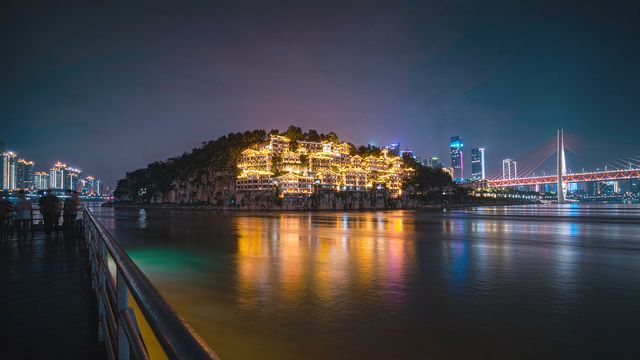
Chongqing Two Rivers Night Cruise: Which Pier, Which Ticket, Which Departure (2026)
November 2026: three piers with non-transferable tickets, night cruises from CNY 138, and Hongyadong lit from 18:30. Routes, departures, refunds and what winter actually feels like on deck.
11/11/2026
Jiaju Tibetan Village, Danba: Five Viewpoints and Where to Sleep (2026)
Tickets 50 yuan for three days, shuttle 35 yuan, private cars allowed in. Which of the five viewpoints to use at which hour, and why sleeping in the village decides whether you see the dawn mist.
11/11/2026