
Dujiangyan and Mount Qingcheng in One Day: What to Read at Fish Mouth, Front or Back Mountain (2026)
Dujiangyan is CNY 80, Qingcheng Front Mountain CNY 80, the Back Mountain CNY 20. Since 2026 both run real-name time slo…
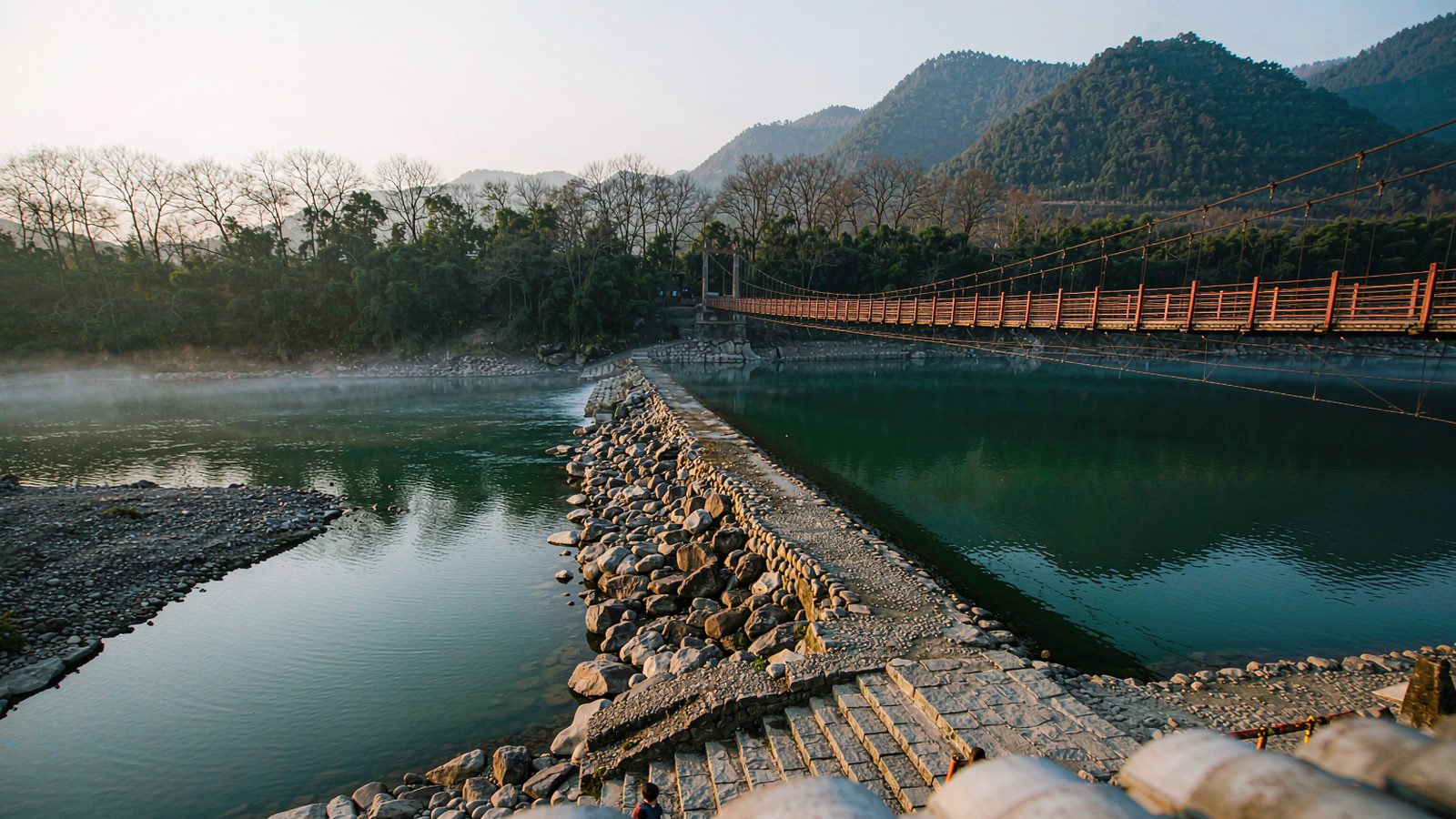
Dujiangyan is CNY 80, Qingcheng Front Mountain CNY 80, the Back Mountain CNY 20. Since 2026 both run real-name time slots. Enter at Gate 6 and walk downhill, with a working one-day timetable.
Pairing Dujiangyan with Mount Qingcheng in a single day is the most popular day trip out of Chengdu, and also the one most often ruined by bad scheduling. The two sites sit barely 15 kilometres apart: one is the oldest surviving irrigation system in the world, the other is a birthplace of Daoism. Water and mountain, engineering and religion. They complement each other perfectly.
The problem is arithmetic. Plenty of visitors assume that "two 5A-rated sites in one day" is good value, then spend the morning skimming Dujiangyan, reach the Qingcheng gate at 3:30 in the afternoon, queue forty minutes for the cable car, and turn around the moment they see the summit pavilion.
This guide reflects the rules in force in November 2026. Ticket prices, opening hours, reservation rules and train times were checked against official scenic-area notices and the current ticketing platforms. Anything that changes with the season is flagged with its date range. The short answer: yes, one day for both is realistic, but only if you subtract something. See the three core features at Dujiangyan, take the Front Mountain at Qingcheng, and give the Back Mountain a separate day of its own. Cram the Back Mountain in and both places become something you "passed through" rather than something you saw.
1. First decision: Front Mountain or Back Mountain
Mount Qingcheng is split into a Front Mountain and a Back Mountain. They sell separate tickets and have separate entrances, and a surprising number of visitors only discover at the gate that they bought the wrong one. The difference is not the number of sights. It is two entirely different kinds of day out.
| Front Mountain | Back Mountain | |
|---|---|---|
| Theme | Daoist temples, cultural axis | Streams, waterfalls, hiking |
| Ticket | CNY 80 (students CNY 40) | CNY 20 (students CNY 10) |
| Highlights | Jianfu Palace, Tianshi Cave, Shangqing Palace, Laojun Pavilion | Tai'an Old Town, Wulong Valley, Longyin Gorge walkway, Sandan mist springs, Cuiying Lake |
| Typical time | 3.5 to 5.5 hours | 3 to 8 hours, depending on the loop |
| Effort | Moderate; cable car plus walking | Demanding; endless wet stone steps |
| Best for | First visits, older travellers, tight schedules | Repeat visitors, keen walkers, water scenery |
| In rain | Workable, temples have covered galleries | Not advised; walkways flood and valleys close |
The one-line rule: first time in Chengdu, take the Front Mountain. Already seen it and want a full day in a stream valley, take the Back Mountain. The Front Mountain is reading; the Back Mountain is walking. The Front Mountain costs four times as much, but what you are paying for is the part of Qingcheng that earned its World Heritage listing: the temples, the ancient trees, the cliff inscriptions, and a stone stairway running from the gate all the way to the summit.
2. Dujiangyan: a 2,200-year-old project still on shift
The common mistake at Dujiangyan is to treat it as a ruin. It is genuinely ancient, built in 256 BC under Li Bing, the Qin governor of Shu Commandery; it joined the World Heritage list in 2000 and the World Heritage Irrigation Structures list in 2018. But it is also a working system under full load, irrigating more than 660,000 hectares across 41 counties and districts in eight cities around the Chengdu Plain. The water you watch at Fish Mouth is actually being divided. The current you see at Bottle-Neck Channel is actually regulating how much water enters Chengdu.
So what you are looking at is not age. It is cleverness. There is no dam anywhere in the system. Three components working together turn a violent river into a predictable canal.
Fish Mouth: the four-six split
The Min River bursts out of the mountains and is cut in two by a gravel levee shaped like the mouth of a fish. The outer river keeps the original channel and carries floods away. The inner river is the man-made headrace that feeds the plain. The split is not fixed; it shifts with the water level. In the dry season the inner river takes about sixty percent and the outer forty, guaranteeing irrigation supply. In flood season the inner river drops to roughly forty and the outer takes sixty, throwing the peak downstream. No machinery is involved. The curvature of the levee and the difference in riverbed height do all of it.
There is a second, subtler trick: sediment separation, traditionally described as "twenty percent of the silt into the inner river, eighty percent out". Surface water carries little sediment and is steered into the inner channel by the bend; heavier, sediment-laden water near the bed is thrown outward by centrifugal force. The water that reaches Chengdu is far cleaner than the raw Min River. Achieving that in the third century BC is engineering in the strict sense.
Flying Sand Weir: a spillway built deliberately low
Flying Sand Weir is an overflow weir about 240 metres wide, built intentionally low. It does two jobs. When the water rises above the safe level, the excess simply pours over the crest and returns to the outer river. At the same time the resulting vortex scours silt off the bed of the inner channel and flings it out, which is where the name comes from. Its low height is the design, not a compromise. Build it higher and the Chengdu Plain floods; build it lower and the inner river runs dry. That crest level has been recalibrated for two thousand years against a six-character maintenance rule: dig the channel deep, keep the weir low.
Bottle-Neck Channel: the final constriction
Bottle-Neck Channel is a gap cut by hand through Yulei Mountain, roughly 20 metres wide, shaped like the neck of a bottle. It is the only route by which the inner river reaches the Chengdu Plain. There is no gate. The fixed width limits the flow: too much and Chengdu drowns, too little and Chengdu parches. The gap was cut more than two thousand years ago without explosives, using fire and water: pile firewood against the rock, heat it, then drench it with cold water so the stone cracked and spalled off in layers.
From the viewing platform here you can take in three things at once: the isolated rock stack on the left bank, cut free from the mountain and topped by Fulong Temple; the fast water at your feet; and the direction of the Chengdu Plain beyond. If you are allowed to stand in only one spot all day, stand here.
| Item | Current in 2026 | Notes |
|---|---|---|
| Admission | CNY 80; students CNY 40 | Free under age 6 or under 1.3 m |
| Hours, high season (2 Mar - 31 Oct) | 08:00-18:00 | Ticket sales end 17:30; exit by 20:00 |
| Hours, low season (1 Nov - 1 Mar) | 08:00-17:30 | Ticket sales end 17:00; exit by 19:30 |
| Shuttle (Stele Pavilion - Fish Mouth) | CNY 10 one way, CNY 15 return | Winter hours roughly 09:00-17:30 |
| Buyun Corridor escalator | CNY 20 one way, CNY 40 return | Free under 1.3 m |
| Audio guide | About CNY 20 | Rent at the visitor centre, not from touts |
| Typical visit | 3 to 4 hours | Excludes Nanqiao night view and Guanxian old town |
Which gate you enter decides how tired you get
The scenic area has several entrances, and picking the wrong one adds an entire hill of climbing. The easiest is Gate 6, Qinyan Tower: you step in at mid-slope, look down over Fish Mouth and the whole Min River valley, then walk downhill the entire way through Two Kings Temple, the Anlan suspension bridge, Fish Mouth, Flying Sand Weir, Bottle-Neck Channel and Fulong Temple, exiting through Lidui Park with Nanqiao bridge right outside. All downhill, no backtracking.
Enter at Gate 1 instead, at Lidui Park west of Nanqiao, and you walk flat ground first and climb afterwards, arriving at Qinyan Tower with most of your energy gone and a return leg still ahead. Unless you plan to use the shuttle to skip a section, do not walk Gate 1 forwards. Gates 2 (West Street), 3 (Yuhuang Hill) and 4 (Li Bing Memorial Hall) are mainly for locals and re-entries.
Anlan Bridge and Two Kings Temple
Anlan Bridge spans the inner and outer rivers and is about 240 metres long. It is the link between Fish Mouth and Two Kings Temple. The deck is timber, it sways, and in wind it sways a lot; if you are uneasy with heights, hold the cables. It is nicknamed the Couple's Bridge after a Qing-dynasty couple who raised the funds to build it. Do not look at your phone mid-crossing; the gaps between planks look straight down at the river.
Two Kings Temple sits at the foot of Yulei Mountain and honours Li Bing and his son. Most of what stands today is a Qing reconstruction. The reason to come is the stone tablets of water-management maxims, where the six characters "dig deep, keep low" are carved over and over. That phrase is the operating manual for the whole system: dredge the bed down to the buried iron markers, and never raise the weir. Behind the temple a old post road climbs towards Yulei Pass, quiet and with good views.
Fulong Temple stands on the isolated rock stack. Inside is a stone statue of Li Bing carved in AD 168, the first year of the Jianning era of the Eastern Han. It was recovered from the outer riverbed in 1974, stands about 2.9 metres tall, hands folded in sleeves, and is the earliest known depiction of the man. It is worth hunting down deliberately; most tour groups walk straight past it without knowing what it is.
New in 2026: the Tiangong Kaiyan hall
A new indoor exhibition hall called Tiangong Kaiyan opened beside Fulong Temple on 17 October 2026. It runs daily from 10:00 to 17:00 and requires a separate ticket. There are three spaces: a main theatre with a twenty-minute animated scale model explaining the hydraulics, plus an interactive room and a shadow-puppet workshop. Its real value is explanation. If you are not hiring a guide but want to understand within half an hour why Flying Sand Weir expels silt, this is the most efficient place to learn it.
3. Qingcheng Front Mountain: cable car up, walk down
Mount Qingcheng is one of the birthplaces of Daoism. In AD 143, the second year of the Han'an era of the Eastern Han, Zhang Daoling established a retreat here and founded the Way of the Celestial Masters, which is why the mountain is counted as the Fifth Grotto-Heaven. In 2000 it was inscribed with Dujiangyan as a World Heritage site. The classical description, "Qingcheng is the world's quietest mountain", is not marketing; it is what your body registers. The stairway on the Front Mountain is flanked by cedars and ginkgos centuries old, their crowns closing overhead so that even at midsummer noon you walk in broken light.
One important 2026 change first: the Feixian Temple entrance has closed. The Front Mountain now has a single entrance, the main gate at Jianfu Palace square. Older guides still tell you to enter at Feixian Temple to save a section. That no longer works. Tell your driver "Qingcheng Mountain Front Mountain main gate" explicitly.
| Item | Current in 2026 | Notes |
|---|---|---|
| Admission | CNY 80; students and ages 6-18 CNY 40 | Free under age 6 or under 1.3 m |
| Hours, high season (1 Apr - 31 Oct) | 08:00-17:30 | Ticket sales end 17:00 |
| Hours, low season (1 Nov - 31 Mar) | 08:30-17:00 | Ticket sales end 16:30 |
| Shuttle (rail station - main gate) | CNY 20 one way, CNY 35 return | Half route from main car park CNY 10 |
| Yuecheng Lake ferry | CNY 5 one way | Full fare above 1.2 m; about two minutes |
| Cable car (Yuecheng Lake - Siwang Temple) | CNY 35 one way, CNY 60 return | Free under 1.2 m; 1.2-1.5 m CNY 20 / 30 |
| Typical visit | 3.5 hours easy route, 5.5 hours full loop | The official figure is 5.5 hours |
The easy route: up by cable car, back the same way
Main gate, Yuting Pavilion, Tianran Pavilion, Yuecheng Lake, cable car, Ciyun Pavilion, Shangqing Palace, Laojun Pavilion, then back down the same stairs. About 3.5 hours. This is the route for an afternoon arrival, or for anyone travelling with older relatives or small children. The cable car only reaches Siwang Temple at mid-mountain; from the upper station it is still about forty minutes of stone steps to Laojun Pavilion. The gradient is real but the surface is good.
Shangqing Palace was first built in the Jin dynasty; the present buildings are Qing. Inside are the Magu Pool and the Mandarin Duck Wells, and the gate plaque is in Chiang Kai-shek's calligraphy. The terrace in front is the first place on the Front Mountain with a long view; on a clear day you can see the edge of the Chengdu Plain.
Laojun Pavilion stands on Laoxiao Peak, the summit of the Front Mountain at about 1,260 metres. The six-storey pavilion was rebuilt in 1992 and houses a statue of the deified Laozi. The view is 360 degrees: the Chengdu Plain east, the Qionglai range west, and on exceptional days snow peaks to the northwest. Whether those forty minutes of stairs are worth it depends entirely on visibility. Check the visibility board at the gate on your way in; if it is hazy, skip the summit.
The full loop: adding Tianshi Cave
Main gate, Yuecheng Lake, cable car lower station, Siwang Temple, Ciyun Pavilion, Shangqing Palace, Laojun Pavilion, back to Shangqing Palace, Chaoyang Cave, Tianshi Cave, Quanzhen Temple, Tianran Picture, main gate, Jianfu Palace. About 5.5 hours. The extra two hours are mostly spent on the Tianshi Cave section.
Tianshi Cave is the Daoist heart of the mountain, originally called Changdao Temple and renamed for Zhang Daoling's preaching here. The halls are built against the cliff in three terraces: Three Clarities Hall, Yellow Emperor Hall, Celestial Master Hall. The treasures are the Tang-dynasty stone carvings of the Three August Ones in the main hall, and the ancient ginkgo in front of it, traditionally said to have been planted by Zhang Daoling himself. The age claims vary, but the tree is unquestionably old and takes several people to encircle. Beside the temple a natural cave gives the place its name; the opening is low and you duck to enter.
Below it, Chaoyang Cave is a small temple wedged into the cliff face, only a few rooms, with a view straight down the valley. It is one of the best viewpoints on the Front Mountain and almost nobody stops there. Further down, Zhibi Gorge is a vertical fissure about seventy metres deep, said to have been scored by Zhang Daoling throwing down his brush. Then Tianran Picture, a timber gateway framing the valley, which is the mountain's most photographed spot.
Jianfu Palace sits outside the main gate, founded in the Tang and rebuilt in the Qing, dedicated to Ningfeng Zhenren and Du Guangting. It is outside the ticketed area and free, and most visitors walk past it on the way out with nothing left in their legs. If you still have twenty minutes, go in and look at the 394-character couplet; it is a footnote to the mountain's literary history.
4. Qingcheng Back Mountain: a different mountain for CNY 20
The Back Mountain has an entirely different character. There is no temple axis, just walkway after walkway following stream valleys, and the theme is water: the deep pools of Wulong Valley, the falls of Feiquan Valley, the slot of Longyin Gorge, the still surface of Cuiying Lake. The ticket is only CNY 20, but what it really costs is time and knees.
| Item | Current in 2026 | Notes |
|---|---|---|
| Admission | CNY 20; students CNY 10 | Tai'an Old Town is the gateway and supply base |
| Hours | About 08:00-18:00 in summer; from 17:30 in winter | Confirm on the day |
| Jinli cable car | CNY 30 one way | Tai'an Old Town up to Youyi Village |
| Baiyun cable car | CNY 45 one way | Youyi Village to above Cuiying Lake |
| Cuiying Lake ferry | CNY 2-3 | No land route around it; the boat is mandatory |
| Shuttle from rail station | About CNY 16 one way | Departs from Qingchengshan station; watch the last service |
Three loops, chosen by fitness:
Easy (2-3 hours): Tai'an Old Town, Wulong Valley, Longyin Gorge walkway, Youyi Village, down by the Jinli cable car. Good for families and first visits.
Middle (3-5 hours): Tai'an Old Town, Feiquan Valley, Baiyun Ancient Village, down by the Baiyun cable car, Wulong Valley, back to town. The most complete scenery, with the water seen twice.
Full (5-8 hours): Tai'an Old Town, Wulong Valley, Longyin Gorge, Youyi Village, Baiyun Temple, Cuiying Lake, Feiquan Valley, back to town. Start early and carry water and food.
Four things you need to know. The Longyin Gorge walkway is bolted to a cliff and permanently wet; hold the rail and go slowly. Cuiying Lake has no land bypass, so the middle and full loops both require the CNY 3 wooden ferry. The descent hurts knees more than the climb; a knee support beats a trekking pole here. And do not enter in rain: the valleys rise fast and the park closes sections without notice.
Which brings back the main point: the Back Mountain and Dujiangyan cannot share a day. Even the shortest easy loop takes two to three hours, and with transfers and lunch in Tai'an Old Town it consumes five hours or more. Force it and you rush both, and may miss the last cable car.
5. Building the day: three versions
Start with geography. Dujiangyan's Lidui Park gate to Qingcheng's Front Mountain gate is about 15 kilometres, twenty to twenty-five minutes and CNY 30-40 by taxi. Each has its own commuter rail station, Lidui Park and Qingchengshan, one stop and five minutes apart. That proximity is what makes a single day viable.
| Time | Compact (both sites) | Comfortable (both sites) |
|---|---|---|
| 07:30 | Depart Xipu station by intercity train | Leave Chengdu 07:00, arrive Lidui Park 08:00 |
| 08:00 | Enter Gate 6, Qinyan Tower, for the overview | Enter Gate 6, walk slowly to Fish Mouth |
| 08:30-11:30 | Two Kings Temple, Anlan Bridge, Fish Mouth, Flying Sand Weir, Bottle-Neck | Same, using the shuttle for one leg |
| 11:30-12:30 | Lunch in Guanxian old town | Lunch by Nanqiao bridge, sit a while |
| 12:40 | Taxi to Qingcheng Front Mountain, about 25 min | 13:00 taxi to the Front Mountain |
| 13:10-16:40 | Cable car up, Shangqing Palace, Laojun Pavilion, walk down | Cable car up, Laojun Pavilion, Tianshi Cave, walk down |
| 17:00 | Exit, return from Qingchengshan station | 17:30 exit, return or stay at the foot of the mountain |
| 19:00 | - | Optional: back to Dujiangyan for the Nanqiao night lights |
The real difference between the two versions is lunch. The compact one squeezes it to sixty minutes; the comfortable one allows ninety and still reaches Tianshi Cave. Travelling with older relatives or children under six, take the compact version and stop pretending you will see everything.
With only half a day, my advice is blunt: choose Dujiangyan only. Its three core features sit within 1.5 kilometres and three hours covers them properly. The Front Mountain is a 5.5-hour linear route; cut it in half and you have not really been up the mountain. Half a day at Qingcheng is worse than none.
6. Getting there: the CNY 10 train beats driving
The best way from Chengdu is the Chengdu-Guanxian intercity line. Take metro line 2 or 6 to Xipu, then change in the same station to an S-prefixed train:
| Leg | Time | Fare | Notes |
|---|---|---|---|
| Xipu to Lidui Park | 25-30 minutes | CNY 10 | 5-10 minutes on foot to the Lidui gate |
| Xipu to Qingchengshan | About 30 minutes | CNY 10 | Then shuttle or bus 101 to the main gate |
| Lidui Park to Qingchengshan | About 5 minutes | About CNY 5 | The shortest link between the two sites |
After the 15 April 2026 timetable change the line runs 79 pairs a day, covering 06:00 to 23:00. Six previously holiday-only night services became permanent, including two on the Lidui Park branch: S5165 departs Xipu 20:47 and arrives 21:11; the return S5166 leaves 21:22 and reaches Xipu 21:45. Those two are your lifeline after the Nanqiao night lights. The ordinary last train is around 21:55; confirm on the day.
Driving from Chengdu takes about an hour on the Chengdu-Guanxian expressway. At Dujiangyan use car parks P2 or P3, or Nanqiaofang 1 and 2, all five to ten minutes on foot. At Qingcheng use the main car park, two minutes from the shuttle stop. At weekends the Qingcheng main car park fills by about 10:00 and you get redirected to P1, adding ten minutes. Tourist coaches also run from Chunxi Road and Kuanzhai Alley for CNY 29-58, about 1.5 hours, if you would rather not change trains.
7. Tickets and reservations: the 2026 rules
This section matters most, because the rules changed in 2026. From 4 February 2026 both scenic areas operate fully online, real-name, time-slotted reservations. Every visitor must book online, up to 15 days ahead.
The slots are: Dujiangyan 08:00-10:00, 10:00-12:00, 12:00-14:00 and 14:00-17:30; Qingcheng 08:00-10:00, 10:00-12:00, 12:00-14:00 and 14:00-17:00. Opening hours differ by season and the slots shift slightly with them. You must enter within your booked slot. Arriving early or late can mean being turned away.
Daily caps: Dujiangyan 48,000 with entry suspended at 43,000; Qingcheng 24,000 with entry suspended at 21,500. For Spring Festival, the May holiday and National Day, lock your slot three to five days ahead rather than buying on the day.
For international visitors this deserves its own paragraph, because it directly affects how you plan:
- Visitors from Hong Kong, China, Macao, China and Taiwan, China book with their travel-permit number and enter through the manual channel for document checks;
- Foreign nationals book with a passport or foreigner residence permit, also entering through the manual channel, or present documents at the on-site ticket window;
- Official channels are the WeChat accounts Qingchengshan Dujiangyan and Yueyou Dujiangyan, plus authorised platforms such as Meituan and Ctrip. The official WeChat now links to an inbound-visitor booking gateway settling in 41 currencies, with interfaces in English, Japanese, Korean, Thai and French;
- The foreign-visitor hotline is 96099, running 24/7 since 1 July 2026 with automated support in eight languages. General enquiries and rescue: 96526.
On free admission, sources differ, so here is the official wording: children under six or under 1.3 metres enter free, including children from Hong Kong, China, Macao, China, Taiwan, China and abroad, accompanied by an adult; Chinese nationals aged 60-64 pay half price on statutory public holidays and enter free without booking on other days by scanning their ID card; 65 and over free; active and retired military, disabled visitors, firefighters and police enter free after activating documents at the service window. Shanghai residents also enter free on production of an ID card, a long-standing pairing-assistance policy that remains in force.
Two charges that confuse people. Dujiang Night Weir is a separate night-tour product with its own ticket, not valid with the daytime ticket. And the Nanqiao "blue tears" light show is outside the scenic area and free; the official booking notice says explicitly that the blue-tears spot is not inside the park, precisely because people were buying tickets to look for it. The lights come on around sunset, measured at about 19:10 in early May 2026, earlier in autumn and winter, roughly 18:30-19:00. Check the day's notice rather than waiting for 19:30 because an old blog said so.
8. Eating and where to stay
Dujiangyan eating clusters in Guanxian old town and West Street, CNY 30-60 per person. What locals order: zhazha noodles, dry-tossed with adjustable heat; congcong rolls, a thin pancake wrapped around scallion and sauce; rabbit head; ginkgo stewed chicken; and yerba rice cakes. Restaurants inside the park are expensive and mediocre. Walk 800 metres into town and the saving pays for an extra dish for two. Qingcheng has its own repertoire: cured pork, ginkgo chicken, Dongtian rice wine and Qingcheng tribute tea. In Tai'an Old Town the cured pork hangs from every eaves and can be stir-fried to order.
Three areas to stay. Dujiangyan town is close to the park, good for the Nanqiao night view and decent value. The foot of Qingcheng is quiet, mostly resort hotels, convenient if you are going up again the next day. Tai'an Old Town is the base for Back Mountain hiking, plain but saves travel time. If you have an early flight or train the next morning, stay in Dujiangyan town; the station is ten minutes away.
9. Seven ways people get this wrong
One: squeezing in the Back Mountain. The most common error, and it makes both halves rushed. Give the Back Mountain its own day.
Two: walking Dujiangyan forwards from Gate 1. Flat first, climbing after, and a return leg at the end. Enter at Gate 6 and go downhill throughout.
Three: assuming you can buy on the day. Since 2026 it is online, real-name and time-slotted. On a holiday you may simply find nothing left. Book on the official WeChat account.
Four: hiring a tout at the gate. Dujiangyan's explanation depends on hydraulic principles, and getting them wrong ruins the visit. Hire at the visitor centre or take the CNY 20 audio guide.
Five: the wrong shoes. About five kilometres of stone paving at Dujiangyan, all stone steps at Qingcheng, treacherous when wet. Start from trainers. No leather soles, no sandals.
Six: arriving at Qingcheng at 3:30 pm. In low season ticket sales stop at 16:30 and the cable car closes at 17:00. After three o'clock you are limited to the area near the gate.
Seven: planning to eat on the mountain. The Front Mountain has a little food near Shangqing Palace, pricey and limited. Carry snacks and water; bottled water up there is CNY 5-8.
10. When to come
Late March to May is the best window. Dujiangyan's Qingming water-releasing festival falls in early April, with re-enacted rites and gate-opening ceremonies; Qingcheng's new leaves are out, humidity is comfortable and the steps are not slippery. June to August is Chengdu at its most oppressive, which makes Qingcheng the local escape: deep shade on the Front Mountain, cool valleys behind. It is also the rainy season, with common afternoon thunderstorms and possible Back Mountain closures. September to November brings the clearest air and longest views; from Laojun Pavilion you can trace the furthest ridgelines, making it the best season for photography. December to February is quietest, Qingcheng occasionally holds snow, the Front Mountain stays open, and the Back Mountain shortens its hours and closes some sections.
If I could pick only one window, it would be late October to early November: heat gone, rains over, ginkgos turning, a fraction of the National Day crowds, and Dujiangyan still on high-season prices without the scramble for slots.
One last honest note
Dujiangyan is a place that overwhelms you if you understand it and looks like a river if you do not. Qingcheng rewards slowness. Putting them in one day is really a test of whether you can accept not seeing everything. If you can, one day is exactly right. If you cannot, two days will not be enough either.
Travelling with older relatives or foreign friends, drop the pace one more notch: at Dujiangyan walk only from Qinyan Tower to Bottle-Neck Channel, and at Qingcheng turn back at Shangqing Palace. Two sights fewer buys you an unhurried lunch and a photograph you can actually sit down for. That trade is worth making.
If you would like this rebuilt around your flight times, group size and fitness, or strung into a two-day route with the Panda Valley, a Jadetour consultant can do it. We have worked this corridor for years and know which gate is quietest at which hour.
Need help planning this trip?
Tell us your travel dates and group size — we reply within 24 hours.
WhatsApp +86 183 1705 8017 · WeChat 18317058017
Destinations in this guide
Related Tours
Sichuan & Chongqing 9 Days 8 Nights · Jiuzhaigou Grand Tour
5-10 Days
Mountains of Ba, Waters of Shu · Chengdu, Jiuzhaigou & Wulong 9 Days (Jiuzhaigou + Huanglong + Wulong Karst + Furong Cave + Wujiang Gallery + Mountain City Nights)
5-10 Days
Chengdu & Chongqing 8 Days · A Journey of Ethnicity and Culture
5-10 Days
More Guides
Langzhong Ancient Town: Feng Shui, Three Kingdoms and the Birth of Chinese New Year (2026)
The streets are free around the clock; the 110-yuan pass lasts three days. Reading the feng shui from Jinping Hill, plus the Zhang Fei shrine, the exam hall and real rail times.
11/15/2026
Flower Lake and the First Bend of the Yellow River, Zoige: Best Months, Sunset Spots and a Two-Day Route (2026)
Flower Lake costs 105 yuan including the shuttle and closes for the season on 14 November. The First Bend ticket is 105 yuan with the uphill escalator; summit 3,610 m, sunset 18:06.
11/14/2026
Dazu Rock Carvings: Baodingshan or Beishan, Tickets and Whether You Need a Guide (2026)
November 2026 prices: Baodingshan CNY 115, Beishan CNY 70, combo CNY 140 with shuttle. How to read the 830-handed Guanyin, the 31-metre reclining Buddha and Cave 136.
11/14/2026