
Baiheliang Underwater Museum: 40 Metres Below the Yangtze, a 1,200-Year Water Ledger (2026)
Tickets cost 50 yuan, booking opens 1-7 days ahead, and the museum closes on Mondays. What the 91-metre escalator, 23 w…
Tickets cost 50 yuan, booking opens 1-7 days ahead, and the museum closes on Mondays. What the 91-metre escalator, 23 windows and the river's flood season really mean for a visit.
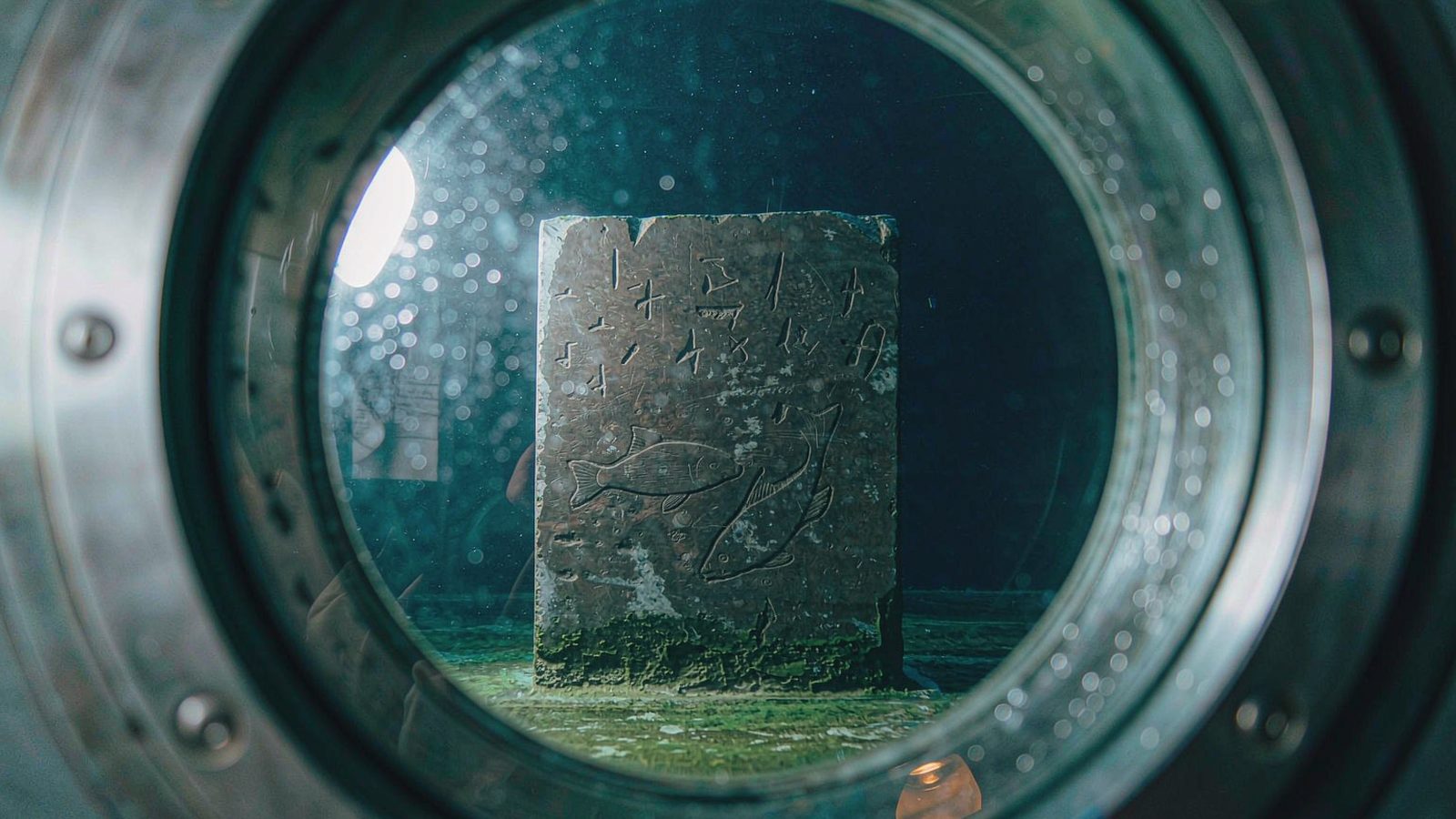
Some sights in Chongqing photograph badly and only make sense in person. The Baiheliang Underwater Museum in Fuling is the hardest of them to explain: it is not on a hill and not on the riverbank, but 40 metres beneath the surface of the Yangtze, in the middle of the river. You ride a 91-metre tunnel escalator down, walk through a horizontal corridor, and then stand in front of a row of portholes watching a slab of rock that has been underwater for twelve centuries. Cut into that rock are the low-water levels of 72 drought years since the Tang dynasty, plus the handwriting of more than 300 scholars.
Guests often ask whether a piece of stone justifies a special trip to Fuling. My answer is blunt: if you are interested in how people learned to live with a great river, yes; if you want a photo opportunity, no. The underwater section is dim, the glass reflects, and flash is banned throughout, so most pictures come out grey. But stand at those 23 windows for twenty minutes and actually read the inscriptions, and the place does something unusual to you. It makes clear that long before water gauges existed, a group of local officials and writers recorded the Yangtze's moods by carving them into stone, and kept it up for twelve hundred years.
Everything below was checked against the rules in force in November 2026: tickets, booking, opening hours, closed days, travel times, the visitor route and the six mistakes that cost people a trip.
1. What Baiheliang actually is
Baiheliang, or White Crane Ridge, is a natural sandstone reef in the middle of the Yangtze at Fuling, about 1,600 metres long and 10 to 15 metres wide, lying in the water like a submerged crocodile. In earlier centuries the surroundings were green enough that white cranes gathered here in autumn and winter, which is where the name comes from. What makes the reef unusual is its height: the crest sits almost exactly on the river's low-water line, so it only breaks the surface during the dry season, roughly December to March. Once the water rises, it disappears.
The people who lived here found an elegant solution. They carved carp into the rock and used the fishes' eyes as a water-level scale. When the river fell below the eyes, the year was a drought year. A local proverb says that when the stone fish emerge, a good harvest follows, because low water usually meant no destructive flood the following season. It sounds simple now, but it was a working observation system.
The reef carries 165 inscriptions, of which 108 have direct hydrological value. Together they record the low-water levels of 72 drought years from the Tang dynasty onward, roughly 30,000 characters in total, left by more than 300 authors across the Tang, Song, Yuan, Ming, Qing and modern periods. There are 18 stone carp, two Guanyin figures, one white crane and reliefs including "Cranes Calling at Baiheliang". The Northern Song contributed the most inscriptions, 98 of them, and the calligraphy spans seal, clerical, running, cursive and regular scripts, with the schools of Yan, Liu, Su and Huang all represented. Hence its second name: the underwater forest of steles.
The twelve hundred years are counted precisely. The earliest surviving inscription dates from around 763 AD, the first year of the Guangde era of the Tang. The last was carved on 15 February 1963 by the Fuling cultural centre. That is 1,200 years almost to the day, a continuity unmatched in any other inland waterway record, and the reason UNESCO calls it the best-preserved ancient hydrological station in the world.
Two numbers connect the ancient and the modern directly:
- 137.91 metres. The pair of carp recut in 1685, in the 24th year of the Kangxi reign, have eyes at 137.91 metres above sea level. That figure matches the zero point used by modern hydrological stations almost exactly.
- 1,100 years earlier. The Yangtze's first modern gauging station, the Hankou customs gauge in Wuhan, was installed in 1865. Baiheliang's records predate it by more than eleven centuries.
In 1974 a Chinese delegation presented a report on the Fuling stone fish at the international hydrology conference in Paris, and the scientific value became internationally recognised. Both the Gezhouba and Three Gorges projects later used these records when estimating dry-season flows, low-water volumes and navigation conditions, and the case for the 175-metre reservoir level drew on them too. A major engineering decision about a river was informed by a ledger carved into a rock.
2. How it was saved: the pressure-balanced container
Once the Three Gorges project began, Baiheliang faced an awkward fate. At a reservoir level of 175 metres it would sit permanently under more than forty metres of water and never surface again. From 1994 onward, experts proposed seven different protection schemes, among them burying it in silt, building a replica on shore, ringed cofferdams and an underwater museum. Arguing the options took nearly a decade.
The scheme finally adopted was the pressure-balanced container proposed by Ge Xiurun of the Chinese Academy of Engineering. The principle is not complicated. Build a large oval metal shell over the reef in situ, fill it with filtered Yangtze water, and use pumps and pipes to keep the pressure inside roughly equal to the pressure outside. Three things follow:
- The relic never leaves its setting. The inscriptions stay in their original position, in their original water. Nothing was cut out and moved, and nothing is a replica.
- The river's destructive energy is blocked. The shell stops wave erosion, silt deposition and ship impact; anti-collision piers and a no-navigation zone add a second layer.
- People can walk in. A ring corridor was built inside the shell along the reef, reachable without diving. That is the origin of the claim to be the world's first underwater archaeological site museum accessible without diving.
Construction began in February 2003 and the museum opened on 18 May 2009, at a cost of about 210 million yuan. The shell holds more than 4,500 tonnes of water, and the pump system runs continuously, filtering and recirculating to hold the pressure balance. Keeping the water clear is a permanent battle: after about three months the water loses transparency, algae bloom and a biofilm forms on the carvings. Professional divers go down periodically to vacuum the sediment with hoses and brush algae off the inscriptions and lamps with soft brushes. A single dive lasts no more than an hour, and the next one cannot start for 24 hours.
The lighting has been redesigned several times. Aluminium fittings leached material into the water and were replaced with stainless steel; warm-white lamps raised the water temperature and encouraged algae, so they became cool white. By turbidity, the water inside the shell is now cleaner than many drinking-water standards. Without that, you would see nothing at the windows.
3. The visitor route, step by step
The museum has two parts, the riverside exhibition hall and the underwater viewing section, on a site of 11,300 square metres with 8,433 square metres of floor space. The route is one-way, so you simply follow it.
1. Riverside exhibition hall (allow 30-40 minutes)
About 3,000 square metres in four sections: Water of Life, The Ruler of the Yangtze, The Underwater Forest of Steles, and Pearl of the Three Gorges. They cover how river civilisations measured water levels, the scientific and humanistic value of the inscriptions, and how the museum was built. Near the entrance is a large block carved with a stone carp, lifted out intact and weighing about 3.5 tonnes, where you can study the carving and the weathering up close. It is the only object you can inspect at arm's length, though touching is not allowed.
Do not skip this floor. The logic is practical: below water the light is low and the characters are dense. If you arrive not knowing where the twin carp are, what Huang Tingjian's seven characters look like, or why 108 hydrological inscriptions matter, you will stare at the windows for ten minutes and leave.
2. Tunnel escalator (2-3 minutes)
The escalator descends 91 metres in a tunnel, one of the longest of its kind in Asia, dropping about 40 metres vertically. It is enclosed, with light strips and projections of cranes on the walls. Children enjoy it; anyone uneasy in enclosed spaces may feel some pressure, but it lasts only two or three minutes.
3. Horizontal access corridor (3-5 minutes)
At the bottom, a roughly 146-metre tubular corridor runs with the Yangtze overhead. Only after the watertight door at the end do you enter the protected zone. The floor is occasionally wet, so grippy shoes help.
4. Ring viewing corridor (allow 20-30 minutes)
The core is a 77-metre U-shaped corridor along the northern slope of the reef, which tilts at 14.5 degrees and carries most of the inscriptions. 23 circular portholes, about half a metre across, line the inner wall, with lamps mounted underwater outside so the carved strokes stay legible.
Each window has a touchscreen giving the text, author and date for that section. Use it. Much of the calligraphy is cursive, and without the transcription you will not know what you are reading. You exit through a second watertight door on the downstream side and take the escalator back up.
Total time: 1.5 to 2 hours at a normal pace; 50 minutes if you skim; two and a half hours or more if you care about calligraphy or hydrology. Tour groups are usually given one hour, which is tight.
4. Tickets: 50 yuan, 25 yuan concession, and who enters free
Pricing in 2026 is refreshingly simple, with no seasonal split: 50 yuan full price, 25 yuan concession. The old "50 in low season, 60 in high season" figures are obsolete.
| Category | Who qualifies | Price | Proof required |
|---|---|---|---|
| Full ticket | Adults 18-59 without concession documents | 50 yuan | ID card or passport |
| Concession | Minors aged 6-18; full-time school, college and university students; seniors aged 60-64 | 25 yuan | ID, student card or household register |
| Free | Children under 6 or under 1.2 m; seniors 65 and over; serving and retired military personnel; disabled visitors (one carer free for severe disability); journalists, licensed guides, firefighters; families of martyrs; low-income households | 0 yuan | Original documents |
| Partner-region free entry | Visitors with Zhejiang household registration | 0 yuan | Zhejiang ID card |
Two warnings. Free entry does not mean no booking: everyone, including free categories, must reserve first, then exchange at the counter or scan through. And foreign visitors can book online with a passport, as can Hong Kong, Macao and Taiwan residents with their travel permits. There is no need to ask an agent to book on your behalf.
5. Booking: 1 to 7 days ahead, one official channel
Entry is by real-name reservation, and walk-up tickets are not guaranteed, particularly on public holidays when slots sell out. There are two entry points into the same system:
- The WeChat mini-program Chongqing China Three Gorges Museum Micro Site, then select Chongqing Baiheliang Underwater Museum, choose a date and pay.
- The WeChat official account Chongqing China Three Gorges Museum, then Services, Visit Reservation, Baiheliang, Individual Reservation.
Rules worth knowing:
- Window: 1 to 7 days ahead, including the same day.
- One WeChat account can book several people. Minors without an ID card are booked by their guardian, and the details must be exact.
- Different ticket types must be paid separately. A family mixing full and concession tickets cannot settle in one transaction.
- Special concession groups (disabled visitors, military, journalists, guides) can only buy standard tickets online; the rest must be handled at the counter with documents.
- Travel agencies can make group reservations, but every guest must carry original documents, and groups queue with everyone else on holidays.
Telephone: +86 23 7212 1211, +86 23 7287 6888 (24 hours), +86 23 7212 1206. Address: 388 Baiheliang Avenue, Fuling District, Chongqing.
6. Opening hours, and the flood-season caveat
Standard hours: Tuesday to Sunday, 09:00-17:00, with ticket sales and entry stopping at 16:30. Closed Mondays except on statutory public holidays.
Hours are extended on holidays, but the arrangement changes year to year, so check the official notice. In 2026, for example, the museum opened 09:00-17:00 through the Qingming holiday of 4-6 April; for Labour Day it opened 09:00-17:30 on 1 May, 08:30-17:30 from 2 to 4 May, and 09:00-17:00 on 5 May. Some years New Year's Day runs to 18:00. Do not memorise a holiday closing time; check the notice in the week before you travel.
Here is the point most guides omit: the underwater section can close temporarily when Yangtze flood conditions or water clarity fall below the operating standard. When that happens you can only see the riverside exhibition hall, and ticket handling follows that day's notice. This is not a rare event; it can happen during the summer flood season or after sustained heavy rain. So:
- Keep Baiheliang movable in your itinerary rather than making it the only thing you do that day.
- Call +86 23 7287 6888 the day before and ask whether the underwater section will open. That beats any guide online.
- If it is closed and you came specifically for it, ask at the counter about rebooking before you buy.
One more practical warning: queues at peak times can exceed an hour, a line the museum itself repeats in every holiday notice. 09:00 to 10:00 on a weekday is the calmest slot. After 14:00 the groups arrive and the line grows visibly.
7. Getting there: three options, and a two-fold difference in time
Baiheliang sits on the Yangtze in the north of Fuling, about 117 kilometres from central Chongqing.
| Method | Route | Time | Cost guide | Best for |
|---|---|---|---|---|
| Rail plus taxi (recommended) | Chongqing North to Fuling North by train, then taxi to the door | 30-50 min train plus 25-35 min taxi; about 1.5 hours door to door | 21-34 yuan second class plus about 40 yuan taxi (metered, no official quote) | Independent travellers, couples, older guests |
| Rail plus bus (cheapest) | Fuling North, then bus 119 to the Baiheliang stop | 30-50 min train plus about 68 min bus (21 stops); 1.5-2 hours total | 21-34 yuan plus 2 yuan | Budget travellers with time |
| Self-drive | Inner ring, Yuyi expressway, Changfu expressway, then the Fuling riverside road | About 1.5 hours | About 150-200 yuan in tolls and fuel | Three or more people, day trips, combining sights |
Details that matter:
- Fuling North is the high-speed station; Fuling station is the conventional one. They are in different places. Check the station name on your ticket. Fuling station is closer to the old town, about 20 yuan by taxi, but has fewer trains and takes over 1.5 hours from Chongqing.
- The distance from Fuling North looks short on a map, but the road loops through expressway and several tunnels. 18 kilometres and 25-35 minutes is normal; do not plan on ten minutes.
- Bus 119 really does stop at the gate for 2 yuan, but it is 21 stops and nearly 70 minutes, and the bus is hot in summer. With luggage or children, take a taxi.
- Trains are frequent, dozens a day, but evening and weekend services fill up. Buy the return leg in advance rather than hoping for a spare seat.
8. What to look for inside: five essentials
The underwater section is small, and a lap of the 23 windows takes fifteen minutes. The highlights have a clear order:
1. The twin carp recut in 1685
This is the most scientifically important single image on the reef. Two carp side by side, eyes at 137.91 metres, matching the modern hydrological zero point. What you see at the window is not just two fish but the origin mark of a ruler used for more than a thousand years.
2. Huang Tingjian's seven characters
Inscribed in 1100, the Gengchen year of the Yuanfu era, reading "The old man of Fu comes". Huang Tingjian, whose pen name was Fuling Old Man, passed through Fuling that year on his way home after a pardon. The characters are large, the horizontal strokes heavily weighted, and because of that they are the easiest to recognise and photograph through the glass and water.
3. The stone carp and the King of Carp
There are 18 carp on the reef, each different. The largest, at the western end, is about 3 metres long, 1.5 metres wide and half a metre thick, carved in the Jiaqing reign of the Qing. It is known as the King of Carp. The block at the entrance to the exhibition hall, lifted out whole, is your sample for studying how the carving was done.
4. The argument about harvests inside the 108 inscriptions
Not all of the inscriptions are praise. Several debate whether the fish emerging really predicts a good year. Huang Shou, a Ming prefect of Fuling, carved a sharp line to the effect that in good times the fish can stay submerged and the harvest is still good, while in bad times the fish can appear and the year is still disastrous. Zhang Huan and Liu Yongliang left a couplet arguing that if the fish emerge and people do not economise, a good year will not be good, and if the fish stay hidden and people do economise, a bad year need not be bad. Carved into stone and sunk in a river, these lines carry more weight than any caption.
5. The crane reliefs
Besides the carp there are two Guanyin figures, one white crane and reliefs such as Cranes Calling at Baiheliang. The crane is where the reef's name comes from and is the most recognisable image after the three characters themselves. They sit further along; use the touchscreen index to locate them.
9. Photography, comfort and etiquette
- No flash anywhere. Strong light accelerates algae growth and damages the carvings, and staff will stop you. Turn the flash off, raise the ISO and press the lens to the glass.
- Reflections are the real enemy. Rest the lens on the glass and shade the sides with a hand or a jacket. Light clothing will appear in the reflection and ruin the shot; dark clothing is safer.
- Do not touch or tap the glass. The portholes are pressure-resistant double glazing, tapping is a safety issue and you will be asked to leave.
- Temperature. The river bed is cool all year. Pleasant in summer, but bring an extra layer in winter. The corridor floor is sometimes wet; wear grippy shoes.
- Ears. A 40-metre descent can make ears feel blocked. Swallowing or opening the mouth clears it, and it settles within a couple of minutes.
- Claustrophobia. The corridor is tubular with the Yangtze overhead. If you or a companion are uneasy in enclosed spaces, look at the monitors and model in the exhibition hall first and decide there.
- Guiding. Scheduled talks run on normal days; paid guiding is usually unavailable during holiday peaks. For English guiding, call +86 23 7212 1211 in advance to confirm availability, and groups should bring their own interpreter.
10. What to combine with it
Fuling sits where the Wu River joins the Yangtze, and on clear days the meeting of the two waters is visible as a line between clear and muddy. Having travelled 1.5 hours, two hours in the museum and straight back is a waste. Three options:
| Place | Distance from Baiheliang | Ticket guide | Time needed | Why go |
|---|---|---|---|---|
| Project 816 | Baitao, about 25 km, 40 min by road | 65 yuan adult; 15 yuan student; 40 yuan for ages 60-64 | 09:00-16:30; allow 2-2.5 hours | A decommissioned underground nuclear plant from the Third Front era, the largest known artificial cave complex in the world; there is also a stage show |
| Wuling Mountain Great Rift Valley | About 45 km, 1 hour by road | Official package 145 yuan including shuttle, one-way electric cart and uphill cableway; online often 135 yuan | 08:30-16:00 high season, 09:00-15:30 low season; allow 4 hours for the loop | The Qingtian Gorge fissure and the Tianmen Cave suspension bridge, less than 2 metres wide at the narrowest |
| Fuling town | Walking distance | Free | 1-2 hours | The riverside promenade at the confluence, the evening painted boat (about 20:00-21:00), and the Fuling pickled mustard greens museum |
If Wulong is your goal, Fuling fits naturally: Fuling to Wulong is about 87 kilometres, roughly 1 hour 40 minutes by road, via the Shiyu expressway and the Xiacheng line. A common two-day plan is Chongqing to Fuling on day one, Baiheliang in the morning and Project 816 in the afternoon, overnight in Fuling, then Wulong on day two for the Three Natural Bridges or Xiannvshan, returning to Chongqing in the evening. The reverse works too, but Baiheliang is busier in the afternoon, so morning is better.
With only one day, my recommendation is Baiheliang plus Fuling town. Enter at 09:00, leave around 11:30, have a local lunch of shredded pork with pickled greens and Wu River fish, walk the riverside promenade in the afternoon to see the confluence, and take a train back around 16:00. It is unhurried, and a temporary closure of the underwater section will not wipe out the whole day.
11. Six mistakes people actually make
- Going on a Monday. The museum closes on Mondays except statutory holidays, and many visitors do not know museums keep a closed day. Scheduling it on a Monday wastes the trip.
- Turning up to buy tickets. Entry is by real-name reservation, and popular slots may have nothing left. Book first.
- Assuming free entry means no formalities. Over-65s, military personnel and disabled visitors are exempt from the ticket price, not from booking, and they still need original documents.
- Confusing Fuling North with Fuling station. They are more than ten kilometres apart; getting off at the wrong one costs 40 minutes.
- Not budgeting for the queue. Peak waits exceed an hour, as the museum's own notices say. Arriving for the first slot at 09:00 is the single best time-saving move.
- Not knowing the underwater section can close. In flood season or when clarity fails, only the exhibition hall opens, which is a bitter disappointment for a dedicated trip. Call the day before.
12. Who it suits, and who it does not
It suits anyone interested in hydrology, archaeology, calligraphy or engineering; families with children old enough to stay engaged, roughly upper primary and above; repeat visitors to Chongqing who want a day out of the city; and anyone routing through Fuling on the way to Wulong.
It does not suit people expecting a visual spectacle on the scale of an aquarium tunnel. There is no glass tube full of fish here, just one rock and a row of windows. It is also hard for visitors with limited mobility or a dislike of confined spaces, and it cannot be compressed into a half day: three hours of travel plus two hours inside is the floor.
One honest closing thought. Baiheliang's value is not that it is beautiful, but that it is still there. After the reservoir filled, this reef was destined to vanish from human view. A group of engineers spent a decade arguing and six years building to keep it, and its twelve hundred years of records, in place. The characters you see through the glass are on the same stone, in the same position, as the ones a traveller passing through Fuling saw eleven hundred years ago. No replica and no display board can reproduce that continuity.
If you decide to go, give it half a day in the itinerary, not one hour.
Need help planning this trip?
Tell us your travel dates and group size — we reply within 24 hours.
WhatsApp +86 183 1705 8017 · WeChat 18317058017
Destinations in this guide

Related Tours

More Guides
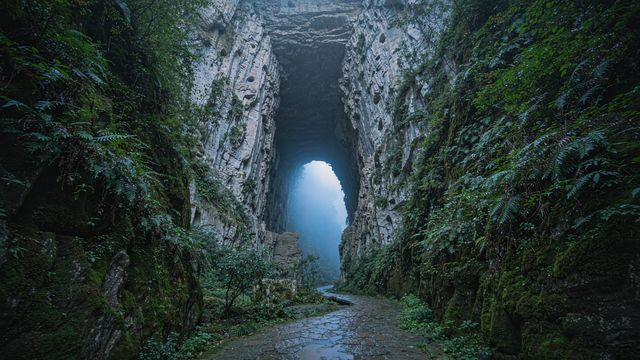
Wulong Three Natural Bridges: What the Ticket Covers, How Long the Walk Takes (2026)
A 40 yuan ticket will not get you to the valley floor: the 125 yuan pass adds the shuttle and the cliff lift. Bridge dimensions, a 2.5-hour route, rail links and six common mistakes.
11/17/2026
Three Days in Downtown Chongqing: Yuzhong, Nan'an and the Red Rock Line (2026)
Three days split by riverbank, not by attraction: Yuzhong Peninsula, the Nan'an hills, then the Red Rock sites in Shapingba, with hourly plans, fares, booking rules and a cost table.
11/16/2026
How to Order Chongqing Jianghu Food: Laziji, Maoxuewang and Shuizhuyu for Four (2026)
Is laziji priced by weight or by plate, how many people share one basin of maoxuewang, and why fish is weighed alive: a four-dish template with 2026 prices and heat requests.
11/16/2026