
Three Days Around Chongqing: Wulong, Dazu or Fuling, and How to Choose (2026)
Wulong, Dazu and Fuling all sit 1.5 to 2.5 hours from Chongqing, yet one is karst, one is Buddhist carving, one is hydr…
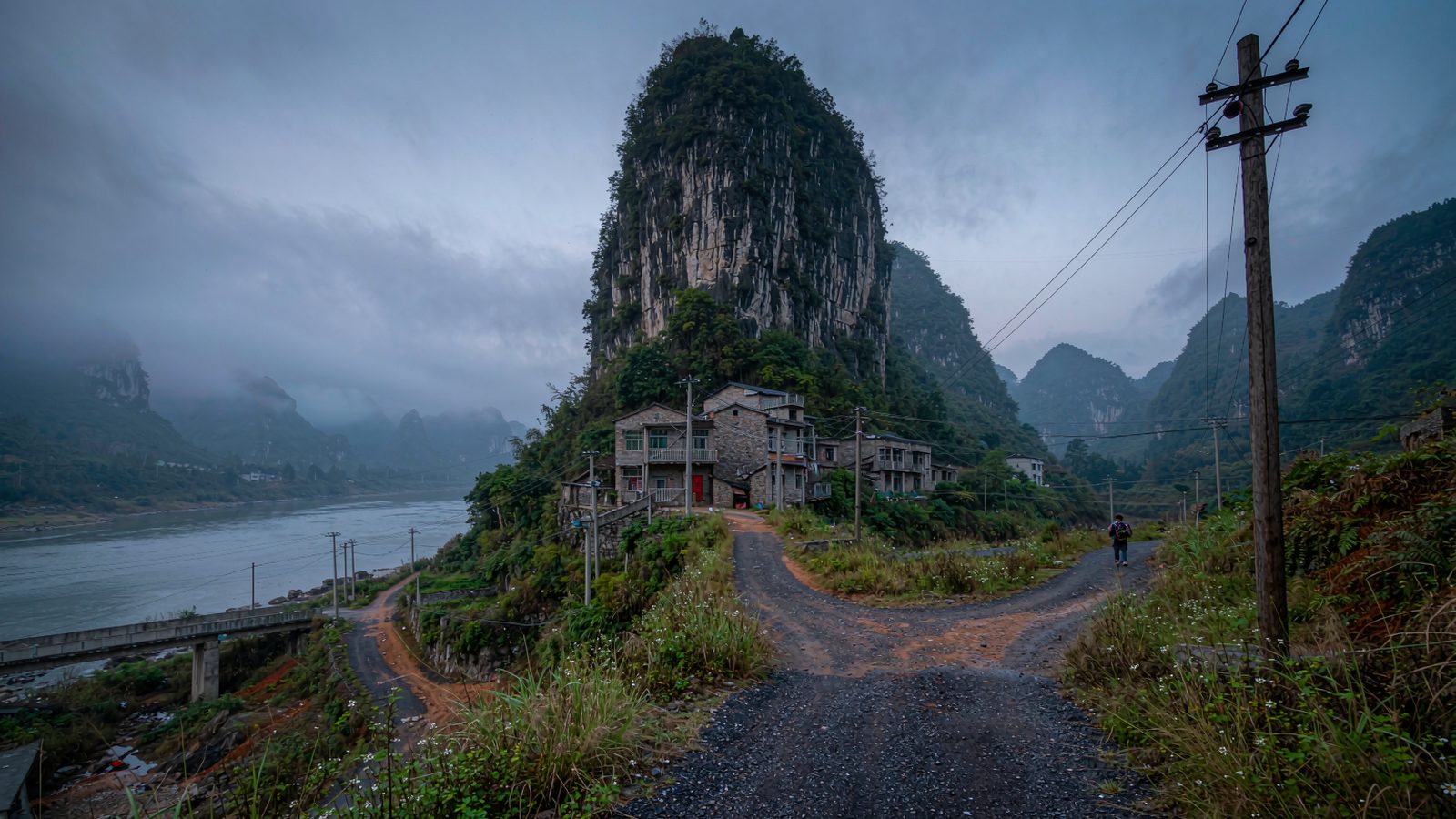
Wulong, Dazu and Fuling all sit 1.5 to 2.5 hours from Chongqing, yet one is karst, one is Buddhist carving, one is hydrology. Tickets, door-to-door times, stamina and four ways to spend three days.
Almost every third group that books a Chongqing itinerary asks the same question: we have two days in the city, and three days left — where should we go?
The three answers we give most often are Wulong, Dazu and Fuling. On a map they look interchangeable: roughly 120 to 180 kilometres out, with a high-speed train that takes half an hour to an hour. In practice they are three entirely different trips. Wulong goes down, into sinkholes and natural stone bridges collapsed out of the karst. Dazu goes sideways, along cliff faces carved by Song dynasty craftsmen over seventy years. Fuling goes under — forty metres beneath the Yangtze, and into a mountain that was hollowed out by hand.
This article does not repeat the single-destination guides. It answers one question: with three days, which of the three do you take, how do you combine them, and how do you actually count the hours. All prices and opening hours were checked in November 2026; seasonal changes move them.
1. The short answer
| Wulong | Dazu | Fuling | |
|---|---|---|---|
| What you see | Three Natural Bridges, Longshuixia Gorge, Fairy Mountain | Baodingshan and Beishan cliff carvings | Baiheliang underwater museum, 816 Underground Project, Wuling Mountain Great Rift |
| Door to door | About 2 hours (38 min by rail plus 40–60 min transfer) | About 2 hours (30–40 min by rail plus 55–65 min transfer) | About 1.5 hours (30–50 min by rail plus 25–35 min transfer) |
| Drive from the city | 170–180 km, 2–2.5 hours | About 120 km, 1.5 hours | About 117 km, 1.5 hours |
| Core tickets | Bridges 125 low season / 155 high; gorge 85 / 105 | Baodingshan 115, Beishan 70, combo 140 (120 low season) | Baiheliang 50; Project 816 65; rift combo 135 |
| Physical load | High. 2.5 km of steps downhill, no lift back up | Low to moderate. Level cliff paths | Moderate. Flat indoors, steps and cable car outdoors |
| Time needed | One day covers the bridges only; two days to do it properly | One full day for both sites | One day fits two of the three sites |
| In one line | Natural spectacle, paid for in legwork | Cultural depth, unlocked by a guide | Hardcore and under-visited |
If you only take one: first-time visitors travelling with parents or children should take Dazu; travellers with good knees who want images they cannot get anywhere else should take Wulong; repeat visitors tired of crowds should take Fuling.
2. These are not three versions of the same trip
Comparing them on "which is more fun" is the wrong question. They differ less in scenery than in what your body is doing for six hours.
Wulong is vertical. A shuttle takes you from the visitor centre to the entrance; the Tianlong spiral lift drops you about 80 metres to the valley floor; then a one-way trail runs 2.5 kilometres beneath three stone bridges more than 200 metres high. It is almost all descent and steps. The floor is three to five degrees cooler than outside and permanently damp. It spends your knees and ankles, and the final kilometre uphill to the exit is the hardest fifteen minutes of the day.
Dazu is horizontal. The Great Buddha Bend at Baodingshan is a horseshoe cliff about 500 metres long; you walk a paved path while 31 groups of carvings unfold in sequence, with almost no climbing. Beishan is another 300 metres of cliff with few steps. It spends attention and information instead. Without a guide you will stand in front of the Thousand-Hand Guanyin for three minutes and conclude it is a wall of stone; with one, three minutes is not enough.
Fuling goes downward. At Baiheliang you ride a 91-metre escalator tunnel 40 metres down, then walk a 146-metre corridor into the underwater protective shell. Project 816 is a walk into a hollowed mountain held at a constant sixteen or seventeen degrees. The Great Rift requires descending to the gorge floor and riding a cable car back out. It spends your expectations — none of the three delivers an instant postcard, and the first ten minutes can feel flat. The story assembles at the end.
So the honest way to choose is not to rank scenery but to ask: over these three days, do I want tired legs, a tired head, or something nobody I know has seen?
3. Wulong: one day covers the bridges, two days cover Wulong
The question is never whether Wulong is worth it. It is how much of it fits in a day. Start with hard numbers.
The Three Natural Bridges combo ticket is 125 yuan in low season (40 gate, 40 shuttle, 45 spiral lift) and 155 yuan from March 1 to October 31. Visitors over 65 get the gate fee waived but still pay the 85 yuan of transport — it is internal transport, not admission. The trail is one-way, takes 2.5 to 3 hours, and there is no lift back up from the valley floor; turning around means climbing back to the entrance.
Longshuixia Gorge is a separate site: 85 yuan low season, 105 high season, both including shuttle and lift, walking 1.5 to 2 hours. Fairy Mountain charges 50 yuan plus an optional 25 yuan mini-train. The Impression Wulong night show starts at 200 yuan for standard seating; winter schedules are reduced, so check the day's performance before promising it to anyone.
Now the time. Chongqing East to Wulong South is 35 to 38 minutes at best, 62 to 89 yuan second class. But Wulong South to the Fairy Mountain visitor centre is another 40 to 60 minutes by shuttle bus, 10 to 16 yuan. Door to gate is about two hours, not 38 minutes. Get this wrong and the whole day collapses.
Only two plans actually work:
- Day trip, bridges only. 07:30 train from Chongqing East, 09:10 at the visitor centre, 09:30 inside, 12:30 out, lunch in Fairy Mountain town, 14:30 back to Wulong South, in the city before 16:00. Unhurried, and the safest option with older travellers.
- Two days, one night. Arrive the first afternoon, sleep in Fairy Mountain town (mostly 150 to 300 yuan), see the show at dusk. Next morning take the 08:30 opening into the bridges, then the gorge or Fairy Mountain in the afternoon, and return to the city at night. This treats Wulong as a destination rather than a stopover.
Squeezing bridges and gorge into one day is technically possible, but puts more than five hours in the parks plus four hours of travel, and lands you back in Chongqing around eight or nine at night having rushed everything. Not recommended with children or anyone over sixty.
One more thing people miss: private cars cannot enter the core area. Everything parks at the Fairy Mountain visitor centre and transfers. Navigation that sends you to "Three Natural Bridges entrance" will usually be turned back, costing half an hour of mountain road.
4. Dazu: one day is exactly right, and the guide is the dividing line
Dazu is not a single site. It is the collective name for 141 cliff-carving sites across the district. Visitors realistically go to two: Baodingshan and Beishan, about ten kilometres apart, with completely different characters.
November 2026 prices: Baodingshan 115, Beishan 70, combo 140 (high season March 1 to November 30; low-season combo around 120, Baodingshan around 100 to 110). Bought separately the two cost 185, so the combo saves 45 yuan and has no real alternative. Allow three hours at Baodingshan and 1.5 to 2 at Beishan; fifteen minutes by car between them.
Three times matter: opens 08:30, last entry 16:10 to 16:30, closes 18:00. The museum runs 09:00 to 17:00 Tuesday to Sunday and is closed on Mondays except public holidays. Many people schedule Dazu for the afternoon, leave the city at two, arrive at four, and manage a third of the site. 16:10 is a hard line.
Transport is where this route bites. Chongqing West or Shapingba to Dazu South is 30 to 40 minutes for 28 to 32 yuan, which sounds close. But Dazu South sits in Youting town, about 43 kilometres from Baodingshan: 55 to 65 minutes by car, roughly 100 yuan by taxi. By bus you take route 204 or 206 into town and change to the tourism shuttle — two hours or more. "Thirty minutes to Dazu" is only half true.
The real dividing line is the guide. Official human guides start at 100 yuan, priced by group and route. Baodingshan is a single script: from entrance to exit, 31 groups of carvings follow Buddhist doctrine in order with almost no repeated subject, so walking it is like hearing one sustained sermon. Beishan accumulated over 250 years from different donors at different times, and what you read there is stylistic evolution. Neither reads itself.
A practical split: hire a human guide at Baodingshan, use the audio guide at Beishan. One needs storytelling, the other needs close looking. Same budget, different spending.
5. Fuling: three strong sites, two per day maximum
Fuling is the most underrated of the three and the easiest to mis-schedule, because its three sights sit far apart.
Baiheliang Underwater Museum is on the riverfront in Fuling itself. Tickets are 50 yuan, 25 concession, with no seasonal difference. The route runs: riverside exhibition hall (about 30 minutes), a 91-metre escalator tunnel descending 40 metres, a 146-metre horizontal corridor, then a 77-metre ring corridor with 23 viewing windows. Allow 1.5 to 2 hours. Tuesday to Sunday, 09:00 to 17:00, last entry 16:30, closed Mondays except public holidays. Reserve online one to seven days ahead; passports, Hong Kong and Macao permits and Taiwan permits are all accepted. The underwater section closes temporarily after floods or when visibility drops, leaving only the hall upstairs.
Project 816 is in Baitao, about 25 kilometres from the city: 65 yuan (40 for students and ages 60 to 64), open 09:00 to 16:30 from November 1 to March 31. It is a nuclear fuel plant built inside a hollowed mountain during the Third Front campaign, with more than twenty kilometres of tunnels; the visit takes about an hour. The temperature is constant, so bring a layer in summer and enjoy it in winter.
Wuling Mountain Great Rift is further out: 135 yuan for the package including the uphill cable car, one-way shuttle and transfer bus; last entry 15:30, allow 3.5 hours. It is a genuine fissure, at its narrowest barely one person wide, and the Qingtianxia section gives you a strip of sky overhead. Nothing like Dazu or Baiheliang — this one is pure physical effort.
So the correct one-day Fuling is Baiheliang plus Project 816, city plus Baitao, which fills a day comfortably. The Great Rift needs its own day, or the direct shuttle. Fuling North station runs a tourist shuttle at 10:00 daily to the rift (20 yuan); station to Project 816 is 15 yuan, 816 to the rift 5 yuan, with returns at 17:00 from the rift and 17:30 from 816. Departures are few — miss one and you are calling a taxi.
Worth knowing: Fuling to Wulong is only 87 kilometres, about 1 hour 40. Those two routes combine well and save at least two hours over returning to Chongqing first. Dazu lies west of the city, in a different direction; forcing it into the same loop wastes half a day in the car.
6. Four ways to spend the three days
Plan A — nature first (Wulong 2 days, city 1). Day 1 in the city: Jiefangbei, Hongyadong, the Yangtze cableway. Day 2 early train to Wulong, bridges, night in Fairy Mountain town. Day 3 gorge or Fairy Mountain in the morning, back to the city in the afternoon. For fit travellers who want the least urban side of Chongqing. No room for culture.
Plan B — culture first (Dazu 1, Fuling 1, city 1). Day 1 city. Day 2 Dazu, both sites, back to the city at night. Day 3 Fuling, Baiheliang plus 816, back at dusk. For second-time visitors or anyone interested in cave art and modern history. Lowest physical load, best choice with older parents.
Plan C — mixed (Wulong 1.5, Dazu 1, city 0.5). Day 1 half day in the city then drive to Wulong. Day 2 first entry at the bridges, down the mountain at noon, back to the city. Day 3 Dazu, both sites. For tight schedules that still want one nature and one culture day. The cost is that Day 2 afternoon is mostly road.
Plan D — with children or grandparents (Dazu 1, Fuling half, city 1.5). Day 1 city. Day 2 Dazu — gentle slopes, a museum, a digital cinema, works in rain. Day 3 Baiheliang in the morning, city in the afternoon. No day exceeds two hours of driving. Do not put Wulong in this plan: 2.5 kilometres of steps plus a kilometre uphill is unkind to older knees.
If you remember one sentence: Wulong costs stamina, Dazu costs a guide, Fuling costs attention. Wulong plus Dazu in three days works. Wulong plus the Great Rift is self-inflicted.
7. Transport: the fast part is the train, the slow part is the last forty kilometres
| Route | Rail leg | Station to site | Total |
|---|---|---|---|
| Wulong | Chongqing East to Wulong South, 35–38 min, 62–89 yuan | 40–60 min, shuttle 10–16 yuan | About 2 hours |
| Dazu | Chongqing West or Shapingba to Dazu South, 30–40 min, 28–32 yuan | 43 km, 55–65 min by car, about 100 yuan by taxi | About 2 hours |
| Fuling | Chongqing North to Fuling North, 30–50 min, 21–34 yuan | 18 km, 24–32 min by car; bus 119 takes about 70 min | About 1.5 hours |
In practice: rail suits one or two travellers, cheap but transfer-heavy, and hard with luggage or older companions. A hired car suits three or four, door to door with no changes, and often costs little more per person. Self-driving suits confident mountain drivers, but at Wulong the car still stops at the visitor centre, at Dazu you drive the ten kilometres between the two sites yourself, and Fuling's three sights point in three directions.
A concrete tip: for Dazu and Fuling, take the train out and a taxi back — taxi the station-to-site leg, and have the driver run you to the station at the end. It saves about two hours over all-bus routing. For Wulong, book a car or the direct coach, because afternoon departures from Wulong South thin out sharply and finishing at closing time can leave you one train.
8. Budget: tickets are fixed, cars are the variable
- Wulong, one day: 125 (low-season combo). Add 85 for the gorge, 50 plus 25 for Fairy Mountain and its train.
- Dazu, one day: 140 combo; add 22 for the Baodingshan shuttle; guide from 100 per group, not per person.
- Fuling, one day: 50 plus 65, so 115.
One core sight from each route totals about 380 to 465 yuan per person. With lodging (150 to 300 in Fairy Mountain town, 200 to 500 in Dazu or Fuling towns) and meals (40 to 80 per person per meal), the hard cost of three days lands around 1,000 to 1,400 yuan per person, excluding long-distance transport and the car.
The car is the big swing. A seven-seater for three days runs roughly 2,400 to 3,600 yuan on the open market, or 600 to 900 per person for four, including fuel and tolls; the driver's meals and lodging are usually billed separately. Quotes far below that range tend to be recovered at shopping stops or optional extras — the one line item we never advise trimming.
9. November reality: low-season prices, early darkness
November is the best value window for all three. Wulong and Dazu drop to low-season tickets, crowds thin, and Wulong's valley is at its best colour — deciduous trees turning, heavy moisture, strong contrast. Three things must be built into the plan.
It gets dark early. Mid-November sunset in Chongqing is around 18:00, and mountain light goes sooner. Wulong stops entry at 16:30, so arriving after 15:30 is wasted; Dazu stops at 16:10; Baiheliang stops at 16:30. Put those three numbers in the itinerary and they will do more work than any guidebook.
Mountain weather turns fast. Wulong closes sections after rain or snow; call the scenic area on the day (400-023-5666). The rift gets slippery and its cable car can stop. Baiheliang's underwater section closes after floods or when visibility is poor, leaving only the hall — and the booking page will not tell you in advance.
Have a rain plan. Dazu is the most rain-proof: museum plus digital cinema. Project 816 is entirely indoors. Wulong is the worst — wet stone plus seepage, proper grip is mandatory. If the forecast is steady rain for your three days, swapping Wulong for Dazu or Fuling is the smart move.
10. Six mistakes we see every week
- "We can do all three in three days." Each is two hours each way plus five hours on site. All three means three days entirely in transit, always against a last-entry deadline.
- "The train takes 35 minutes to Wulong." It takes 35 minutes to Wulong South. The visitor centre is another 40 to 60. Door to gate is two hours.
- "We'll do Dazu in the afternoon." Last entry is 16:10. Leaving at two and arriving at four buys you a third of the site.
- "Fuling is on the way, half a day is enough." Baiheliang closes Mondays and its underwater section can close at short notice; Project 816 is 25 kilometres in another direction.
- "Wulong closes in winter." The bridges run all winter on an 08:30 to 16:30 schedule. It is darker and colder, not closed. Only weather closes sections.
- "Over 65 is free everywhere." At Wulong only the gate fee is waived; the 85 yuan of transport is not. At Dazu, waivers and half-price tickets are mostly handled at the window with original documents — buy full price online and claim the difference.
11. Four notes for international visitors
The obstacle on these routes is not language. It is matching your documents to the booking system.
Documents. If you booked with a passport, you enter through the manual verification lane and must carry the physical passport — not leave it in the car. Dazu and Baiheliang both accept passport, Hong Kong and Macao permits and Taiwan permits for booking, and so does Wulong, but manual checks are slower than ID card scans.
Payment. Ticket windows at all three accept foreign cards linked to mobile wallets. Small stalls in the Wulong valley floor and inside Project 816 may not. Carry three to five hundred yuan in cash.
Guides. English guiding at Dazu must be booked ahead and costs more than Chinese. English signage at Wulong and Fuling is less complete than at Dazu. Decide this before you travel, not at the gate.
Pace. Visitors from Europe and North America routinely underestimate the scale: 2.5 kilometres on the Wulong valley floor, 3.5 hours in the Great Rift, five hours across both Dazu sites. Explaining how long you will be walking is more useful than explaining how beautiful it is.
12. How we put these three together
Jadetour runs inbound itineraries across Chongqing and Sichuan, and these three routes are the set our guests most often swap between. Our order of judgement is: age and mobility first, then whether the group leans nature, culture or engineering, and only then budget — because the ticket difference across all three is under two hundred yuan, while stamina and guiding decide the experience.
In practice we do four things. We build the timetable backwards from your flight or train arrival and put the longest route on your strongest day. We lock reservations early — three to five days for Dazu, one to seven for Baiheliang, a day or more for Wulong on holidays. We count the last transfer leg explicitly instead of quoting only the rail time. And we match the guide to the site: a carving specialist at Dazu, someone who knows the valley route at Wulong.
If you are planning three days around Chongqing, send us your arrival date, group size and ages and we will return an itinerary with a working timetable. You can also start from our tailor-made trip page or contact us directly. For single destinations in depth, our Chongqing travel guides cover Dazu, Wulong and Baiheliang separately.
One last honest line: none of these three is the best route. Only the one that fits your three days. Choosing wrong will not ruin a trip, but it will put you in a car for two of the three days.
Need help planning this trip?
Tell us your travel dates and group size — we reply within 24 hours.
WhatsApp +86 183 1705 8017 · WeChat 18317058017
Destinations in this guide

Related Tours

More Guides
G318 Sichuan-Tibet Highway: Drive Yourself or Hire a Driver, and How Many Days to Lhasa
Chengdu to Lhasa is 2,140 km. Eight days is the limit, ten is the norm, fourteen lets you actually see it. What changed in 2026, and why foreign passports cannot self-drive into Tibet.
11/19/2026
Mugecuo Lake, Kangding: Is Half a Day Enough at 3,780 m?
Tickets 105 + shuttle 90 in high season, 75 in winter, real-name booking, 16,000 daily cap. Stop order, half-day vs full-day plans, altitude advice and transport.
11/18/2026
Xiling Snow Mountain: Cable Cars, Cloud Seas and Chengdu's Closest Ski Resort
110 km from Chengdu, from plain to 3,250 m in two hours. Ticket prices, ski season, three one-day routes, transport and where to stay.
11/18/2026