
Jiefangbei and Ciqikou in Half a Day: How to Link a Downtown Square with an Old River Town
Metro Line 1 takes 33 minutes, the Jialing ferry takes 60, and Ciqikou's lanes empty out before 10am. Here is the exact…
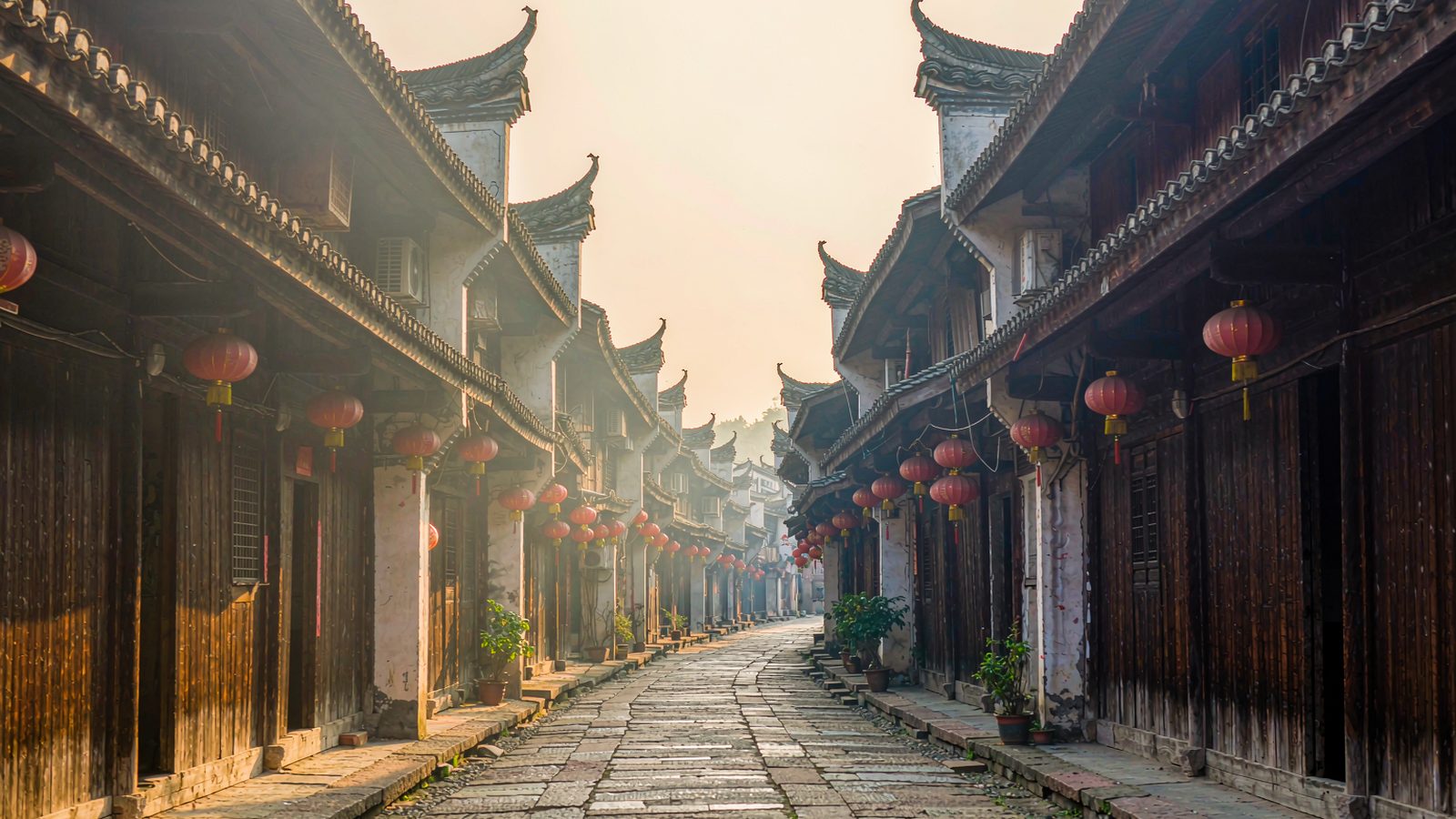
Metro Line 1 takes 33 minutes, the Jialing ferry takes 60, and Ciqikou's lanes empty out before 10am. Here is the exact timing, fares and walking order for a half-day between Chongqing's monument square and its old porcelain port.
Almost every first-time visitor to Chongqing puts Jiefangbei and Ciqikou on the same day. The two are always mentioned together: one is the city's modern centre, the other its old river port. Then the practical question arrives. They sit sixteen kilometres apart, with the Jialing River and the whole Yuzhong peninsula in between. Which comes first? Is half a day enough?
This guide skips the poetry and does the arithmetic: what time to leave, how many stops, how far you walk, when the crowds arrive, and when you have to be gone. All fares, ferry departures and opening hours were checked against November 2026 conditions. Schedules change with the season, so re-check before you travel.
1. The short answer: yes, but only the skeleton
Yes, and the route is genuinely smooth — provided you accept seeing the main structure of each place rather than going deep into either.
Give Jiefangbei 60 to 90 minutes: fifteen at the monument itself, one meal on Bayi Road, and one lane nearby. Give Ciqikou 2 to 2.5 hours: cross the main street quickly, wander the side lanes slowly, climb to Baolun Temple for the river view. Add 40 to 60 minutes of transit.
That totals 4 to 5 hours — exactly one "out in the morning, back after lunch" or "out after lunch, back before dark" block. Doing both properly — Shibati, Shancheng Lane, Daijiaxiang and Hongyadong at one end; the back streets, Shaci Lane, Baoshan Palace and Zhong Family Courtyard at the other — is a full day. Squeezing it into half produces a forced march, not a visit.
Everything below forms a minimum-backtracking skeleton. Extras are marked as optional so you can add them according to your legs and your clock.
2. How the two relate: one metro line, two different cities
Get the geography straight first, and the timings stop being confusing.
Jiefangbei sits on the spine of the Yuzhong peninsula — Chongqing's "upper city". It stands about 260 metres above sea level on the ridge between two rivers, ringed by towers of 200 metres and more. What you see from the monument is not an old town but a single point wrapped in glass curtain walls: the stele is old, everything around it is new, and that collision is itself the attraction.
Ciqikou lies on the west bank of the Jialing in Shapingba — the city's old wharf. It climbs a hillside, one main street rising from the river, flanked by timber stilt houses and bluestone paving. What it preserves is a line: walk uphill and the houses stack in layers, ending at Baolun Temple, where you turn around to a sea of tiled roofs and the river beyond.
The two are joined by Metro Line 1 with no interchange. That matters: few pairs of major Chongqing sights sit on a single line. Hongyadong and Ciqikou are also linked by water, and Liziba sits on the same Line 1, so these points combine freely.
In one sentence: Jiefangbei is something you look into; Ciqikou is something you walk up. One costs your eyes, the other your legs.
3. Jiefangbei: a 27.5-metre stele inside a wall of glass
Many visitors photograph it and move on, concluding it is "just a column". The monument carries far more information than it appears to. Learn three dates and you will see something other than stone.
It began not as a monument but as the "Spiritual Bastion", begun on 12 March 1940 and completed at the end of 1941 — a five-storey timber pyramid, 7 zhang 7 chi tall (a coded reference to 7 July 1937), painted black to hide it from Japanese bombers. Chongqing was then the wartime capital, enduring five and a half years of strategic bombing. The wooden tower existed to hold morale together.
After the victory, the foundation stone of a permanent memorial was laid on the same spot on 31 October 1946, and the Monument to the Victory of the War of Resistance was inaugurated on 10 October 1947. Built entirely in reinforced concrete, it is an octagonal column with a helmet-shaped crown, 27.5 metres tall, 2.55 metres on each side, with eight levels including the basement and a spiral stair to the top. The crown carries self-chiming clocks on all four faces, plus searchlights, a wind vane, an anemometer, a compass and an observation deck. At the time it was the tallest building in the city.
Chongqing was liberated on 30 November 1949. In 1950 Liu Bocheng, chairman of the Southwest Military and Political Committee, inscribed the new name: the People's Liberation Monument — the name it still carries. Strictly speaking, then, three eras are layered into one stele: a wartime symbol of resolve, a victory memorial, and a landmark of the new state. That is why it was listed as a nationally protected cultural relic in 2019.
The monument faces north-by-east, looking straight down Minzu Road. The commercial story runs on a separate timeline: in 1997, the year Chongqing became a municipality, western China's first pedestrian shopping street was built around the stele. In 2020 the street was designated one of the country's first national demonstration pedestrian streets. The square began at 24,400 square metres and reached 96,000 after a 2012 expansion; underground development goes 25 metres deep, with three metro lines interchanging beneath.
One detail worth knowing: in 2025 the Jiefangbei business district passed 100 billion yuan in both GDP and retail sales, the only "double hundred-billion" central business district in western China, generating roughly 2.9% of the municipality's GDP from less than 0.04% of its land. The towers you see from the stele are the physical form of that number.
4. Around Jiefangbei with only 60 minutes
When time is short, do not be greedy. Sort everything into must-see, if-there-is-time, and next-visit.
Must-see (about 20 minutes): circle the stele to read the inscriptions on each face and see the clocks at the crown, then walk to the north side and look back — that angle stacks the monument against the towers in one frame and is the easiest good photograph. The stele is open 24 hours, free, and needs no booking, because it stands in the middle of a pedestrian street with no wall and no gate.
If there is time (about 40 minutes): walk ten minutes south to Bayi Road food street, where hot-and-sour noodles, glutinous rice balls, crisped pork and grilled brains all sit on one block; 30 to 40 yuan per person gets you most of the way to full. Then head toward Jiaochangkou: Shibati traditional district is right by the metro station — free, open all day, shops and exhibition halls 10:00–22:00, night lighting 18:30–22:00. Its core is 398 old stone steps; from the main entrance down to the night-view terrace takes about forty minutes round trip. It was designated a national-level tourism and leisure district in March 2025.
Next visit: Hongyadong (free, 09:00–23:00, lighting changed to 18:30–23:00 from 17 October 2026), the Yangtze River Cableway (30 yuan one way, 50 return, under the government guidance price effective 1 January 2025), Huguang Guild Hall (32 yuan, 09:00–18:00, last entry 17:00), and the Shancheng Lane and Daijiaxiang cliff walks (both free). Any one of these deserves two hours of its own. Wedging them into half a day produces a tick-box visit.
Two warnings. Hongyadong has no fast track; anyone selling "skip the queue" access is running a scam. On weekends and public holidays it requires a free real-name booking through its official WeChat account, up to five days ahead. The cableway also sells out: tickets open at 07:45 on its official account and only two days ahead.
5. Getting to Ciqikou: three ways, and the time doubles
Sixteen kilometres apart in a straight line, but three genuinely different journeys.
Option one, Metro Line 1 (recommended for everyone). Walk from central Jiefangbei to Jiaochangkou station — about one kilometre, sixteen minutes. (You can also take Line 2 one stop from Linjiangmen and change, but the stairs eat the saving.) Board toward Bishan and ride 14 stops to Ciqikou station, about 33 minutes. From the exit it is roughly 400 metres and five minutes on foot to the main archway. Door to door: about 55 minutes, fare by distance, approximately 5 yuan for this stretch. It is punctual, immune to traffic and weather; the downside is a packed train at rush hour, so avoid it with large luggage.
Option two, taxi or ride-hailing. The navigation distance is about 18 kilometres, roughly 30 minutes and 35 to 50 yuan by day. Peak hours or weekend traffic toward Shapingba can double that. Best for groups of three or four, heavy bags, or travelling with elderly parents and small children. Note that Ciqikou's approach roads jam badly at weekends and holidays and parking is scarce — driving yourself often means forty minutes queueing to get in.
Option three, the Jialing ferry (most pleasant, least flexible). This route reopened when Ciqikou's wharf opened in February 2026, running from Hongyadong passenger wharf to Ciqikou Yinglongmen wharf: about 18 kilometres, roughly 60 minutes on the water, 30 yuan one way, children under 1.2 metres free (one per adult). The boat is double-decked — air-conditioned seating below, open deck above — and passes nine river bridges in sequence, including a view up at the Liziba monorail running through a building.
The catch is frequency. The schedule effective 17 November 2026: from Hongyadong at 10:00, 11:30, 13:00, 14:00, 15:00, 16:00 and 17:00; from Ciqikou at 10:00, 11:30, 12:30, 13:30, 14:30, 15:30 and 17:00. There is also a "sunset sailing" at 18:20 from Ciqikou to Hongyadong for 50 yuan, which catches daylight, sunset and the lit-up city in one hour. Buy through the Damei Chongqing WeChat account, the Zhoumozhijia mini-program, or the wharf ticket window; show the SMS code to board. No separate seat reservation is required.
The ferry's structural problem is that it swaps Jiefangbei for Hongyadong — Hongyadong wharf sits on the Jialing, a ten-minute uphill walk from the square. So the best ferry itinerary is: Jiefangbei in the morning, lunch at Hongyadong, the 13:00 boat to Ciqikou, the old town all afternoon, Metro Line 1 back at 17:00. You get river, city and old town in one day.
6. Ciqikou: free, but with an invisible timetable
The most common misunderstanding is "what time does it open". The answer: it has no opening time, because it is not an enclosed attraction.
Under the municipal culture and tourism commission's register of graded scenic areas published in January 2026, Ciqikou is an open-style area, accessible all day, with admission recorded as 0 yuan in both peak and off-peak seasons. It was graded a national 4A area in November 2006. It is a set of streets — no gate, no turnstile, no ticket. In normal times it also needs no booking; the real-name reservation system was a temporary measure from the pandemic period and has been abolished.
What actually shapes your visit is not opening hours but three invisible clocks:
- The shop clock: most stores and snack stalls open around 09:00 and wind down between 21:00 and 22:00. If eating is the point, be inside before 20:30.
- The crowd clock: before 10:00 the main street is walkable. After 10:30 tour groups arrive and the main street becomes a current you are carried by. Weekends and holidays have no quiet window at all.
- The light clock: the main street runs east–west, so 09:00 to 10:00 throws raking light across the bluestone and timber doors — the best hour for photographs. After the lanterns come on it is a different mood, but the busiest.
One holiday caveat: at high volumes Ciqikou switches to one-way flow and capacity limits, and entry and exit routes can change at short notice. Check the official "Chongqing Ciqikou" WeChat account the day before.
7. The route: escape the main street, then climb
Most people have a mediocre Ciqikou experience for one reason: they mistake the main street for Ciqikou.
Do it in four stages, two to two and a half hours in total.
Stage one, cross the main street fast (15 minutes). Enter at Jinrong Gate or the main archway and walk up Cizheng Street — do not stop. The twisted-dough shops, hotpot-base shops and souvenir stalls on both sides are the most expensive in town. Note where they are; buy on the way back.
Stage two, turn into the side lanes (40 minutes). This is the real Ciqikou. When you see signs for Hengjie, Jinbi Lane or Gaoshikan, turn in. The bluestone narrows, the visitors thin out, and what remains is old wooden doors, weathered walls, and residents sorting vegetables on their doorsteps. There is no "sight" here, but it is the only place you can photograph Ciqikou with nobody in it.
Stage three, climb to Baolun Temple (40 minutes). The temple occupies the highest point, its back to Baiyan Hill and its face to the Jialing. Open 07:30–18:00, the temple is free, and the bell and drum tower costs 5 yuan. Founded in the Xianping era of Emperor Zhenzong of Northern Song (998–1003), it is also called Longyin Temple after the Ming emperor Jianwen, who is said to have hidden here — which is why Ciqikou was once known as Longyin Town. After the wars at the end of the Ming only the Mahavira Hall survived, and the rear hall was bombed again during the war, so the hall you see is Ming-dynasty original work: mulberry-wood columns, joinery with no nails, and column bases that stay balanced with one convex and one concave. A mid-Qing Tathagata statue and a "life-release well" said to connect to the Jialing also survive. The steps are steep; heels are a mistake.
Stage four, down to the wharf (20 minutes). Descend the far side to Yinglongmen wharf, which is both the ferry boarding point and the best eye-level view of the town's stacked, climbing roofs. Next door, Shaci Lane is a newer cultural-retail block with coffee and a bookshop — a good place to wait for a boat.
Optional extras: Zhong Family Courtyard (a Qing-era eastern Sichuan quadrangle, 10 yuan), Baoshan Palace and Zhuanyun Tower (face-changing opera and long-spout tea pouring, 30 to 48 yuan with tea, performances around 11:00, 14:00 and 16:00), and "Chongqing 1949" (outside the old town on Jinbi Zheng Street; a 360-degree rotating auditorium, from 194 yuan, shows at 11:00, 14:00, 16:00 and 19:30, book ahead). Each takes an hour or more, so pick exactly one for a half day.
8. What to eat: don't choose the dough shop by queue length
Fried twisted dough — mahua — is Ciqikou's signature, but "the longest queue is the real one" is false. At least six shops in town call themselves the authentic Chen mahua, with near-identical names, signs and packaging. Some queues are real demand; others are herd behaviour. Choose by taste, not by queue.
The reliable method: buy a small bag first — most shops allow tasting — and check the crispness and whether the oil tastes fresh before committing. The going rate is around 15 yuan per jin (500 g). Salt-and-pepper and mala are the two flavours least likely to disappoint. Check the production date: freshly fried stock keeps for only a short time, so do not buy five bags to carry back to the hotel.
Also worth eating: old-town chicken giblets (pickled radish base, 40 to 60 yuan per person, what locals actually order), hand-pulled hot-and-sour noodles (street carts are cheaper than shops), pounded glutinous rice cake (rolled in soybean flour and brown sugar, eat it hot) and maoxuewang (the town's signature dish, one portion feeds two or three).
Skip: fruit cups, candied green plums, "internet-famous" milk tea, and gift-boxed "Chongqing specialities". These occupy most of the main street frontage, cost more and are not local food. Buy hotpot base in a city supermarket — it is at least 30% cheaper than in the scenic area.
9. Four traps to avoid
Trap one, "free tea tasting". Someone warmly invites you into a teahouse for "a free brew", then starts pressing loose-leaf tea at 200 to 800 yuan, and turns nasty if you decline. Unless the price is agreed first, refuse politely.
Trap two, "merit money" at Baolun Temple. A monk offers a free blessing and a bracelet, then asks for a "donation" of their choosing. If you wish to give, put it in the donation box yourself and never accept a specified amount.
Trap three, counterfeit Chen mahua. As above — six shops use the name. Look for a specific person's name (Chen Jianping and Chen Changyin are two different established brands), or simply buy by taste.
Trap four, souvenirs at the entrance. The first shop inside the gate is always the dearest. The same goods get cheaper the further in you go; side-lane shops run 20 to 30% below the main street.
Two safety notes: the bluestone is slippery and stepped — wear flat shoes with grip; and pickpockets work the densest stretch of the main street at weekends, so wear your bag in front and zip it.
10. Two half-day timetables (copy these)
Plan A: old town first, city second — best in summer, best if you burn easily, best if you have a flight or train later.
| Time | What | Notes |
|---|---|---|
| 07:40 | Leave Jiefangbei, walk to Jiaochangkou | 1 km, 16 min |
| 08:00 | Line 1, 14 stops to Ciqikou | 33 min, about 5 yuan |
| 08:40 | Enter, cross the main street | Thinnest crowds, best light |
| 09:00 | Side lanes and Jinbi Lane | 40 min, main photo stretch |
| 09:50 | Climb Baolun Temple | 07:30–18:00, free, tower 5 yuan |
| 10:40 | Down to Yinglongmen wharf, Shaci Lane | River view, rest |
| 11:20 | Chicken giblets or noodles for lunch | 40–60 yuan per person |
| 12:30 | Line 1 back to Jiaochangkou | Rest on the train |
| 13:30 | Jiefangbei, Bayi Road, Shibati | Stele 20 min, Shibati 40 min |
| 15:00 | Finish; add Hongyadong or the cableway if you like | Optional, no loss either way |
Plan B: old town in the afternoon, ferry home at dusk — best in spring and autumn, best for night photography, best when nothing is rushing you.
| Time | What | Notes |
|---|---|---|
| 09:30 | Jiefangbei and a late breakfast on Bayi Road | Stele 20 min, eat 40 min |
| 11:00 | Walk to Shibati | Free, 398 stone steps |
| 12:20 | Line 1 from Jiaochangkou | 14 stops, 33 min |
| 13:20 | Ciqikou main street and side lanes | Busiest hour — use the lanes |
| 15:00 | Climb Baolun Temple | Be inside before 17:00 |
| 16:00 | Coffee at Shaci Lane, wait for the boat | Wharf is right there |
| 17:00 | Jialing ferry to Hongyadong | 30 yuan, 60 min, nine bridges |
| 18:10 | Arrive Hongyadong, wait for 18:30 lighting | Lit until 23:00 |
| 19:00 | Walk ten minutes back to Jiefangbei | Uphill, take it slowly |
If you are travelling alone with a free schedule, I would take Plan A's morning and Plan B's evening: into Ciqikou before 08:00, back to town for lunch, Jiefangbei in the afternoon, then the 18:20 sunset sailing in reverse from Hongyadong to Ciqikou to see the lanterns — except that you must then solve your own return, since the last boat has gone.
11. Who this suits, and who it doesn't
It suits: first-time visitors with only a day and a half in the city who want the fastest possible sense of what Chongqing is. Families with children also do well — Ciqikou's steps are many but not dangerous, the temple climb gives a sense of achievement, and mahua and rice cake are instant rewards.
It does not suit: repeat visitors (neither place will show you anything new); anyone who dislikes crowds (the weekend main street is one of the most crowded places in Chongqing); and anyone with limited mobility or a stroller — bluestone, steps and slopes make everything off the main street effectively impassable for wheels.
One group deserves a specific warning: photographers. If you are here for images, do not put both places in half a day. Ciqikou deserves a whole early morning (07:00 to 09:00); Jiefangbei deserves a whole night (after lighting, until 23:00). Half a day only buys snapshots.
12. Questions visitors actually ask
Does Ciqikou need a ticket or a booking? No ticket, open all day, and no booking in normal circumstances. Only high-volume holidays may bring one-way flow and capacity limits — check the official account.
Is half a day enough? For the skeleton, yes. For both places in depth, you need a full day.
Which first? In summer, Ciqikou first (cooler, emptier in the morning). In spring and autumn, reverse it — better afternoon light in the old town, and a ferry at dusk.
With elderly parents or small children? Take a taxi straight to the main archway, do the main street and one side lane, and skip Baolun Temple — the steps are too steep. Return on Line 1 and keep total walking under two kilometres.
Can I bring a suitcase? Not comfortably. Ciqikou is bluestone plus slopes and wheels catch. Left-luggage points exist at Ciqikou metro station and the visitor centre, but they fill up in peak season.
Is it worth it in the rain? Ciqikou is arguably better in rain — the stone reflects, the timber darkens, and the crowds halve. But the steps get slick: wear grip, and skip the steep temple stairway.
How do I combine these with Hongyadong and Liziba? All sit on Line 1 or Line 2. Four in one day is a scramble; three is the right number — Jiefangbei plus Ciqikou plus Hongyadong (or Liziba), and save the fourth for tomorrow.
13. How we actually run this route
When we take inbound guests along this line, we do three things that are hard to arrange alone.
First, we move departure earlier. Not eight o'clock — half past seven. That half hour is the difference between a walkable main street and being carried by the crowd.
Second, we reverse the main street. The standard route enters at the archway and exits at the wharf. We often enter from the Yinglongmen wharf side, walk against the flow to the temple first and come down through the streets, exiting at the archway straight onto the metro. Same two hours, twice the empty stretches.
Third, we make the transport asymmetric. Out by Line 1 — fast and punctual. Back by the Jialing ferry — slow and beautiful. Guests never feel they wasted half a day riding the same train twice.
If you are planning it yourself, those three rules are enough: half an hour earlier, against the flow, and a different way back.
A last honest word. Neither place is spectacular in the postcard sense — one is a stele surrounded by towers, the other an old town wrapped in commerce. Their real value is contrast: at mid-morning you are standing among glass curtain walls; an hour later you are on bluestone smelling fried dough. In most cities that contrast costs a three-hour drive. In Chongqing it costs fourteen metro stops.
Half a day is exactly enough to feel it once.
Need help planning this trip?
Tell us your travel dates and group size — we reply within 24 hours.
WhatsApp +86 183 1705 8017 · WeChat 18317058017
Destinations in this guide

Related Tours

More Guides
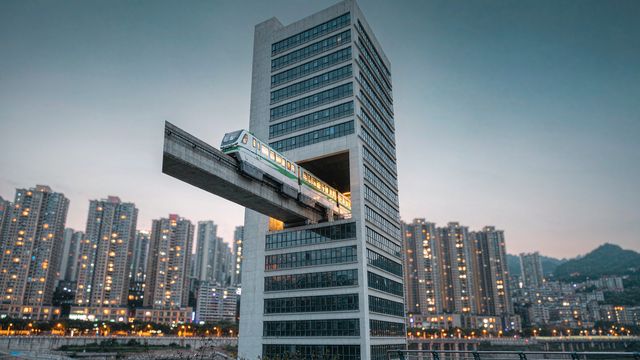
Liziba Monorail Through a Building: Platform, Timetable and the Angles That Work (2026)
The two-second shot is easy; not wasting the trip is the hard part. Exit 1, platform hours, train frequency, the 2026 rebuild closures, and why morning light beats afternoon. Five angles, three half-day routes, seven mistakes.
11/20/2026
Three Days Around Chongqing: Wulong, Dazu or Fuling, and How to Choose (2026)
Wulong, Dazu and Fuling all sit 1.5 to 2.5 hours from Chongqing, yet one is karst, one is Buddhist carving, one is hydrology. Tickets, door-to-door times, stamina and four ways to spend three days.
11/19/2026
G318 Sichuan-Tibet Highway: Drive Yourself or Hire a Driver, and How Many Days to Lhasa
Chengdu to Lhasa is 2,140 km. Eight days is the limit, ten is the norm, fourteen lets you actually see it. What changed in 2026, and why foreign passports cannot self-drive into Tibet.
11/19/2026