
A Guide to Zhangjiajie's Main Sights: Tianmen Mountain, Wulingyuan and Fenghuang
Tianmen Mountain, Wulingyuan, Furong Town and Fenghuang sight by sight: opening hours, how long to allow and how to dod…
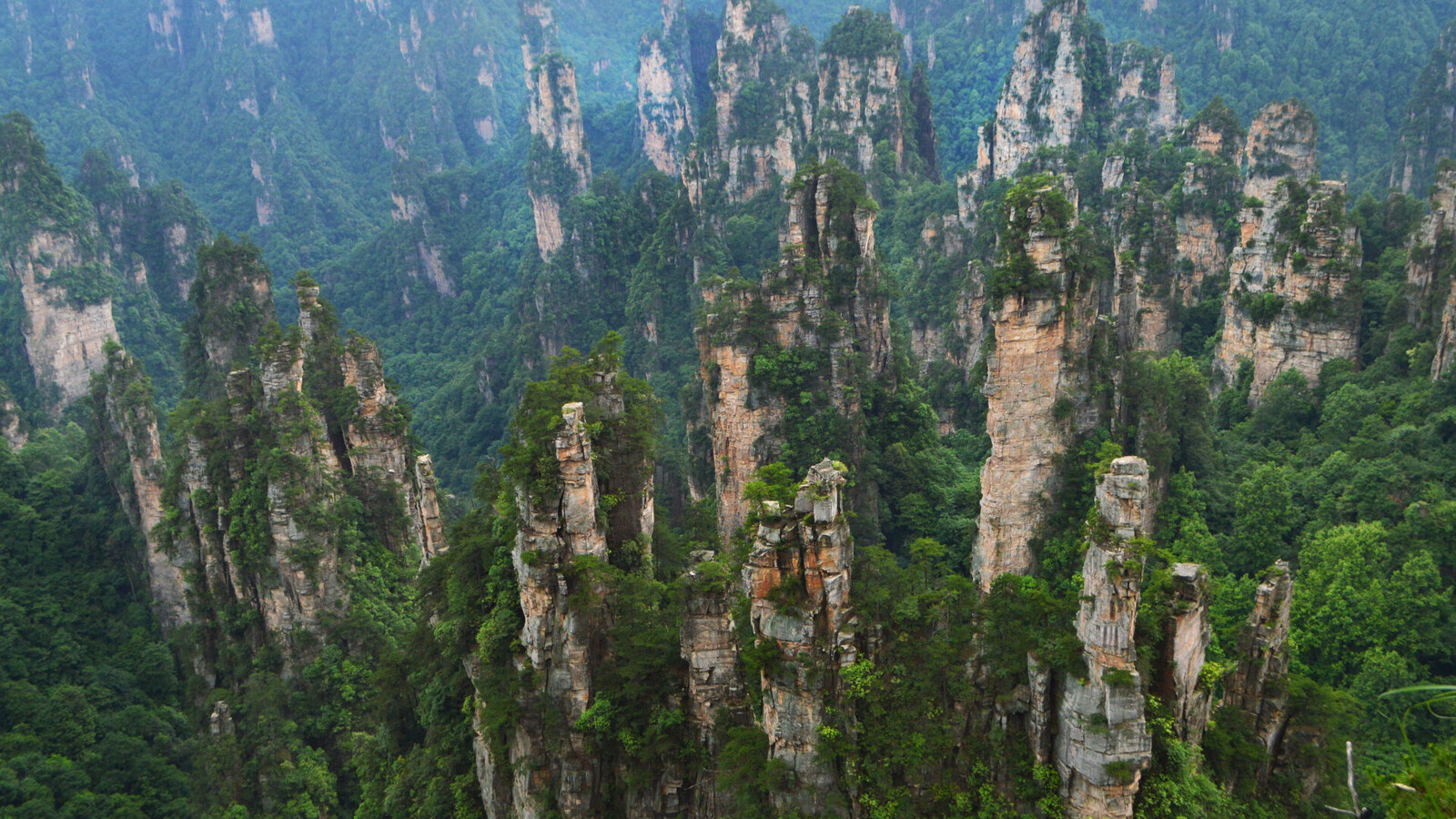
Tianmen Mountain, Wulingyuan, Furong Town and Fenghuang sight by sight: opening hours, how long to allow and how to dodge the queues, plus 3- and 5-day plans, hotels and food.
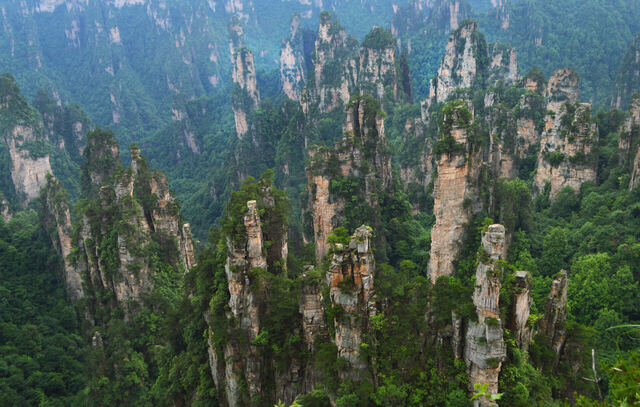
There are places that look exactly like the photographs, and then there is Zhangjiajie — three thousand sandstone pillars rising straight out of the valley floor with cloud pouring between them, the landscape that gave the film Avatar its floating mountains. This guide covers the main sights of Zhangjiajie one by one: what you are actually looking at, opening hours, how long to allow, and how to dodge the worst of the crowds — followed by itineraries, where to sleep and what to eat, so that a first visit does not turn into a day of wrong turns.
First, understand that "Zhangjiajie" is not one park
What visitors call Zhangjiajie is really three separate areas, none of them close to each other. Plenty of people only discover at the gate that they bought the wrong ticket:
- Wulingyuan Scenic Area (Zhangjiajie National Forest Park): the core and most famous section, containing Yuanjiajie, Tianzi Mountain, Golden Whip Stream, Ten-Mile Gallery and the Bailong Elevator. A World Natural Heritage site, ticketed as a multi-day pass;
- Tianmen Mountain: south of the city proper, known for Tianmen Cave, the 999-step stairway, the glass skywalks and the 99-bend mountain road. Ticketed separately;
- Zhangjiajie Grand Canyon: famous for the world's highest and longest glass bridge, a separate scenic area in its own right.
Key point: Wulingyuan and Tianmen Mountain are about 40 km apart and each needs a full day. Squeezing both into one day means spending most of it in transit and in queues.
The main sights, one by one
1. Tianmen Mountain — the "first sacred mountain of western Hunan"
Zhangjiajie's signature landmark. A vast natural archway, Tianmen Cave, hangs in a sheer cliff face with cloud drifting through it, while the 99 bends of the mountain road and the glass skywalks built onto the cliff produce a genuine jolt of vertigo when you look down over the ranges below.
- Opening hours: 07:00–19:00
- Allow: 3–4 hours
- Tips: take the cable car up and the bus down to skip the 999 steps; the summit is noticeably colder than the city, so bring a light jacket. The slip-on shoe covers (about ¥5) are worth buying.
2. Zhangjiajie National Forest Park (Wulingyuan) — World Natural Heritage
The location used for the Hallelujah floating mountain in Avatar. Three thousand peaks rise from the valley floor, cut through by streams and dense forest. Yuanjiajie's floating mountain, the sea of peaks seen from Tianzi Mountain and the rock gallery of Ten-Mile Gallery are all here.
- Opening hours: 07:30–17:00
- Allow: 2 days
- Tips: the ticket is valid for four days and two of them are worth using. Wear proper non-slip shoes, watch your bag around the monkeys, and carry a rain jacket — mountain weather turns quickly.
3. Ten-Mile Gallery — a scroll of peaks and gorge
A naturally formed corridor of pinnacles with a gentle walkway running through it, or a sightseeing tram if you would rather rest your legs. The rock formations along the way — the Herb-Gathering Old Man, the Three Sisters Peak — are uncannily lifelike. In the early morning or after rain, mist rises between the peaks and the whole valley turns into an ink painting.
- Opening hours: 07:30–17:00
- Allow: about 1 hour
- Tips: the tram saves effort and one way is enough; the best light is early morning or after rain. Comfortable shoes, slow pace, camera out.
4. Bailong Elevator — the "number one lift in the world"
The tallest outdoor lift on earth, built against a sheer cliff face with a vertical rise of 326 metres. In a few tens of seconds the glass cabin sweeps you past the endless Wulingyuan pinnacles and up to the top — the fastest route into the Yuanjiajie floating-mountain area.
- Opening hours: 08:00–17:00
- Allow: about 40 minutes
- Tips: go early in peak season; the queue can exceed an hour. Not for the seriously acrophobic, no jumping inside, and hold your phone firmly if you film.
5. Seventy-Two Wonders Tower — the "Tibetan-style Potala of the Tujia"
Layer upon layer of Tujia stilt houses stacked up a hillside — Zhangjiajie's best-known piece of man-made architecture. By day you can study the carpentry; after dark the whole structure is lit up and becomes a light sculpture. You can rent ethnic costume and photograph yourself into the scene.
- Opening hours: 10:00–23:30
- Allow: 2–3 hours
- Tips: go in after 16:30 for the night lighting; comfortable shoes are essential, and costume rental is available on site.
6. Zhangjiajie Grand Canyon Glass Bridge
The highest and longest glass suspension bridge in the world, stretched across a gorge between two cliff walls. Standing on the transparent deck, the gorge drops away directly beneath you and the ranges unroll to the horizon; below, the canyon floor is a tangle of streams and boulders.
- Opening hours: 07:00–17:00
- Allow: 3–4 hours
- Tips: book the ticket in advance and wear non-slip shoes. Don't force it if you are afraid of heights, no running or jumping on the bridge, and take care when the deck is wet.
7. Baofeng Lake — a high mountain lake among the peaks
A lake held between the Wuling ranges, its water clear as a mirror, peaks rising on both sides and Tujia stilt houses at the water's edge. A boat ride across it, with Tujia folk songs drifting over the water, is the most relaxed hour in the whole park.
- Opening hours: 08:00–17:30
- Allow: about 3 hours
- Tips: morning or late afternoon gives the softest light; it is windy on the water, so bring a light jacket and stay seated on the boat.
8. Furong Town — the thousand-year-old town hanging over a waterfall
Stone-flagged lanes wind along the hillside while a broad waterfall pours off the cliff beneath the old town. By day you wander the Tujia stilt houses; after dark the fall is floodlit and the water runs in colour.
- Opening hours: 08:00–20:30
- Allow: 2–3 hours
- Tips: go in late afternoon for the illuminated waterfall. The stone lanes are slippery — non-slip shoes — and the local rice tofu is not to be missed.
9. Fenghuang Ancient Town — the pearl of western Hunan
The Tuo River runs through the town with stilt houses standing in the water on both banks. Early morning, mist lies on the river and there is almost nobody about; by night the whole town is lit and the reflections double it in the water below the Rainbow Bridge. This is the small town of Shen Congwen's novels.
- Opening hours: open all day
- Allow: 1 day
- Tips: walk the river early to avoid the crowds and come back after dark for the lights. Comfortable shoes; ignore the touts offering "guided tours".
How to structure your trip
Zhangjiajie in 3 days (compact)
- Day 1: arrive → Tianmen Mountain in the city (cave, glass walkways, cable car);
- Day 2: Wulingyuan: Golden Whip Stream → Ten-Mile Gallery → Bailong Elevator → Yuanjiajie;
- Day 3: Tianzi Mountain overlook → Yangjiajie → depart.
Zhangjiajie in 5 days (with the old towns)
Add the Grand Canyon glass bridge and Baofeng Lake, then extend to Furong Town and Fenghuang Ancient Town, both about 2–3 hours away by road, to combine peaks, a waterfall town and a river town in one trip. We run this combination as a fixed itinerary — see the related tours.
Where to stay
- Near the Tianmen Mountain cable car: plenty of choice, a few minutes on foot to the cable-car station, no morning traffic, and good local food (sanxiaguo hotpot, rice noodles) nearby. Avoid the older downtown buildings — no lifts, poor soundproofing — and avoid anything so far out that the morning traffic ruins your mood;
- Near the Biaozhimen / East Gate entrance to Wulingyuan: 5–10 minutes on foot to the park gate, which saves an hour of shuffling every day; good food and a lively night market, and close to the Charm of Xiangxi show. Staying up in the mountains is not recommended (damp, basic, hard work with luggage), and neither are remote guesthouses — you will be taking taxis in the dark;
- In Fenghuang Ancient Town: choose a riverside room on the Tuo, quiet and with a view, 5–8 minutes on foot to the Rainbow Bridge, and around half the price of a room right at the bridge. Avoid guesthouses on the bar street — the music runs to 1 or 2 a.m. and the walls are thin. Anything outside the old town is a 20-minute walk from everything;
- In Furong Town: a room above the waterfall is the whole point — you sleep beside the sound of falling water with the illuminated gorge outside your window. It is the most expensive option and can be noisy in peak season, and most are converted stilt houses with steps to climb, so it is not ideal with large luggage or limited mobility.
What to eat
- Sanxiaguo: the signature local hotpot of cured pork and intestines, simmered and heavily spiced — best on Nanmenkou Food Street;
- Pig-head cold noodles: a night-market favourite in Hourong Street, braised meat over chilli-oil noodles, sour and hot;
- Mugwort cakes: fried to order from street stalls on Xibu Street;
- Rice tofu: everywhere in the Nanmenkou night market, dressed with sour chilli water — the local way to cool a burning mouth;
- Blood-cake duck: the Tujia restaurant speciality in Wulingyuan, duck with glutinous blood-rice cakes and a strong cured aroma;
- Sweet-oil rice cakes: cheap and filling, in the Hourong Street night market;
- Tujia braised pork: rich but not greasy, meltingly soft, made for plain rice;
- Golden Whip Stream small fish: tiny river fish, deep-fried until crisp;
- Tujia communal rice: wild greens, glutinous rice and cured pork steamed together — hearty and fragrant.
Practical notes
- Tickets: Wulingyuan is a multi-day pass that includes the shuttle buses inside the park; Tianmen Mountain, the Grand Canyon and Baofeng Lake are ticketed separately. Book popular sites online in advance — peak-season tickets do sell out;
- Weather: you may get sun, mist and rain in a single day. A rain jacket, non-slip shoes and a light layer are essentials. Cloud and mist are when Zhangjiajie is at its most beautiful — rain is not a reason to change your plan;
- Queues: the Bailong Elevator and the Tianmen cable car can both exceed an hour in peak season; arriving at opening saves one to two hours;
- Fitness: expect long trails and many steps. Cable cars and the elevator cost money but take a great deal of fatigue out of the trip, and that affects everything that follows;
- Transport: Fenghuang and Furong Town are 2–3 hours from Zhangjiajie city. A private car or an organised tour is far less hassle than changing buses;
- Avoid: the National Day golden week and the May Day holiday. Zhangjiajie is a perennial top-ten destination in China, and both crowds and room rates rise sharply.
Need help planning this trip?
Tell us your travel dates and group size — we reply within 24 hours.
WhatsApp +86 183 1705 8017 · WeChat 18317058017
Destinations in this guide
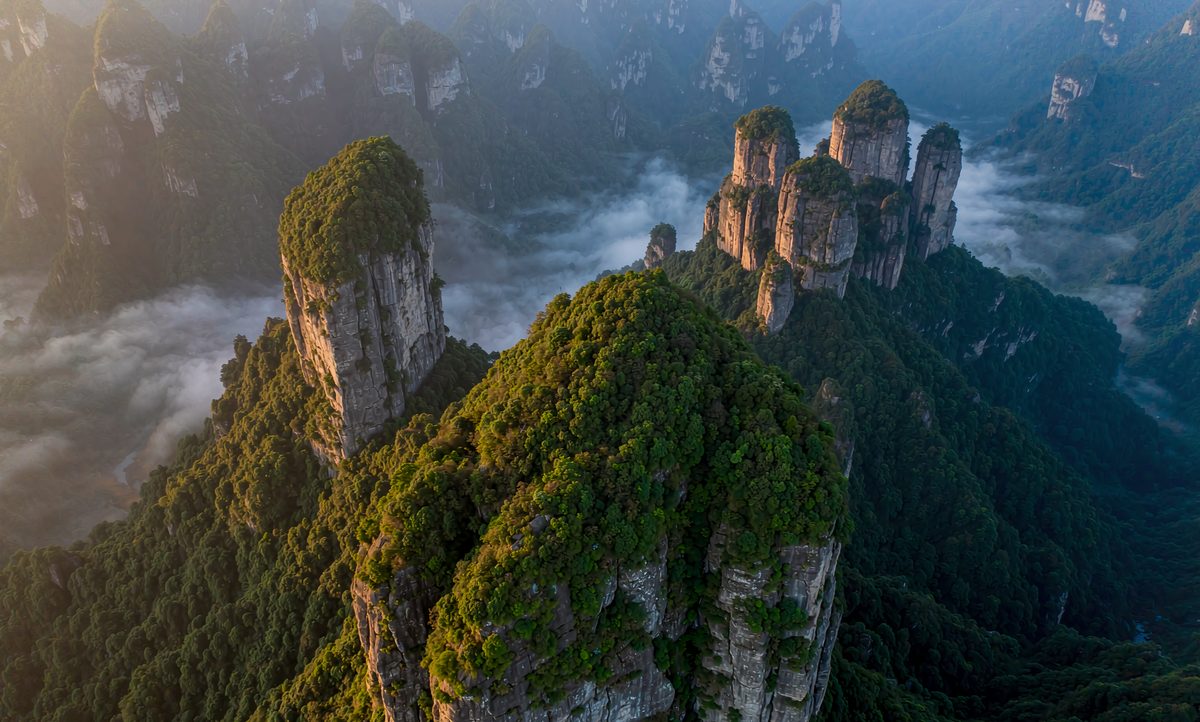
Related Tours
Five-Star Zhangjiajie · 5 Days 4 Nights with Fenghuang Ancient Town (Tianmen Mountain + Zhangjiajie National Forest Park + Huanglong Cave + Fenghuang)
5-10 Days
Chengdu · Jiuzhaigou · Zhangjiajie 9 Days · A Journey Through Natural Wonders
11 Days +
10-Day Fanjingshan, Zhangjiajie & Ethnic Village Tour
11 Days +
More Guides
Flying with a Pet to and from China: Cabin, Hold and Quarantine in 2026
Cabin, live-animal hold or cargo, plus quarantine certificates, the 21-day rabies rule and China entry requirements.
10/17/2026
Solo Female Travel in China: Safety, Night Transport and a 2026 Checklist
Registration, late-night rides, payments and emergency numbers: a practical 2026 checklist for women travelling alone in China.
10/17/2026
Student Travel in China: 2026 Rail Fare Rules and the Best Hands-On Activities by City
A practical guide to study tours in China: 2026 rail student fare scope, visa-free basis for camps, hands-on activities by city, and group safety standards.
10/16/2026