
Student Travel in China: 2026 Rail Fare Rules and the Best Hands-On Activities by City
A practical guide to study tours in China: 2026 rail student fare scope, visa-free basis for camps, hands-on activities…
A practical guide to study tours in China: 2026 rail student fare scope, visa-free basis for camps, hands-on activities by city, and group safety standards.
The most common mistake when bringing students to China is substituting schools for sights. What gives a student trip real educational value is not what the group looked at, but what the students did with their own hands. Writing with a brush, cycling a city wall, folding dumplings with a local family, comparing textbook karst diagrams against the real Li River — these are the things students remember long after the display cases blur together.
This guide organises China's best hands-on activities for student groups by city, and sets out the 2026 railway student fare rules, the visa-free basis for study camps, and the safety standards group leaders need. Teachers, parents and anyone planning a holiday with real content can use it directly.
What makes a trip educational rather than just sightseeing elsewhere
We use one simple test: every day should include at least one segment where students produce something with their hands or bodies, and take it away or present it. A piece of calligraphy they wrote, a song style they learned, a pair of comparison photographs they shot, a meal budget they calculated.
A good student itinerary therefore contains three activity types:
- Craft: calligraphy, paper cutting, opera mask painting, dumpling making, tai chi, tea ceremony. Low barriers, fast sense of achievement, takeaway product.
- Fieldwork: cycling the city wall, geography aboard a Li River boat, museum task sheets, measured walks through an old quarter. Textbook concepts grounded in real space.
- Collaboration: group cooking, team trekking, orienteering tasks, charity sales or school exchanges. Impossible to complete without working with others.
Conversely, if a segment is only "arrive, photograph, leave", it is sightseeing. Keep it if you like, but do not count it as class time.
The policy picture: who can use student fares, and who cannot
This is the question overseas parents ask most, and the one most often misunderstood, so let us be clear.
China's railways do run a mature student fare system, and the new national railway passenger regulations that took effect on 1 June 2026 widened it further:
| Item | 2026 rule |
|---|---|
| Number of trips | Four single journeys per academic year (1 October to 30 September); 2026 graduates receive two extra, up to six in the year |
| Eligible classes | Expanded from hard seat, hard sleeper and second class to second-class package seats, multi-function seats, first class and high-speed sleeper berths |
| Pricing | 75% of the actual ticket price, and never below 40% of the published fare |
| Verification | Completed online in the 12306 app; changing the eligible travel range no longer requires a stamped document. Verified students simply tap their ID card at the gate |
| Connections | Multi-leg connections travelled within five days count as a single trip |
| New students | One fare from home to campus on the admission letter before term starts; a dedicated booking channel opens during the intake season |
Note the scope carefully: student fares apply to full-time students enrolled at institutions inside China, and require verification against a Chinese student card, admission letter or enrolment record. Study groups organised by overseas schools and students enrolled abroad are not eligible and pay standard adult fares. We flag this explicitly in study-tour quotations so families are not budgeting for a "student half-price" that does not exist.
One policy that genuinely helps student groups: people entering China to take part in sports events, exhibitions or study activities such as summer and winter camps, staying no more than 30 days, are within the scope of China's current visa-free arrangements and may enter on a valid ordinary passport without a prior visa. But visa-free entry only settles admission into the country — it does not change age or fare rules, and the two should not be confused. The country list and validity periods are adjusted periodically; check the latest notice from your local Chinese embassy or consulate before travelling. Visa applications must be submitted by the traveller through official channels; we do not provide and do not promise any visa agency service.
Beijing: moving the classroom into the hutongs and museums
Beijing's advantage is density — within half a day a group can move from imperial architecture to everyday street life. Activities that work well for students:
- Calligraphy in a hutong. In Chinese calligraphy, controlling the pressure of the brush matters more than forming the character exactly. Classes usually start with grip and stroke practice before students write a piece to take home. A tip: a relaxed wrist controls the tip better than a tense one.
- Crosstalk in a teahouse. Crosstalk is excellent listening practice for Chinese learners, because almost every joke rests on ambiguity and rhythm in the language. If students are studying Chinese, have them read one or two routines in advance.
- Peking opera mask painting. Teach the colour code first — red for loyalty, white for treachery, black for integrity — then let students paint their own. This lesson works even with no Chinese at all.
- Task sheets at the Forbidden City and the Great Wall. Instead of following a guide for two hours, hand out ten questions and let students find the answers in the architecture.
Beijing involves a lot of walking. Split the Forbidden City and the Great Wall across two days and place an indoor activity in the afternoon as a buffer.
Xian: a live history lesson between the wall and the warriors
Xian is the best place in China to teach dynasties, because the ground and the underground both still speak. Recommended combinations:
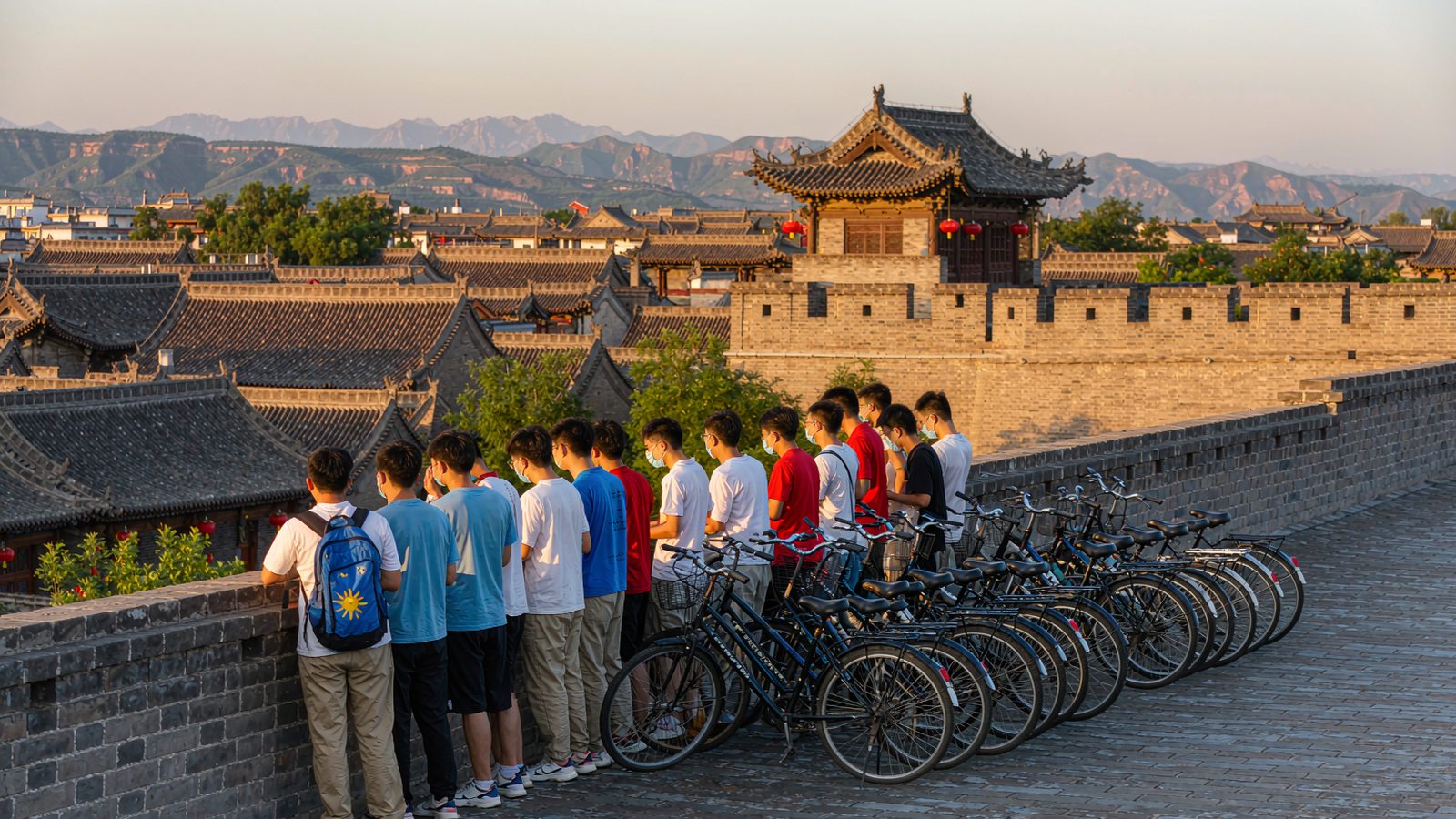
- Cycling the city wall. Xian's wall is among the largest and best-preserved ancient fortifications in China, roughly 13.7 kilometres around. A full circuit takes about 90 minutes to two hours, with stops to look down into the lanes. It combines exercise with urban observation and is consistently one of the highest-rated activities for student groups.
- Making dumplings. No need to find a famous chef — any local household can teach this. An hour is enough to learn rolling, filling and sealing.
- The Terracotta Army and the excavation site. Give students a comparison sheet on the three pits beforehand so they enter with questions rather than only remembering that it was large.
- A food survey in the Muslim Quarter. Hand out a budget and let students order, total and balance the meal themselves. It is the most natural practical maths lesson available.
Xian swings hard between summer heat and winter cold, and July and August afternoons often exceed 35°C. Schedule outdoor activity for mornings and early evenings.
Shanghai: universities, museums and the future city
Shanghai is suited to teaching education and modernity together, and the pace is lighter than Beijing or Xian.
- University visits. Shanghai concentrates several of China's leading universities. A campus visit gives students a direct sense of the academic environment and often includes exchange with local students. Bookings are usually required, and some campuses have a dedicated group reception process.
- Museums and the science museum. The Shanghai Museum's bronzes and ceramics and the Science and Technology Museum's interactive exhibits cover humanities and science respectively. The science museum has many hands-on exhibits and merits at least half a day.
- Urban observation task. The Bund and Lujiazui face each other across the river — the clearest possible diagram of urban development. Have students shoot two photographs from the same angle and write a comparison afterwards.
Shanghai's metro is dense and lift-equipped, making it the easiest city for student groups to navigate independently. It suits one or two "small-group independent tasks" that build route-planning skills.
Guilin and Yangshuo: geography class on the Li River
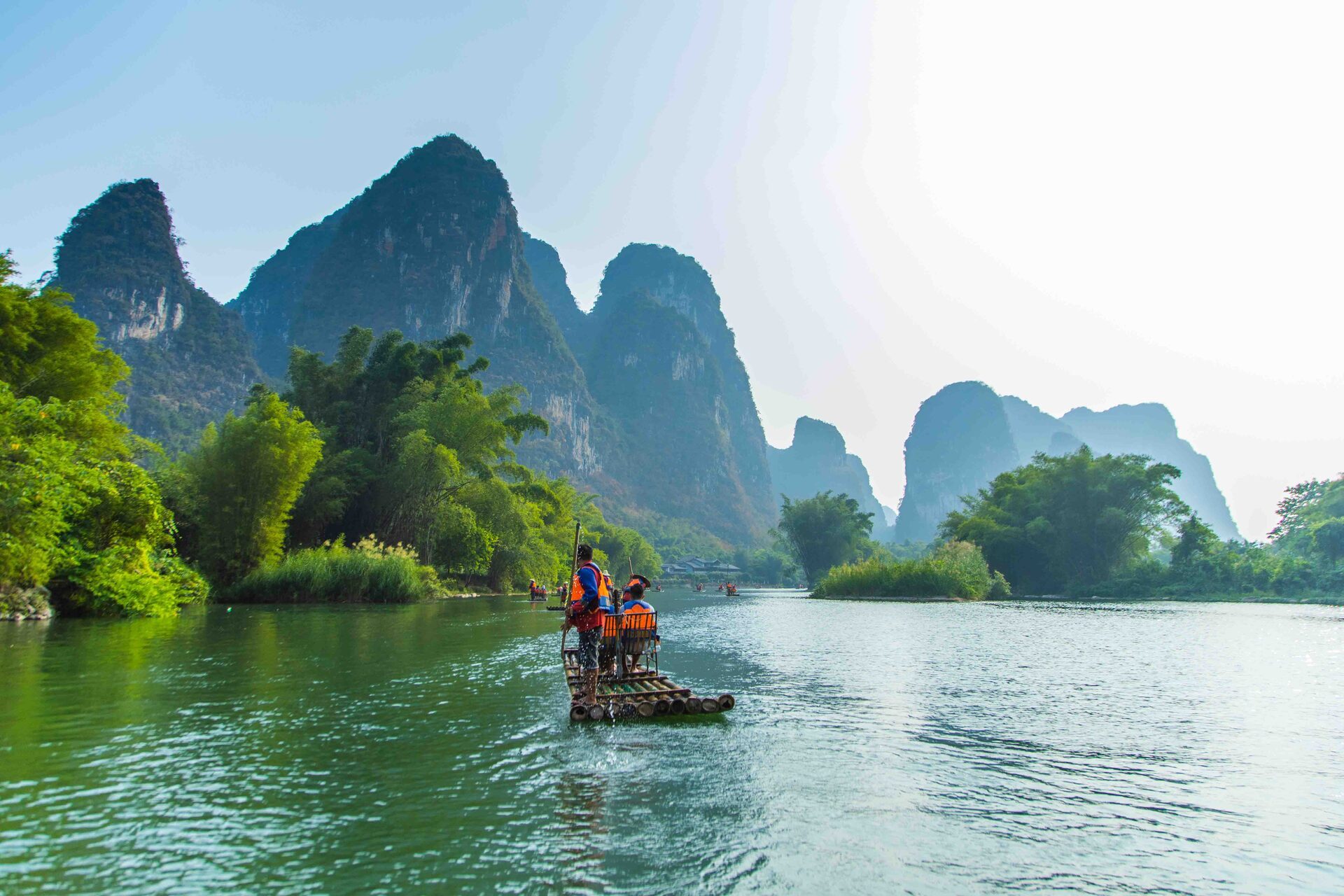
Guilin's karst landscape is the ideal geography field trip. Students can complete a real observation exercise:
- Comparative observation from the boat. Have students identify textbook peak-forest and cave forms from the deck, and record current direction and differences in bank vegetation. Four hours is ample for a written record.
- Yangshuo countryside extensions. Cycling, cooking classes, tai chi and rock climbing are all available. Most cycling routes are flat and suit secondary students; climbing tests nerve and teamwork and requires a professional instructor.
- Team task design. For example, have groups complete "buy local ingredients, then cook the dinner" — budget, negotiation and division of labour all handled by students.
Guilin's rainy season runs April to June. When the Li River runs too high, cruise boats can be suspended, so keep one flexible day in the plan.
Yunnan: the advanced route for fitness and teamwork
Yunnan suits older secondary students and university groups, because the physical demands are noticeably higher.
- Tiger Leaping Gorge trek. One of China's best-known high-trail hikes, it upgrades both fitness and mental resilience. Assess the group's fitness first and prepare an alternative route.
- Ethnic minority village study. Yunnan's ethnic diversity is a resource found almost nowhere else in China. Design it as an "interview and record" task rather than a simple visit.
- Tea mountain experience. Picking and pressing Pu'er tea teaches the full production chain behind a single product.
Yunnan ranges from about 1,900 to 3,300 metres, with Kunming near 1,900 and Shangri-La near 3,300. Ascend in stages and watch students' sleep and hydration.
Safety, documents and supervision: six hard requirements
- Documents and roster filing. Every student needs a valid passport, ideally with six months' validity beyond the trip end. Keep a full roster, emergency contacts and guardian authorisations.
- Supervision ratio. For outdoor and trekking activities, no worse than 1:8; for water or climbing, no worse than 1:5, with a local professional instructor.
- Insurance. Travel insurance covering medical evacuation and acute outpatient care is mandatory for all participants; confirm that the policy covers the outdoor activities planned.
- Grouping and roll calls. Use fixed small groups with a named leader, and call the roll every two hours. Agree a meeting point and contact method on arrival at each site.
- Dietary and allergy information. Collect allergens and religious dietary requirements in advance and give one copy to the restaurant and one to the group leader. Chinese restaurants usually need a day's notice for separate meals.
- Emergency numbers. Police 110, fire 119, ambulance 120, traffic accidents 122. The immigration service hotline 12367 offers multilingual advice. Note that 12308 serves Chinese citizens only — foreign student groups should contact their own embassy or consulate.
Budget and pace
Student group budgets concentrate in three places: transport, tickets and instructors. Three practical ways to hold cost without cutting quality:
- Concentrate the craft classes in one or two cities. Calligraphy, dumplings and mask painting have very low marginal cost; clustering them beats running one class in every city.
- Use high-speed rail instead of short flights. For larger groups the fares are stable, luggage is easier, and total time is often lower than flying.
- Keep one flexible day. The likeliest problems on a student trip are fatigue and weather. A spare day is the cheapest insurance available.
On rhythm, we recommend a three-part day: morning activity, afternoon practical class, evening debrief. The debrief is the most commonly skipped and the most important, because it is what turns experience into knowledge — even if it is only ten minutes writing down the one thing worth remembering.
Bringing students to China rewards a shorter list and deeper segments. Fix the hands-on content for each day first, then work backwards to cities and transport, and the itinerary becomes clear on its own. If you are planning a school study tour or a learning-focused family holiday, tell us the group size, ages, length of stay and the learning goals, and we will build the route around activity capacity rather than a count of sights. Design a China itinerary built around hands-on learning, or contact us directly.
Need help planning this trip?
Tell us your travel dates and group size — we reply within 24 hours.
WhatsApp +86 183 1705 8017 · WeChat 18317058017
Destinations in this guide

Beijing
Imperial Capital · Great Wall, Forbidden City & Hutongs

Shanghai
China's Modern Metropolis · The Bund & Classical Gardens

Yunnan
South of the Clouds · From Snow Mountains to Rainforest

Xi'an
Thirteen Dynasties of Capital · Terracotta Army & City Wall
Guilin
Finest Karst Scenery Under Heaven · Li River & Rice Terraces
Related Tours

Xi'an 4 Days · Ancient City & Mount Hua
5-10 Days

Huashan Discourse · Xi'an 5 Days 4 Nights In-Depth Tour (Mount Hua + Terracotta Army + Huaqing Palace + Xi'an Everlasting Sorrow Show + Tang Night City + Ming City Wall)
5-10 Days

4-Day Shanghai & Suzhou Culture Tour
5-10 Days
More Guides

Flying with a Pet to and from China: Cabin, Hold and Quarantine in 2026
Cabin, live-animal hold or cargo, plus quarantine certificates, the 21-day rabies rule and China entry requirements.
10/17/2026
Solo Female Travel in China: Safety, Night Transport and a 2026 Checklist
Registration, late-night rides, payments and emergency numbers: a practical 2026 checklist for women travelling alone in China.
10/17/2026
Senior Travel in China: Ticket Discounts, Age-Friendly Rail Services and High-Altitude Preparation
The 2026 guide to senior travel in China: ticket discount age thresholds, age-friendly rail services, whether foreign seniors qualify, and altitude safety.
10/16/2026