
Solo Female Travel in China: Safety, Night Transport and a 2026 Checklist
Registration, late-night rides, payments and emergency numbers: a practical 2026 checklist for women travelling alone i…
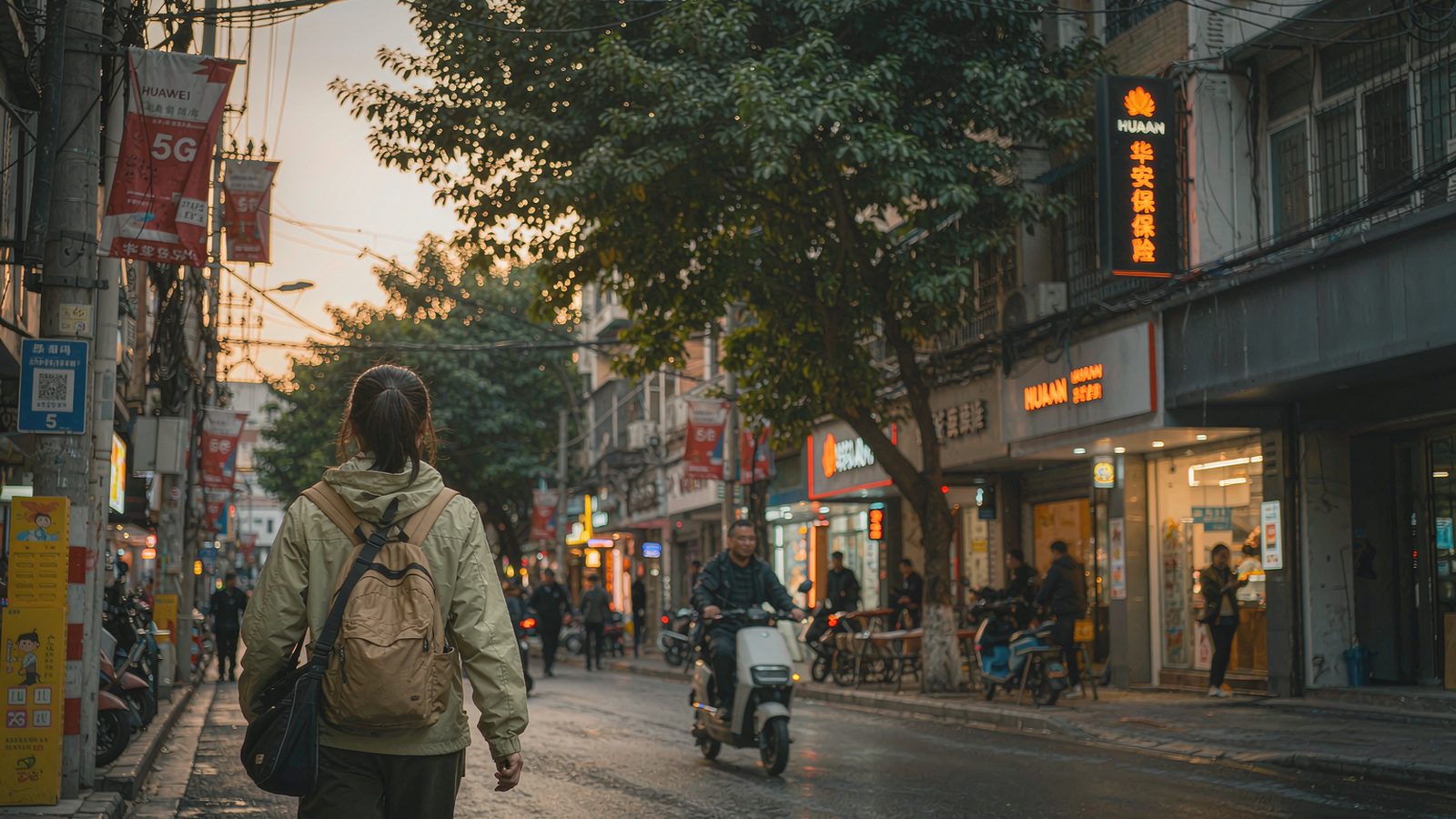
Registration, late-night rides, payments and emergency numbers: a practical 2026 checklist for women travelling alone in China.
If the question is simply whether China is safe for women, the short answer is yes: China is one of the safest destinations in the world for a woman travelling alone. Violent crime against strangers is rare, cities are brightly lit and heavily monitored, and metro security checks, 24-hour convenience stores and visible street patrols create a genuinely solid baseline. Solo female travellers consistently report that walking, taking the metro and eating late at night in a Chinese city feels comparable to Tokyo or Singapore.
But safe does not mean frictionless. What actually goes wrong for women travelling alone in China is rarely a crime story. It is four very ordinary things: a hotel that cannot register a foreign passport, a payment app that will not authorise, no car at midnight, and no idea who to call when something happens. Solve those before departure and the difficulty of solo travel drops by half. This guide follows that order.
Step one: the 24-hour accommodation registration
After entering China, foreign visitors, including ethnic Chinese holding a foreign passport, must be registered. If you stay in a hotel, the hotel does it for you. If you stay with friends, in a homestay or in a short-term rental, you must register at the local public security office within 24 hours of moving in. This is law, not a hotel policy. Most mid-range and chain hotels handle it routinely. Problems concentrate in two places: private short-term rentals that may not be licensed to receive foreign guests, and family-run guesthouses in remote areas that simply do not know the procedure.
- Ask before you book. Write one line into the booking notes: can you accept a foreign passport and complete the accommodation registration? That single question prevents most front-desk arguments.
- Carry your passport, not a photocopy. Train tickets, scenic sites, SIM cards and hotel check-in all require real-name verification. Photos on a phone are frequently refused.
- Photograph the registration slip. Some cities check it on departure or when you apply for other documents. A photo in your phone is enough.
Choose the right city for a first solo trip
Not every Chinese city is equally easy solo. Three criteria matter: a dense metro network, lively streets after dark, and plenty of chain hotels. Meet all three and the friction cost drops sharply.
- Shanghai is the easiest first stop: the most complete metro system, easy late-night taxis and convenience stores, and widespread English signage.
- Chengdu moves at a slower pace, with busy night districts around Taikoo Li and Yulin, low restaurant prices, and enough to fill four or five days.
- Hangzhou and Xiamen are compact. West Lake and Gulangyu can be covered on foot and by bus, which suits a three or four day trip.
- Beijing and Xiamen reward time but are physically demanding. Schedule one major site per day rather than filling every hour.
- Long northwest routes and high-altitude areas are better saved for a second trip. They are not unsafe, but distances are long and medical facilities are sparse, so the margin for error is thinner.
Getting around at night: app-hailed cars beat street hailing
Chinese cities are bright and populated at night. The habit worth building is about how you get into a car.
- Use a ride-hailing app such as Didi. The route is tracked, the trip can be shared with a contact in one tap, in-app audio recording and an SOS button exist, and the plate number and driver are fixed at the moment you order. Street hailing gives you none of that.
- Check three things before you get in: plate number, car model and colour, and the driver's surname. If they do not match, do not get in. Cancel and order again. Ten seconds of checking removes most of the risk.
- Sit in the back and share the trip with someone locally. When you are alone, that action is itself a deterrent.
- Never follow touts at station exits or scenic area gates. The private car offering a flat fare and no queue is the most common trap in every Chinese city, and neither the price nor the safety is guaranteed.
- Ask for a receipt in a metered taxi. The receipt carries the plate number and a complaint line, and it is the only lead you will have if you leave something behind.
- Last metro trains usually leave between 22:30 and 23:30, and the time differs by city. Put it in your itinerary instead of improvising a taxi at midnight.
Money: payment failure is more likely than a safety incident
This is the most common real breakdown for foreign visitors, and it is not gender-specific. Daily spending in China runs on two QR codes. Cash remains legal tender, but using it in small shops, markets and shuttle buses is genuinely awkward.
- Link an international card to Alipay or WeChat Pay before you fly. Visa, Mastercard and JCB are widely supported, and once linked you can scan and pay in convenience stores, on the metro, in taxis and in restaurants.
- Prepare a second path. A second card, a travel companion's account, or simply 300 to 500 yuan in small notes. When a single point fails, cash is the only option that cannot let you down.
- Keep headroom for large purchases. Per-transaction and annual limits for foreign cards follow platform and issuing bank rules, so test a small payment before buying an expensive ticket or a multi-day private car.
- Do not change money on the street. Bank branches and airport counters are transparent. Street offers of a great rate usually end in counterfeit notes or a sleight of hand.
Connectivity: maps, translation and daily check-ins
This matters more than most people expect. When the map will not load and messages will not send, people panic, and panic is the real risk multiplier.
- Install an international roaming eSIM before you land. Data routed through an overseas server keeps your usual apps and maps working without extra configuration. It is currently the simplest and most stable option.
- Also install a Chinese map app. Amap gives noticeably better bus and walking navigation inside China, and it accepts Chinese addresses directly.
- Screenshot your hotel name and address in Chinese. Showing a driver the Chinese address works ten times better than reading a romanised name aloud.
- Check in once a day. WeChat location sharing lets family see where you are in real time, which is genuinely useful when travelling alone.
Being stared at, approached, or asked for a photo
One thing needs saying clearly. In China, especially outside the largest cities and at major sights, a foreign woman being looked at or asked for a photo is almost always curiosity rather than hostility. It is uncomfortable, but it is not a danger signal.
- If you do not want a photo, say no clearly. A smile, a raised hand and "no thanks" usually ends it. No explanation and no apology are required.
- Do not follow a stranger out of politeness. Any version of "I will show you" or "let me buy you a drink" can be declined politely and firmly.
- Keep normal awareness in bar districts. Areas such as Sanlitun in Beijing or Hengshan Road in Shanghai are not dangerous, but alcohol and crowds bring more approaches and promotions. Watch your glass and never accept a drink from a stranger.
- If someone follows you or keeps talking after a clear refusal, walk into the nearest shop, hotel lobby or metro station and call 110. Police response in urban areas is usually fast.
Emergencies: four numbers and two procedures
- 110 police, 120 ambulance, 119 fire, 122 traffic accidents.
- 12367 is the National Immigration Administration hotline, available around the clock in several languages, covering visas, residence and entry-exit policy.
- 12308 is the consular protection hotline of the Chinese foreign ministry and serves Chinese citizens only. Foreign visitors should contact their own embassy or consulate.
The procedure for a lost passport is fixed: report it at the nearest police station and obtain a report, then contact your embassy or consulate for a replacement travel document. The police report is required for the replacement and for insurance, so do not skip it. Before departure, photograph the passport data page, visa page and entry stamp, and store them both on your phone and in your email; this noticeably speeds up the replacement.
For medical care, tier-one hospitals and international clinics in major cities can treat foreign patients, either self-paid or direct-billed through insurance. Costs are moderate by Western standards, but travel insurance remains essential, particularly cover that includes accidents and medical evacuation.
Health and periods: easier than you might expect
- Sanitary products are widely available in convenience stores, supermarkets and pharmacies in cities, with plenty of brands. Smaller towns and scenic areas have less choice, so bring your preferred brand if you are particular.
- Pharmacies are everywhere and common cold, stomach and pain medication can be bought over the counter. Pharmacists usually ask a couple of questions. Prescription drugs require a hospital prescription.
- Public toilets are common in malls, metro stations and scenic areas. Carrying tissues and hand sanitiser makes a real difference.
- Hot water is a national habit. Hotels and high-speed trains all provide it, which is more helpful than many destinations during a difficult period.
- High-altitude itineraries need separate preparation. Lhasa, Jiuzhaigou and Shangri-La are high. Do not shower or exercise hard on the first day, and ask a doctor before taking any altitude medication.
Three routes that work well for a woman travelling alone
- Five days, Shanghai and Suzhou. Two days on the Bund and Wukang Road, two days in Suzhou's gardens and Pingjiang Road, one flexible day. High-speed trains take half an hour and you will barely need a private car.
- Six days, Chengdu and Leshan. Four days in Chengdu for Kuanzhai Alley, the panda base and the Yulin neighbourhood, one day for the Leshan Giant Buddha, one day to return. Slow, inexpensive and ideal for a first solo trip.
- Eight days, Beijing and Xi'an. Four days in Beijing with one major site per day, a four-hour train to Xi'an, then the Terracotta Army and the city wall. Distances are large, so resist over-scheduling.
Five myths worth dropping
- Myth one: China is dangerous. By urban crime measures it is safer than most Western cities. The real risks are scams and traffic, not violent crime.
- Myth two: you cannot go out at night. City nights are busy and well lit, and walking alone after ten is ordinary. What you avoid is isolated streets and strangers' cars, not the night itself.
- Myth three: solo women must join a tour. High-speed rail, metro, ride-hailing and QR payments make independent travel easier here than most people assume.
- Myth four: carrying lots of cash is safest. Cash is inconvenient in China and cannot be recovered if lost. Small notes plus a linked card is the right combination.
- Myth five: eating alone is awkward. Chinese restaurants are thoroughly used to single diners, from noodle shops to hotpot, and many offer half portions.
Let Jadetour remove the friction in advance
Most of the confidence in solo travel comes from preparation. Jadetour can confirm whether a hotel is licensed to receive foreign guests, build an itinerary that schedules one major site per day at your pace, and prepare a one-page card with your addresses in Chinese and the emergency numbers. Visas must still be applied for by you through official channels; we do not provide or promise visa agency services. Everything around the visa, from hotels to ground arrangements, we can have ready when you land.
If you would like a solo itinerary built around your cities, dates and budget, start from our custom tour page and tell us what you have in mind.
Need help planning this trip?
Tell us your travel dates and group size — we reply within 24 hours.
WhatsApp +86 183 1705 8017 · WeChat 18317058017
Destinations in this guide

Beijing
Imperial Capital · Great Wall, Forbidden City & Hutongs

Shanghai
China's Modern Metropolis · The Bund & Classical Gardens

Chengdu
Home of the Pandas · Gateway to Western Sichuan

Xi'an
Thirteen Dynasties of Capital · Terracotta Army & City Wall

Hangzhou
Paradise on Earth · West Lake & Longjing Tea Hills

Xiamen
Garden on the Sea · City of Pianos
Related Tours

Xi'an 4 Days · Ancient City & Mount Hua
5-10 Days

Huashan Discourse · Xi'an 5 Days 4 Nights In-Depth Tour (Mount Hua + Terracotta Army + Huaqing Palace + Xi'an Everlasting Sorrow Show + Tang Night City + Ming City Wall)
5-10 Days

4-Day Shanghai & Suzhou Culture Tour
5-10 Days
More Guides

Chengdu Travel Guide 2026: Panda Base Booking, Dujiangyan, Qingcheng and a Five-Day Route
Panda Base CNY 55 and booked ahead, Dujiangyan and Qingcheng CNY 80 each. A 2026 Chengdu guide to booking, routing, hotpot and common mistakes.
10/19/2026
Guilin Travel Guide 2026: Li River Cruises, Longji Rice Terraces and a Three-Base Route
Li River cruises from CNY 215, Longji terraces CNY 80, Elephant Trunk Hill free but booked. A 2026 guide to piers, tickets, routes and common mistakes.
10/19/2026
Beijing Travel Guide 2026: Reservations, the Great Wall and Daily Routes
Palace Museum, National Museum and Tiananmen all need timed bookings. Release times, routes and transport for 2026 in one place.
10/18/2026