
How to Pay in Shanghai: A Complete Guide for Foreign Visitors
Shanghai is one of China's most cashless cities — the metro, ferries, convenience stores and food markets all take QR p…
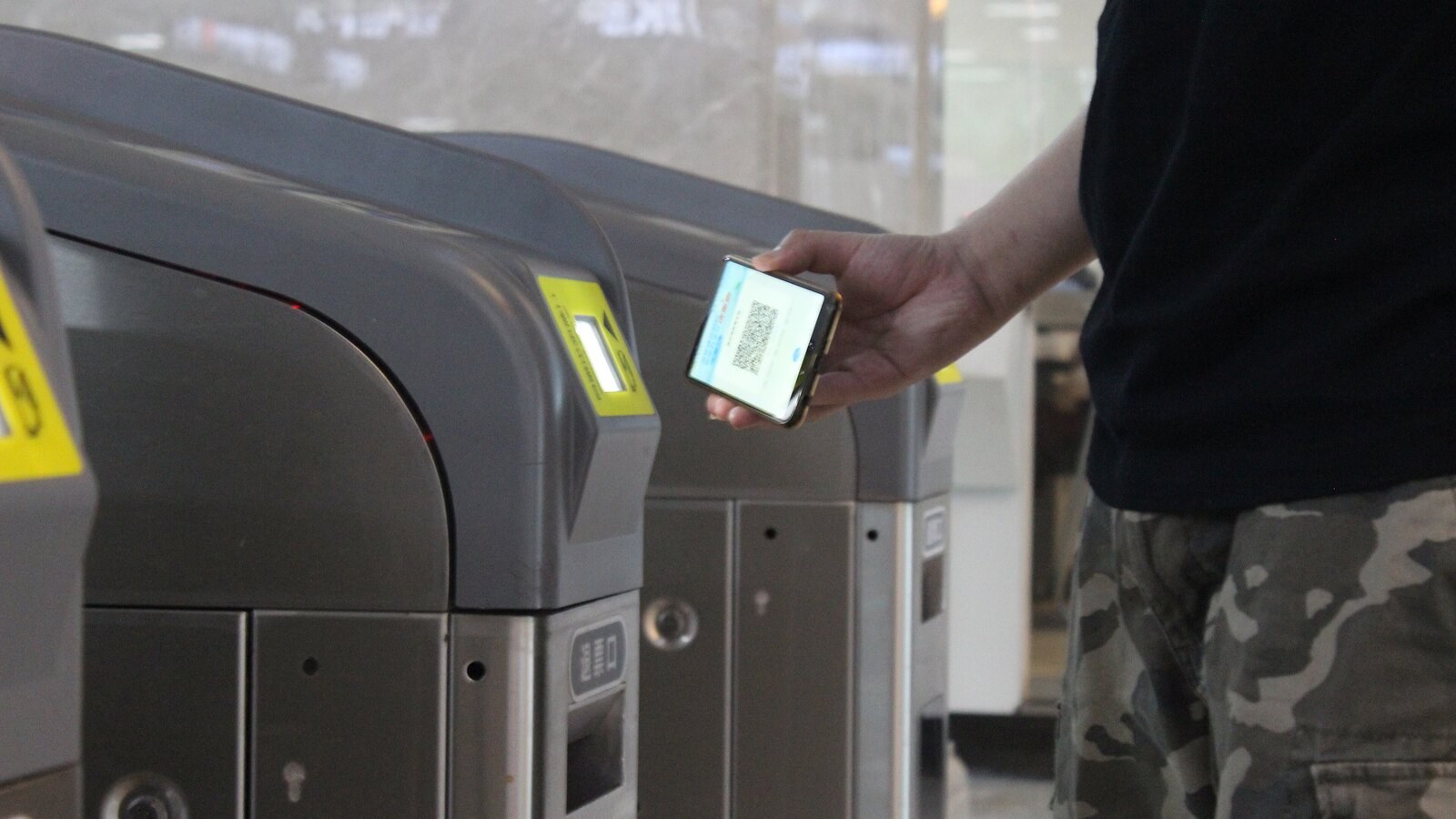
Shanghai is one of China's most cashless cities — the metro, ferries, convenience stores and food markets all take QR payments. Here is how Alipay and WeChat Pay work on the ground, where you still need cash or a physical card, and the 2026 rules on foreign cards and departure tax refunds.
If any single city in China is built for "one phone, start to finish", it is Shanghai. Every metro line accepts QR entry, so do the Huangpu River ferries and sightseeing buses, and the counters of convenience stores, coffee shops, old-brand pastry shops and even vegetable stalls all display a payment code. Cash has not disappeared in Shanghai in 2026, but it has been pushed firmly into the role of backup.
For foreign visitors, three things make Shanghai distinctive: the highest density of payment scenarios in the country, the most concentrated foreign-facing service counters, and the most practical tax-refund thresholds and stores. This guide follows the order "arrival — daily life — large purchases — tax refund" and sets out the full path of paying for things in Shanghai, including a clear list of where you will still need a physical card.
Last updated: October 2026. Rates, limits and refund rules may change; always check the live notice inside the payment app or at the store counter.
1. Why Shanghai deserves its own guide
- Highest QR penetration: Shanghai was among the earliest and is among the most complete adopters of mobile payment in China. From a Bund coffee shop to a xiaolongbao stall in a lilong alley, merchants that take cards but not QR codes are practically nonexistent;
- Metro and ferries fully covered: every gate on every Shanghai metro line accepts QR entry, as do the Huangpu River ferries, sightseeing buses and some taxis. That means you can complete an entire trip without buying a transport card;
- Most mature foreign-card acceptance: merchant training for both Alipay and WeChat Pay is best in Shanghai, cashiers are familiar with foreign-card QR payments, and staff who speak English are easier to find when something goes wrong;
- Dense refund network: most large malls and department stores around Nanjing West Road, Huaihai Road and Lujiazui support departure tax refunds, and many handle it on the spot — easier here than in most other cities;
- Cash still works: by law, RMB cash is legal tender and no merchant may refuse it. In practice, however, small vendors often cannot make change for a 100-yuan note, so if you carry cash, carry small denominations.
2. First step after landing: set up both apps
The short answer: Alipay is essential, and WeChat Pay is strongly recommended as well. More than nine in ten Shanghai scenarios accept either, but you will occasionally meet one that does not — having both means never getting stuck.
- Download Alipay (the international version) from the App Store or Google Play. Registration needs only a foreign mobile number, and it supports Visa, Mastercard, American Express, JCB, Discover and Diners Club;
- Add your foreign card following the in-app steps. ⚠️ Cards issued outside mainland China are usually credit only — a pure debit card may not link at all;
- Complete identity verification: upload your passport photo page plus a selfie. Without this step, a linked card still will not pay;
- Download WeChat and link a card too: the flow mirrors Alipay — Me → Services → Wallet → Cards → Add a Card. WeChat's advantage is that you will already be using it to reach drivers and guides;
- Carry one physical Visa or Mastercard for hotel deposits, large purchases and the occasional card-only merchant.
3. Daily life in Shanghai: a payment checklist
| Scenario | Typical method | Notes |
|---|---|---|
| Metro / ferry / sightseeing bus | Alipay or WeChat QR | Scan at the gate; no transport card needed |
| Taxi / ride-hailing | QR or in-app payment | Taxis commonly display a code; ride-hailing settles in the app |
| Convenience store / café | QR — they scan you | Use your pay-code so the cashier scans it; fastest option |
| Old-brand pastry shops / dumpling houses | QR — you scan them | Usually "scan and enter the amount yourself" |
| Food markets / fruit stalls | QR — you scan them | Keep a little cash; a few stalls don't take foreign cards |
| Malls and department stores | QR or physical card | For large amounts prefer the card — often avoids the 3% fee |
| Hotels | Physical card (deposit) + QR | Deposits are usually pre-authorised and released at check-out |
| Museums and attraction tickets | Book or pay in-app | Popular venues are best reserved online in advance |
4. Fees, limits and how to save
- Under 200 yuan is fee-free: transactions of 200 RMB or less carry no international card fee;
- Over 200 yuan costs 3%: charged on the transaction amount and deducted by the payment platform;
- Limits: 6,000 RMB per transaction, 50,000 RMB per month and 60,000 RMB per year;
- The smart approach: in Shanghai, meals, coffee and metro rides almost always come in under 200 yuan → completely free. What actually triggers the 3% is large spending — and large spending is exactly where a physical card is the better deal;
- Exchange rate: converted at the card network's and your issuer's rate; the payment platform itself adds nothing. Your bank may levy roughly 1.5% in foreign transaction fees, which is worth checking before you travel.
⚠️ The whole saving logic in one line: small amounts by QR, large amounts by card. In Shanghai that combination pushes fees close to zero.
5. When you still need cash or a physical card
- Personal transfer codes at street stalls: some vendors use a personal collection code that foreign cards cannot pay. Move to the next stall, or use cash;
- Temples, historic buildings and small exhibitions: occasionally still cash-box only, or physical card only;
- Hotel deposits: most hotels require a physical credit card pre-authorisation and will not accept a QR payment;
- Emergencies: a dead battery, unstable network, or a risk-control block on the app. Power banks are easy to rent in Shanghai's convenience stores and metro stations, but carrying 200–300 yuan in small notes remains sensible insurance.
6. Departure tax refund: don't leave this money behind
- Threshold: spend 500 RMB or more in a single tax-refund store on the same day to qualify;
- Refund rate: the VAT refund rate is normally 11%, and after handling fees you receive roughly 9% in practice;
- The process: ① ask the store for a tax refund application form and the invoice; ② at the airport, present the goods, the form, your passport and boarding pass at the refund counter; ③ choose a credit-card refund or cash;
- Time limit: generally you must leave China within 90 days of purchase, as stated on the form;
- Shanghai ports: both Pudong and Hongqiao airports have refund counters. Arrive three hours early — refund queues can be long in peak season;
- ⚠️ Don't check the goods in: the counter may ask to inspect them, so keep refund items in your carry-on and check them only after clearing the refund desk.
7. Safety and frequently asked questions
Is QR payment safe?
Yes. Dynamic pay-codes refresh each time and screenshots are invalid, while large amounts require a payment password or biometrics. Turn on fingerprint or face unlock, and tell your card issuer you are travelling to China before you leave, so the very first transaction isn't blocked by fraud controls.
What if my phone dies?
Shared power banks are everywhere in Shanghai — convenience stores, cafés, metro stations and malls — rentable by QR for a few yuan an hour. But renting one also requires scanning, so the safest plan is to bring your own power bank and keep a little cash on you.
Can I pay by QR with only a debit card?
Pure debit cards issued outside mainland China often cannot be linked. Workable options: ① switch to a credit card; ② add the card to your phone wallet and use contactless payment; ③ ask at a bank branch after arriving, though this eats into your trip — far better to sort it out before you leave.
Does Apple Pay or Google Pay work in Shanghai?
Yes, but coverage is nothing like QR. Contactless card payment works in large malls and chain stores; small shops, food markets and taxis generally do not accept it. Treat Apple Pay as a supplement, never a replacement for Alipay and WeChat Pay.
How do refunds work?
They return along the original payment route, with the fee refunded proportionally, typically within 3–15 working days. ⚠️ Returning tax-refund goods affects your refund eligibility, so if you already hold a tax refund form and need to return an item, check with the store first.
Only two days in Shanghai — is it worth setting up payments?
Yes — and do it before you leave home. Setting it up after landing usually means fumbling at the checkout queue. Ten minutes at home saves you repeatedly digging for cash, hunting for change and being turned away.
Need help planning this trip?
Tell us your travel dates and group size — we reply within 24 hours.
WhatsApp +86 183 1705 8017 · WeChat 18317058017
More Guides
Flying with a Pet to and from China: Cabin, Hold and Quarantine in 2026
Cabin, live-animal hold or cargo, plus quarantine certificates, the 21-day rabies rule and China entry requirements.
10/17/2026
Solo Female Travel in China: Safety, Night Transport and a 2026 Checklist
Registration, late-night rides, payments and emergency numbers: a practical 2026 checklist for women travelling alone in China.
10/17/2026
Student Travel in China: 2026 Rail Fare Rules and the Best Hands-On Activities by City
A practical guide to study tours in China: 2026 rail student fare scope, visa-free basis for camps, hands-on activities by city, and group safety standards.
10/16/2026