
Travel Insurance for China: How Much Cover, What Is Excluded, How Claims Work
China has no compulsory travel insurance, yet deposits, international-department bills and air ambulances are paid up f…

China has no compulsory travel insurance, yet deposits, international-department bills and air ambulances are paid up front. Cover, exclusions and claims explained.
The question we hear most about travel insurance is: "Don't we already have cover?" Usually the person means the policy the tour operator bought. That is a costly misunderstanding. A travel agency's liability insurance covers the agency's own negligence. It does not cover the bill when you slip in a hotel bathroom.
This guide is written against the rules and price structures we verified in October 2026: whether insurance is compulsory in China, how money actually moves through public and international hospitals, how much cover makes sense, which situations are excluded, and what to do in the first hour after an incident. Policies and prices change, so treat this as a planning framework and check the current wording of your own policy before departure.
1. There is no legal requirement, and that is not the same as not needing it
Chinese law does not make travel insurance a condition of entry, and the tourist visa document list does not include a policy. You may well enter the country without anyone asking to see one. Many visitors conclude from this that cover is optional.
But "nobody checks" and "you will not need it" are different statements. Three practical constraints matter:
- Public hospitals ask for a deposit first. Outpatient visits are paid at the counter. For admission, a deposit is normally required before a bed is assigned. Foreign visitors are not in the Chinese public insurance system, so everything is paid in full and settled at discharge.
- International and private hospitals are a different order of magnitude. In the same city, a standard outpatient registration at a top public hospital costs a few dozen yuan. The international department of that same hospital, or a private clinic, can cost ten to several dozen times more. You get English service and short waits, and a bill closer to Western levels.
- Medical evacuation is the expensive line item. A transfer from a plateau, mountain or remote scenic area can involve an air ambulance and reach six figures in yuan. Without cover, this is effectively uninsurable by an individual at short notice.
The conclusion is not "you must buy". It is: you may travel without it, but you should know which risk you are personally carrying. For families with children or older relatives, or any itinerary that includes altitude or the outdoors, the answer is usually obvious.
2. How medical costs actually accumulate
You cannot size a policy without understanding the billing structure. Chinese healthcare splits into roughly three tiers.
- Standard public hospital. Best value and where locals actually go. Registration costs a few dozen yuan, wards are charged per day, and tests and medicines follow government guidance. The trade-offs are crowds, queues and limited English.
- International or VIP department of a public hospital. Common in first-tier cities. Registration and consultation fees are much higher, but appointments are possible, waits are short, English reception is normal, and some departments accept direct billing from international insurers.
- Private and foreign-invested hospitals. Well established in Beijing, Shanghai, Guangzhou and Chengdu. Prices approach Western levels: several hundred to over a thousand yuan for an outpatient visit, and considerably more per inpatient day. The advantages are language, privacy and direct billing networks.
The decisive difference is settlement. Only a minority of hospitals offer direct billing, where the hospital bills your insurer and you pay only the deductible and co-payment. Everywhere else you pay in full and claim later. So even with a large sum insured, you need the practical ability to front several thousand to several tens of thousands of yuan by card or cash.
3. Sizing the cover: three numbers that matter
Policy documents are long, but the outcome is decided by a handful of figures.
| Benefit | Basic (city sightseeing) | Recommended (outdoor / altitude) | Why this figure |
|---|---|---|---|
| Accident and acute illness medical | CNY 300,000 | CNY 500,000 to 800,000 | Covers a typical admission plus outpatient care, including an international department |
| Emergency evacuation and repatriation | CNY 1,000,000 | CNY 1,500,000 or more | A plateau or mountain transfer may require an air ambulance |
| Accidental death and disability | CNY 300,000 | CNY 500,000 | Set against family obligations and lost income |
| Trip cancellation and interruption | Tour cost | Tour cost plus flights | Non-refundable deposits, air tickets and hotel penalties |
| Baggage and documents | CNY 5,000 | CNY 10,000 | Replacement documents and emergency accommodation |
| Personal liability | CNY 200,000 | CNY 500,000 | Damage to a hotel room or to another person's property |
Two details are routinely overlooked: the deductible and the co-insurance percentage. Two policies with the same sum insured behave very differently if one has a zero deductible and pays 100 percent, while the other has a CNY 500 deductible and pays 80 percent. Find those two numbers first, then look at the headline figure.
4. Four situations that need a separate confirmation
Standard policies assume a traveller walking around a city. Step outside that assumption and you must check each item.
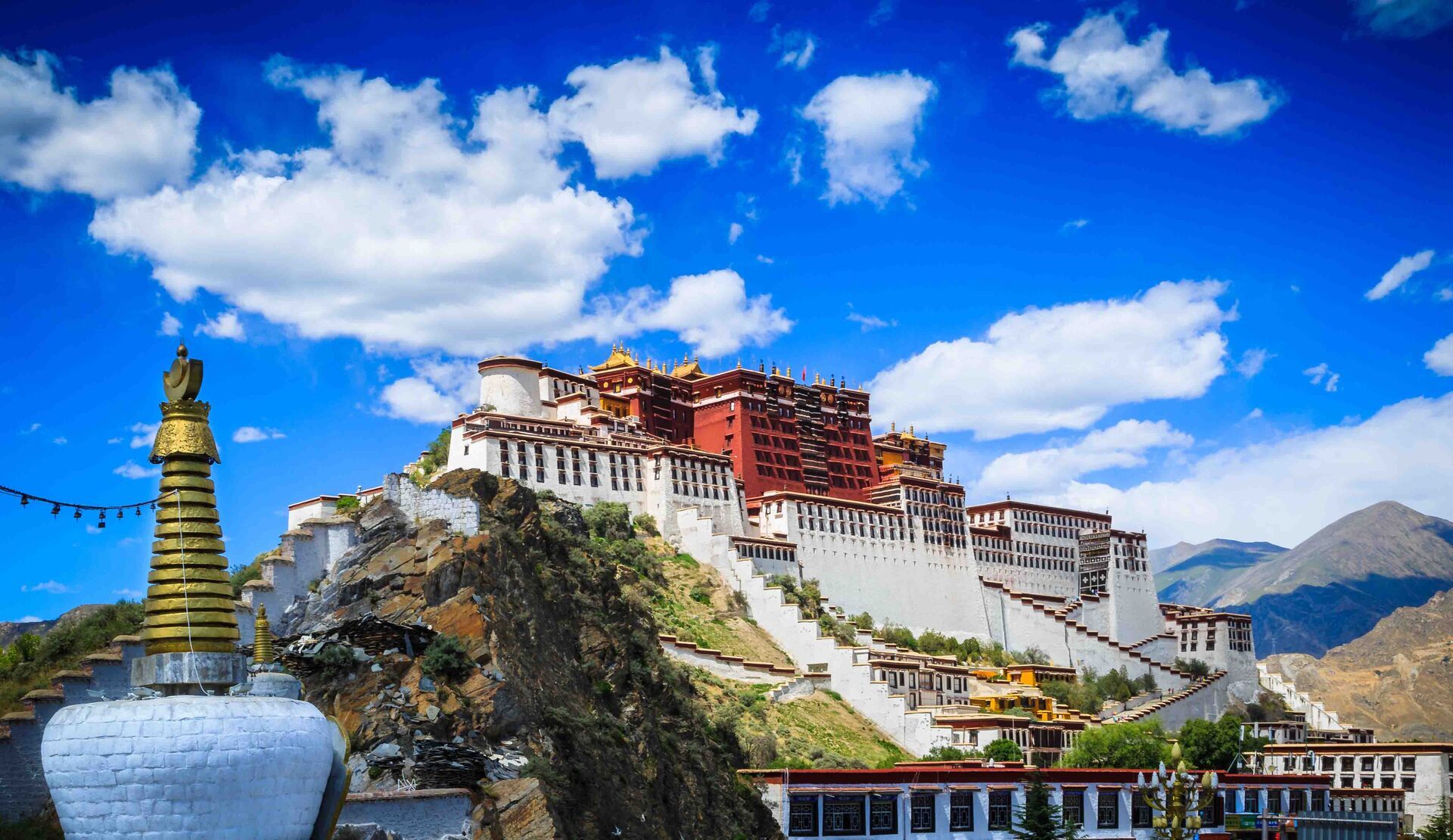
- Altitude. Lhasa sits at about 3,650 metres, Huanglong's boardwalks run between 3,500 and 3,900 metres, and some viewpoints on the Everest route exceed 5,000 metres. Most accident policies cover accidents only; altitude sickness is an illness, so you need an acute illness medical benefit. Some policies exclude treatment above 3,500 or 4,000 metres altogether.
- Trekking, skiing and diving. "Hiking" is often defined narrowly: non-commercial, non-technical, below a stated altitude. The long route in Daocheng Yading, Yubeng, or a Four Girls Mountain summit may fall outside that definition. For skiing, confirm off-piste cover; for diving, confirm the depth limit, commonly 18 or 30 metres.
- Older travellers and children. Many products cap entry age at 70 or 75, or raise premiums sharply and cut benefits beyond it. When travelling with older relatives, "can we insure them at all" comes before "how much".
- Pre-existing conditions. Hypertension, diabetes, heart disease and any cancer history will almost certainly be excluded. Some products offer an acute-flare-up rider, but it normally requires health disclosure, extra premium and a waiting period.
5. Seven exclusions that appear in almost every policy
- Pre-existing conditions and their complications, including anything diagnosed, medicated or symptomatic before departure.
- Driving under the influence, without a licence, or in an unregistered vehicle. This includes riding a scooter without the correct Chinese licence category.
- Deliberate risk-taking: entering closed areas, climbing barriers, swimming where swimming is prohibited.
- Non-medically necessary treatment: health checks, vaccinations, cosmetic work, dental reconstruction, eyewear, maternity.
- Travel beyond the policy period. A policy covers the dates printed on it. If a flight delay strands you, check whether the trip-delay benefit extends cover.
- Failure to report on time. Most policies require notification within 24 to 72 hours; late notice can mean a reduced or refused claim.
- War, civil unrest, government action and nuclear risk. Standard exclusions that are effectively impossible to buy back.
6. Agency liability insurance is not your medical cover
This deserves its own section because it causes more disputes than any other point.
Under China's Tourism Law, a travel agency must carry travel agency liability insurance. It responds when the agency is at fault: a vehicle without commercial operating credentials, a guide who changes the itinerary without consent, and similar failures. It does not respond when you trip on a step, eat something that disagrees with you, or have an accident during free time.
In other words, the agency's policy does not replace your own accident and medical cover. The two stack. The reverse is also true: your own policy will not absorb liability that properly belongs to the operator.
7. Five things to do before you pay
- Confirm the product accepts foreign nationals. Many domestic Chinese travel policies cover Chinese citizens only. Look for products labelled for inbound visitors, or simply ask whether a foreign passport can be insured.
- Use the passport as the ID document, and spell the name exactly as printed, including middle names. A single wrong letter turns into an identity verification exercise at claim time.
- Check the effective date. Most policies start at midnight after purchase. Buy at least a day ahead so cover runs door to door.
- Check the territory. It must state mainland China. A policy that says only "Asia" may exclude China or treat Hong Kong, Macao and Taiwan separately.
- Get a bilingual policy schedule. You will hand documents to both a hospital and an insurer; a bilingual schedule saves days of translation and notarisation.
8. After an incident: report, pay, document, follow up
- Treat first, report second. Do not wait for an insurer's reply in a life-threatening situation. Once stable, call the 24-hour assistance line on the policy with your location, injury and treating hospital.
- Ask about direct billing. If the hospital's international department has an agreement with your insurer, use it. If not, keep every receipt for later reimbursement.
- Collect the full document set: passport copy, medical certificate, outpatient or inpatient record, original invoices, itemised cost list, test reports, proof of payment, claim number and itinerary. One missing page can send the file back for supplementation.
- Track the payout. Cross-border claims commonly take two to six weeks. If the stated timeframe passes, follow up in writing quoting the claim number and keep the correspondence.
One practical habit: photograph every receipt on the spot and sync it to the cloud. Losing paper invoices, or soaking them in rain, is the single most common obstacle to a claim, and it is entirely avoidable.
9. Five common misconceptions
- "Visa-free entry means no insurance is needed." Visa-free arrangements govern admission, not the ability to pay a hospital bill.
- "My international health plan is enough." Confirm it is valid in mainland China, includes evacuation, and either direct-bills or accepts documents in Chinese. Many high-end plans treat short leisure trips under separate terms.
- "Higher cover is always better." A high sum insured with a large deductible and wide exclusions can pay out less than a modest policy with none.
- "I bought it, so I can forget it." Failing to report, failing to keep receipts, or overstaying the policy period can void perfectly good cover.
- "The tour operator has insurance." See section 6. That policy covers the operator's negligence.
10. Treat insurance as part of the itinerary
Flights, hotels, tickets and private cars can all be compared on price. Insurance is the one line item you buy hoping never to use. Its value is not the payout figure; it is being able to skip a certain calculation at 2 a.m. in an emergency room, or on a switchback road at 4,000 metres.
If your dates and group size are settled, send us the itinerary and we will suggest cover based on the real risk profile of the route: altitude, outdoor content, and the ages of the people travelling. More pre-departure reading is in our travel guides, and if you would like insurance planned alongside vehicles and hotels, you can design a private itinerary with us.
One clarification: we explain published visa and entry rules and share practical experience. We do not process visa applications on your behalf and make no representation about the outcome.
Need help planning this trip?
Tell us your travel dates and group size — we reply within 24 hours.
WhatsApp +86 183 1705 8017 · WeChat 18317058017
Destinations in this guide


Related Tours

Essential 4-Day Lhasa Private Tour
5-10 Days

Sichuan & Chongqing 9 Days 8 Nights · Jiuzhaigou Grand Tour
5-10 Days

Mountains of Ba, Waters of Shu · Chengdu, Jiuzhaigou & Wulong 9 Days (Jiuzhaigou + Huanglong + Wulong Karst + Furong Cave + Wujiang Gallery + Mountain City Nights)
5-10 Days
More Guides
Choosing a Guide in China: Licences, Commentary, Tipping and Unlicensed Guides
Only 8.4 percent of China 660,000 licensed guides speak a foreign language. How to verify credentials, why fees differ threefold, and the legal lines on tips and shops.
10/21/2026
How to Pay for a China Trip: Five Channels, Fees and Payment Milestones
Where the 3% Alipay fee comes from, how the PayPal rate is locked, and when deposits and balances fall due: paying for a China trip in 2026.
10/20/2026
How to Book a Jadetour Trip: Six Steps from Enquiry to Departure
Enquiry, finalising, contract, deposit, entry documents, pre-departure: six steps that explain how booking a private China tour actually works in 2026.
10/20/2026