
How Big Can a China Tour Group Be: Seat Limits, Guide Ratios and Three Thresholds
Group size is the smallest of three ceilings: seats, guide attention, site capacity. Four bands, cost steps and the 8…
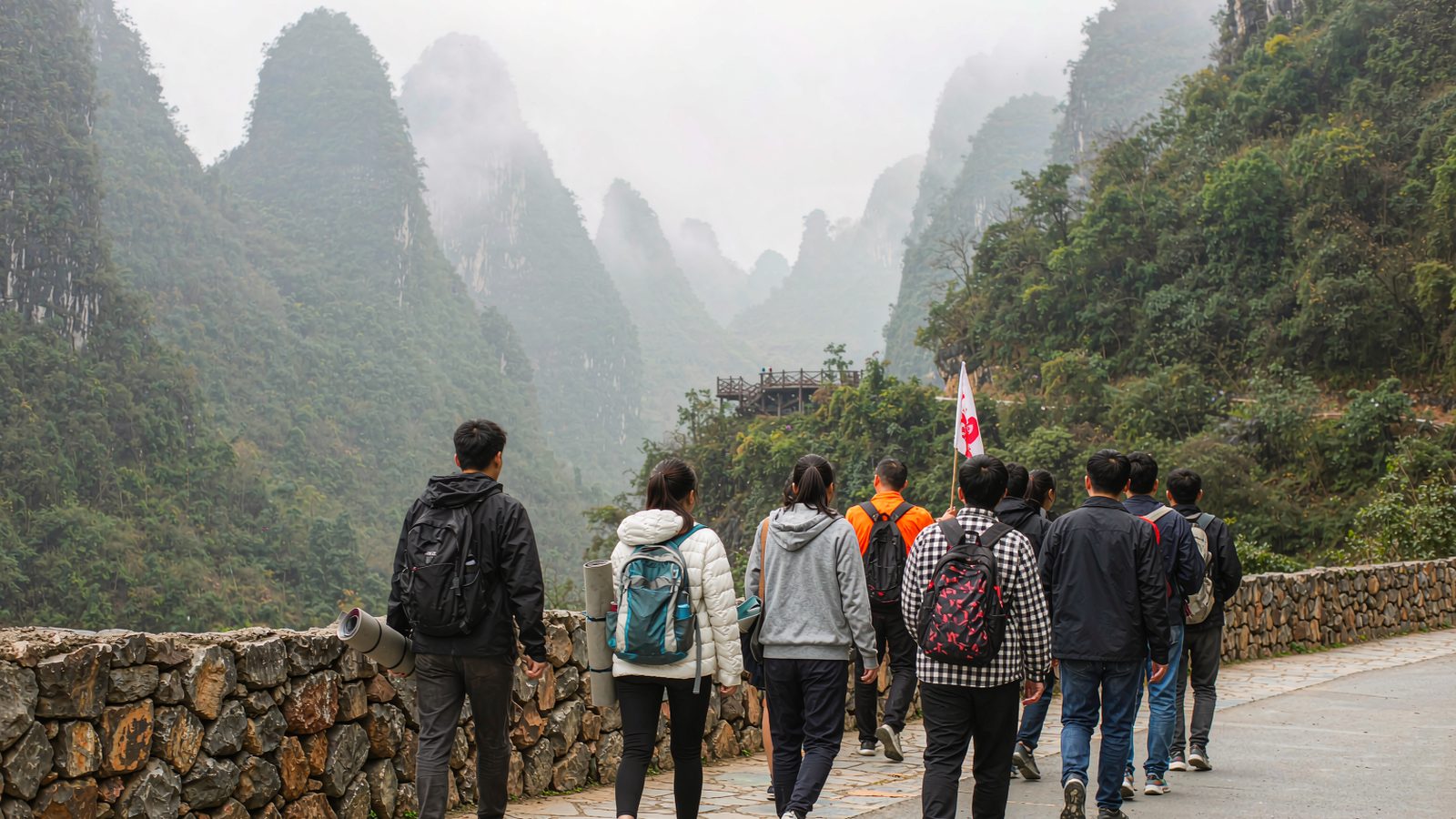
Group size is the smallest of three ceilings: seats, guide attention, site capacity. Four bands, cost steps and the 8, 16 and 24 guest thresholds.
How many people will be in my group is the most common question in tailor-made enquiries, and the easiest one to answer badly. Group size is never a single number. It is the smallest of three ceilings: seats in the vehicle, guests one guide can genuinely look after, and the number of tickets a site will release that day. Whichever ceiling you hit first sets your maximum.
1. The three ceilings
- Seats. A seven-seat vehicle carries six guests. A 15-seat van carries 12 or 13. A 33-seat coach carries 28 to 30. The remainder belongs to the guide, the driver and the luggage.
- Attention. One guide inside a site can keep 20 to 25 people within earshot and within sight. Beyond that you add an assistant or switch to wireless headsets.
- Capacity. The Forbidden City caps at 40,000 visitors a day, Jiuzhaigou at 41,000 in high season, the Terracotta Army at 65,000, all with real-name timed booking. The tickets you can secure are the real limit on group size.
2. Our four size bands
| Band | Guests | Typical vehicle | Best for |
|---|---|---|---|
| Private | 2 to 6 | Sedan or seven-seat MPV | Families, couples, small groups of friends |
| Small group | 7 to 16 | 13 to 22 seat van | Two families, alumni clusters |
| Mid-size | 17 to 24 | 28 to 33 seat coach | Corporate retreats, school groups |
| Large group | 25 to 45 | 37 to 53 seat coach | Associations, large trade groups |
The bands are not simply more expensive or cheaper versions of each other. Vehicle, guide configuration, number of dining tables and assembly method all change together. That is why adding two guests can jump the quotation by a whole step.
3. Hard vehicle limits: seats are not guest seats
When the industry says 33 seats, it means total seats including driver and guide. Sellable guest seats are usually three to five fewer. Two further constraints are routinely ignored.
- Luggage space. A 28-inch case takes about 0.08 cubic metres. A seven-seat MPV full with six guests usually swallows only four or five such cases. On long routes with heavy luggage, such as western Sichuan or Tibet, you either drop two passengers or add a luggage van.
- Empty-seat ratio. Tourism industry standard LB/T 073-2019 recommends keeping at least 15 percent of seats empty. On that basis a 33-seat coach should carry 26 to 28 guests, and senior or family groups often need 20 percent.
So a 33-seat coach carrying 33 guests does not work in practice. Plan on 80 to 85 percent of the seat count and nobody ends up with a suitcase on their lap.
4. The step effect in cost per person
Vehicle cost per day is fixed, so cost per head jumps as the group changes. Taking a two-day Wulong trip from Chongqing, including fuel, tolls and driver expenses:
- A seven-seat vehicle at about 1,000 yuan a day costs 500 per person at two guests, 250 at four, and 167 at six.
- A 15-seat van at about 1,300 yuan a day costs 163 per person at eight guests and 108 at twelve.
- A 33-seat coach at about 1,800 yuan a day costs 100 per person at eighteen guests and 69 at twenty-six.
The pattern is clear: going from two to six guests cuts cost per head by two-thirds; going from twelve to twenty-six cuts it by only another third. The curve flattens after 16 to 20 guests, so adding more people saves little money and starts costing experience.
5. Guide ratios: how many one person can carry
- 2 to 8 guests. One guide, who also drives up to six. Commentary reaches everyone and questions are easy.
- 9 to 25 guests. One guide plus one driver. Commentary uses a microphone and questions need timing.
- 26 guests and above. One lead guide, plus an assistant for assembly, tickets and headcounts when needed.
- Student and study groups. Teachers are added on a ratio of 1:10 to 1:15 and written into the safety plan.
One detail worth checking: a driver is not a guide. If a quotation says one person per vehicle, ask whether that person holds a guide licence and accompanies you inside sites, or only drives.
6. Site caps feed back into group size
In 2026 almost every major site uses real-name timed booking, and groups must reserve seat by seat. That directly limits how large a group you can build.
- Forbidden City. 40,000 a day, released seven days ahead at 20:00, split into morning and afternoon slots. A 20-person group needs twenty tickets in one slot, which means booking on the minute.
- Jiuzhaigou. 41,000 a day in high season, real-name booking 7 to 14 days ahead, entry 07:30 to 14:00. Large groups must enter in batches and regroup inside.
- Terracotta Army. 65,000 a day, with ten days of lead time advised in peak season.
- When booking fails. Change the slot, split into two batches, or substitute an equivalent site. All three options add real cost once a group passes thirty.
The conclusion is blunt: above twenty guests in peak season, flexibility is close to zero. If you want room to adjust on the day, staying under sixteen is more realistic.
7. Three experience thresholds: 8, 16 and 24
- Eight guests. You can still decide things together. One round table for dinner, one headcount at the door, and the guide remembers everyone's name. This is the best experience band.
- Sixteen guests. Process starts to matter. Headcounts, two restaurant tables, and agreed meeting gates and times. Commentary needs amplification.
- Twenty-four guests. Sub-groups become mandatory. Boarding takes twice as long, toilets and photo spots queue, and any delay propagates.
In practice, on the same one-day Wulong route, an eight-person group spends about nine hours in transit and a 24-person group about ten and a half. The extra ninety minutes is almost entirely assembly and queueing.
8. Limits for special groups
- Senior groups. Keep to 20 guests, raise empty seats to 20 percent, cap driving at four hours a day, and use lifts or cable cars instead of climbs.
- Families with children. Keep to 16 guests, roughly six to eight families, protect a midday rest, and carry child seats.
- Accessibility needs. With more than two wheelchair users, assign a dedicated assistant, confirm the vehicle can take a folded wheelchair, and keep the group under twelve.
- Photography groups. Twelve at most. Sunrise and sunset positions are finite and crowds block each other.
- Study groups. Teachers at 1:10 to 1:15, generally no more than forty students, split into two or three teams on the ground.
9. Keeping quality at larger numbers
- Split into teams. Thirty guests become three teams of ten with their own commentary, synchronised by wireless headsets.
- Arrive early. Thirty minutes ahead of the standard group arrival removes the longest queue of the day.
- Lock tickets in writing. Put the reserved slot into the contract annex and state the cost of changing it up front.
- Table planning. Group meals are built around tables of ten. If your number is not a multiple of ten, agree the sharing plan with the restaurant in advance.
- Meeting cards. For every site, give a time, a landmark and the plate number. That beats ten messages in the group chat.
10. Four common questions
- Can one person join a tour? Yes on a group tour, subject to sharing a room or paying a single supplement. Private tours usually start at two, and a solo traveller is priced as two.
- What if we exceed 45 guests? Split into two groups with two vehicles and two guides, running in parallel or offset. Do not compress 53 seats into one coach.
- Do children count? Yes. A seat is a seat, and infants still need a child seat. Nobody rides on a lap to save space.
- Can we add someone late? Vehicle and tickets must both be reconfirmed. Three days ahead usually works in low season; in July and August, National Day or Spring Festival it is effectively impossible.
11. How to settle the number
Start with who must travel, then the maximum you can accept, and only then look at price. Give us the headcount range, age mix, luggage volume and must-see sites, and Jadetour will return a concrete plan covering vehicle, guide configuration and ticket feasibility rather than a lump sum worked backwards. To start, open Plan my China trip.
Need help planning this trip?
Tell us your travel dates and group size — we reply within 24 hours.
WhatsApp +86 183 1705 8017 · WeChat 18317058017
Destinations in this guide


Related Tours

More Guides
Private, Group or Budget Tour: What the Price Difference Really Buys
The same route can differ by more than double. Four measurable cost drivers, three tour formats, and eight questions to ask before booking.
10/22/2026
Choosing a Guide in China: Licences, Commentary, Tipping and Unlicensed Guides
Only 8.4 percent of China 660,000 licensed guides speak a foreign language. How to verify credentials, why fees differ threefold, and the legal lines on tips and shops.
10/21/2026
Travel Insurance for China: How Much Cover, What Is Excluded, How Claims Work
China has no compulsory travel insurance, yet deposits, international-department bills and air ambulances are paid up front. Cover, exclusions and claims explained.
10/21/2026