
Shunan Bamboo Sea: How to Plan 7,000 Hectares of Bamboo, Cable Car and 2026 Tickets
CNY 100 in peak season, 60 in winter, a 55 yuan shuttle valid three days and a 50 yuan cable car. Which route to take a…
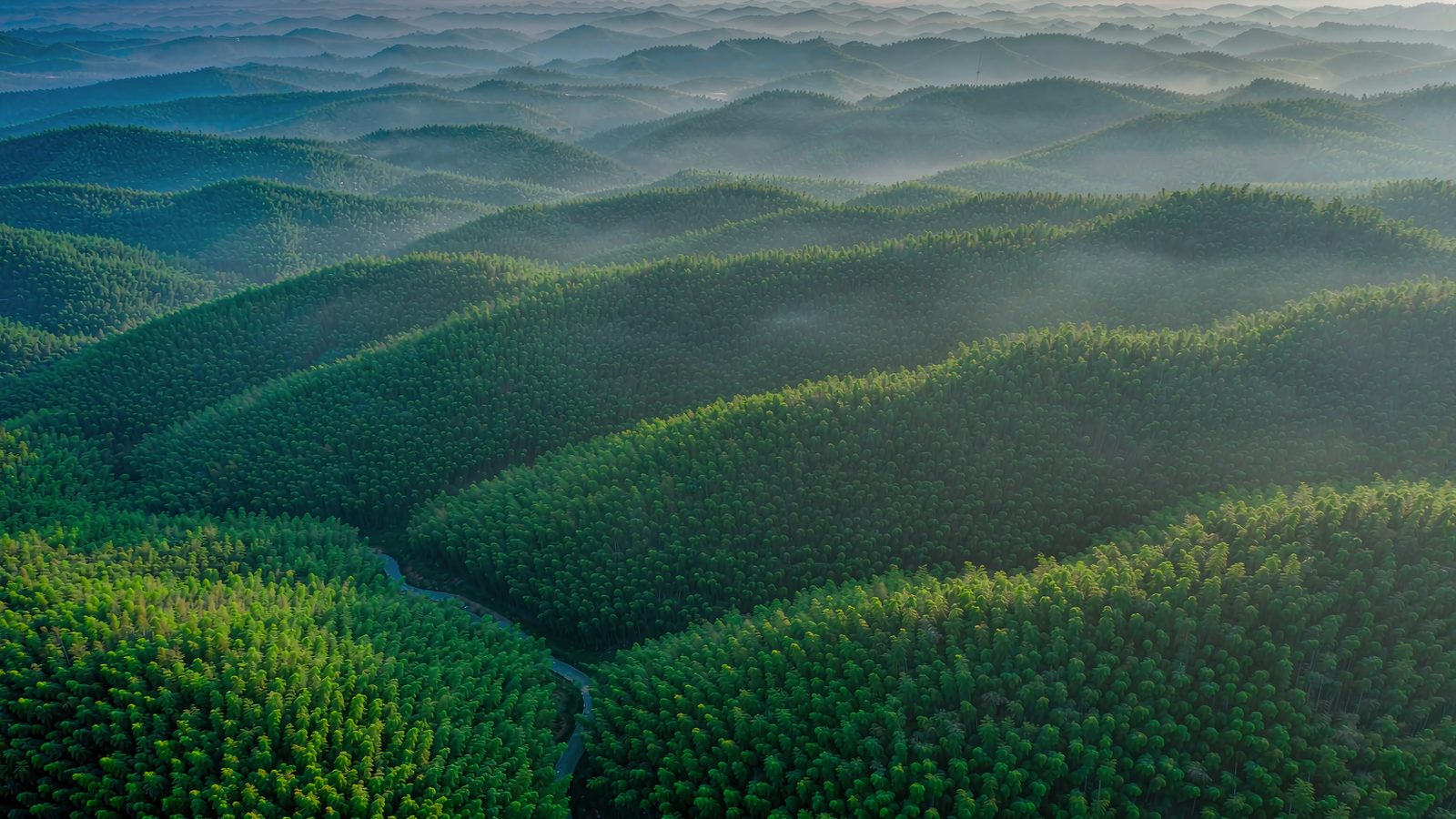
CNY 100 in peak season, 60 in winter, a 55 yuan shuttle valid three days and a 50 yuan cable car. Which route to take and why drivers must book ahead.
Shunan Bamboo Sea is the kind of place that looks ordinary in photographs and silences you once you are inside it. More than 70,000 mu of nanmu bamboo — roughly 4,700 hectares — spread across 27 ridges and over 500 peaks, with a 45-square-kilometre core area, more than 400 bamboo species and 92.4 per cent vegetation cover. On a summer afternoon the city of Yibin reads 34 degrees; the bamboo town at two in the afternoon reads 22. That is not marketing. It is altitude plus canopy.
It is also a place that is very easy to visit badly, for one concrete reason: the scenic spots are two to eight kilometres apart and the site cannot be covered on foot. Everything runs on the shuttle bus. There is one cable car, in one place. Plenty of visitors arrive, buy the entrance ticket, discover they have not bought the bus ticket, then ride the cable car in the wrong direction, and finish the day having seen three points.
This guide sets out the 2026 prices, the two routes, which sights to keep and which to drop, and how to get there.
The short answer: one day or two, west line or east
The sights fall naturally into two lines separated by a stretch of mountain road. Understand that layout and half the itinerary writes itself.
| Your time | Route | What you give up |
|---|---|---|
| One day, self-drive or private car | West gate, Woyou Valley, cable car from Moxi, Guanhai Tower, Jade Corridor, Haizhonghai, return | Xianyu Cave and Tianbao Fort, which sit in the southeast, 30 minutes away by road |
| One and a half to two days (recommended) | Day one west: Woyou Valley, cable car, Guanhai Tower, Jade Corridor. Day two east: Xianyu Cave, Tianbao Fort, Qicai Waterfall, Haizhonghai | Nothing important. Stay inside the park to save the daily re-entry and the drive |
| With elderly parents or small children | Woyou Valley (first 500 metres only), cable car both ways, Guanhai Tower, Jade Corridor, Haizhonghai raft | Drop the cliff walkways at Xianyu and Tianbao entirely |
| Primarily photographing | Dawn at Jade Corridor, late morning at Qicai Waterfall, dusk at Baishou Terrace; second dawn at Guanhai Tower for cloud sea | You must sleep inside the park or you will miss the 07:00 light |
In one sentence: the west line shows the shape of bamboo; the east line shows bamboo against cliffs and water. If you can only do one, do the west — the cable car plus Guanhai Tower give the single view this place cannot be replaced on.
2026 tickets and opening hours
Shunan Bamboo Sea prices its tickets by season, and this is the official published schedule:
| Item | Price | Notes |
|---|---|---|
| Peak season ticket, 1 March to 30 November | CNY 100 full, CNY 50 concession | Concession covers ages 6-18 and full-time undergraduates |
| Low season ticket, 1 December to end February | CNY 60 full, CNY 30 concession | Roughly sixty per cent of peak. Winter is the best value of the year |
| Shuttle bus | CNY 55 per person | Valid three days, unlimited rides. With sights 2-8 km apart, this is not optional |
| Cable car, Moxi to Guanhai Tower | CNY 50 one way, CNY 75 return | 2,742 metres long, about 30 minutes each way; operates 09:00-17:00 |
| Giant Panda Park | CNY 24 adult, CNY 12 concession | 09:00-17:00, last entry 16:00; these prices hold until 30 November 2026 |
| Haizhonghai raft | CNY 160 per four-person raft, no time limit | Rafts can be shared, roughly CNY 20-40 per person; Yingfeng Bay rafts are CNY 30 each |
| Wire-flying experience at Haizhonghai | CNY 128 per person | Costume and harness, flying over the bamboo canopy |
Who gets in free, who pays half
- Free all year: children aged six or under, or 1.2 metres and under; visitors aged 65 and above; retired senior cadres; serving military including emergency rescue teams, disabled veterans, veterans, and the families of martyrs and of military personnel who died in service; disabled visitors; accredited journalists; licensed tour guides leading a group; Buddhist and Daoist clergy.
- Ages 60 to 65: free on ordinary days, half price during the seven statutory holidays — New Year, Spring Festival, Qingming, Labour Day, Dragon Boat, Mid-Autumn and National Day.
- Yibin residents: CNY 30 with a Yibin ID, all year except 1-5 May and 1-7 October.
- 2026 only: visitors surnamed Ma or born in the Year of the Horse get the first ticket free, all year, but only at the physical ticket window with an ID. It cannot be booked online.
- Arrival offers: anyone landing at Yibin Wuliangye Airport, or arriving on a China Eastern flight from Sichuan or Chongqing, pays half price within seven days of arrival, using the boarding pass.
Opening hours work on two levels. The core scenic area is open 24 hours, all year — the park never closes. But individual experiences keep their own hours: cable car 09:00-17:00, Haizhonghai rafts 08:30-18:30, the canopy walkway 07:00-19:00. And the shuttle bus runs 07:30-18:00 from April to September, roughly every 30 minutes; from October to March it runs 08:30-16:30 on weekdays and 08:30-18:00 at weekends and holidays, roughly hourly. That last detail matters most: on a winter weekday the last bus is 16:30. Be at Xianyu Cave at three in the afternoon and you may be walking back to the car park.
Self-drivers must book in advance. Every private vehicle entering the park has to reserve a slot on the official mini-program, up to seven days ahead. Without it you will be turned away at the west gate. Roads inside are steep and winding; parking is about CNY 20 a day.
Why the CNY 55 bus is not a choice
Be clear about one thing: Shunan Bamboo Sea is not a sight. It is a mountain range. Eight main zones and 134 individual points are scattered across a 45-square-kilometre core, the nearest two kilometres apart, the farthest eight, all on switchback roads. On foot you will manage two points a day and spend your energy on asphalt.
The shuttle loops between the main nodes every 10-15 minutes in high season, every 30-60 minutes on winter weekdays. For CNY 55 you get three days of unlimited rides. Four rides breaks even; a full west plus east circuit needs eight to ten. Use it the way you would use a city bus rather than an airport transfer: get off wherever something looks good, wander, then wait for the next one without worrying about the fare.
Two practical notes. Write down the last bus time before you plan the afternoon — that is the only mistake here that leaves you stranded. And the bus runs in two directions, west line and east line, so ask the driver whether this one stops where you are going; riding the wrong way costs twenty extra minutes of hairpins.
The west line: the cable car and the one view you cannot get elsewhere
Entering from the west gate, the first stop is usually Woyou Valley, a stream-and-bamboo boardwalk taking 30 to 60 minutes. The water is clear and shallow, with a few small waterfalls that are more about sound than spectacle. Frankly the valley is not dramatic. Its value is rhythm: after a long drive, a gentle walk pulls your body out of the car. It is also the best place in the park for children, who can paddle in the stream.
Then the main event: the cable car, linking the floor of Moxi valley with Guanhai Tower. It is 2,742 metres long and takes about half an hour each way — the only position in the entire park from which you can see, from the air, what the words bamboo sea actually mean. As the cabin clears the ridge, the canopy runs unbroken beneath you, a green ocean wrinkled by wind, all the way to the horizon. No photograph reproduces it, and it is what separates this place from any other mountain that happens to have bamboo on it.
Tickets are CNY 50 one way, CNY 75 return. Take it up and walk down. Thirty minutes of panorama going up, forty minutes of bamboo forest coming down, both experiences, and CNY 25 saved. Take the return only if knees or schedule are against you.
The upper station is Guanhai Tower, one of the park's high points, with a 360-degree view from the top floor. What people wait for here is the dawn cloud sea, most likely after rain clears overnight, when cloud streams just above the bamboo tips and only a few summits show through. Be honest with yourself: it is luck, not a deliverable. Catch it and you are fortunate; miss it and the plain panorama still earns the climb. One local tip — the stair landings inside the tower give a better downward frame than the open deck.
Coming down, the Jade Corridor is the park's signature: 480 metres of natural red sandstone paving, 6.5 metres wide, with bamboo on both sides leaning inward to close a green tunnel overhead. The stone reads dark red in the shade, hence the local phrase about a red carpet. The window is 07:00 to 08:00, mist still hanging and nobody about. After nine the coaches arrive, the path is narrow, and the experience drops off a cliff. Late afternoon, 16:00 to 17:00, gives raking light that scatters across the stone like filings of gold.
The east line: cliff caves and a fortress, not for the acrophobic
The east line carries the human history and is the most underrated part of the park. It sits a stretch of mountain road away from the western core, which is why many visitors skip it out of sheer reluctance to ride the bus. That is a mistake.
Xianyu Cave
Xianyu is not a cave in the usual sense but a rock shelter — a half-tunnel about 500 metres long, backed by sheer cliff and opening onto a deep gorge. Bamboo grows thick above it; the gorge below fills and empties with cloud, so the mouth of the shelter appears and disappears. Locals call it the pearl of the bamboo sea.
It is also a Buddhist and Daoist shrine in one: Guanyin Hall and the Great Hall went up after the Song dynasty, the Daoists added the Jade Emperor and Laojun halls in the Qing, and several dozen Ming-dynasty cliff carvings survive inside. The Ming stela of nine dragons in the Great Hall is remarkably intact — a small block of stone, nine dragons cut with real movement.
Tianbao Fort
Tianbao was built around 1862, during the Xianfeng-Tongzhi years of the Qing, as a military stronghold against Shi Dakai's Taiping army marching into Sichuan, and was later used as a bandit-defence post in the Republican era. What survives is about 1,500 metres of cliff walkway cut into the middle of a cliff face several hundred metres high, running west to Xianyu Cave and east to Tianhuang Temple, past thirteen stone gatehouses. In 1997 a further set of carvings was added: the Thirty-Six Stratagems, roughly 1,000 square metres in high relief, one stratagem per panel, spread along a kilometre of rock — the first such carved gallery in China.
A warning that has to be explicit: this stretch is hostile to anyone afraid of heights. Parts of the walkway are cut straight into the cliff with a several-hundred-metre drop below and a single chain for a handrail. Acrophobics, families with small children, and anyone visiting after rain should skip it and go to Qicai Waterfall instead. Xianyu and Tianbao are linked by walkway; allow two hours, and you do not retrace your steps.
Qicai Waterfall
The Shuilao river leaves the forest and drops off a cliff in four tiers at Huilong Bridge, close to 200 metres in total. The first tier is five metres wide and thirty high, a ribbon of silver; the third, four wide and fifty high, is the most powerful; the fourth, five wide and seventy-four high, sits at the mouth of the gorge and is mostly heard rather than seen.
The name means seven-colour. At midday in clear weather the sun refracts through the spray and a rainbow hangs in front of the fall — and because the spray drifts on the wind, the rainbow wanders with it. Your best odds are 14:00 to 16:00, on a sunny day. Mountain weather turns fast; ten minutes of hard rain is normal here, so an umbrella is not a suggestion, it is equipment.
Haizhonghai: the water in Crouching Tiger
Haizhonghai is a low trough on the mountain that was dammed into a lake of about sixty mu — four hectares. It is famous because Ang Lee filmed here: the shot in Crouching Tiger, Hidden Dragon where Zhang Ziyi skims across the water on a raft.
Rafts still run: CNY 160 for a four-person raft, no time limit, and they can be shared at roughly CNY 20-40 a head. The boatman wears a conical hat, poles once, and the raft slides out into green water ringed by bamboo reflections, flat as a jade mirror. To be fair: it is a pole-driven raft and it is slow. Thrill-seekers will be bored; anyone who wants to sit still for a while will think it worth every yuan. Weekends and holidays can mean a half-hour wait, so go early.
There is also a wire-flying rig at the lake, CNY 128, costume included, which is more a short-video activity than a sightseeing one. Early morning, before the mist lifts, is the photographic window here.
Four places people walk past
- Baishou Terrace, also called Guanyun Pavilion: the hills below read as a hundred turtles bowing, which is where the name comes from. This is the view used in the landscape scroll of the 2008 Beijing Olympics opening ceremony, and it has been shown on the screens in Times Square. Also good for cloud sea, sunrise and sunset.
- Longyin Temple: built on a summit, named for the way wind through the bamboo sounds like a dragon. Arrive before 08:30 and you can often photograph cloud sea.
- The Bamboo Museum: the largest specialist bamboo museum in the country, 6,668 square metres, split into nature, history, folklore and bamboo-rhyme galleries. The rainy-day fallback, and the fastest way into the cultural thread.
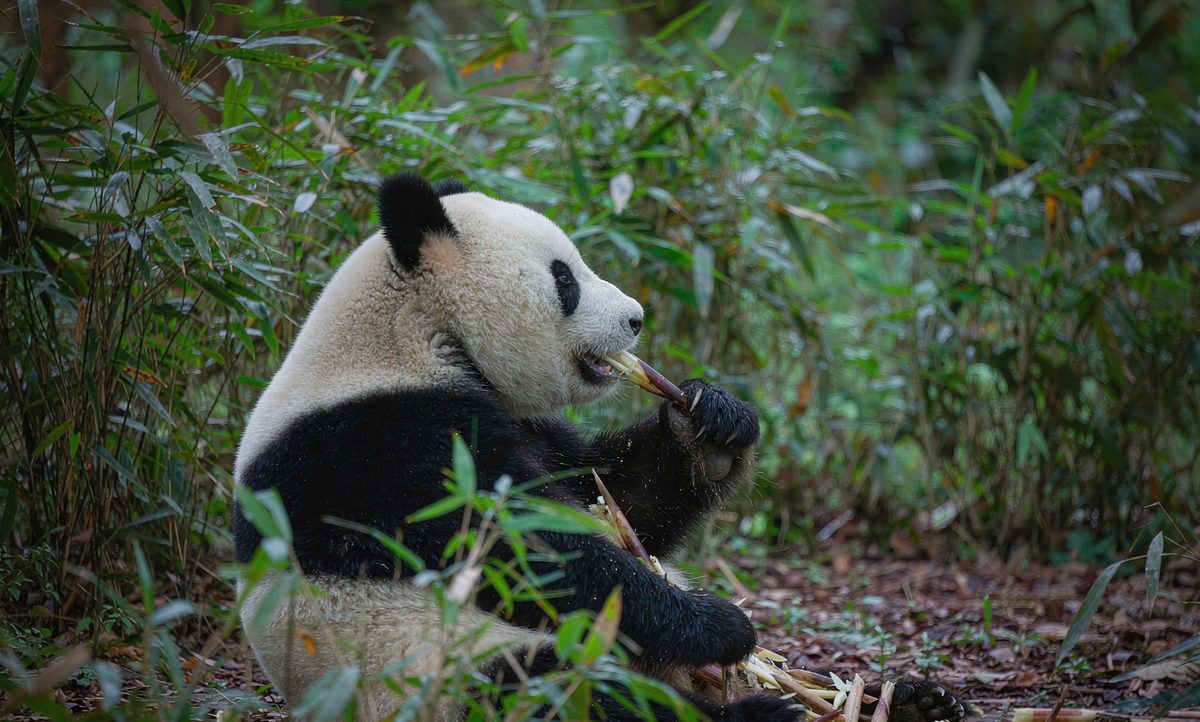
- Giant Panda Park: opened in 2026, the first in southern Sichuan, with four residents — Jinke, Qilin, Pingping and Fanxing. Two pavilions themed on the park's four seasons, one echoing the mountain outline in its roof, the other built over water. There is a panda train, a small-animal area and a panda restaurant. The animals are most active between 09:00 and 11:00; tickets CNY 24, concession CNY 12.
Getting there: Changning station beats Yibin
Most people assume you go to Yibin and then onward. In fact Changning is the closest high-speed rail station, and this is the single easiest optimisation in the whole itinerary.
| Leg | Time | Cost | Notes |
|---|---|---|---|
| Chengdu East to Yibin West | About 1.5 hours | About CNY 110 second class | Frequent; also check whether any service runs direct to Changning |
| Yibin West to Changning | 13-15 minutes | CNY 15-17 | Departures cluster in the morning and early evening; check the timetable |
| Changning station to west gate | 15-20 minutes | About CNY 60 per car, four seats | 19 km on a dedicated fast road; bookable transfer 0831-4912288 |
| Changning station by bus | About 30 minutes | CNY 3-4 | Route 3; frequent but many stops |
| Self-drive from Chengdu | 3-3.5 hours | Tolls plus fuel | About 260-280 km; navigate to the west gate |
| Self-drive from Chongqing | 2.5-3 hours | - | Via the Chengdu-Chongqing ring road onto the Yibin-Xuyong expressway |
Two details worth planning around. Yibin West to Changning is not a dense service: 09:29, 09:48 and 10:18, then nothing until 15:13 — a gap of nearly five hours. Miss the morning trio and your options are a 60-kilometre, seventy-minute taxi, or a coach from Yibin city. Check the day's timetable before you commit. And Changning station has a bookable transfer desk: CNY 60 for a four-seat car, CNY 200 for a sixteen-seat minibus, phone 0831-4912288. More reliable than hailing something at the kerb.
Sleeping and eating: is the whole-bamboo banquet worth it
Where to stay. Inside the park there are 234 accommodation properties, 5,037 rooms and 8,025 beds, from five-star tourism hotels to farmhouse rooms at one or two hundred yuan. The one recommendation that matters is stay inside the park. Not for atmosphere but for efficiency: the ticket allows repeat entry within its validity for guests staying on site (check what is printed on your ticket), while staying outside means re-checking every day and an hour of driving each way. Mountain rooms are damp in summer — confirm air conditioning and a dehumidifier before booking, both are essentials. Weekend rooms in July and August sell out; book at least a week ahead.
What to eat. The whole-bamboo banquet is a provincial-level intangible cultural heritage of Sichuan, dating to the Ming dynasty, built from bamboo fungus, fresh shoots, bamboo bird's nest, bamboo tripe, fungus eggs and bamboo foetus. Sixty to eighty yuan a head buys a good version. The soul of it is bamboo fungus stewed with free-range chicken: a clear broth, the fresh fungus saturated, bursting when bitten. Bamboo shoots with cured pork is the other keeper — cypress-smoked farm bacon against shoots dug that morning, crisp, salty, and dangerously easy to eat too much of.
Two warnings. Do not order the CNY 888 or 1,088 set banquets; ordering individual dishes is far better value, and several of the expensive items in those sets are imitation. And bamboo fungus and bamboo bird's nest are mostly cultivated — ignore anyone selling you wild. In the town outside the gate, two cheap things are worth seeking out: Shuanghe rice jelly, made with well water and served with iced brown sugar syrup for about CNY 10, and Yibin burning noodles, about CNY 8, heavy on oil and chilli.
Six misconceptions
- "The ticket includes the bus." It does not. The shuttle is CNY 55 separately, valid three days. Sights are 2-8 km apart; without it you will not cover the park.
- "Yibin station is most convenient." Changning is 19 km and 15-20 minutes from the gate; Yibin West adds another leg.
- "I can just drive in." All private vehicles must reserve on the official mini-program, up to seven days ahead. Without a reservation you stop at the gate.
- "A return cable car ticket is better value." One way up plus a walk down gives you more and costs CNY 25 less. Take the return only if mobility is an issue.
- "There is nothing to see in winter." The winter ticket is CNY 60, sixty per cent of peak, with thin crowds, bamboo turning yellow-green, and occasionally snow on the canopy. It is the best value season.
- "One day is enough." For the west line, yes. West plus east crosses the entire core; in one day you would spend it in the bus.
One more rule to state plainly: drones are banned throughout the park. Do not bring one. Mosquitoes in the bamboo are large and persistent, so bring repellent. And the stone paving turns into a skating rink after rain — grippy shoes are a requirement, not heels and not sandals.
How Jadetour handles Shunan Bamboo Sea
We place it in the middle of a southern Sichuan route, usually linked with Yibin — Lizhuang old town and the Wuliangye distilleries — or with Xingwen Stone Sea, rather than running it as a standalone trip. The reasoning is practical: it is over 260 km from Chengdu and about 200 from Chongqing, so a there-and-back visit puts too much of the day on the road. Inside a loop, the transport cost amortises.
Our standard shape is two days. Day one, leave Chengdu or Chongqing, reach Changning around midday, take the west line in the afternoon — Woyou Valley, cable car, Guanhai Tower, Jade Corridor — and sleep inside the park. Day two, the east line in the morning, Xianyu Cave, Tianbao Fort and Qicai Waterfall, then Haizhonghai by raft and the panda park in the afternoon, and home in the evening. For groups with older travellers or small children we replace the cliff walkways with the waterfall and the museum: slower, but nobody spends an afternoon frightened on a ledge.
For international guests we normally provide an English-speaking driver-guide and buy the shuttle and cable car tickets a day ahead so nobody queues at a window. If your Sichuan dates are set, send us the number of travellers, the age mix and whether you will have a car, and we will build an hour-by-hour plan around that season's bus timetable and cable car hours — what time to be in the Jade Corridor for photographs, whether to ride the cable car one way or both, whether to spend a night on the mountain. Those details matter far more than whether the place is worth visiting.
Need help planning this trip?
Tell us your travel dates and group size — we reply within 24 hours.
WhatsApp +86 183 1705 8017 · WeChat 18317058017
Destinations in this guide

Related Tours

More Guides
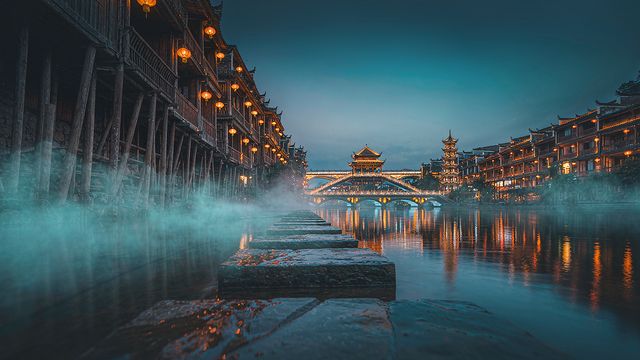
Fenghuang Ancient Town: Night-View Spots, River Cruises and Where to Sleep
The old town is free; only nine sights charge. A 51-minute train from Zhangjiajie, a 20-minute blue hour and which stretch of riverbank is actually quiet.
11/08/2026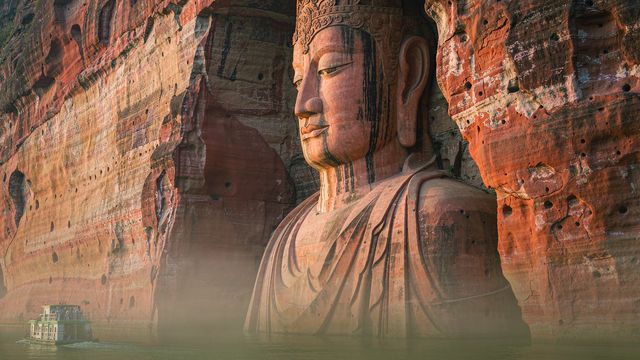
Leshan Giant Buddha: Cruise or Cliff Stairway, and How to Beat the Three-Hour Queue
Mountain ticket 80 yuan, cruise 70 — two routes that barely overlap. Tickets, time slots, the 8,000-a-day stairway quota and how to avoid the queue.
11/08/2026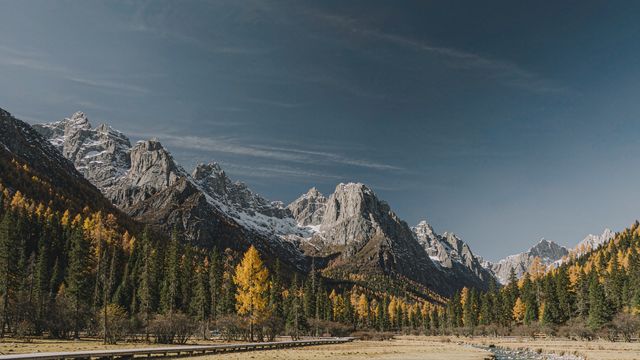
Siguniang's Three Valleys: Shuangqiao, Changping or Haizi — Which One Fits You
One valley is a bus ride past snow peaks, one a gentle forest walk, one a horse trail into empty meadows. Tickets, hours and fitness demands compared.
11/07/2026