
Suzhou In Depth: How to Read the Gardens, Which Water Town to Choose
Lingering Garden for space, the Humble Administrator’s for water, the Master of the Nets for night. How to choose among…
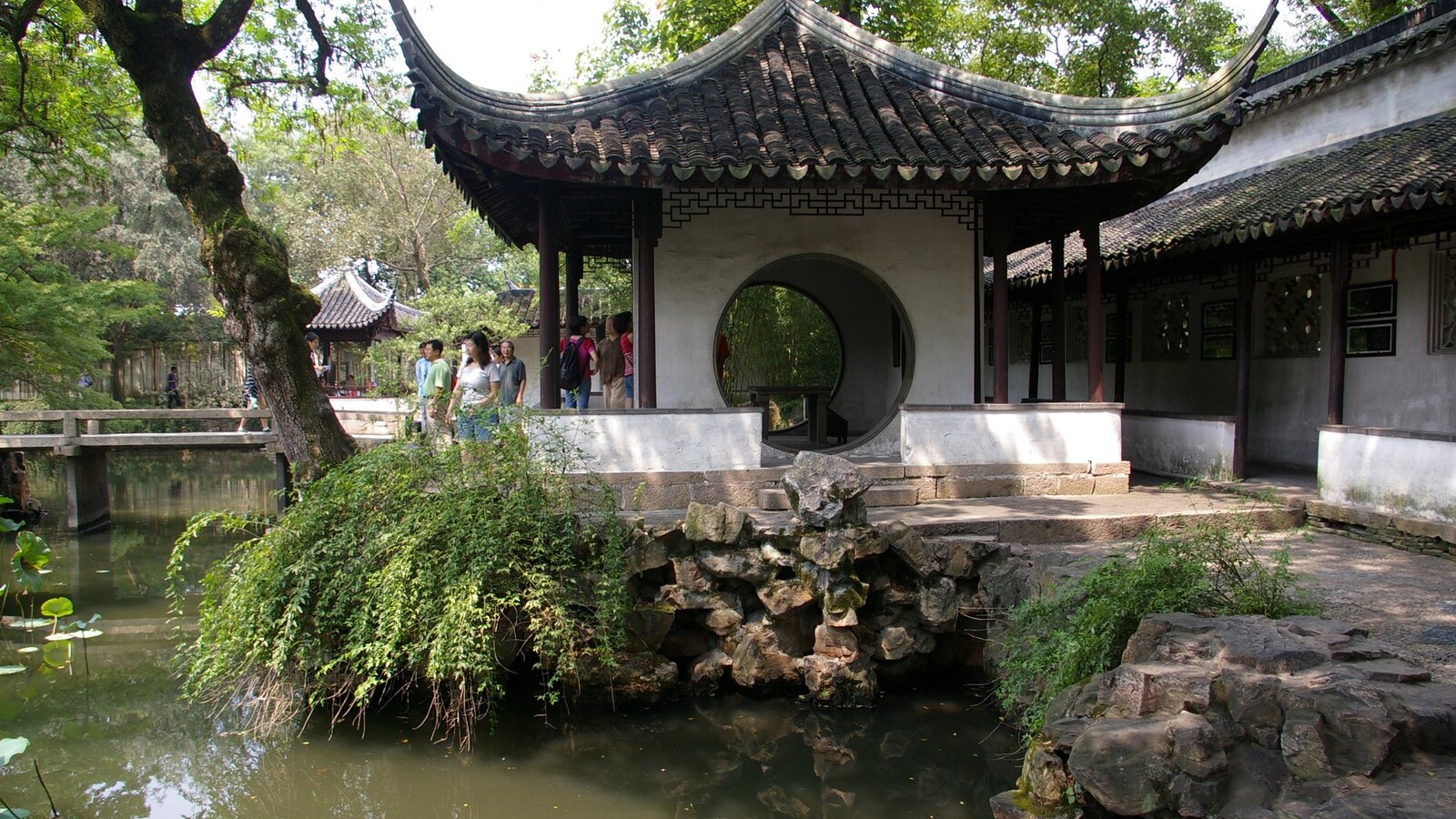
Lingering Garden for space, the Humble Administrator’s for water, the Master of the Nets for night. How to choose among the great gardens, and Tongli versus Zhouzhuang.
Suzhou is often treated as a "stop on the way" from Shanghai, but if you only give it half a day you will see nothing but the crowds at the Humble Administrator's Garden. Suzhou's real significance is this: it represents the highest achievement of Chinese classical garden art, and it is the best entry point for understanding the Jiangnan literati way of life. Hundreds of gardens were built here during the Ming and Qing dynasties, and nine still hold UNESCO World Heritage status today.
How to actually look at a Suzhou garden
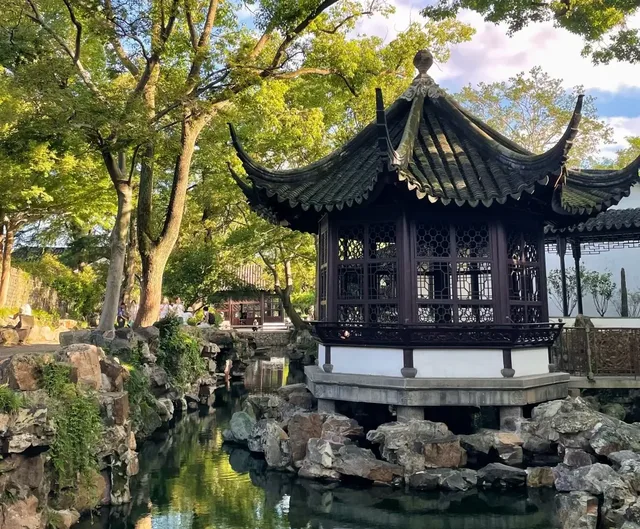
First-time visitors often find the gardens "just a pile of pavilions and rockeries". The reason is that they have not learned how to look. The essence of a Chinese classical garden is not the buildings themselves but the way space is organised — how an illusion of boundlessness is created within a limited area.
Four things to watch for
- Borrowed scenery (jiejing): drawing a pagoda, hill or tree outside the wall into the garden's sightlines. The western part of the Humble Administrator's Garden borrowing the North Temple Pagoda is the classic example;
- Opposite scenery (duijing): standing in one place with your eye landing precisely on a view elsewhere. Every window and doorway in a garden is placed deliberately;
- Shifting views with each step: paths are designed to wind rather than run straight, so that the composition changes entirely every few paces;
- The large within the small: rockery, reflected water and dividing corridors build layered landscapes within a few dozen square metres.
With those four ideas in mind, the pavilions stop being isolated objects and become a precisely calculated system of spatial design.
Choosing among the four great gardens
Lingering Garden: a textbook of spatial art
The Lingering Garden is celebrated for its masterly handling of architectural space. It divides into four distinct zones: the central area given to rockery and water, the east to halls, courtyards and the extraordinary Cloud-Capped Peak stone, the north to bonsai, and the west to wooded seclusion. A corridor of more than 700 metres threads the four together, so that each step reveals a new composition. If you see only one garden, this best demonstrates the "unique spatial arrangement" of Chinese garden design.
Humble Administrator's Garden: the largest, and the busiest
The largest garden in Suzhou, with broad water surfaces and rich planting in a relaxed, naturalistic style. Its drawback is sheer visitor volume — be at the gate the moment it opens, or come after 3pm, or you will struggle to sense the quiet the garden was designed to produce.
Master of the Nets Garden: small, exquisite, best at night
Modest in size but exceptionally tight in layout, it is considered the finest example of a small garden. More importantly, it is the Suzhou garden best experienced at night. In the evening it becomes something else entirely: following the staff through pavilions and halls, you find each room hosting a different traditional performance — Kunqu opera, pingtan ballad singing, guqin, bamboo flute, dance and calligraphy. Lamplight on water, silk-and-bamboo music in the air: this is the most elegant way to experience a Jiangnan literatus's evening.
Tiger Hill: not a garden, but unmissable
Strictly speaking a hill with historic remains rather than a garden. Barely 30 metres high, it has long been called "the finest sight in Wu". Climbing the stone steps you pass temples, gardens and curious rocks — the Sword Pool is deep and enclosed, the Thousand Men Rock broad and open. At the summit, the Yunyan Temple Pagoda has leaned for nearly a thousand years and is known as "China's Leaning Tower of Pisa". Along the way you can also see bonsai in many styles and learn how they are made.
Water towns: Tongli or Zhouzhuang?
Several canal towns surround Suzhou; the usual choice is between Tongli and Zhouzhuang.
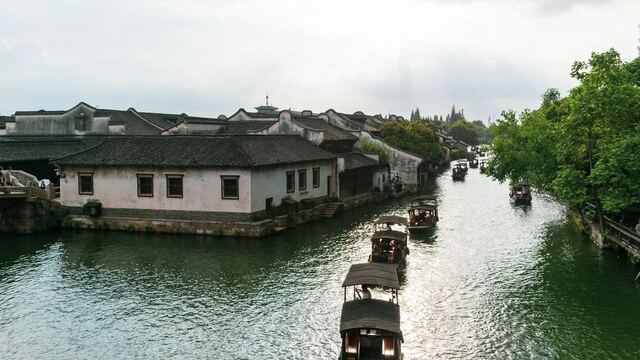
- Tongli: about 30 minutes by car from Suzhou. A dense network of waterways with a strong sense of daily life and comparatively lighter crowds. A hand-rowed boat along the canals is the classic experience — the creak of the oar, whitewashed walls and dark tiles on both banks, Ming and Qing houses and stone bridges sliding past;
- Zhouzhuang: better known, with the Twin Bridges and Shen Hall as its landmarks, but also more commercialised and more crowded;
- Our recommendation: if you only have time for one, choose Tongli — quieter and closer to real canal-town life. If you want the postcard image, choose Zhouzhuang but go early.
Whichever you pick, take a hand-rowed boat. The essence of a water town is seeing the land from the water, not the water from the land.
What else to see in Suzhou
- Suzhou Museum: I. M. Pei's final project, reinterpreting Jiangnan architecture in modern geometric language — a work of art in itself. Advance booking required;
- Pingjiang Road: a historic street laid out in the Song dynasty along a canal, with bridges and flowing water. Best at dusk;
- Shantang Street: a water street dating to the Tang dynasty, especially good after dark;
- Kunqu opera and pingtan: Suzhou is the birthplace of Kunqu. Hearing a live performance in a garden or teahouse explains the city's temperament better than any commentary.
Suggested itineraries
One day in Suzhou (combined with Shanghai)
- Morning: depart Shanghai, about 1.5 hours by private car to Suzhou → Lingering Garden;
- Afternoon: Tiger Hill, for the leaning pagoda and bonsai garden;
- After dinner: Master of the Nets Garden at night, for the traditional performances;
- Next morning: Tongli water town by hand-rowed boat, back to Shanghai in the afternoon.
Two days in depth
Add the Humble Administrator's Garden (early morning), the Suzhou Museum, Pingjiang Road and Shantang Street, and keep half a day simply to sit and drink tea in a garden. Suzhou rewards slowness — rushing defeats the purpose.
Practical notes
- Getting there: high-speed rail from Shanghai takes about 25–30 minutes with frequent departures. Within Suzhou, a private car or taxi is best between sights; buses are slow;
- Tickets: book popular gardens such as the Humble Administrator's and Lingering Gardens online in advance — peak-season capacity is capped;
- Season: March–May and September–November are best — flowers in spring, osmanthus in autumn. Summer is humid and wet; winter is bare but quiet;
- Footwear: gardens are full of stone paving and rockery steps. Wear comfortable, non-slip shoes;
- Pacing: allow 1.5–2 hours per garden, and no more than three in a day, or they begin to blur together.
Common misconceptions
- "The gardens are all the same": the Lingering Garden is about space, the Humble Administrator's about water, the Master of the Nets about scale — each has a different focus;
- "The Master of the Nets is the same by day": the night visit is the highlight. Daytime means missing half of it;
- "Water towns are for photos": their value lies in the perspective from the water and the pace of real life. Taking the boat matters far more than taking the photo.
Need help planning this trip?
Tell us your travel dates and group size — we reply within 24 hours.
WhatsApp +86 183 1705 8017 · WeChat 18317058017
Destinations in this guide
Related Tours
More Guides

Flying with a Pet to and from China: Cabin, Hold and Quarantine in 2026
Cabin, live-animal hold or cargo, plus quarantine certificates, the 21-day rabies rule and China entry requirements.
10/17/2026
Solo Female Travel in China: Safety, Night Transport and a 2026 Checklist
Registration, late-night rides, payments and emergency numbers: a practical 2026 checklist for women travelling alone in China.
10/17/2026
Student Travel in China: 2026 Rail Fare Rules and the Best Hands-On Activities by City
A practical guide to study tours in China: 2026 rail student fare scope, visa-free basis for camps, hands-on activities by city, and group safety standards.
10/16/2026