
Hangzhou In Depth: Walking West Lake, the Two Tickets at Lingyin, and Where to Drink Longjing
West Lake is free — but how do you split the 15 km loop, why does Lingyin need two tickets, and which tea village shoul…
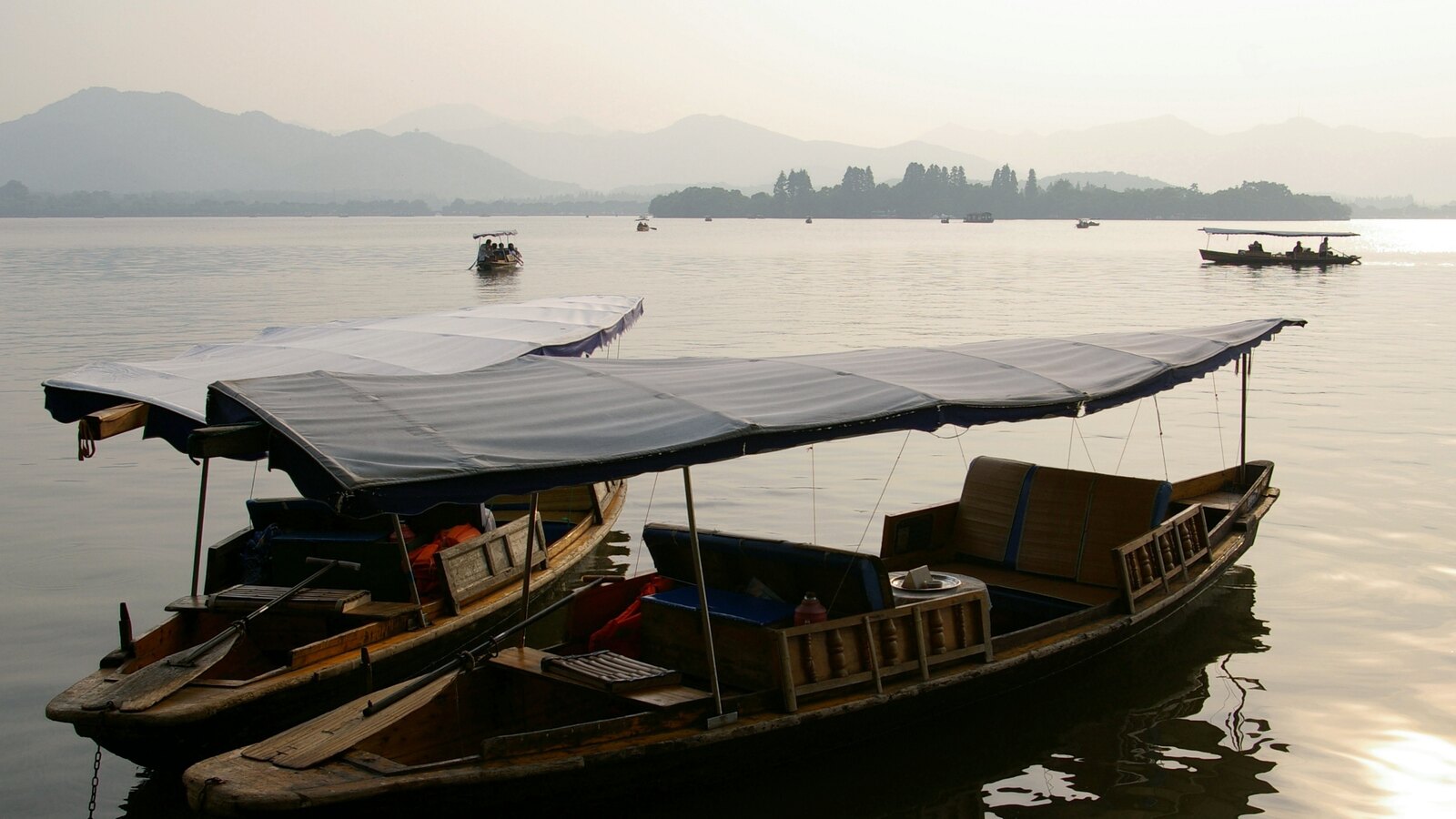
West Lake is free — but how do you split the 15 km loop, why does Lingyin need two tickets, and which tea village should you choose? Plus 3-day and 5-day plans.
Most visitors treat Hangzhou as a one-day stop: photograph Broken Bridge and the Three Pools Mirroring the Moon, then get back on the bus. Doing that, you have seen a lake surrounded by tourists — not the city. Hangzhou has three layers: the lake, the tea hills that ring it, and the Grand Canal with its everyday street life. Walk all three and Hangzhou stops being "a lake" and becomes "a city".
When to go
- Mid-March to April: the best window. Willows turn green, peach and cherry blossom run together, and it is the picking season for pre-Qingming Longjing tea.
- October to November: osmanthus fills the city — most noticeably around Manjuelong — and clear, cool days are ideal for walking the lake.
- Mid-June to July: the plum-rain season. Humidity is extreme and the lake sits under mist. It is genuinely beautiful, but bring rain gear and spare clothes.
- July to August: hot. Avoid midday outdoors; walk at dawn and dusk and spend the middle of the day in a museum or teahouse.
- Avoid: Qingming, May Day and National Day holidays. West Lake is free and open, so on those dates the lakeside roads become shoulder-to-shoulder, and the queue at Lingyin Temple can exceed two hours.
West Lake: how to break up the 15 km loop
West Lake is free — no entrance ticket, any gate, any time. That means the real challenge is not ticketing but avoiding the crowds and splitting the roughly 15 km shoreline into sensible sections.
North shore: Broken Bridge → Bai Causeway → Solitary Hill
The classic stretch, and the busiest. Broken Bridge is famous from the "Legend of the White Snake"; the Bai Causeway opens up wide views; Solitary Hill holds the Xiling Seal Society and the Zhejiang Provincial Museum. Walk this before 7 a.m. After 8 a.m. you are essentially moving with the crowd.
South shore: Su Causeway → Viewing Fish at Flower Harbour → Leifeng Pagoda
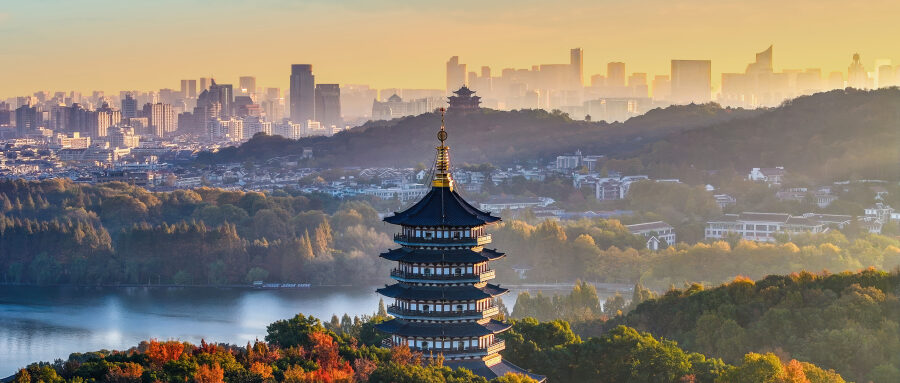
The Su Causeway runs nearly 3 km, lined with peach and willow — the most pleasant walking on the lake. At its southern end you reach Flower Harbour, then climb Leifeng Pagoda for the panorama. The pagoda charges separately, and its real value is being the one place where you can take in the whole outline of the lake at once.
West shore: Yanggong Causeway → Maojiabu → Longjing Road
This is the least crowded section and the closest to how locals actually use the lake. The Yanggong Causeway separates the main water from quiet inlets; Maojiabu is where residents come to drink tea and stroll; further west, Longjing Road leads up into the tea terraces. If you have only half a day, skip the north shore and go straight here.
Boats and getting around the lake
- Boat: the only way to actually reach the islet of the Three Pools Mirroring the Moon. Boat and island admission are sold as a combined ticket.
- Lakeside shuttle: charged by segment, useful if you are short on time or stamina — you can hop on for just part of the loop.
- Bicycle: cycling is restricted on parts of the lakeside road. Check the current rules before renting.
Lingyin Temple and Feilai Peak: two separate tickets
This is the most common misunderstanding in Hangzhou. The Lingyin area requires two purchases:
- First: the Feilai Peak scenic-area ticket. Required to enter the site at all, and it includes the Feilai Peak grottoes — a set of Fifth Dynasty to Yuan-era Buddhist carvings whose number and state of preservation are rare in southern China, and worth the trip on their own.
- Second: the Lingyin Temple incense ticket. The temple sits inside the scenic area, so entering the temple itself needs a second ticket. If you only want the carvings, the first ticket is enough.
Two notes: go early — arriving before 7 a.m. is a different experience; and do not use flash on the carvings, and keep your voice down inside the halls. Also inside the same scenic area, Yongfu and Taoguang temples are usually quiet and uncrowded — worth adding if time allows.
Longjing tea: where to drink it, and how not to be overcharged
West Lake Longjing is one of China's best-known green teas, and it also attracts more consumer traps than almost anything else in the city.
Three growing areas, three experiences
- Longjing Village: the core growing area, the most visited and the most commercialised. Good if you want to see tea terraces up close.
- Meijiawu: terraces line both sides of the road and family teahouses are dense. The mood is relaxed — the best place to sit for an afternoon.
- Manjuelong / Wengjiashan: quieter, and in autumn the osmanthus mixes with tea blossom. A local favourite.
Pre-Qingming versus pre-Grain-Rain
"Pre-Qingming" (early April) means leaves picked before the Qingming festival; "pre-Grain-Rain" (late April) means before Grain Rain. Pre-Qingming buds are finer and yields are tiny, so prices run several times higher. Pre-Grain-Rain tastes stronger, lasts more infusions, and is far better value. For most visitors, pre-Grain-Rain Longjing is the rational choice.
How to avoid the traps
- Ignore roadside touts claiming to sell "direct from the farmer", and avoid following strangers into shops.
- Pre-Qingming Longjing trades in a known price band. Anything dramatically cheaper labelled "pre-Qingming" is almost certainly not.
- Ask to brew and taste on the spot, and check origin and picking date on the packaging.
- If you simply want the experience, order tea by the cup in a teahouse rather than buying loose leaf to take away.
Beyond West Lake
- Lingyin and Feilai Peak: covered above — Hangzhou's most important religious and stone-carving site.
- Xixi Wetland: a large wetland on the city edge, explored by wooden rowboat. Quiet, and worth half a day.
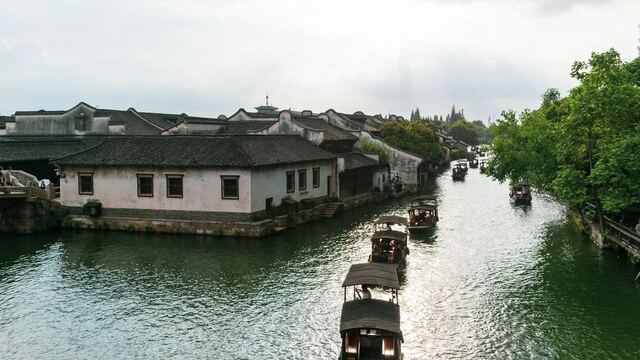
- Grand Canal around Gongchen Bridge: the southern terminus of the Beijing–Hangzhou canal, with scissor, sword and umbrella museums along the bank. Strong everyday-life atmosphere.
- Liangzhu Ancient City: a UNESCO World Heritage site roughly 5,000 years old, showing China's early urban planning and water works. Best for travellers interested in early civilisation.
- The Romance Show (Songcheng): a large-scale evening production — fast, spectacular and an efficient use of an evening.
How to structure the trip: 3 days and 5 days
3-day core
- Day 1: arrive → late-afternoon west shore (Yanggong Causeway, Maojiabu) to dodge the daytime crowds.
- Day 2: early north shore (Broken Bridge, Bai Causeway, Solitary Hill) → Lingyin and Feilai Peak → tea in Meijiawu in the afternoon.
- Day 3: south shore (Su Causeway, Flower Harbour) → Leifeng Pagoda → departure.
5-day extended
Add Xixi Wetland (half day), the Grand Canal (half day) and Liangzhu (half to full day), and keep one morning free to simply sit in a tea village. Hangzhou rewards slowness; its value lies in being able to stop.
Practical tips
- Getting there: Shanghai to Hangzhou is 45–60 minutes by high-speed rail with very frequent departures; both Hangzhou East and Hangzhou stations connect easily to the centre. Xiaoshan Airport is about 30 km out.
- Getting around: the metro covers the main districts, but around West Lake walking and cycling beat everything. Expect traffic controls on lakeside roads during holidays.
- Tickets: West Lake is free; Lingyin needs two tickets; Leifeng Pagoda, Xixi and Songcheng charge separately. Book popular temples online in advance.
- Clothing: there is a lot of walking on lakeside and hill paths — wear comfortable shoes. Spring and autumn have wide day–night temperature swings; bring a light jacket.
- Eating: Hangzhou cuisine is light and slightly sweet. Look for West Lake vinegar fish, Dongpo pork, Longjing shrimp and pian'erchuan noodles. Restaurants right at the lake are pricier — two streets inland is usually better value.
Common misconceptions
- "Hangzhou is West Lake." The lake is one layer. The canal, Liangzhu and the tea hills complete the picture.
- "Walking the loop once is enough." Finishing 15 km only means you covered the distance — not that you noticed how different each section feels.
- "Lingyin is just one temple." The Feilai Peak carvings and the Yongfu and Taoguang temples matter just as much.
- "Longjing is a casual purchase." It is the most trap-heavy purchase in the city. Trust the channel, not the price.
Need help planning this trip?
Tell us your travel dates and group size — we reply within 24 hours.
WhatsApp +86 183 1705 8017 · WeChat 18317058017
Destinations in this guide
Related Tours
More Guides

Flying with a Pet to and from China: Cabin, Hold and Quarantine in 2026
Cabin, live-animal hold or cargo, plus quarantine certificates, the 21-day rabies rule and China entry requirements.
10/17/2026
Solo Female Travel in China: Safety, Night Transport and a 2026 Checklist
Registration, late-night rides, payments and emergency numbers: a practical 2026 checklist for women travelling alone in China.
10/17/2026
Student Travel in China: 2026 Rail Fare Rules and the Best Hands-On Activities by City
A practical guide to study tours in China: 2026 rail student fare scope, visa-free basis for camps, hands-on activities by city, and group safety standards.
10/16/2026