
Xiamen In Depth: Winning a Gulangyu Ferry Ticket, the Main Island, and the Fujian Tulou
No island entrance ticket — the ferry is the only way in. Booking opens 15 days ahead, released daily at 09:00, capped…

No island entrance ticket — the ferry is the only way in. Booking opens 15 days ahead, released daily at 09:00, capped at 50,000 a day. Includes the main island route and the tulou decision.
Xiamen is one of the most underrated cities on any China itinerary. At a glance it is just a southern town with a sea, a university and Gulangyu — but it actually holds three strong cards: a World Heritage island (Gulangyu), the gateway to another World Heritage site (the Fujian tulou), and a complete, unhurried Minnan way of life. Its biggest risk is equally clear — the ferry ticket. This guide exists mainly to keep guests from making a wasted trip over one ticket.
First, the rule that matters: Gulangyu ferry tickets
Many people assume Gulangyu has an island entrance ticket. It does not — the only way onto the island is the ferry ticket, which means the ferry ticket is the admission ticket. The rules:
- Only official channels: the "Meet Xiamen" (Yu Jian Xiamen) mini-program in WeChat or Alipay, and the "Xiamen Ferry Co." WeChat account. No third party is authorised; anything else is marked up or fake.
- 15-day advance sale: since February 2026 the booking window has been extended from 10 days to 15.
- Released daily at 09:00: exactly on the hour, for the date 15 days out. To visit on 1 October, you buy on 17 September at 09:00.
- Price: a standard return ticket is ¥35 per person and is the only essential fare. The "premium cabin" (around ¥80) is only an upgrade in vessel type — identical rights, not required.
- Validity: the return leg is valid for 20 days and is not tied to a specific pier or departure — no second purchase needed.
- Daily cap of 50,000: when it is full, it is full. In peak periods the popular morning window (09:00–11:00) often sells out within minutes.
- Real-name booking: one ticket per person, booked with an ID card or passport, tapped through at the gate. A single account may hold up to 10 unused tickets.
- No ticket window on site: arriving at the pier without a ticket means no island. Pier counters sell same-day leftovers only, and in peak season there usually are none.
Three practical tips for guests: first, open the mini-program 5–10 minutes early and pre-load every traveller under "passenger management" — it saves about ten seconds, and those ten seconds usually decide the outcome. Second, aim for an afternoon slot — most visitors fight over 08:00–10:00, while afternoon sailings are far roomier. Third, if the morning is gone, try the Neicuo'ao pier as a backup.
How to spend Gulangyu
There are no vehicles on the island; everything is on foot. Two consequences: do not bring a large suitcase, and wear shoes you can genuinely walk in.
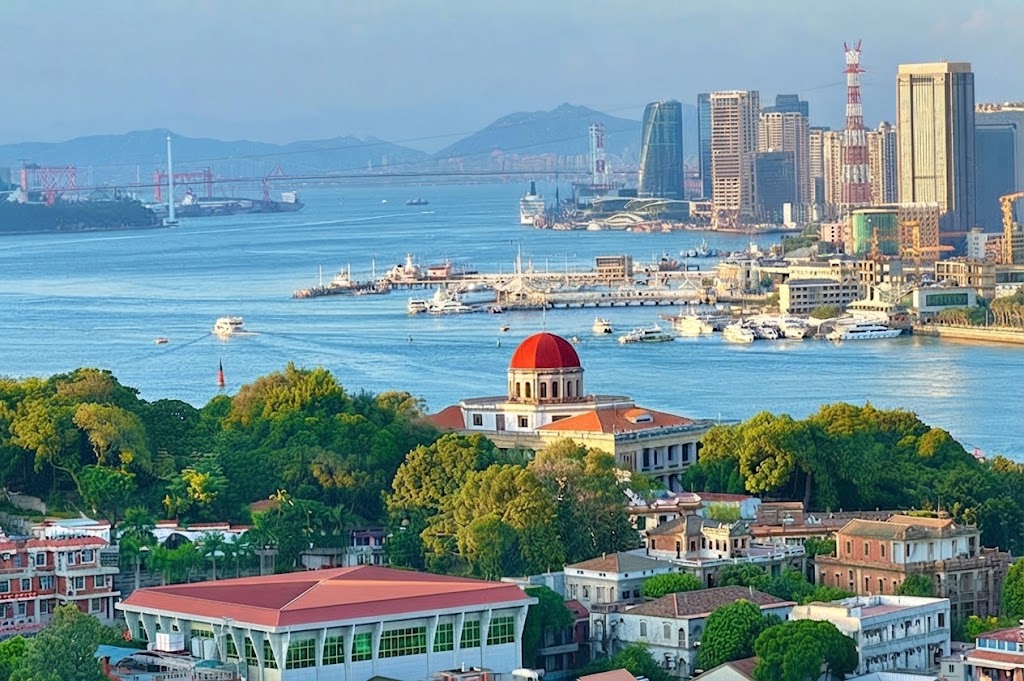
- Colonial architecture: Gulangyu is a World Heritage site, and its value lies in the intact clusters of 19th- and 20th-century buildings — consulates, churches, trading houses and overseas-Chinese villas, mixed in style but remarkably preserved.
- Sunlight Rock and Shuzhuang Garden: Sunlight Rock is the island's high point, overlooking both Gulangyu and Xiamen itself; Shuzhuang Garden is built against the sea, and its "hidden sea" device is a rare example of sea views handled in Chinese garden design.
- Piano Museum: Gulangyu is known as the "Island of Pianos", and the collection of antique instruments is the island's most substantial indoor attraction.
- Longtou Road area: the densest concentration of shops and snacks. Once you have walked the main street, turn into the side lanes — the quiet residential quarters are the genuinely beautiful part.
One key judgement: Gulangyu rewards seeing less and walking slowly. Treated as a checklist it takes two hours — and that is the same as not having been. Budget at least four to five hours, including lunch.
Xiamen island: Nanputuo, Xiamen University, the Ring Road
- Nanputuo Temple: one of the most important temples in Minnan. Free, but advance booking is required. A short trail behind the temple climbs Wulao Peak for views over the university and the sea.
- Xiamen University: one of China's most beautiful campuses, right next to Nanputuo; campus entry needs a reservation. The Furong Tunnel and Shangxian Field are the two most photographed spots.
- Ring Road (Huandao Road): a coastal cycling route and the most pleasant half-day in the city. Bicycles and e-bikes can be rented; beaches and boardwalks alternate along the way.
- Zengcuo'an and Shapowei: the former is a dense cluster of creative snack stalls; the latter is a converted old harbour turned arts district. Shapowei has more depth and feels more genuine, so if you only have time for one, choose Shapowei.
Xiamen's most overlooked card: the Fujian tulou
Not many people realise Xiamen is the most convenient gateway to the Fujian tulou — large rammed-earth communal dwellings built by Hakka and Minnan communities for settlement and defence, and a World Heritage site. Nothing else in the world is quite like them in scale or form.
- Nanjing tulou cluster: about 2–2.5 hours by road. The Tianluokeng group — four round buildings around one square — is nicknamed "four dishes and a soup" and is the most famous single image of the tulou.
- Yunshuiyao Ancient Town: usually combined with the Nanjing cluster; old paths, banyan trees and a stream, at a quiet pace.
- Yongding tulou: the other main area, larger in scale, home to the Zhencheng Lou known as the "king of tulou".
Recommendation: the tulou need a full day including transfers, and a private car is the most efficient way. For travellers interested in architecture or clan culture, they outrank every Xiamen city sight except Gulangyu.
When to go
- March to May: the best window — comfortable temperatures and moderate humidity.
- September to November: another golden stretch: clear autumn days and water still warm enough to swim.
- June to August: hot, humid and typhoon season. From July to September a typhoon can suspend ferries and close Gulangyu outright — the single biggest uncontrollable risk to any itinerary.
- December to February: mild but often overcast and drizzly, with cold sea wind. Fewer visitors, cheaper hotels.
- Avoid: the summer holidays and National Day. Summer is when Gulangyu tickets are hardest to get; National Day is the annual crowd peak.
How to structure the trip: 3 days and 5 days
3-day core
- Day 1: arrive → Nanputuo Temple → Xiamen University → Shapowei in the evening.
- Day 2: full day on Gulangyu (book the ferry early).
- Day 3: cycle the Ring Road → Zengcuo'an → departure.
5-day extended
Add a full day at the Fujian tulou (Nanjing + Yunshuiyao) and half a day at Jimei School Village — the Jiageng-style complex built by the overseas-Chinese philanthropist Tan Kah Kee, whose hybrid roofs are instantly recognisable and especially meaningful for travellers with emigrant roots. We already run "Xiamen + tulou" as a fixed itinerary — see the related tours section.
Practical tips
- Getting there: Gaoqi Airport, Xiamen Station and Xiamen North all connect easily to the centre; the metro and BRT cover the main districts, and city transport is cheap.
- The ferry is the binding constraint: make "get the Gulangyu ticket" step one, and book hotels after. If your slot is in the afternoon, use the morning for Nanputuo and the university.
- Documents: ferry tickets are real-name. Foreign guests should book with passport details and carry the same document when boarding.
- Typhoons: from July to September, check warnings before travelling. Ferries stop during a typhoon and Gulangyu becomes unreachable, so keep the plan flexible.
- Eating: Minnan food is fresh and light — look for satay noodles, oyster omelette, jellied sea worm, misua noodle soup and ginger duck. Food on Gulangyu is markedly pricier than on the main island; eat simply there and properly back on shore.
Common misconceptions
- "Gulangyu has an entrance ticket." It does not. The ferry ticket is the only way in — which is exactly why having no ticket means no island.
- "Buy at the pier." There is no ticket window on site, and in peak season arriving without a booking is a dead end.
- "Xiamen is Gulangyu." Nanputuo, the university, the Ring Road and the tulou together make a Minnan trip; Gulangyu is one part of it.
- "The tulou are a side stop." A round trip plus sightseeing takes a full day — it cannot be done as a detour.
Need help planning this trip?
Tell us your travel dates and group size — we reply within 24 hours.
WhatsApp +86 183 1705 8017 · WeChat 18317058017
Destinations in this guide
Related Tours

More Guides

Flying with a Pet to and from China: Cabin, Hold and Quarantine in 2026
Cabin, live-animal hold or cargo, plus quarantine certificates, the 21-day rabies rule and China entry requirements.
10/17/2026
Solo Female Travel in China: Safety, Night Transport and a 2026 Checklist
Registration, late-night rides, payments and emergency numbers: a practical 2026 checklist for women travelling alone in China.
10/17/2026
Student Travel in China: 2026 Rail Fare Rules and the Best Hands-On Activities by City
A practical guide to study tours in China: 2026 rail student fare scope, visa-free basis for camps, hands-on activities by city, and group safety standards.
10/16/2026