
Shanghai In Depth: The Bund, the French Concession and Lujiazui
Read the Bund by day and photograph it by night; walk the plane-tree streets of the French Concession for the other Sha…
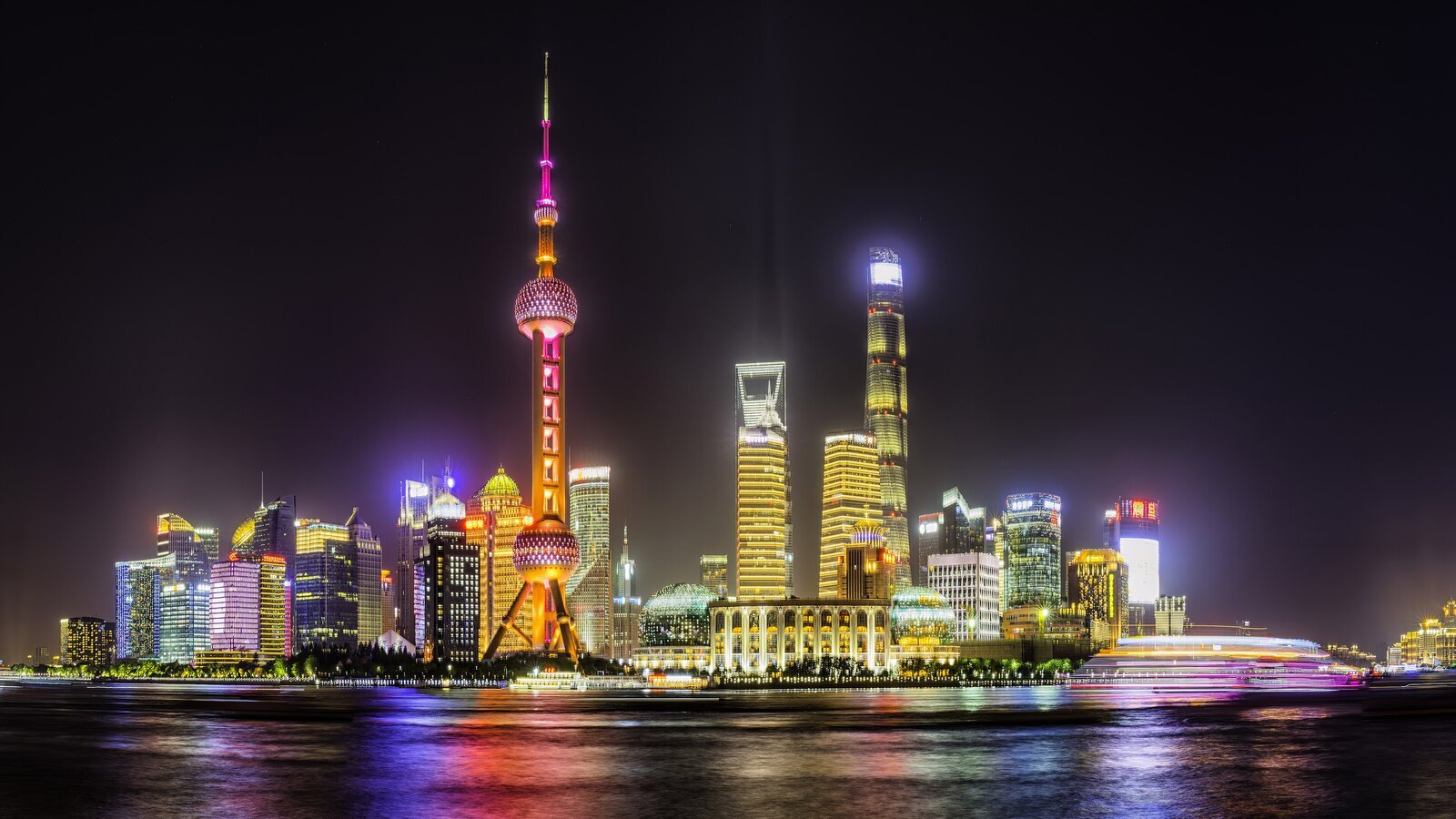
Read the Bund by day and photograph it by night; walk the plane-tree streets of the French Concession for the other Shanghai. Includes 3- and 5-day itineraries, seasons and practical tips.
Many overseas visitors treat Shanghai as their entry point into China, spend a single day ticking off the Bund and Yu Garden, and then move on. That is a shame. Shanghai's real appeal lies in the overlay of two Chinas: the 1920s and 1930s architecture and plane-tree boulevards of the former concessions on one side, and the Lujiazui skyline that rose in less than thirty years on the other. Understanding that overlay is what it takes to actually read this city.
When to visit Shanghai
- March to May: the best season. Fresh plane-tree leaves, temperatures of 15–25°C, ideal for long walks;
- September to November: crisp autumn air and the scent of osmanthus — a second golden window;
- June to August: plum rains followed by high heat. Humid and oppressive; plan indoor activities for midday;
- December to February: damp cold, but fewer crowds and cheaper hotels. The Bund is at its most atmospheric over Christmas and New Year;
- Avoid: the National Day golden week (1–7 October) and Chinese New Year, when the Bund and Yu Garden become difficult to walk through.
The Bund: two different places, day and night
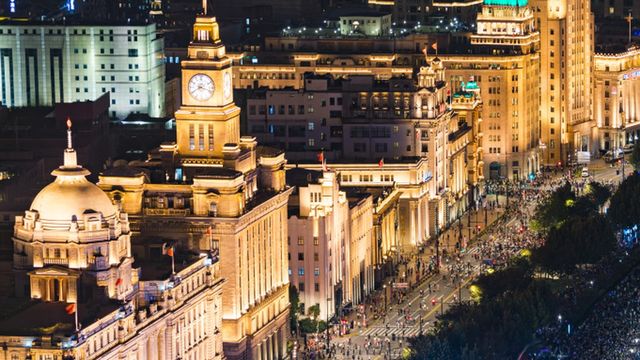
The Bund runs for roughly 1.5 kilometres along the west bank of the Huangpu River and holds 52 buildings in a remarkable range of styles, known collectively as the "exhibition of world architecture". One principle governs how to see it: come in daylight for the buildings, come at night for the lights.
By day: read the architecture
Walking south from the Waibaidu Bridge towards Yan'an East Road, you pass the former HSBC building (now SPD Bank), the Customs House and the Peace Hotel in turn. The most rewarding approach is with a guide — behind each façade is a story from Shanghai's years as the "first port of the Far East" in the 1920s and 1930s. Without that context, these are simply handsome stone buildings.
By night: take to the water
A Huangpu River cruise is one of the best ways to see the Bund at night: from the water, the century-old classical architecture lines the west bank while the Lujiazui towers rise on the east, both lit at once. Cruises run about 45–60 minutes. Choose a departure roughly 30 minutes before sunset and you will catch daylight, dusk and the lights coming on in a single trip.
If you prefer to stay on land, the riverside promenade on the opposite bank is equally rewarding — looking back at the Bund from Lujiazui gives you the fuller view.
Shanghai Tower and the Lujiazui skyline
At 632 metres, Shanghai Tower is China's tallest building, with its observation deck on the 118th floor at roughly 546 metres. Two things are worth knowing:
- The lifts are extraordinarily fast. Ground to observation deck takes only tens of seconds on one of the world's quickest elevators, and the pressure change is noticeable;
- Visibility decides whether it is worth it. On hazy days the view is completely lost in cloud. Check the real-time visibility before you go, or pick a late-afternoon slot to get both daylight and night views.
Lujiazui also offers Jin Mao Tower (88th-floor deck) and the Shanghai World Financial Center (100th-floor deck, with a glass floor walkway). One is enough — there is no need to do all three.
The former French Concession: Shanghai's other temperament
The old French Concession area — today's Hengshan Road, Wukang Road, Anfu Road and West Fuxing Road — is the most liveable and photogenic part of the city. The point here is not to "see sights" but to walk:
- Wukang Road: the Wukang Mansion is Shanghai's most famous street-corner building, surrounded by preserved garden villas;
- Anfu Road / Wuyuan Road: independent cafés, design shops and old villas side by side — the best sample of contemporary Shanghai life;
- Sinan Mansions: a cluster of French-style garden houses, often hosting open-air markets;
- Xintiandi: a shikumen lane district converted into a commercial quarter, with a distinctive East-meets-West architectural language.
Allow at least half a day to wander here unhurried. Stopping at a café along the way usually brings you closer to everyday Shanghai than rushing between sights.
Yu Garden and the old town
Yu Garden is a Ming-dynasty Jiangnan garden, smaller and more intricate than its Suzhou counterparts, with rockeries laid by a master. The garden and the bazaar outside it are two different things: inside is heritage and landscaping; outside is a dense tourist zone of snacks and shops. Go early to avoid the crowds, then explore the zigzag bridge and the Mid-Lake Pavilion on your way out.
How to structure your trip: three days or five
Three-day core
- Day 1: Arrive, check in, then an evening Bund walk plus a Huangpu River cruise — an easy first day that helps with jet lag;
- Day 2: In-depth Bund exploration, then Shanghai Tower, then a walk through the former French Concession;
- Day 3: Yu Garden and the old town, then Xintiandi or Tianzifang, then departure.
Five days with Suzhou and the water towns
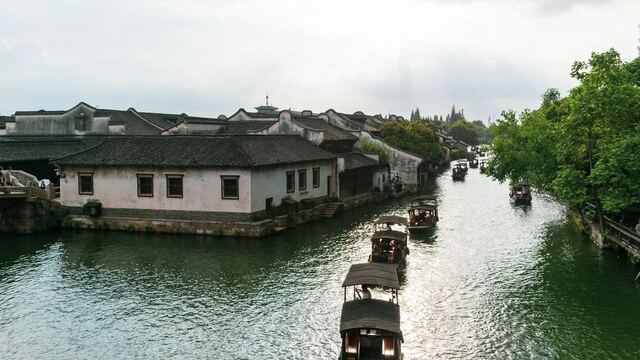
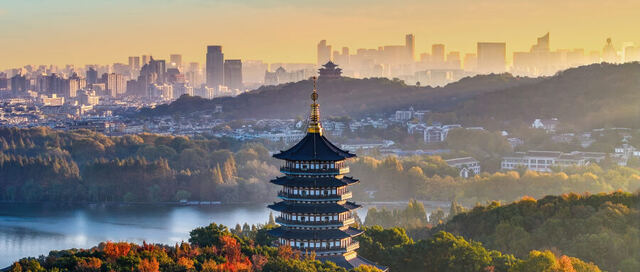
Add Suzhou's classical gardens and Tongli water town (about 30 minutes by high-speed rail or 1.5 hours by private car) for a complete Jiangnan experience of city, garden and canal town. We run this as a fixed itinerary — see the related tours below.
Practical notes
- Getting around: the metro covers almost every sight across 20 lines, with fares of ¥3–8. Use a transit card or phone payment. Taxis start at about ¥16, but traffic at peak hours is heavy;
- Airports: Pudong (PVG) is around 50 km from the centre and reachable on Metro Line 2; Hongqiao (SHA) is only about 15 km out and far more convenient;
- Payments: WeChat Pay and Alipay both support foreign bank cards and are accepted almost everywhere, but carry a little cash as backup;
- Connectivity: some apps you rely on at home are not directly accessible in mainland China. Arrange your messaging and navigation before you arrive;
- Language: major sights, the metro and large malls have English signage, but small shops and taxi drivers generally do not speak English — keep screenshots of addresses in Chinese.
Common misconceptions
- "Shanghai can be seen in a day": the Bund and Lujiazui are only the face. The French Concession, the old town and the nearby water towns complete the picture;
- "Shanghai is all modern buildings": quite the opposite — it preserves one of the largest stocks of early-modern architecture in China;
- "Yu Garden is just a snack street": the Ming garden inside and the bazaar outside are entirely different experiences, and skipping the garden means missing the point.
Need help planning this trip?
Tell us your travel dates and group size — we reply within 24 hours.
WhatsApp +86 183 1705 8017 · WeChat 18317058017
Destinations in this guide

Related Tours
More Guides

Flying with a Pet to and from China: Cabin, Hold and Quarantine in 2026
Cabin, live-animal hold or cargo, plus quarantine certificates, the 21-day rabies rule and China entry requirements.
10/17/2026
Solo Female Travel in China: Safety, Night Transport and a 2026 Checklist
Registration, late-night rides, payments and emergency numbers: a practical 2026 checklist for women travelling alone in China.
10/17/2026
Student Travel in China: 2026 Rail Fare Rules and the Best Hands-On Activities by City
A practical guide to study tours in China: 2026 rail student fare scope, visa-free basis for camps, hands-on activities by city, and group safety standards.
10/16/2026