
China Payment Guide: Pay with Alipay + Your Visa or Mastercard
China runs on QR payments, not cash. This illustrated step-by-step guide shows you how to add a Visa, Mastercard or Ame…
China runs on QR payments, not cash. This illustrated step-by-step guide shows you how to add a Visa, Mastercard or Amex card to the international Alipay app — covering QR payments, metro rides, high-speed rail tickets and restaurant ordering. Ten minutes before you fly is all it takes.
In China one phone covers everything from breakfast to a high-speed rail ticket. Street food stalls, temple donation boxes, convenience stores, chain restaurants, metro gates, hotel deposits — QR payment is the default, and cash is often simply not accepted or cannot be changed. The good news: as a foreign visitor you do not need a Chinese bank card. The international Alipay app accepts Visa, Mastercard, American Express, JCB, Discover and Diners Club cards, and once linked you pay exactly like a local — just scan.
Last updated: October 2026. Fees and limits may change — always check the live notice inside the Alipay app.
1. Ten minutes before you fly: linking your card in 5 steps
The single most important tip: download the app, register and link your card before you leave home. Doing it after landing wastes time and turns into a panic at the checkout queue. The whole process takes about 5–10 minutes.
- Download AlipaySearch for Alipay on the App Store or Google Play (blue icon), or visit alipay.com. Sign up with your home phone number or an email address; the interface switches to English or Thai automatically.
- Open Bank CardsOn the home screen go to Account → Bank Cards and choose Add Card.
- Scan or type your cardVisa / Mastercard / JCB / Amex / Discover are supported. Scanning the card reads the number automatically, or you can type the number, expiry and CVV by hand.
- Verify your identityPhotograph your passport data page and take a selfie; approval takes a few minutes.
- Confirm by SMS, then scanEnter the code your bank sends and the card is linked. From then on, show your Pay code or scan the merchant — either works.
Per-payment limitBoth per-payment and annual caps apply. Check the live notice inside the app for the exact figure (commonly a few thousand CNY per payment). Several smaller payments can accumulate, and it is more than enough for meals, taxis and tickets.
Service feePayments of CNY 200 or less are fee-free. For any single payment of more than CNY 200, Alipay charges 3% of the transaction amount (Alipay official rules). If your bill sits just above CNY 200, ask the merchant whether it can be split.
Supported cards: Visa, Mastercard, American Express, JCB, Discover and Diners Club. Link one or two cards as a backup (availability inside the app always takes precedence).
2. There are only two ways to pay
Open Pay on the home screen and let the cashier scan the barcode or QR code. Standard at convenience stores, supermarkets and chain restaurants; small amounts need no PIN.
Tap Scan in the top corner, point at the QR code on the counter or table and enter the amount yourself. Street stalls, wet markets, taxis and temple donation boxes work this way.
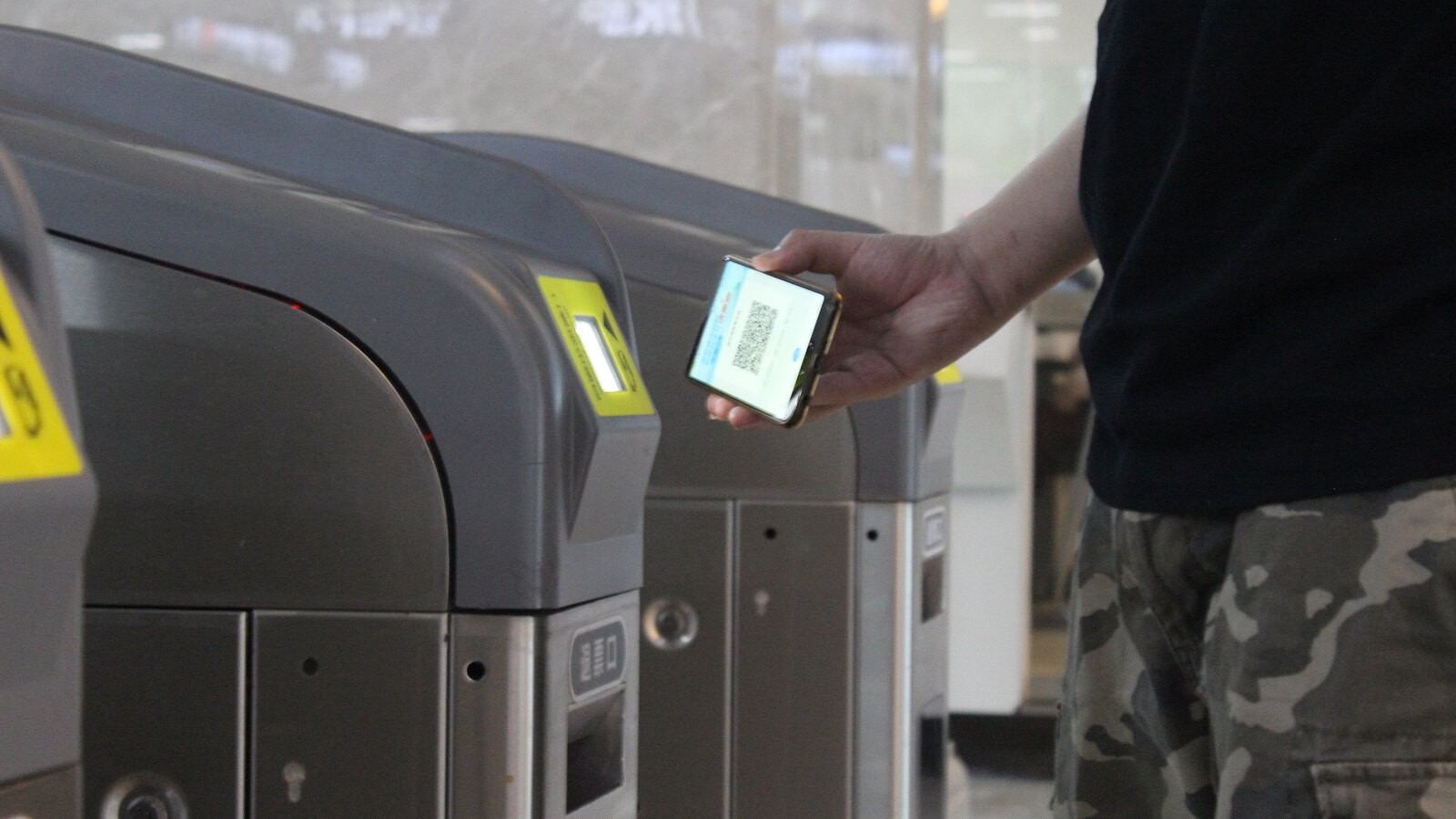
Metro gates accept the Ride Code directly, or buy a single-ride token. Rail tickets are bought on 12306 / Trip.com; board by swiping your passport or using the manual lane.
After payment the screen shows the amount and the merchant name — let the cashier see it before you walk away.
Do these ten minutes before you fly
- Install Alipay, link your card and finish identity verification (before you leave — not at the till)
- Carry your passport; it is your ID document in China
- Keep CNY 300–500 in cash for stalls, temple tickets and smaller towns
- Turn on roaming or an eSIM so you are online the moment you land
Three common traps
- Your first payment may be stopped by your bank's fraud control — call them first and flag your trip to China
- Changing your phone number or card means verifying again; do not leave it until you are in the checkout queue
- For large amounts (hotel deposits, private-car balance) ask in advance whether card or transfer is accepted
3. Scanning in practice
The most common situation on the road is "you scan the merchant": street stalls, wet markets, taxis and shop kiosks in scenic areas usually display a printed payment QR code. Scan it and enter the amount. A small number of stalls only accept personal transfer codes, which foreign cards cannot use — move on to the next stall or pay in cash. That is also why carrying a little cash remains a sensible safety net.
4. Convenience stores and supermarkets
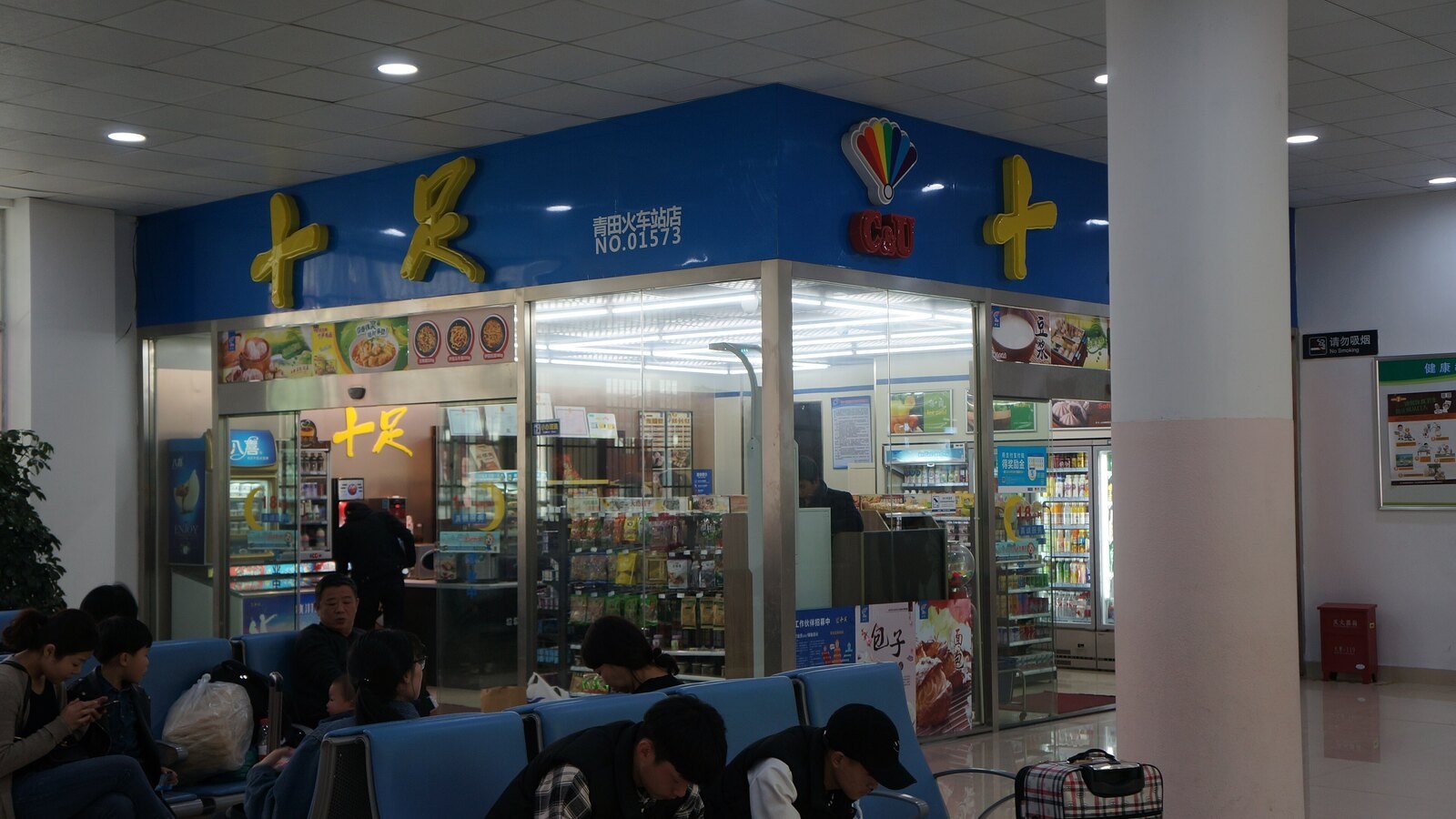
At 7-Eleven, FamilyMart, Lawson and large supermarkets the cashier simply scans your Pay code — done in a second. This is also the easiest place for a foreign card to succeed, so make your first test payment there for a small amount (CNY 10–50) and confirm the card works before spending more.
5. Getting around: metro, taxis and high-speed rail

- Metro and buses — search "Ride Code" on the Alipay home screen, activate it for your city and scan straight through the gates. Available in Beijing, Shanghai, Guangzhou, Shenzhen, Chongqing, Chengdu, Xi'an and most major cities;
- Taxis — tap Transport → Ride to hail a car, or use the built-in DiDi mini-program; foreign cards are accepted;
- High-speed rail tickets — search "Train tickets", buy in your own name with your passport, then board by swiping the passport or using the manual lane;
- Attraction tickets, shared bikes and power-bank rentals all work the same way.
6. Fees, limits and exchange rates
- Fees — payments of CNY 200 or less are fee-free; above CNY 200 Alipay charges 3% of the transaction amount (Alipay's official rules). If the merchant agrees to split the payment, several smaller transactions avoid the fee;
- Limits — both per-payment and annual caps apply. Check the live notice inside the app for exact figures (commonly a few thousand CNY per payment). More than enough for meals, taxis and tickets;
- Exchange rate — converted at the card network's daily rate with no markup from Alipay. Your issuing bank may add roughly 1.5% as a foreign transaction fee;
- Refunds — returned to the linked credit card, usually within 3–15 working days.
7. Backups and what does not work
- WeChat Pay — also accepts foreign cards and makes an ideal backup alongside Alipay; install both;
- Cash — carry CNY 300–500 for cash-only stalls, temple tickets or network outages;
- Paying with the card directly — premium hotels, big malls and airport duty-free shops generally accept Visa/Mastercard; small street shops do not;
- ATM withdrawals — airport and bank ATMs mostly accept foreign cards; watch your bank's own fees;
- Not supported — an Alipay account linked to a foreign card cannot be used for peer-to-peer transfers, red packets or wealth products. If you need transfers, check whether Alipay currently offers a prepaid option such as TourCard (availability depends on the app).
8. Frequently asked questions
Can I register without a Chinese phone number?
Yes. Alipay International accepts a foreign phone number or email, and the SMS code goes to your home number. That said, drivers and delivery riders often call to confirm, so a local SIM card makes life easier once you arrive — though it is not required for payments.
My card was rejected. What now?
Three usual causes: (1) the card is not enabled for overseas or online transactions; (2) your bank's fraud control blocked it; (3) the cardholder name does not match the passport spelling. Call your bank to enable overseas online payments, or try another card.
What if my phone dies or I have no data?
The Pay code can be shown offline (with count and value limits), so carry a power bank. Metro stations, malls and hotels generally offer free Wi-Fi.
Is it safe? Can my card be skimmed?
QR payments use dynamic codes that refresh constantly, so screenshots are useless. Large payments require a six-digit PIN. Enable fingerprint or face unlock, and tell your bank you are travelling to China so the first transaction is not blocked.
Should I tip?
China has no tipping culture — pay exactly what the bill says, and extra tips are usually politely refused. Premium hotels and some international-brand restaurants may already add a 10–15% service charge.
Let payment stop being the first hurdle of your trip
Jadetour looks after inbound travellers end to end in English and Chinese: we help you link your card and finish verification after we pick you up, buy your high-speed rail tickets, reserve attraction tickets and private cars, and give you a consultant who is always reachable. Sort out "how to pay" before you fly, and simply enjoy the trip once you land.
Build my custom China itinerary → Talk to a travel consultant →
Need help planning this trip?
Tell us your travel dates and group size — we reply within 24 hours.
WhatsApp +86 183 1705 8017 · WeChat 18317058017
Destinations in this guide


Related Tours



More Guides
Flying with a Pet to and from China: Cabin, Hold and Quarantine in 2026
Cabin, live-animal hold or cargo, plus quarantine certificates, the 21-day rabies rule and China entry requirements.
10/17/2026
Solo Female Travel in China: Safety, Night Transport and a 2026 Checklist
Registration, late-night rides, payments and emergency numbers: a practical 2026 checklist for women travelling alone in China.
10/17/2026
Student Travel in China: 2026 Rail Fare Rules and the Best Hands-On Activities by City
A practical guide to study tours in China: 2026 rail student fare scope, visa-free basis for camps, hands-on activities by city, and group safety standards.
10/16/2026