
Where to Go on Your Second Trip to China: Five Deeper Routes Worth the Detour
Your first China trip covered Beijing, Xi'an, Shanghai and Guilin. Your second should go deeper. Five routes, plus 2026…
Your first China trip covered Beijing, Xi'an, Shanghai and Guilin. Your second should go deeper. Five routes, plus 2026 entry rules, rail links and booking details.
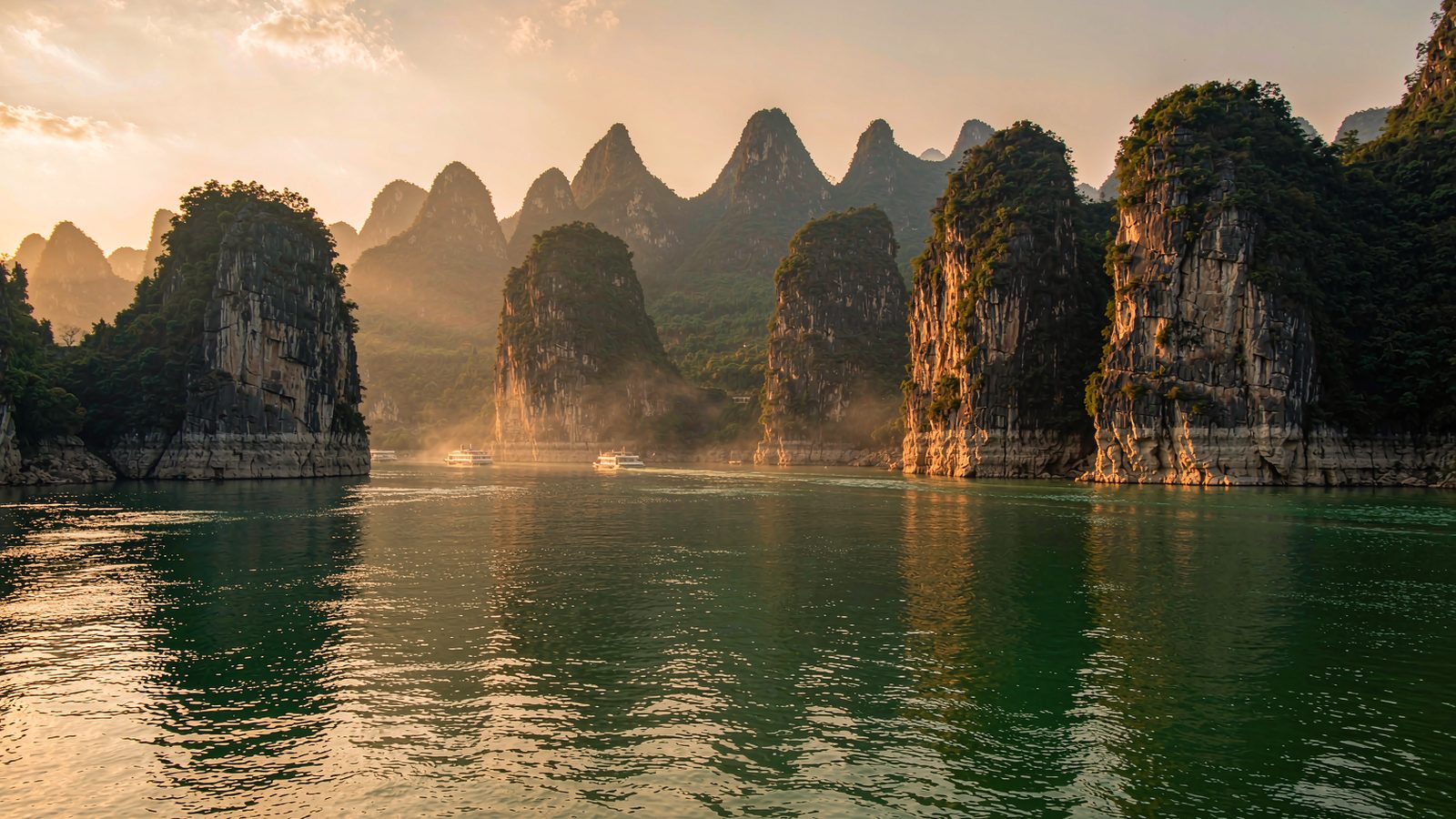
Almost everyone's first trip to China follows the same script: the Forbidden City and the Great Wall in Beijing, the Terracotta Army in Xi'an, the Bund in Shanghai, and the karst hills of Guilin. You come home with a full camera roll and a strange sense of emptiness, as if you had been checking items off a list rather than actually living somewhere for a few days.
By your second trip you no longer need to prove that you have been to China. That is exactly the moment to change your frame of reference: from the most famous to the most moving, and from sightseeing to staying put.
The five routes below are the ones we plan most often for repeat visitors. They are bigger in scale and slower in pace, and they require planning ahead. Nearly everyone who takes them says the same thing afterwards: this was worth more than the first trip.
Why a second trip should be built differently
The hard part of a first trip is a lack of information. You do not yet know what China feels like, so you rely on the most famous landmarks to build a mental map. The hard part of a second trip is the opposite: there is so much information that itineraries collapse into a line connecting dots on a map, with every day spent in transit.
Three practical realities point toward slower, deeper routes the second time around:
- High-speed rail has compressed distances dramatically. China's high-speed network now exceeds 48,000 kilometres. Beijing to Xi'an takes about 4.5 hours, and Chengdu to the Huanglongjiuzhai station takes as little as 1 hour 39 minutes. Transport is no longer the bottleneck; the real question is where to go and how long to stay.
- Major attractions now run on real-name reservations. Jiuzhaigou caps daily admissions at 41,000 and releases tickets 14 days ahead at 08:00, with no on-site ticket window at all. A first trip can be improvised; a second trip needs homework.
- On a second trip you care about experience density, not attraction count. Ten days spread across six cities and ten days anchored in two places leave memories of very different weight.
First, the paperwork: entry in 2026 is easier than many people assume
A lot of travellers stall on the visa question. Under policies in force as of October 2026, the picture is considerably more relaxed. These are the categories most commonly used:
| Policy | Who and how long | Key conditions |
|---|---|---|
| Unilateral visa-free entry | Ordinary passport holders from roughly 48 countries, for business, tourism, visiting relatives, exchanges or transit, up to 30 days | For most countries valid until 31 December 2026 (Russia until 31 December 2027) |
| Full mutual visa exemption | About 29 countries, including Singapore, Thailand, Malaysia, Georgia and Kazakhstan | Governed by bilateral agreements, conditions vary |
| 240-hour (10-day) transit visa-free | Citizens of 57 countries transiting through China to a third country or region | Requires a valid international travel document plus a confirmed onward ticket; entry through any of 65 open ports, with movement limited to designated areas |
| 24-hour transit visa-free | All open ports, for travellers of any nationality | Stay under 24 hours and remain within the port's restricted area |
| Regional visa-free entry | Hainan 30-day entry without a visa (61 countries); ASEAN tour groups entering Xishuangbanna in Yunnan | Movement limited to the relevant administrative region |
Two caveats. First, visa-free policies change frequently, so check the latest announcements from China's National Immigration Administration or your nearest Chinese embassy or consulate before you fly, rather than relying on guides written a year or two ago. Second, visa services are outside the scope of what we provide. We do not and cannot promise any visa or entry-permit outcome on behalf of anyone. What we do is arrange the itinerary, accommodation, vehicles and tickets properly.
Route one: a Yangtze River cruise, swapping sightseeing for living inside the scenery
If your first trip was about walking, your second could be about drifting. A Yangtze River cruise has one of the highest satisfaction rates among repeat visitors, and it is the type of product most first-time itineraries miss entirely.
The logic is unusual and appealing. You never repack or rush for a coach, because the ship is the hotel and it moves while you sleep. You wake up and the view outside has changed from the misty river city of Chongqing to the cliffs of Wu Gorge.
- Choosing a direction: the mainstream routes are Chongqing to Yichang downstream (4 days / 3 nights) and Yichang to Chongqing upstream (5 days / 4 nights). Upstream is slower and suits travellers in no hurry; downstream is more compact.
- Highlights: the Kuimen Gate at Qutang Gorge, Goddess Peak at Wu Gorge, Xiling Gorge and the Three Gorges Dam. Selected sailings include the Three Gorges ship lift, which raises the entire vessel over the dam, and it is genuinely memorable.
- Ship categories vary widely in price: from standard vessels to luxury ships with private balconies, fares can differ by two or three times. The difference lies in cabin type, dining standard, included shore excursions and passenger density, not in whether the scenery is worth seeing.
- Best for: families travelling with elders, honeymooners who want to slow down, and experienced travellers who have already covered the four classic cities.
We suggest placing the cruise in the middle of your trip rather than at the end. The ship is the most comfortable recovery period you will get, and it lets the fatigue of the previous days dissolve before the next overland leg.
Route two: the Yunnan loop, Kunming to Dali, Lijiang and Shangri-La
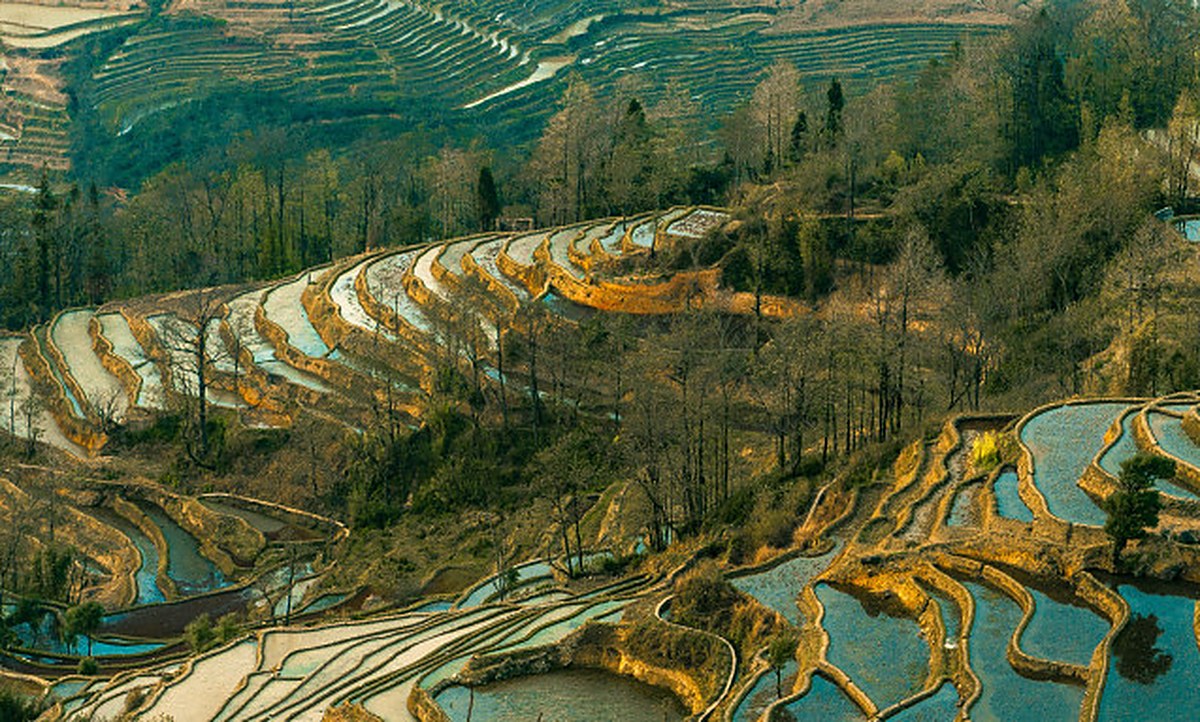
Yunnan is the destination that grows on people the longer they stay, and it shows the difference between a first and second trip better than anywhere else. Most first-timers reach only Kunming and Lijiang; a second visit can climb all the way to Shangri-La.
- Kunming: the Stone Forest, Dianchi Lake and the Dounan flower market. Treat it as a gateway city with one buffer day, mostly for adjusting to the dry air and strong sun.
- Dali: a full loop of Erhai Lake taking in Xizhou, Shuanglang and the Haitse Park, plus the Cangshan cable car and Dali Old Town. Cycling or hiring a car for a day on the lake is the classic approach.
- Lijiang: the Old Town, Shuhe, Jade Dragon Snow Mountain (take the large cable car up to the 4,506-metre viewing platform) and Blue Moon Valley.
- Shangri-La: Pudacuo National Park, Songzanlin Monastery and Dukezong Old Town. At around 3,300 metres, this belongs at the end of the trip so your body has time to adapt.
Yunnan is one of the few places that works all year but feels completely different in each season. Flowers bloom from March to May; June to August is the rainy season, usually afternoon showers with clear mornings and evenings; September to November brings the clearest air; and December to February gives the most complete snow on the mountains. If you can pick only one window, mid-September to early November offers the best overall experience.
Route three: deeper Sichuan, Chengdu with Jiuzhaigou and Huanglong
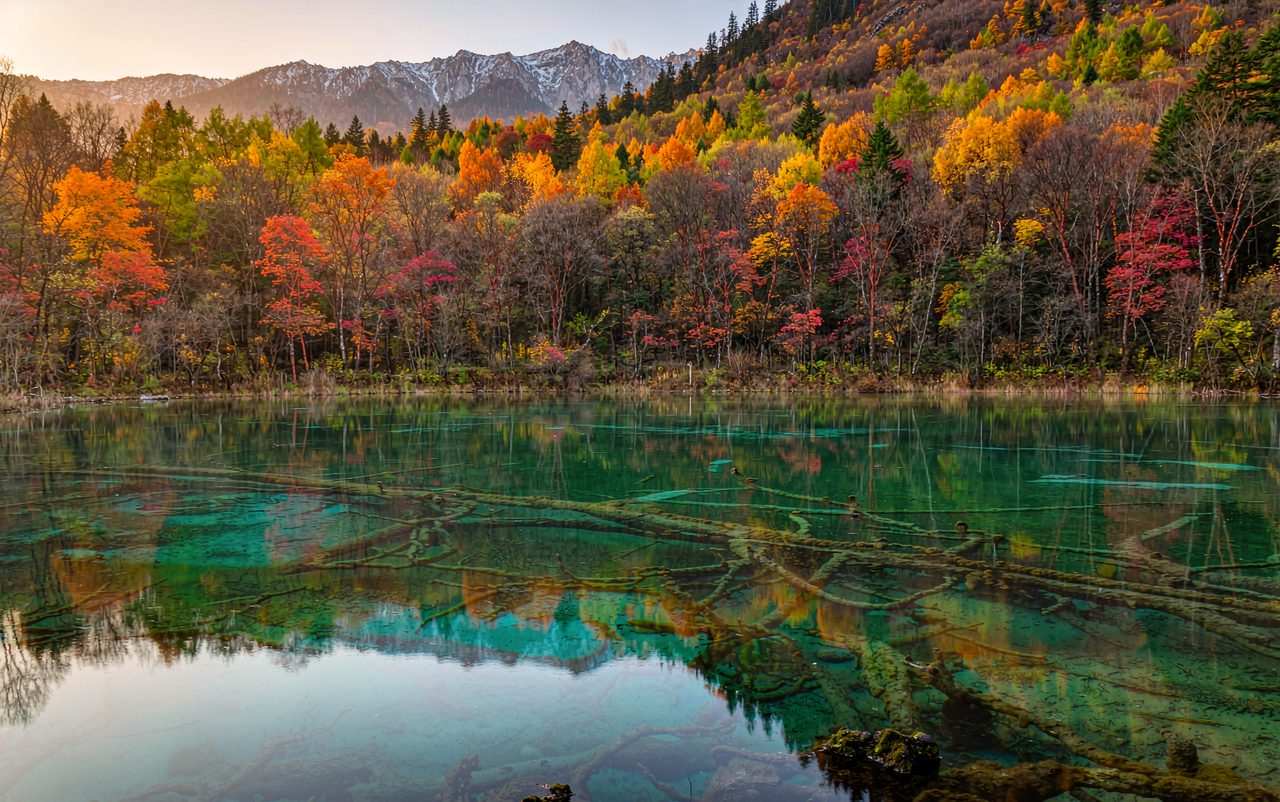
If you have already seen the giant pandas, push Sichuan north on your second visit. Jiuzhaigou and Huanglong are the places guests still talk about long after they get home.
The most practical change in 2026 is transport. With the Huanglongjiuzhai station on the Sichuan-Qinghai railway now open, the fastest service from Chengdu East takes 1 hour 39 minutes, with second-class seats around 110 to 230 yuan, followed by a scenic shuttle of roughly 1.5 to 2 hours to the valley entrance. Flying to Jiuzhai Huanglong Airport looks quicker at about one hour in the air, but the airport is some 80 kilometres from the entrance with a 1.5 to 2 hour coach transfer, and the airport is notorious for delays, averaging about 2.5 hours in summer. For families with elders or children, the train is the more reliable choice.
Ticket and reservation rules need to be understood in advance, and this is where second-time itineraries most often go wrong:
| Item | Rules in force for 2026 |
|---|---|
| Peak season (1 April to 15 November) | Admission 190 yuan plus shuttle bus 90 yuan, total 280 yuan per person |
| Off season (from 16 November) | Admission 80 yuan plus shuttle bus 80 yuan, total 160 yuan per person |
| Daily cap | About 41,000 visitors in peak season, about 23,000 in off season |
| Ticket release | Up to 14 days ahead, released daily at 08:00, real-name only, no on-site ticket window |
| Concessions | Visitors aged 65 and over are exempt from the admission fee; the 90 yuan shuttle is still payable |
| Altitude | Valley entrance about 2,000 metres, Long Lake about 3,100 metres, Huanglong 3,100 to 3,500 metres |
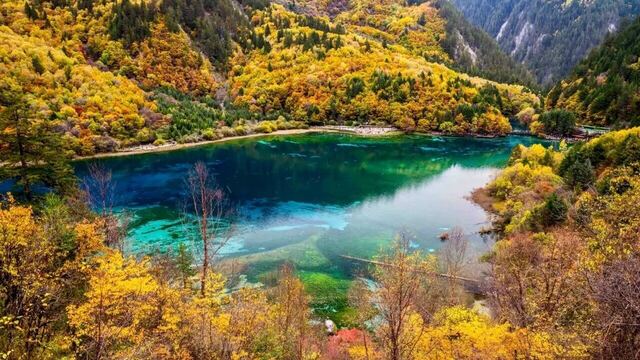
Two pacing suggestions. First, visit Jiuzhaigou before Huanglong, spending two days at around 2,000 metres before climbing to 3,500. Second, aim your viewing window at mid to late October, when the autumn colour usually peaks for about three weeks and the forests around Five Flower Lake, Pearl Shoal and Long Lake turn gold and crimson. It is the most photogenic stretch of the year.
Route four: Zhangjiajie and western Hunan, for landscape obsessives
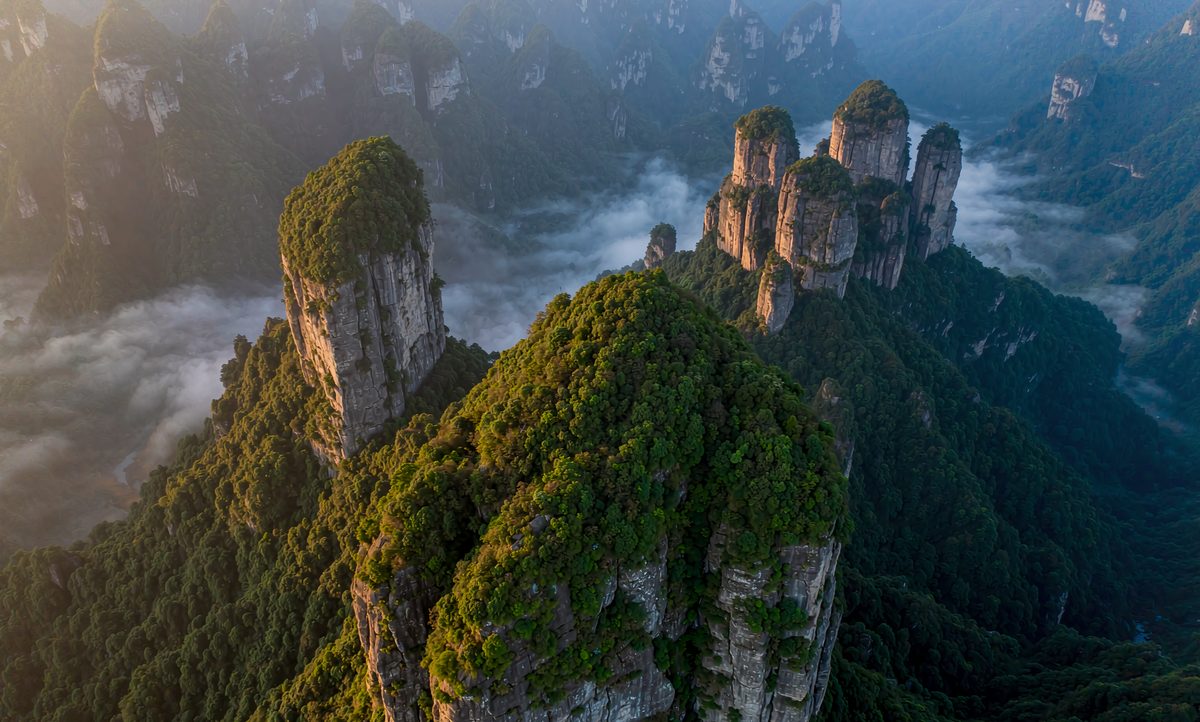
Zhangjiajie is the kind of place that looks exaggerated in photographs and even more exaggerated in person. It suits second-time visitors particularly well, because its value is not one attraction but an entire landform system.
- Wulingyuan core area (Zhangjiajie National Forest Park): the main gate ticket is 165 yuan, and a combined ticket including the internal eco-buses is about 239 yuan, valid for four days with unlimited re-entry. That means you can comfortably split the visit over two days according to your energy.
- The two transfers worth paying for: the Bailong Elevator, about 65 to 72 yuan one way, climbs 335 vertical metres in a little over a minute to Yuanjiajie; the Tianzi Mountain cable car, 72 yuan one way, is the sensible way down and saves your knees.
- The classic loop: enter at the East Gate, take the Bailong Elevator up, walk Yuanjiajie, continue to Yangjiajie and Tianzi Mountain, then ride the cable car down.
- Tianmen Mountain: in the city itself and a separate scenic area, with a ticket around 278 yuan including the round-trip cableway, known for Heaven's Gate and the glass skywalk.
To extend the route, add Fenghuang Ancient Town, about one hour from Zhangjiajie by high-speed rail. The old town itself is free to enter and the Tuojiang riverfront at night is a genuine surprise. October daytime temperatures run about 12 to 22 degrees Celsius, colder on the summits, so bring a jacket and rain gear.
Route five: Tibet, for those willing to do the homework
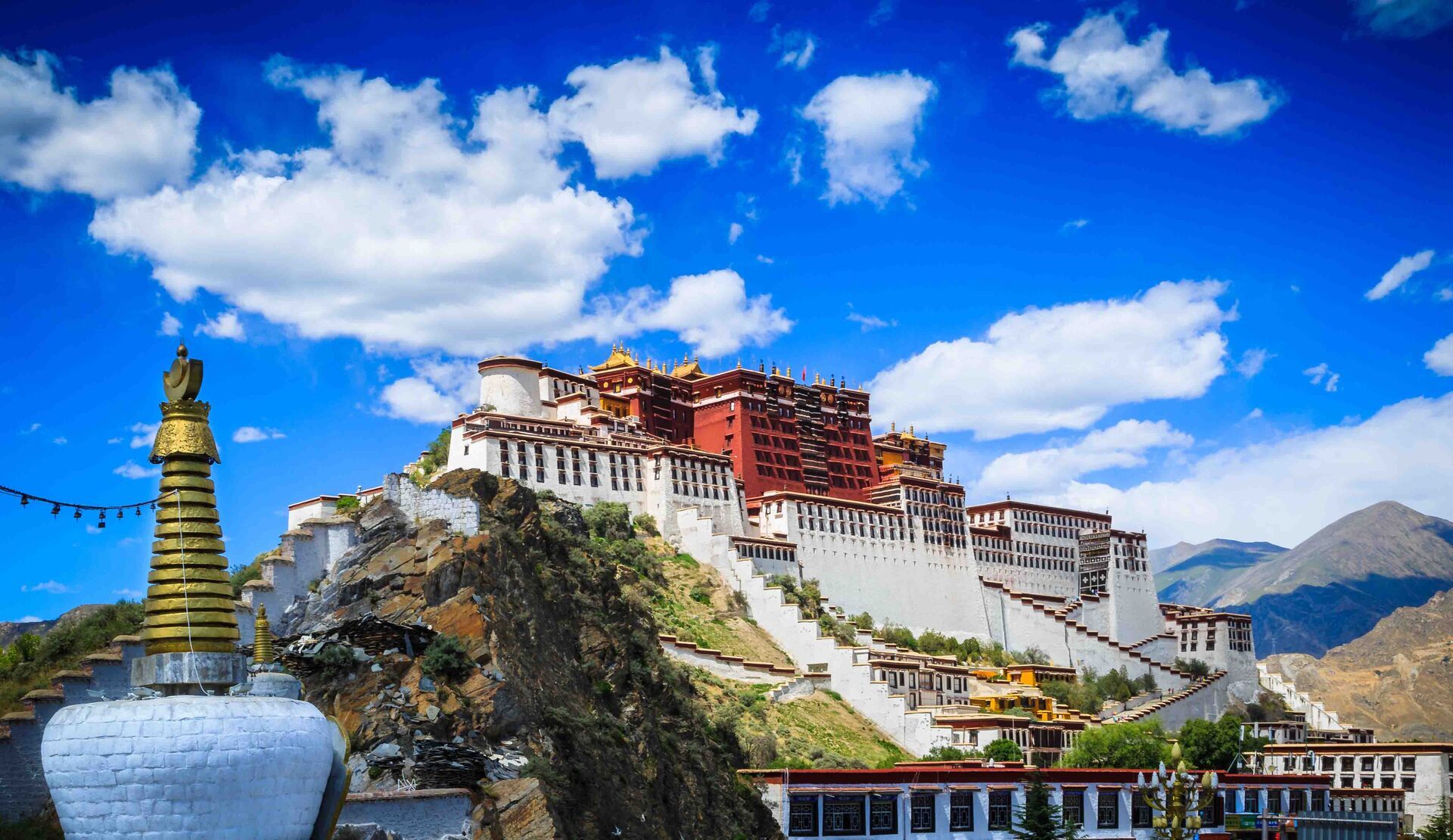
Tibet is the advanced option on a second China trip. It is absolutely worth going, but it is not somewhere you decide to visit on a whim. Here is the state of play under the rules in force in 2026:
- Visitors from Taiwan, China and foreign visitors must obtain a Tibet Travel Permit. Individuals cannot apply directly. Applications must go through a licensed travel agency based in Tibet, and the permit is tied to a registered itinerary.
- Visitors from Hong Kong, China and Macao, China travelling on a Home Return Permit do not require a Tibet Travel Permit and can arrange their trip more freely.
- Since 13 March 2026, anyone entering Tibet by air or by train must carry the original permit. Photocopies are no longer accepted and security checks verify each document.
- The itinerary declared on the permit may currently include only A-grade scenic areas. Sites without a star rating cannot be listed.
- Approval normally takes 7 to 14 working days. In peak season, June to October, start the process 30 to 45 days ahead. Border areas such as Everest Base Camp, Ngari and Medog additionally require a border defence permit.
- The best seasons are April to June and September to November, when the climate is more stable and visibility is high.
We do not promise to arrange Tibet permits on your behalf. We help guests connect with licensed Tibetan ground operators and make sure the overland legs and accommodation on either side of Tibet run smoothly. If Tibet is on your list, please allow plenty of lead time.
How to choose: match the route to your group
| Your situation | Best fit | Suggested length | Why |
|---|---|---|---|
| Travelling with parents or elders | Yangtze River cruise | 4 to 5 days | No repacking, little walking, scenery outside the window |
| Couples and honeymooners | Yunnan loop | 7 to 8 days | The widest choice of hotels and restaurants, with a flexible pace |
| Photographers | Sichuan, Jiuzhaigou and Huanglong | 5 to 6 days | Peak autumn colour in mid to late October |
| Families with children | Zhangjiajie and Fenghuang | 5 to 6 days | Cable cars and eco-buses do the climbing, children cope well |
| Bucket-list travellers | Tibet | 8 to 10 days | Needs preparation, but the highest sense of completion |
Practical checklist: six things to do before a second trip
- Confirm your entry route first. Whether you enter visa-free, under a mutual exemption, as a transit passenger or with a visa determines how much you can change plans at short notice.
- Book attractions that need real-name reservations before anything else. Jiuzhaigou, the Palace Museum and several provincial museums fall into the category of no reservation, no entry, and tickets are released at fixed times.
- Buy high-speed rail tickets early. Tickets usually go on sale 15 days in advance, and popular services on public holidays sell out immediately. With heavy luggage, choose departures from major stations.
- Set up payments in advance. Both WeChat Pay and Alipay can link international bank cards. Completing identity verification and linking your card before you land will save a great deal of friction.
- Build acclimatisation into high-altitude itineraries. Jiuzhaigou, Huanglong, Shangri-La and Lhasa are all poor choices for going straight to the highest point on arrival day.
- Avoid domestic travel peaks. Visitor numbers and hotel prices rise sharply around Spring Festival, Labour Day, National Day and Mid-Autumn Festival. Shift your dates if you can.
Frequently asked questions
Is Beijing or Shanghai still worth revisiting on a second trip?
Yes, but change the content. In Beijing, focus on the hutongs, the National Museum and architectural detail. In Shanghai, walk the Wukang Road and Anfu Road neighbourhoods for everyday city life instead of visiting the Bund again.
Can these five routes be combined?
Yes, but resist overloading. The smoothest pairings are Sichuan with a Yangtze cruise, starting in Chengdu and boarding in Chongqing, or Zhangjiajie with Fenghuang and Guilin. Cross-region combinations need at least 10 to 14 days.
Which route is easiest with parents over 70?
The Yangtze cruise is the gentlest, followed by Zhangjiajie, where cable cars and eco-buses do most of the work. Tibet and the Jiuzhaigou-Huanglong combination need a careful assessment of fitness.
Do I have to join a tour group?
Not necessarily. But for high-friction steps such as Tibet permits, Jiuzhaigou ticket releases and holiday rail bookings, having someone who knows the process makes a noticeable difference.
The greatest value of a second trip to China is not adding another province to the list. It is finally travelling at your own pace. If you already have rough dates and a group size in mind, send us your thoughts and we can turn any of these routes into a day-by-day plan with a clear cost breakdown. Start with a custom tour or simply contact us. Jadetour has long specialised in inbound travel to China, with Chongqing and Sichuan as our home ground.
Need help planning this trip?
Tell us your travel dates and group size — we reply within 24 hours.
WhatsApp +86 183 1705 8017 · WeChat 18317058017
Destinations in this guide

Chengdu
Home of the Pandas · Gateway to Western Sichuan

Jiuzhaigou
Fairy-tale Valley · Turquoise Lakes & Waterfalls
Zhangjiajie
Avatar's Floating Mountains · Quartz Peaks & Tianmen
Yunnan
South of the Clouds · From Snow Mountains to Rainforest
Lhasa
The Holy City of the Snow Land · Potala Palace & Pilgrim Paths
Related Tours
Essential 4-Day Lhasa Private Tour
5-10 Days
Sichuan & Chongqing 9 Days 8 Nights · Jiuzhaigou Grand Tour
5-10 Days
Mountains of Ba, Waters of Shu · Chengdu, Jiuzhaigou & Wulong 9 Days (Jiuzhaigou + Huanglong + Wulong Karst + Furong Cave + Wujiang Gallery + Mountain City Nights)
5-10 Days
More Guides

Flying with a Pet to and from China: Cabin, Hold and Quarantine in 2026
Cabin, live-animal hold or cargo, plus quarantine certificates, the 21-day rabies rule and China entry requirements.
10/17/2026
Solo Female Travel in China: Safety, Night Transport and a 2026 Checklist
Registration, late-night rides, payments and emergency numbers: a practical 2026 checklist for women travelling alone in China.
10/17/2026
Student Travel in China: 2026 Rail Fare Rules and the Best Hands-On Activities by City
A practical guide to study tours in China: 2026 rail student fare scope, visa-free basis for camps, hands-on activities by city, and group safety standards.
10/16/2026