
Health and Medical Preparation for China: Vaccines, Medicine, Clinics and Insurance in 2026
Yellow fever is the only mandatory vaccine for China. What to bring, which hospital to choose and which insurance cover…

Yellow fever is the only mandatory vaccine for China. What to bring, which hospital to choose and which insurance covers you: the 2026 practical guide.
Ask whether you need vaccinations for China and you will get answers ranging from "none at all" to "at least five shots". Both extremes are wrong. Mainland China imposes no mandatory vaccination list on ordinary short-term visitors. The one legally binding requirement is the yellow fever certificate, and it applies only to travellers arriving from, or transiting more than 12 hours through, a yellow-fever-risk area. The preparation that actually pays off is more practical: bring the right medicine, know which hospital to go to, and buy the right insurance.
This guide covers mandatory and recommended vaccines, the arrival health declaration, rules for carrying medicine, how to see a doctor, common travel health problems, and insurance and emergency contacts — as of October 2026. This is general travel-health information, not medical advice. Whether to vaccinate or adjust medication is a decision for your travel clinic or doctor. For visa and entry-document matters, always confirm with the Chinese embassy or consulate in your country and with China's National Immigration Administration. We do not provide visa application services.
1. The short answer: no mandatory vaccines for ordinary tourists
- Mainland China has no mandatory vaccination requirement for ordinary short-term visitors. COVID-19 testing and vaccination requirements have been fully lifted, so vaccinated and unvaccinated travellers face the same routine border procedure.
- On arrival you may go through temperature screening and brief medical questioning. This is standard port health quarantine, not targeting any nationality.
- If you have a fever, cough or other symptoms, declare it to customs voluntarily and cooperate with quarantine. It is both an obligation and the fastest route to help.
2. The single legal exception: the yellow fever certificate
This follows international health regulations, and China as a signatory applies it. The trigger is your routing, not your nationality:
- Who it applies to: travellers aged nine months or older departing from, or with a stopover of more than 12 hours in, a yellow-fever-endemic area.
- What is required: a valid international yellow fever vaccination certificate, with the vaccination dated at least 10 days before arrival. Under current rules a single approved dose makes the certificate valid for life.
- Typical exemption: flying direct from North America, Europe or Australia with no endemic transit normally means no certificate is needed.
- Practical advice: if your itinerary could plausibly touch an endemic area — for example a multi-country Africa or Central and South America routing — get the certificate before departure and carry it physically. Do not argue the 12-hour calculation at the border.
3. Recommended but not required: match them to your route
- Hepatitis A: the most commonly recommended vaccine for China. It spreads through food and water, including in otherwise good restaurants.
- Hepatitis B: sensible for longer trips, or if you might need medical or dental treatment while abroad.
- Typhoid: worth considering for street food in smaller cities, or itineraries of several weeks.
- Japanese encephalitis: mosquito-borne; mainly relevant for rural or mountain travel in summer and autumn, or stays over one month. A pure city itinerary carries very low risk.
- Rabies: generally reserved for long-stay residents, cyclists and rural travellers far from clinics, not the standard short city break.
- Routine catch-up: measles-mumps-rubella, tetanus-diphtheria-pertussis, varicella if you never had it, polio status and seasonal influenza. Adults are often surprised how long ago their last tetanus shot was; a long-haul trip is a good moment to fix that.
- Timing: travel clinics generally advise a consultation about six weeks before departure. Multi-dose series such as hepatitis B take months, and yellow fever must be dated more than ten days before travel. A last-minute visit only covers single-dose shots.
- Long stays follow a different track: work (Z) and study (X) visas often require a medical examination that may include blood tests and a chest X-ray, done abroad on a specified form or after arrival under local rules. That is separate from tourist vaccination.
4. Arrival health declaration and port quarantine
- Inbound travellers still need to complete a health declaration. You can file electronically in advance through the official customs service mini-program or the public health declaration web page, then save a screenshot of the QR code — the code is valid for 24 hours. Paper declaration cards are also available on board or at the inspection channel.
- Ports may run temperature screening and medical patrols. Report fever, jaundice, rash or diarrhoea proactively.
- Travellers from areas affected by yellow fever, Ebola and similar diseases, or with relevant exposure history, must present certificates or declare exposure as required.
- Bringing pets has separate rules: dogs and cats only, one per person per trip, with an official animal health certificate and a rabies vaccination certificate from the exporting country, plus an ISO 11784/11785 microchip. Pets without a valid chip are subject to 30 days of quarantine.
5. Carrying medicine: three categories, three regimes
| Category | Typical examples | What is required |
|---|---|---|
| Ordinary over-the-counter | Cold remedies, stomach medicine, cough syrup, ordinary painkillers, vitamins | No prescription needed; keep to a reasonable personal quantity; retain full original packaging with a legible name and expiry date |
| Standard prescription | Blood pressure, diabetes and cholesterol medicines, routine antibiotics | Bring the original prescription; the drug name, dose and patient identity must match; about seven days' supply for a short trip, a reasonable amount for the trip duration on longer stays |
| Controlled special medicines | Narcotics, Class I psychotropic drugs, anabolic agents, vaccines, sera and antibodies | A hard regulatory line. For treatment, a medical certificate plus identity proof allows carrying narcotics and Class I psychotropic drugs within the maximum dose of a single prescription; vaccines, sera and antibodies require prior health quarantine approval |
- Keep original packaging. Decanting tablets into an unlabelled pill box leaves both customs and hospitals unable to identify them — the most common amateur mistake.
- Carry, do not check. If your luggage is delayed, prescription medicine in a checked bag might as well not exist.
- Medicine counts toward the personal-item allowance. For non-resident travellers, personal effects intended to remain in China are duty-free up to RMB 2,000 in total value, and medicine counts. Do not use personal channels for resale or stockpiling.
6. Medicines you must not bring
- Traditional medicines containing endangered species: products with musk, tiger bone, rhino horn or toad venom are prohibited in any quantity and for any purpose.
- Unlicensed, expired or tampered medicine: treated as counterfeit or substandard; seized and disposed of by law, with liability in serious cases.
- Carrying Chinese herbal medicine out of China is also subject to value limits that differ between Hong Kong and Macao, China and other destinations. Check the latest customs notice before departure.
7. Seeing a doctor in China: smoother than most expect
- Levels of care: international departments of top-tier public hospitals in first-tier cities offer English service at near-international prices. Private international clinics are the easiest to communicate with and the most expensive. Community clinics and ordinary public hospitals are good value but offer limited English.
- Registration: appointments are now mostly booked online through a hospital's official account or app; popular departments fill one to three days ahead. First visits need your original passport to create a record.
- Payment: foreign visitors pay as self-funded patients, and hospitals usually require payment before treatment. Alipay and WeChat Pay both work; some international departments accept international cards. Always ask for invoices and a diagnosis certificate for your insurance claim at home.
- Pharmacies: dense in cities and fine for over-the-counter items. Antibiotics and prescription drugs require a local doctor's prescription, which differs from some countries — do not expect to buy them over the counter.
- Ambulance: call 120, free nationwide. Bring your passport and have your hotel's Chinese name and address ready as a phone screenshot.
8. Six common health problems on the road
- Traveller's diarrhoea: the most common issue. Drink bottled water, avoid raw and undercooked food, carry oral rehydration salts and an anti-diarrhoeal. Seek care immediately for high fever or bloody stools.
- Heat and dehydration: in July and August the "furnace cities" such as Chongqing, Wuhan and Nanjing feel above 40°C. Avoid midday exposure and replace electrolytes, not just water.
- Altitude: at Lhasa, the high parts of Jiuzhaigou or Qinghai Lake, take it easy on day one, drink water, avoid alcohol, and ask your doctor about medication beforehand.
- Insect bites: mosquitoes are active April to October in the south. Repellent and long sleeves beat after-the-fact treatment.
- Dry air and respiratory discomfort: northern winters with indoor heating are very dry; moisturiser, lip balm and throat lozenges are essentials.
- Foot strain: many scenic areas are all steps. Plasters and anti-blister patches can save a day of your itinerary.
9. Insurance and emergency contacts: the last step before you fly
- Insurance is a necessity, not an option. China's public healthcare does not cover foreign visitors. Buy travel insurance that includes medical expenses and emergency medical evacuation, and store the policy number and 24-hour assistance line offline.
- Save the numbers: 120 ambulance, 110 police, 119 fire, 122 traffic accidents. For immigration and visa questions, the National Immigration Administration runs the 12367 hotline with multilingual service.
- Your own embassy: the relevant channel for a foreign visitor in China is your own country's embassy or consulate. Save the address and 24-hour number for the cities you will visit. China's 12308 line is the Foreign Ministry's consular protection hotline for Chinese citizens overseas and does not serve foreign visitors inside China.
- Stay reachable: save your guide's or travel consultant's number. Sharing a medical or document problem early is far faster than handling it alone.
- Back up documents: keep offline photos of your passport data page, visa, insurance policy and prescriptions, plus separate paper copies.
Health preparation is not about how many injections you collect. It is about locking down the foreseeable risks in advance: the medicine you need, the insurance that actually covers you, and the numbers you can find in the dark. Do those three things and "what if I get sick" stops being an anxious question and becomes a plan you already wrote.
If your itinerary involves high altitude, long mountain drives, or accessibility requirements, send us your dates, party size and health considerations — a Jadetour consultant will factor them into the route design. You can also start with our custom tours.
Need help planning this trip?
Tell us your travel dates and group size — we reply within 24 hours.
WhatsApp +86 183 1705 8017 · WeChat 18317058017
Destinations in this guide

Beijing
Imperial Capital · Great Wall, Forbidden City & Hutongs

Shanghai
China's Modern Metropolis · The Bund & Classical Gardens

Chongqing
The 8D Mountain City · Gateway to the Yangtze Cruise

Chengdu
Home of the Pandas · Gateway to Western Sichuan

Lhasa
The Holy City of the Snow Land · Potala Palace & Pilgrim Paths
Related Tours



More Guides
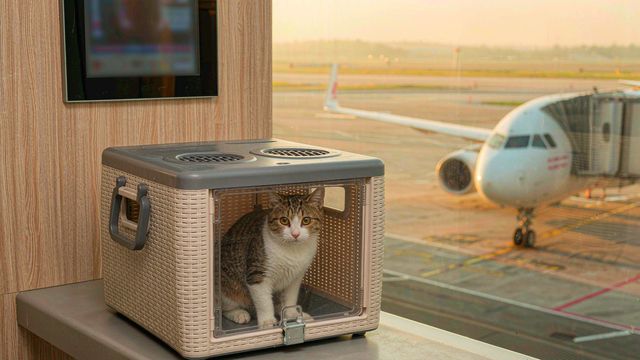
Flying with a Pet to and from China: Cabin, Hold and Quarantine in 2026
Cabin, live-animal hold or cargo, plus quarantine certificates, the 21-day rabies rule and China entry requirements.
10/17/2026
Solo Female Travel in China: Safety, Night Transport and a 2026 Checklist
Registration, late-night rides, payments and emergency numbers: a practical 2026 checklist for women travelling alone in China.
10/17/2026
Student Travel in China: 2026 Rail Fare Rules and the Best Hands-On Activities by City
A practical guide to study tours in China: 2026 rail student fare scope, visa-free basis for camps, hands-on activities by city, and group safety standards.
10/16/2026