
Flying with an Infant in China: Tickets, Bassinets, Baggage and 2026 Charges
Infant fares are 10 percent of the full adult fare and exempt from airport and fuel fees. Age 14 days to two years, one…
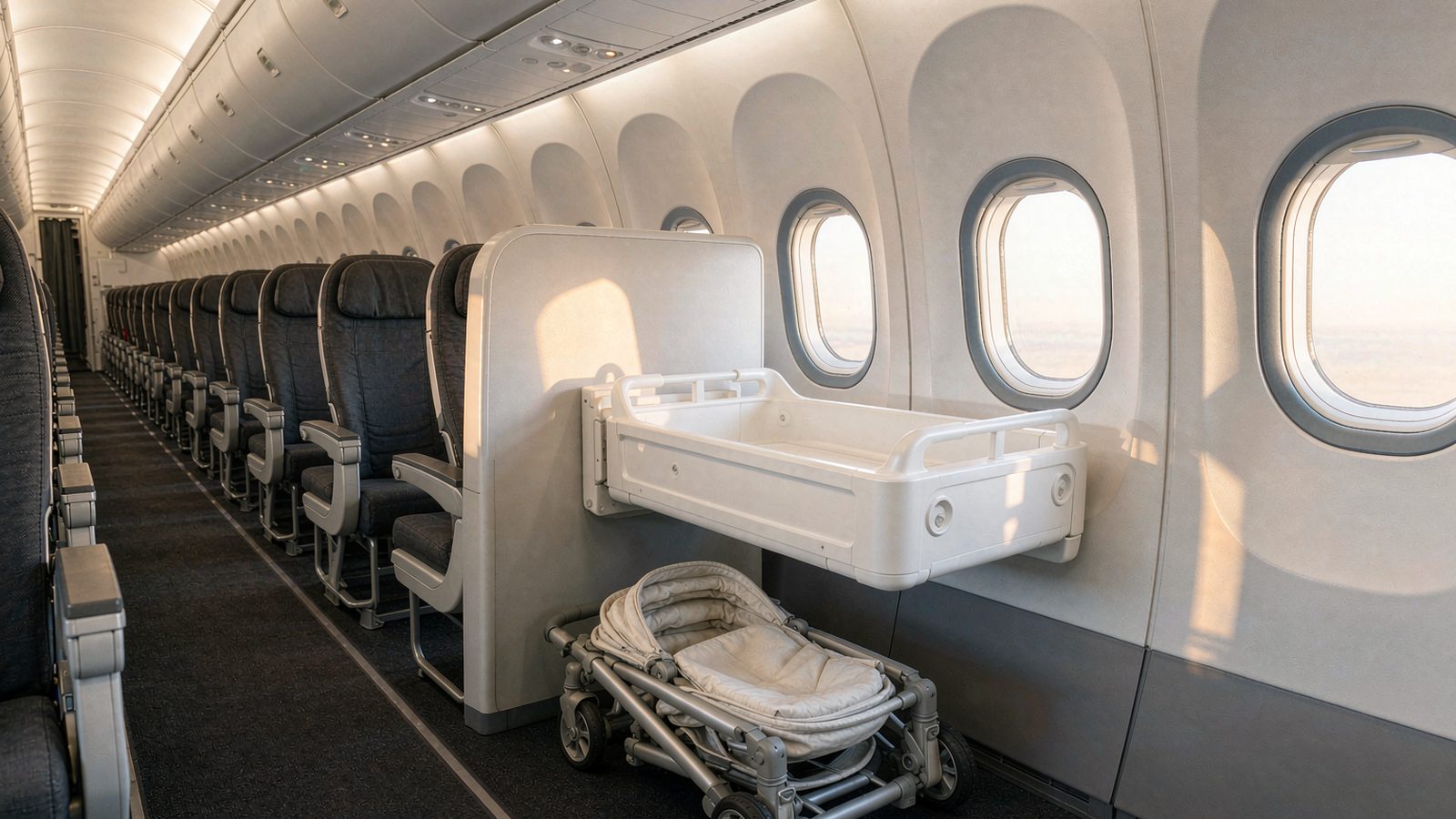
Infant fares are 10 percent of the full adult fare and exempt from airport and fuel fees. Age 14 days to two years, one or two infants per adult, bassinets 24 hours ahead, 10 kg baggage, free stroller.
Flying with a baby under two is rarely difficult because of the flight itself. It is the rules that catch families out: an infant ticket cannot be issued on its own, the fare is calculated on the full adult fare rather than the discounted one, a bassinet has to be requested in advance, and every aircraft has a hard cap on how many infants it may carry. Plenty of parents discover at the check-in desk that "just holding the baby" is not how it works.
This guide walks through the whole process on Chinese domestic and international flights: the age thresholds, how fares and seats are calculated, how many infants one adult may carry, free baggage and strollers, how to book a bassinet and baby meal, the charges in force in 2026, the timing of check-in and boarding, and the security details that travellers most often overlook.
1. Remember three numbers: 14 days, age two, ten percent
- 14 days — a healthy full-term infant must be at least 14 days old to fly. Newborns under 14 days, or premature babies under 90 days, are not accepted for carriage. This is a rule, not a recommendation.
- Age two — age is counted on the day of departure. From that day onward an infant ticket can no longer be used and a child ticket (age 2 to 12) must be purchased instead. Getting this wrong stops you at check-in.
- Ten percent — on domestic flights an infant fare is 10 percent of the full adult fare, and it is not tied to the discount the adult paid. Even a heavily discounted adult ticket does not lower the infant fare.
Two further rules are worth remembering alongside them: infant tickets are exempt from the airport construction fee and exempt from the fuel surcharge. On a domestic sector the two together are usually worth tens to over a hundred yuan.
2. How to book an infant ticket: it cannot be issued alone
This is where most families get stuck: an infant ticket cannot be purchased independently. The correct order is to buy the accompanying adult ticket first, then attach the infant to that booking, confirming at the same time that the flight still has an infant allowance available.
- Channel: use the airline website, its official app, its call centre or a directly owned ticket office. Third-party platforms often cannot process infant attachment and will refer you back to the airline anyway.
- Allowance: the number of infants a flight may carry is limited, and it is tied to the number of spare oxygen masks on board. On popular routes and in peak season, secure it early.
- Documents: for domestic travel bring the original of a birth certificate, a household register or a child identity card; for international travel, a passport. The name and date of birth on the booking must match the document exactly.
One practical note: if the adult ticket is already issued and you forgot to attach the infant, do not rush to refund and rebook. A call to the airline's service line is usually enough, unless the flight's infant allowance is already used up.
3. Fares and seats: ten percent or fifty percent
The real question parents wrestle with is whether to buy the baby a seat. The answer depends on the length of the sector and your budget:
| Ticket type | Age (on day of departure) | Fare | Airport construction fee | Fuel surcharge | Seat |
|---|---|---|---|---|---|
| Infant | 14 days to under 2 years | 10% of full adult fare | Exempt | Exempt | No seat, held by an adult |
| Child | 2 to under 12 years | 50% of full adult fare | Exempt | Charged at half the adult rate | Own seat |
- If you have already bought an infant ticket and now want a seat for the child, switch to a child ticket rather than paying extra for "a seat".
- Infant tickets are usually the most flexible: voluntary changes and refunds on a non-seated infant ticket are generally free of charge, subject to the carrier's rules.
- Free baggage for infants varies: most full-service carriers allow 10 kg, and some allow no separate allowance at all, but almost all carry one folding stroller free of charge.
One difference is easily missed: a child ticket is exempt from the airport construction fee but pays half the fuel surcharge, whereas an infant ticket is exempt from both. On long sectors the gap becomes visible.
4. How many infants may one adult carry
- The general Chinese civil aviation position is that one adult may carry at most two infants, of whom one may travel on a non-seated infant ticket, while any additional infant must have a child ticket and a seat.
- Some carriers are stricter and allow only one infant per adult. Always confirm with the airline you are actually flying.
- The safety logic is straightforward: the number of spare oxygen masks in each cabin zone sets the limit on infants carried in arms. That is also why the allowance must be secured early.
5. How to request a bassinet
On long sectors a bassinet is close to essential, but it is not equipment you can simply ask for on board:
- It must be requested in advance. The common requirement is to book it 24 hours before departure; some carriers advise 72 hours so that a position on the right aircraft type can be confirmed.
- It is limited by aircraft type and cabin. A bassinet hangs on fixed points at a bulkhead, so it is normally allocated to specific front-row economy seats. Weight limits differ by type, commonly 10 to 14 kg, and a bassinet cannot be used once the baby exceeds it even if the request was accepted.
- Where to ask: the airline's call centre or a directly owned sales office. Requesting a bassinet normally also blocks the matching front-row seat for you.
- It matters most on international sectors: on a night flight a bassinet lets the baby lie flat and gives the parents some rest.
If bassinets are already taken, the next best option is a front-row or window seat in economy, on a daytime flight that fits the baby's routine.
6. Baby meals and care on board
- Baby meal: must be pre-ordered, commonly 24 hours before departure. It usually comes as jars of puree in meat, vegetable or fruit varieties. Order a special meal for yourself as well — a parent holding a baby rarely has a free hand for the standard trolley.
- Hot water and formula: the cabin supplies hot water and cabin crew can usually help prepare formula. Turbulence is frequent, so carry pre-portioned formula and a vacuum flask.
- Changing tables: on narrow-body aircraft only some lavatories have one; wide-bodies are better equipped. Ask the crew which door to use.
- Ear pressure: the pressure change during climb and descent is uncomfortable for infants. Feeding, offering water or using a pacifier is the most effective relief.
7. Security: formula, liquids and ice packs
- Liquid dairy products and water for preparing formula may be carried on board, but must be taken out separately for screening and cleared by security. This is an explicit exemption, so there is no need to pour it away for exceeding 100 ml.
- Ice packs used for cooling should be checked in; they are frequently stopped in hand baggage.
- Baby food, such as fruit puree or jars, normally falls under the same liquid exemption but must also be presented separately.
- Folding strollers may be checked free of charge. Some airports let you push them to the gate and hand them over there, collecting them at the airbridge or baggage carousel on arrival, according to the departure airport's rules.
8. The timing of check-in and boarding
With an infant, allow more time than you would travelling alone:
- Check-in cut-off: domestic flights normally stop accepting passengers 30 to 45 minutes before departure. International and regional flights cut off earlier, usually 45 to 60 minutes before departure, because of customs, border inspection and quarantine.
- Gate closing: gates generally close 15 to 20 minutes before departure. Checking in is not the end of the process; leave time to reach the gate.
- Recommended arrival: 2 hours before a domestic flight and 3 hours before an international one. If you are travelling with an infant, pushing a stroller and using special assistance lanes, add another 30 minutes.
- Priority: passengers with infants can usually use priority security or boarding lanes. Just ask at check-in.
One addition: hub airports have been steadily shortening cut-off times, and some now accept domestic passengers up to 30 minutes before departure or less, with a few routes allowing hand-baggage-only passengers to complete formalities 15 minutes before departure. That is an airport-level service upgrade rather than a national standard, so keep planning for two hours.
9. What it costs in 2026
Here is the current charging structure in one table for quick estimating:
| Item | Infant (no seat) | Child (with seat) | Adult economy |
|---|---|---|---|
| Fare | 10% of full adult fare | 50% of full adult fare | Actual discounted fare |
| Airport construction fee | Exempt | Exempt | Charged as prescribed |
| Fuel surcharge | Exempt | Half the adult rate | 60 yuan up to 800 km; 120 yuan above 800 km |
| Free checked baggage | 10 kg on most carriers | Same as adult | Usually 20 kg |
| Folding stroller | One, free of charge | One, free of charge | Not applicable |
The domestic fuel surcharge figures above apply to tickets sold from 5 April 2026 inclusive: 60 yuan per passenger on sectors of 800 km or less, and 120 yuan above 800 km. Infants travelling at 10 percent of the full adult fare are exempt, and children pay half the adult rate. On international routes the surcharge follows the airline's system calculation and published rates.
10. Five common misconceptions
- Misconception one: the infant fare is further discounted from the adult's discounted fare. No. It is always 10 percent of the full adult fare, whatever the adult paid.
- Misconception two: you can simply carry the baby on board. No. The infant must be attached to a booking and occupy the flight's infant allowance, or check-in will not proceed.
- Misconception three: ask the crew for a bassinet once on board. No. Bassinets need at least 24 hours' notice and are limited by aircraft type and weight.
- Misconception four: infants always get their own baggage allowance. It varies. Most carriers allow 10 kg; some allow none. The one consistent benefit is one free folding stroller.
- Misconception five: you can still buy an infant ticket the day before the second birthday. Age is counted on the day of departure, so a child ticket is required from that day.
11. Let the logistics be arranged in advance
On a multi-city China itinerary with a baby, the hard part is the connections: flight times that fit the baby's routine, front-row and bassinet positions, and enough slack for strollers and assistance lanes between airports. Jadetour's tailor-made itinerary service builds these details into the plan. Send your travel dates, party size including the baby's age in months, and the cities you want to contact us, and we will lay out the formalities and timings in advance.
Need help planning this trip?
Tell us your travel dates and group size — we reply within 24 hours.
WhatsApp +86 183 1705 8017 · WeChat 18317058017
Destinations in this guide


Related Tours



More Guides
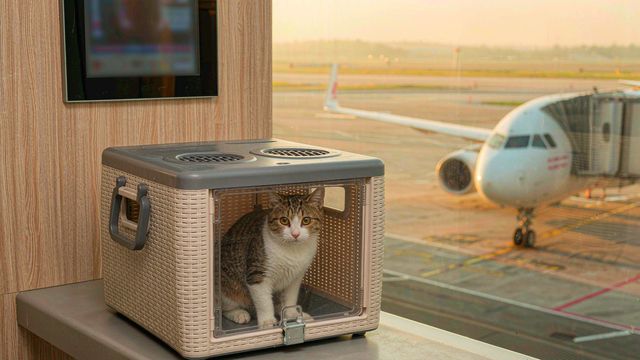
Flying with a Pet to and from China: Cabin, Hold and Quarantine in 2026
Cabin, live-animal hold or cargo, plus quarantine certificates, the 21-day rabies rule and China entry requirements.
10/17/2026
Solo Female Travel in China: Safety, Night Transport and a 2026 Checklist
Registration, late-night rides, payments and emergency numbers: a practical 2026 checklist for women travelling alone in China.
10/17/2026
Student Travel in China: 2026 Rail Fare Rules and the Best Hands-On Activities by City
A practical guide to study tours in China: 2026 rail student fare scope, visa-free basis for camps, hands-on activities by city, and group safety standards.
10/16/2026