
Leaving China in 2026: New Exit Rules, Customs Declaration and Tax Refunds
China's new exit-and-entry regulation took effect on 15 September 2026. This is the current position on the six-step de…
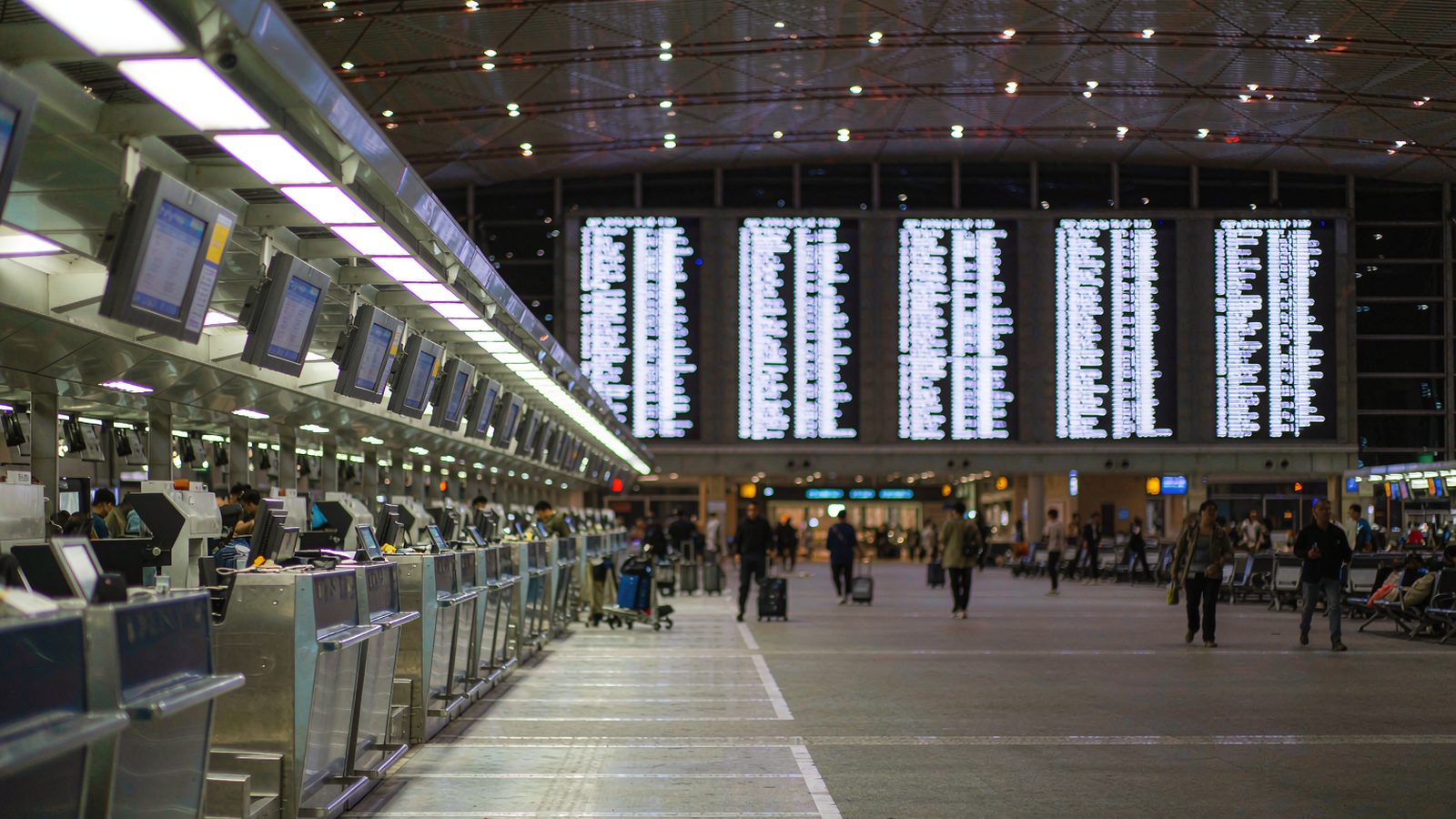
China's new exit-and-entry regulation took effect on 15 September 2026. This is the current position on the six-step departure process, the red and green customs channels, cash limits, prohibited exports, the 200-yuan tax refund threshold, and health declaration - plus the five mistakes that stop travellers at the airport.
Most travellers treat departure as a formality: turn up at the airport and go. What actually stops people is never the process itself, but the information gap. Cash over the limit and undeclared. A tax refund form that was never verified. A stay that quietly expired while you queued at the gate. And on 15 September 2026, a new administrative regulation came into force that tightens how several of these rules are applied.
This article walks through the current position in the order you will meet it: the departure-day sequence, documents, customs, cash limits, prohibited exports, tax refunds and health declaration. Visa and immigration-document matters should always be confirmed against the latest announcements from your nearest Chinese embassy or consulate and from China's National Immigration Administration. We do not provide visa processing services.

1. What changed on 15 September 2026
On 22 July 2026 the State Council published the Regulations on the Administration of Exit and Entry (State Council Decree No. 841), which took effect on 15 September 2026. It does not replace the 2013 Exit and Entry Administration Law; it fills in four areas at the level of implementation:
- Risk prevention for outbound travel. The foreign affairs, culture and tourism authorities, together with Chinese diplomatic missions abroad, will publish security advisories and destination risk warnings. When handling exit-document applications and conducting exit border checks, immigration authorities will warn travellers about high-risk countries or regions and, where necessary, advise against travel to destinations at the highest risk level.
- The stated purpose of travel must be genuine and lawful. Applicants must state a true and lawful purpose and cooperate with verification of identity and purpose. False documents or false statements may lead to refusal of an exit or entry document, or to being barred from exiting or entering.
- Clearer entry and exit restrictions. Obtaining documents by fraud, illegal entry or exit punishable by administrative detention, criminal activity abroad, endangering national security or interests, or breaching export control and technology import-export rules in ways that may harm industrial and technological security are all grounds for being barred from exit. Foreign nationals who submit false documents or statements when applying for a Chinese visa abroad or applying to enter at a port of entry may be refused entry.
- Registration for intermediary services. Agencies and individuals providing exit and entry intermediary services must register, and may not supply or facilitate false documents or irregular applications.
For ordinary tourists and business travellers the process itself has not changed, but one point is now stated more firmly: what you said on arrival must hold up on departure. A mismatch between your declared purpose of entry and what you actually did is the most common reason for extra questioning on the way out.
2. Departure day: the six-step sequence
- Step 1 - Check-in and bag drop. Collect your boarding pass and check in luggage; keep valuables, documents and power banks with you. International check-in counters typically close 45 minutes before departure. Miss that and the flight is gone.
- Step 2 - Customs. Choose the red or green channel depending on whether you carry anything that must be declared (see section 4).
- Step 3 - Immigration. Present your passport and boarding pass; fingerprints and a facial scan are taken, and the officer checks your entry record and permitted stay.
- Step 4 - Security screening. Liquids, power banks (carry-on only, normally up to 100Wh) and lighters are handled under the usual rules.
- Step 5 - To the gate. At large hubs the gate may involve a shuttle bus or a walk of ten minutes or more. Do not lose that time in the duty-free shops.
- Step 6 - Boarding. Gates generally close 15 to 20 minutes before departure.
Timing advice: arrive three hours before an international flight. At major gateways such as Beijing Capital and Daxing, Shanghai Pudong and Hongqiao, Guangzhou Baiyun, Chengdu Tianfu and Chongqing Jiangbei, add another 30 minutes during holidays and the early-morning peak. If you also need to process a tax refund that day, add 30 to 60 minutes more, for the reasons in section 7.
3. Documents and permitted stay: three things to settle before you fly
- Passport and visa status. You need a valid passport and a visa, residence permit or visa-free basis that matches how you entered. Most airlines require validity beyond the departure date; six months of remaining validity is the safe standard.
- Is your permitted stay long enough? If you need more time, apply for an extension at the local exit and entry administration of the public security authority at least seven days before your permitted stay expires. Do not leave this until you reach the airport.
- Is your accommodation registered? Hotels register guests on arrival. If you stayed in a private home, with friends or in a short-term rental, you or your host must register with the local public security authority within 24 hours of moving in.
If you have already overstayed, the correct approach is to go to the exit and entry administration voluntarily and resolve it before arranging your departure. Overstaying is punishable under the law and can affect future entries and visa applications. Arriving at the airport unwell, or being stopped at the border while already in breach, is the worst possible sequence.
One more boundary worth knowing: travellers admitted under 240-hour visa-free transit must leave within 240 hours and from a port of entry eligible under that scheme. Overstaying or travelling outside the permitted area is handled under the law.
4. Customs: red channel or green channel
Baggage declaration is governed by the General Administration of Customs Announcement No. 43 of 2025 on the declaration of luggage and articles by inbound and outbound travellers. The rule is short:
- Carrying articles that require written declaration: complete the Customs Declaration Form for Luggage and Articles of Inbound and Outbound Travellers and use the red channel.
- Carrying nothing that requires declaration: no form is needed; use the green channel.
You can pre-fill the electronic declaration and save time at the airport. Search for the Customs Traveller Finger Service mini-program inside WeChat or Alipay, or visit npc.chinaport.gov.cn, enter your data in advance, then confirm it at the declaration desk and submit to verification.
| Use the red channel if you carry | Notes |
|---|---|
| Renminbi or foreign cash above the limits | See the limits table in section 5 |
| Valuable items to be taken out again | Professional camera gear, expensive watches or jewellery; carry the original declaration made on entry |
| Animals, plants or their products, and special items | Includes seeds, meat products, biologicals and blood products |
| Radio transmitters and secure communication equipment | Restricted exports |
| Commercial goods, samples and advertising material | Not for personal use |
| Quantities beyond reasonable personal use | The officer at the scene makes the call |
One reminder for shoppers: keep invoices and tax refund application forms on you, not in checked luggage. Refund verification happens at the airport, and a form inside a checked bag is a form you cannot use.
5. Cash and foreign currency: the limits in one table
This is the single most common reason travellers are stopped. The current limits:
| Item | Limit and procedure |
|---|---|
| Renminbi in cash | No more than 20,000 yuan per person per entry or exit; above that it will not be released |
| Foreign cash on exit (up to USD 5,000 equivalent) | No Permit to Carry Foreign Currency Out of China required; customs will release it |
| Foreign cash on exit (USD 5,000 to 10,000 equivalent) | A permit must be obtained from a bank and declared to customs, which releases the funds against the permit |
| Foreign cash on exit (above USD 10,000 equivalent) | Not permitted in principle; in special cases such as large group departures or unusually long journeys, a permit must be obtained from the foreign exchange authority |
| Foreign cash on entry (above USD 5,000 equivalent) | Must be declared in writing to customs; separate rules apply to travellers crossing several times a day or within a short period |
The practical advice is simple: use cards and electronic payments and carry less cash. It avoids the limits and the risk of loss or theft. If you genuinely need to carry more, keep the permit, the exchange receipts and the declaration form together and hand them over in one go at the counter.
6. Prohibited and restricted exports
The national schedule of prohibited and restricted articles applies to departures as well as arrivals:
| Category | Typical items |
|---|---|
| Prohibited exports | Anything prohibited on import (weapons, ammunition, explosives, narcotics, counterfeit currency); manuscripts, printed matter, films, photographs, records, tapes, videotapes, optical discs and computer storage media involving state secrets; precious cultural relics and other relics barred from export; endangered and rare animals and plants, including specimens, seeds and propagating material |
| Restricted exports | Gold, silver and other precious metals and articles made from them; Chinese currency; foreign currencies and securities; radio transmitters and secure communication equipment; valuable Chinese medicinal materials; ordinary cultural relics; other articles restricted by customs |
Two classic cases where "nobody told me" is not a defence. First, endangered-species products such as ivory, coral, tortoiseshell and rhino horn are prohibited outright, whether sold as souvenirs or as crafts. Second, gold bars, coins and precious-metal jewellery beyond reasonable personal quantities must be declared or are restricted. If a shop assistant tells you it is fine to take, that is not the standard that matters; the customs schedule is.
7. Tax refunds on departure: from 200 yuan, up to 20,000 in cash
This is the area that has changed most in recent years, and the one travellers most often overlook. In April 2025 six departments - commerce, finance, culture and tourism, customs, taxation and civil aviation - issued the Notice on Further Optimising the Departure Tax Refund Policy to Expand Inbound Consumption, and the tax authority revised the administrative measures that go with it. Three changes matter:
- The minimum purchase fell from 500 yuan to 200 yuan. The same overseas traveller, on the same day, at the same refund shop, spending 200 yuan or more on eligible goods qualifies.
- The cash refund ceiling rose from 10,000 yuan to 20,000 yuan. Refunds of 20,000 yuan or less may be taken in cash or by bank transfer; above that, bank transfer only.
- Refund on the spot was expanded nationwide. At participating shops, travellers can receive the refund immediately after purchase.
Four conditions must all be met:
| Condition | Requirement |
|---|---|
| Amount | Same traveller, same day, same refund shop, purchase of eligible goods reaching 200 yuan |
| Condition of goods | Not yet used or consumed |
| Timing | Departure within 90 days of purchase |
| How it leaves China | Carried by the traveller personally, or as accompanying checked baggage |
On rates: goods subject to 13 percent VAT refund at 11 percent, and goods subject to 9 percent VAT refund at 8 percent. The refundable VAT is the invoice amount including VAT multiplied by the refund rate, and the amount actually paid is reduced by the agency's handling fee. Refunds are paid in renminbi only; there is no currency choice.
On scale: as of May 2026 there were roughly 14,000 refund shops nationwide, about four times the number at the end of 2024, covering major commercial districts, pedestrian streets, scenic areas, resorts, museums and cultural venues, airports and passenger ports.
Three practical points:
- When buying, ask for the refund application form and check that your name, passport number and the goods are correct.
- On departure, have customs verify the goods at the airport first (some ports support electronic verification), then claim the refund at the refund counter. The order is customs verification, then refund, then the normal immigration and security queues.
- Allow extra time. Refund volumes rose sharply after the 2025 changes, and in 2026 some ports have seen long queues. If you are claiming a refund, arrive 30 to 60 minutes earlier than you otherwise would. To skip the queue entirely, choose a shop offering refund on the spot and take the money at the till.
8. Health declaration: is it still required?
Under the General Administration of Customs Announcement No. 151 of 2023 on optimising the health declaration model, from midnight on 1 November 2023 inbound and outbound travellers are exempt from completing the health declaration card. In normal circumstances, no health form is needed on departure.
There is an exception. Travellers with symptoms of an infectious disease - fever, cough, breathing difficulty, vomiting, diarrhoea, rash or unexplained subcutaneous bleeding - or who have been diagnosed with an infectious disease, must declare their health status to customs and cooperate with temperature checks, epidemiological investigation, medical screening and sampling.
Declarations can be made electronically through the Customs Traveller Finger Service mini-program in WeChat, the Customs mobile app or the customs government service platform, generating a barcode to scan at the border, or on paper at the airport. Note the consequences of getting it wrong: failing to declare accurately, providing false information or refusing quarantine inspection can lead to an order to correct the conduct, a warning, and a fine of up to 10,000 yuan, rising to between 10,000 and 50,000 yuan in serious cases.
9. The five situations that stop travellers most often
- An unresolved overstay. Assuming that leaving solves the problem is wrong; the record follows you and affects future entries.
- A purpose of entry that does not match what you did. Staying long-term on a tourist visa while working or running a business attracts questions on the way out, and the September 2026 regulation states the genuine-purpose requirement more firmly.
- Undeclared cash or endangered-species products. Over-limit cash, ivory and coral are all found on the spot.
- A failed tax refund. No customs verification, more than 90 days elapsed, or goods packed in checked luggage all break the refund.
- Insufficient passport validity, caught by the airline. This is not an immigration issue: the carrier refuses boarding at check-in, most often because the passport has too little validity left.
Run this checklist before you leave and most of the trouble disappears: passport validity, visa and permitted stay, accommodation registration, cash and currency limits, items requiring declaration, refund paperwork and the 90-day clock, and any infectious-disease symptoms.
Jadetour focuses on inbound travel to mainland China, with Chongqing and Sichuan as our core regions, and we can build the departure day into the itinerary itself - scheduling refund-eligible shopping for the later stages, factoring in border-crossing times, and booking a final night near the airport when it helps. For itinerary ideas, see our custom tours in China, or simply contact us. For immigration documents and visa specifics, always rely on the latest announcements from your nearest Chinese embassy or consulate and from China's National Immigration Administration.
Need help planning this trip?
Tell us your travel dates and group size — we reply within 24 hours.
WhatsApp +86 183 1705 8017 · WeChat 18317058017
Destinations in this guide

Beijing
Imperial Capital · Great Wall, Forbidden City & Hutongs

Shanghai
China's Modern Metropolis · The Bund & Classical Gardens

Chongqing
The 8D Mountain City · Gateway to the Yangtze Cruise

Chengdu
Home of the Pandas · Gateway to Western Sichuan

Guangzhou
A Thousand Years of Trade · Dim Sum & Lingnan Arcades
Related Tours



More Guides
Flying with a Pet to and from China: Cabin, Hold and Quarantine in 2026
Cabin, live-animal hold or cargo, plus quarantine certificates, the 21-day rabies rule and China entry requirements.
10/17/2026
Solo Female Travel in China: Safety, Night Transport and a 2026 Checklist
Registration, late-night rides, payments and emergency numbers: a practical 2026 checklist for women travelling alone in China.
10/17/2026
Student Travel in China: 2026 Rail Fare Rules and the Best Hands-On Activities by City
A practical guide to study tours in China: 2026 rail student fare scope, visa-free basis for camps, hands-on activities by city, and group safety standards.
10/16/2026