
Useful Chinese for Travellers: 20 Everyday Phrases, Four Tones and Street Survival Tips
Which phrases to learn, how to learn them fast and whether a wrong tone matters: six universal words, four tones in ten…

Which phrases to learn, how to learn them fast and whether a wrong tone matters: six universal words, four tones in ten minutes, greetings, street survival phrases, numbers and prices, emergencies, and where English stops working.
Travelling in China, language is rarely the biggest obstacle - but it is never something you can skip entirely. A cheerful "ni hao" often persuades a taxi driver to loop two extra blocks to find the guesthouse hidden down an alley. A fumbled "duo shao qian" can turn an awkward transaction into a genuinely enjoyable exchange. The real question is not whether to learn Chinese, but which few phrases to learn, how to learn them fastest, and whether a wrong tone will cause a problem.
This guide compresses Chinese into three things: 20 phrases you will actually use, a set of tone rules you can absorb in ten minutes, and a fallback strategy that keeps you polite even when you say it wrong. The goal is not perfect pronunciation - it is being understood and getting where you need to go. For anything related to visas and immigration documents, follow the latest notices from the Chinese embassy or consulate in your country and from China's National Immigration Administration. We do not provide visa application services.
1. Start with six words: they cover half of daily life
Learn these six until they are automatic and your experience of communicating in China changes immediately:
- ni hao - the universal opener. Entering a shop, asking directions, greeting someone, calling a waiter: start here. It is the safest phrase there is.
- xie xie - used even more often than "thank you" in English. Taking change, being pointed in the right direction, having tea poured: say it every time.
- bu yong xie - the natural reply when someone thanks you; roughly "you are welcome".
- bu hao yi si - the most useful all-purpose courtesy phrase in China. Squeezing through a crowd, interrupting, a small intrusion, getting attention: all of it. It is lighter than a formal apology and far more common.
- dui bu qi - a real apology, heavier than "bu hao yi si". Use it when you step on someone or knock something over.
- zai jian - goodbye, fine for waiters, drivers and hotel desks alike.
One honest observation: in China, attitude matters far more than tone accuracy. Even with every tone wrong, a smile and a soft voice usually prompt the other person to fill in the meaning for you. A perfectly pronounced phrase delivered in a harsh tone, on the other hand, can create misunderstanding.
2. Four tones in ten minutes (plus one neutral tone)
The difficulty of Chinese is tones, but the pattern is intuitive. The same syllable "ma" carries four different meanings:
| Tone | Pinyin | Meaning | How it feels | Example |
|---|---|---|---|---|
| First - high and flat | ma | mother | Like the "aah" a doctor asks for, held high and level | mama (mother) |
| Second - rising | ma | hemp; bother | Like a questioning "hmm?", sweeping upward | ma fan (trouble) |
| Third - dip then rise | ma | horse | Like a drawn-out "oh?", pressed down then lifted | ma lu (road) |
| Fourth - sharp fall | ma | to scold | Like an annoyed "hmph!", dropping hard | bu yao (do not) |
| Neutral - light | ma | question particle | Short, weak, almost brushed past | ni hao ma (how are you) |
Three practical conclusions for travellers. First, do not chase perfect tones - chase being distinguishable. In "duo shao qian" the "shao" is a third tone; as long as you do not flatten it, you will be understood. Second, "bu" changes tone before a fourth tone, so "bu yao" is said "bu yao" with a rising second tone; getting it wrong does not break comprehension. Third, when in doubt, write it. Typing a number or place name on your phone is ten times faster than arguing about pronunciation.
3. Greetings from morning to night
| Occasion | Pinyin | Meaning | Note |
|---|---|---|---|
| Morning | zao shang hao | Good morning | Among friends, a single "zao" is enough |
| Afternoon | xia wu hao | Good afternoon | Used after about 2 pm |
| Evening | wan shang hao | Good evening | After dusk |
| To an acquaintance | ni hao ma | How are you | No serious answer expected |
| After a long time | hao jiu bu jian | Long time no see | Warm and friendly, for old friends |
| To an elder or shop owner | nin hao | Hello (polite) | "nin" is the respectful form of "you" |
| Welcoming a guest | huan ying lai zhong guo | Welcome to China | Locals may well say it to you |
| The old-fashioned hello | ni chi le ma | Literally "have you eaten?" | Equivalent to "how are you"; no real answer needed |
A word on "ni chi le ma": it is one of the most traditional everyday greetings in China, exchanged between neighbours, acquaintances and even the vendor you see every morning. Its function is exactly that of "how are you" - you do not need to answer whether you have eaten. A nod, "chi le" (I have), or "ni ne" (and you?) is plenty. If someone asks you this in a morning market, they are not inviting you to a meal; they are simply saying hello.
4. Street survival phrases: directions, taxis, food, the bill
| What you want | Pinyin | Meaning |
|---|---|---|
| Open politely | qing wen | Excuse me, may I ask |
| Find a toilet | xi shou jian zai na li | Where is the washroom |
| Find the metro | di tie zhan zen me zou | How do I get to the metro station |
| Tell the driver | qing song wo dao zhe ge di zhi | Please take me to this address (show it too) |
| Ask the price | duo shao qian | How much is it |
| Where haggling works | tai gui le, pian yi yi dian | Too expensive, a little cheaper |
| Ordering | wo yao zhe ge | I want this one |
| No chilli | bu yao la | Not spicy |
| Mildly spicy | wei la | A little spicy |
| Takeaway | da bao | To take away |
| The bill | mai dan | The bill, please |
| At my hotel | wo zhu zai zhe jia fan dian | I am staying at this hotel |
| Not understood | ting bu dong | I do not understand |
| Slow down | qing man yi dian shuo | Please speak more slowly |
| Use a translator | ke yi yong shou ji fan yi ma | Can we use a phone translator |
Practical tip: "wo yao zhe ge" plus a gesture is the single highest-value phrase of the whole trip. Point at the menu item, the product or the spot on the map, add the phrase, and most unclear situations resolve themselves. Trying to describe a complex need in a full sentence, by contrast, is the most common way to fail.
5. Numbers and prices: hearing the quote is what matters
Chinese numbers are highly regular, so once learned they stick:
| Number | Pinyin | Number | Pinyin | |
|---|---|---|---|---|
| 1 | yi | 6 | liu | |
| 2 | er (liang when counting things) | 7 | qi | |
| 3 | san | 8 | ba | |
| 4 | si | 9 | jiu | |
| 5 | wu | 10 | shi |
The combination rule: 11 is "ten one", 20 is "two ten", and 35 is "three ten five". If you can say 1 to 10, you can say 1 to 99. Two units matter when prices are quoted:
- kuai = yuan. "san shi wu kuai" is 35 yuan. In speech people essentially always say "kuai", not "yuan".
- mao = 0.1 yuan. "wu kuai san" means 5.3 yuan and nothing else.
- liang is used when counting things - "liang ge ren" (two people), "liang ping shui" (two bottles of water) - while "er" is used for the number itself.
One small trick: if a price is quoted too fast to catch, hand over your phone with the calculator open. This works exceptionally well in markets, taxis and small shops, and nobody takes offence.
6. Emergencies: learn these in advance
| Situation | Pinyin | Meaning |
|---|---|---|
| Asking for help | bang bang wo | Help me |
| Feeling unwell | wo shen ti bu shu fu | I do not feel well |
| Nearest hospital | fu jin you yi yuan ma | Is there a hospital nearby |
| Pharmacy | yao dian zai na li | Where is the pharmacy |
| Lost passport | wo diu le hu zhao | I have lost my passport |
| Call the police | qing bao jing | Please call the police |
| Need a translator | wo xu yao fan yi | I need a translator |
Keep "bang bang wo", "wo shen ti bu shu fu" and "wo diu le hu zhao" pinned in your phone's notes, or screenshot them into your photo library. Forgetting a foreign language under stress is entirely normal, and showing the screen is far more reliable than recalling pronunciation on the spot. Also save the emergency numbers in advance: 120 for medical, 110 for police and 119 for fire - all three work nationwide in China. If a passport goes missing, contact your embassy or consulate immediately and report it to the nearest public security office; the report receipt is required to replace the document.
7. More important than pronunciation: gestures and etiquette
- Give and receive with both hands. Business cards, money, or tea from an elder - supporting the item with both hands, or the right hand, is a considered gesture.
- Point with an open hand, not one finger. Pointing a single index finger at a person is notably impolite.
- A nod and a soft "mm" means I am listening. In Chinese, "mm" or "dui" usually signals attention, not agreement - do not treat it as a commitment.
- Do not touch people's heads, and avoid slapping shoulders. Especially with strangers.
- Money can be discussed openly, but face must be preserved. Haggling over the goods is fine; making someone look bad in front of others usually kills the deal.
- Tipping is not customary. Restaurant bills normally include service, and upscale hotels and international restaurants may add 10% to 15%. Tipping guides or drivers is voluntary appreciation.
8. Where English works, and where it does not
A practical assessment so you do not rely on English in the wrong places:
- Major cities: broadly workable. Metro signs, airport signage and major museum guides in Beijing, Shanghai, Guangzhou, Shenzhen, Chengdu and Xi'an are usually bilingual, and five-star hotel desks almost always have English-speaking staff.
- Transport: workable with conditions. The international version of the main ride-hailing app supports an English interface and foreign cards. High-speed rail ticket machines have English menus, though counter staff may not speak it.
- Local restaurants, markets and small shops: mostly not. Menus often have no English and owners are usually local residents. Here "wo yao zhe ge" plus a gesture is the most effective approach.
- Inside attractions: partly workable. Signage and audio guides at popular sites usually include English, but staff language skills vary widely.
- Taxis: the least predictable. Drivers generally speak only Chinese. The correct approach is to show the destination written in Chinese on paper or on your phone, not to try to pronounce the place name.
9. Using translation apps properly, and offline preparation
- Download offline language packs in advance. Deep inside scenic areas, in mountains and in tunnels there is often no signal, and an offline pack is the only thing that helps at the critical moment. Chinese-English packs are small; download before you fly.
- Use camera translation for menus. Dense layouts and unusual fonts mean OCR translation is usually much more accurate than voice input, especially for text-only menus without photos.
- Keep voice input short. Long sentences scramble word order once machine-translated. Splitting "how do I get from here to the nearest metro station" into "nearest metro station" and "how to get there" works better.
- Screenshot key information in Chinese. Hotel name and address, booking number, allergy notes and return flight time - capture all four as Chinese images in advance and your efficiency multiplies.
- When translation fails, do not keep pushing the same sentence. Rephrase, narrow the scope, or simply show the object or the place on a map - almost always faster than repeating yourself.
10. The ten-phrase checklist
If you read only one section, memorise these ten. They cover the five most frequent situations: greeting, shopping, directions, ordering and asking for help.
- ni hao - the universal opener.
- xie xie - for change received and help given.
- bu hao yi si - for interrupting, squeezing past, getting attention.
- qing wen, xi shou jian zai na li - the directions template.
- duo shao qian - asking the price.
- wo yao zhe ge - with a gesture, this handles most ordering.
- bu yao la - your dietary bottom line.
- mai dan - the bill, please.
- ting bu dong - buy yourself a slower reply or typing.
- bang bang wo - emergency help.
Language pays off in China far more than most travellers expect: a visitor who knows ten phrases often gets a warmer atmosphere, more spontaneous recommendations, and occasionally a better price than an English-only visitor. If you would like to fold these ten phrases into a real itinerary - from the backstreets of Chongqing to a Chengdu wet market, from a Xi'an morning market to a Beijing hutong - we can design one around your interests, with language practice built in. Tell us your dates and group size and we will take it from there.
Need help planning this trip?
Tell us your travel dates and group size — we reply within 24 hours.
WhatsApp +86 183 1705 8017 · WeChat 18317058017
Destinations in this guide

Beijing
Imperial Capital · Great Wall, Forbidden City & Hutongs

Shanghai
China's Modern Metropolis · The Bund & Classical Gardens

Chongqing
The 8D Mountain City · Gateway to the Yangtze Cruise

Chengdu
Home of the Pandas · Gateway to Western Sichuan

Xi'an
Thirteen Dynasties of Capital · Terracotta Army & City Wall
Related Tours



More Guides
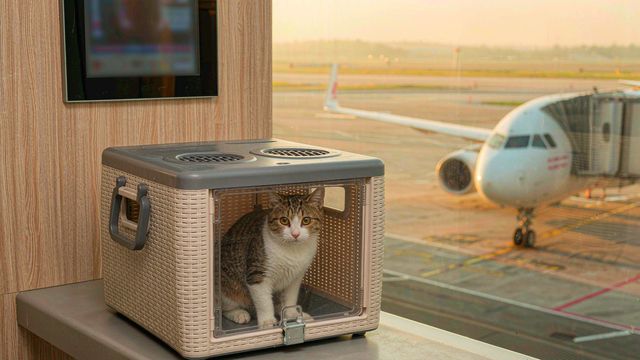
Flying with a Pet to and from China: Cabin, Hold and Quarantine in 2026
Cabin, live-animal hold or cargo, plus quarantine certificates, the 21-day rabies rule and China entry requirements.
10/17/2026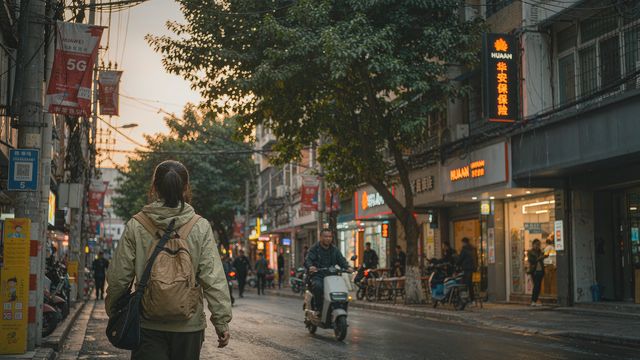
Solo Female Travel in China: Safety, Night Transport and a 2026 Checklist
Registration, late-night rides, payments and emergency numbers: a practical 2026 checklist for women travelling alone in China.
10/17/2026
Student Travel in China: 2026 Rail Fare Rules and the Best Hands-On Activities by City
A practical guide to study tours in China: 2026 rail student fare scope, visa-free basis for camps, hands-on activities by city, and group safety standards.
10/16/2026