
How to Call the Police in China: 110, SMS Alarms and Lost-Passport Reports
What to say on 110, what happens when officers arrive, how to bridge the language gap, how SMS alarm 12110 works, and t…
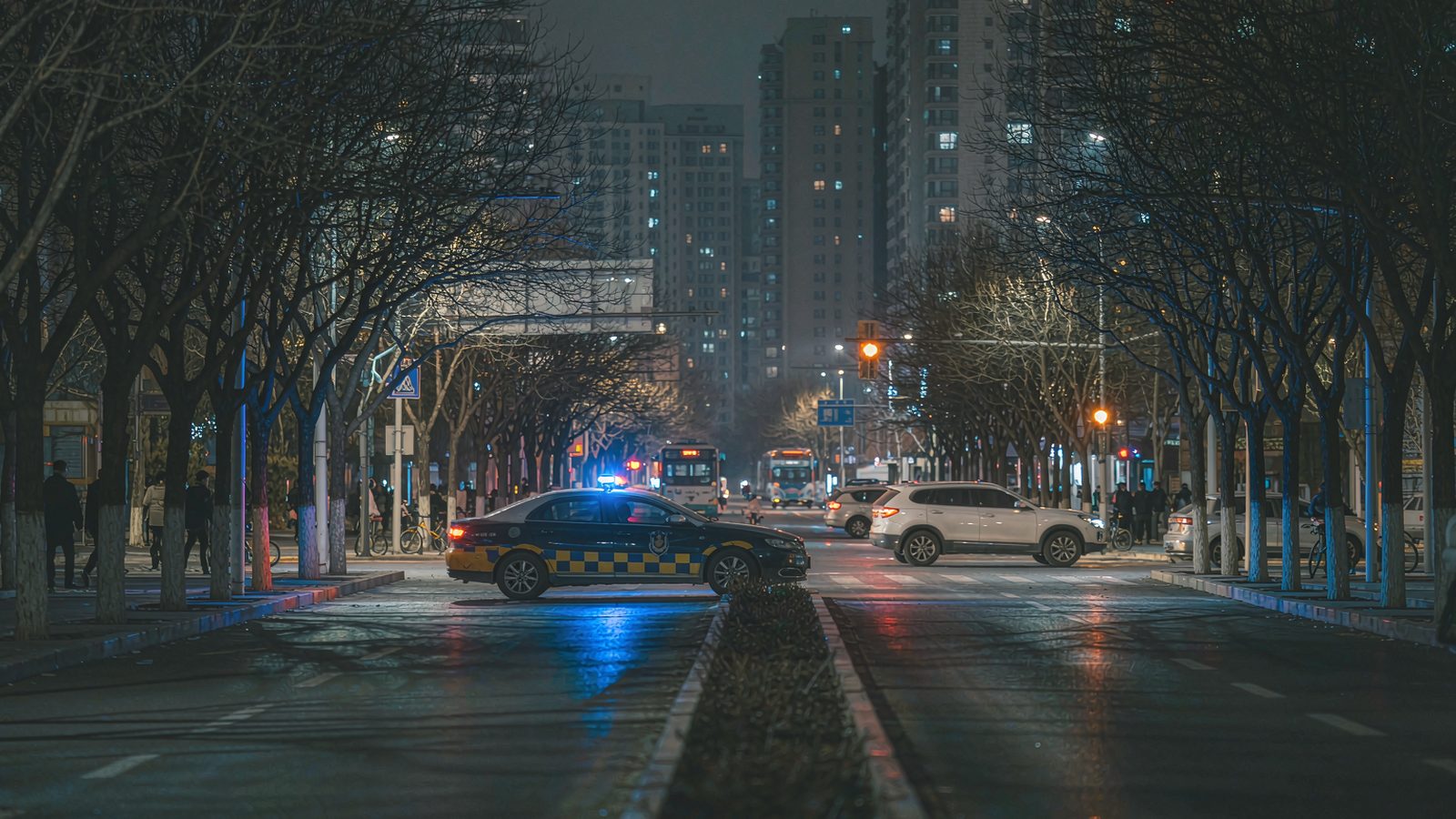
What to say on 110, what happens when officers arrive, how to bridge the language gap, how SMS alarm 12110 works, and the six-step lost-passport report process.
Start with the bottom line: in mainland China, if you need the police, dial 110. It is the single national emergency number, free, staffed 24 hours, and reachable from any handset — including one with no SIM and no signal, through the emergency dialler. But getting through is only the first step. What actually decides how fast help arrives is whether you can say two things in three sentences: where you are, and what happened.
This guide walks the whole chain: when to call 110 and when not to, what to say, what happens when officers arrive, how to manage the language gap, and the scenario foreign visitors need most — reporting a lost passport. It also includes the full mainland emergency number list and the city dialling codes you will need for ordinary calls.
China's emergency numbers: four digits worth memorising
China does not have a single 911-style number. Each type of emergency has its own line, and the division is precise. Save this table or screenshot it on your lock screen.
| Number | Purpose | When to use it |
|---|---|---|
| 110 | Police | Theft, fraud, robbery, threats, harassment, getting lost, lost property requiring a police report |
| 120 | Ambulance | Life-threatening illness, serious injury, a patient who cannot be moved safely |
| 119 | Fire and rescue | Fire, smoke, gas leak, entrapment, building collapse |
| 122 | Traffic accidents | Vehicle collisions; call 120 as well if anyone is injured |
| 12395 | Maritime search and rescue | Emergencies at sea or in coastal waters |
| 12367 | National Immigration Administration | Lost passports, visas, stay limits, border procedures — 24-hour English service |
| 12345 | Government service hotline | Non-urgent public service questions and complaints, such as a taxi refusing the meter; English operators in Beijing, Shanghai and Guangzhou |
Calls to 110, 119, 120 and 122 are free and work regardless of where you are in the country. One important clarification: 12308 is the Chinese foreign ministry's consular hotline for Chinese citizens abroad — it is not for foreign visitors inside China. If you are a foreign traveller in China, your route is your own embassy or consulate.
When to call 110 — and when not to
110 is one of the busiest public resources in China, and its legal remit has clear boundaries. The test is simple: is there an immediate risk to personal safety or property?
- Do call: theft, pickpocketing, robbery, fraud (including online and telecom scams), assault, being followed or threatened, a missing child or elderly person, someone falling or drowning, burst water, gas or power lines, or a scam venue refusing to let you leave.
- Do not call: ordinary neighbour renovation disputes, price disagreements with a shop, hotel service complaints, asking for directions. Those belong with the 12345 government hotline, your hotel, or the booking platform.
- Never call: to make a false report or to occupy the line maliciously. Chinese law provides explicit penalties for false alarms, including detention and fines.
Once you are through: three sentences that matter
You will first hear a bilingual prompt, then an operator. Major city dispatch centres usually have English-speaking staff, but do not count on it — follow this order and you will get results regardless.
- First, location. Where you are matters more than what happened; if they cannot find you, nothing else helps. The ideal is a Chinese street name and number, or a named landmark: "outside the XX Hotel", "Exit B of XX metro station". If you have the hotel's Chinese address card, read it out.
- Second, what happened. Keep it simple: theft, robbery, assault, fraud, someone injured, someone unconscious, I am trapped.
- Third, whether anyone is injured or in danger. This single sentence sets the dispatch priority, so say it explicitly.
- Then give your callback number and keep the line available. Dispatch or the responding officers may call you back.
- Do not hang up first. Wait until the operator tells you the call can end.
If your phone cannot make voice calls — for example a data-only travel eSIM — ask hotel reception, station staff, a shop employee or a nearby passer-by to dial for you immediately. Do not assume your eSIM can reach an emergency dispatcher. Before you travel, confirm that your SIM or roaming plan supports voice calls in mainland China.
When you do not share a language: three practical moves
- Have the key facts written in Chinese in advance. Keep your hotel's Chinese name, full Chinese address, your name and passport number in your phone's notes. Showing the screen is far faster and more accurate than translating live.
- Use a translation app in both directions. Type and show; use speech-to-text for what the officer says. This works well inside a police station.
- Ask for interpretation support. The 12367 immigration hotline offers 24-hour English service and can help with entry, exit and stay questions. For a criminal case, the officers can arrange an interpreter.
SMS alarm on 12110: the backup channel when you cannot speak
If speaking is not safe — you are being followed, or talking would escalate the danger, or you have weak signal but SMS gets through — use the national SMS alarm number 12110.
- Local: send an SMS to 12110.
- Other city: append the last three digits of the local area code. Hangzhou becomes 12110571, Ningbo 12110574.
- In the message, state the exact address, the danger, descriptions of the people or vehicle involved, and add "I cannot make a voice call".
- Set your phone to silent and disable message tones before sending, so the reply does not expose you.
- Forward the same message to a friend or family member and ask them to call 110 as well. Two channels are faster than one.
SMS is a supplement, not a substitute. It can be delayed or fail. If you can speak, always call 110 first.
After the officers arrive
- Stay where you are. Remaining at the scene helps them find you and preserves the site.
- Do not disturb the scene. Especially in theft or robbery cases, moving items undermines the evidence. You may photograph, but do not move anything.
- Ask for and keep the report receipt. After the statement, request the stamped report receipt (bào'àn zhèngmíng). You will need it for a replacement passport, insurance claims and card disputes. Make several copies.
- Record the case details. Note the time of the call, the station handling it, and the officer's contact or badge number.
- Be patient and cooperative. Chinese police stations are neighbourhood institutions with standard procedures. Being a foreigner does not complicate your case.
The scenario that matters most: a lost passport
This is the most common reason foreign visitors call 110, and the process is highly standardised. Getting the order right saves a great deal of time.
- Step one: search properly first. Check every bag, pocket, hotel safe and jacket lining, and call the hotel front desk — a passport left at check-in is the most common "loss". Only proceed once you are sure.
- Step two: file a report at the police station. Go to the station (pàichūsuǒ) with jurisdiction over where the passport was lost or where you are staying. Chinese stations operate by strict geographic jurisdiction, so choose correctly. Bring a photocopy or phone photo of your passport, your hotel registration, and any other ID. Say clearly whether it was lost or stolen — a theft report takes longer, but insurers usually require a theft certificate, so be accurate.
- Step three: obtain the stamped report. Usually issued the same day, occasionally after several hours. This is the document that unlocks everything else.
- Step four: register the loss with the Exit and Entry Administration. Take the report to the local Public Security Bureau's Exit and Entry Administration office to obtain the official Confirmation of Reporting the Loss of Passport. This certificate is typically valid for 30 days — you must complete the remaining steps within that window, or risk penalties for overstaying.
- Step five: contact your embassy or consulate. Bring the report, your passport copy and compliant photos (China's standard is 33mm × 48mm; photo studios charge 20–60 RMB, self-service booths in metro stations 15–35 RMB). Apply for an Emergency Travel Document or replacement passport. Most countries issue within one to five working days.
- Step six: sort out your visa status. If you plan to stay longer, apply for a new visa or extension at the Exit and Entry Administration. If you are leaving, carry both the temporary travel document and the police report when you depart.
One habit that halves the recovery time: photograph your passport data page, visa page and entry stamp before you travel, and store the images in your phone, your email and cloud storage.
Dialling ordinary calls in China
Beyond emergencies, you will sometimes need to call a hotel, a tour operator or family. The rules are simple.
- Local calls: dial the number directly, no area code. Chinese mobile numbers have 11 digits and usually start with 1.
- Domestic long distance: dial 0 + city area code + number. Key area codes: Beijing 010, Shanghai 021, Guangzhou 020, Xi'an 029, Chongqing 023, Chengdu 028, Hangzhou 0571, Guilin 0773, Kunming 0871.
- Hong Kong, China / Macao, China / Taiwan, China from the mainland: 00852, 00853, 00886 respectively.
- International: dial 00 + country code + city code without its leading zero + number. A London number of 020-xxxx-xxxx becomes 00 44 20 xxxx xxxx.
- Calling home: on roaming, most phones can dial your home number directly. If it fails, the + country code format is the most reliable.
Five minutes of preparation before you fly
- Save 110, 120, 119, 122 and 12367 in your contacts, labelled in Chinese so you can point to them when asking for help.
- Screenshot your hotel's Chinese name and full Chinese address, and ideally print a small card for your wallet.
- Save your embassy's address and 24-hour emergency number.
- Confirm your phone can make voice calls. A data-only eSIM cannot dial 110. Check before you rely on it.
- Buy travel insurance with medical and evacuation cover. Healthcare in China is not free — ambulances and hospital stays are paid upfront, then claimed back.
Finally
Chinese cities sit in the safest tier of destinations worldwide, and the overwhelming majority of trips never need a single number on this page. But reading through this once costs five minutes, and it buys you something worth having: the certainty that if something does happen, you already know what to do.
If you would like your transport, tickets and local guide arranged by one team — which removes most of the moments where you would otherwise be improvising — take a look at our tailor-made itineraries, or simply contact us. Our Chongqing-based team will build a plan around your dates and budget.
Need help planning this trip?
Tell us your travel dates and group size — we reply within 24 hours.
WhatsApp +86 183 1705 8017 · WeChat 18317058017
Destinations in this guide

Beijing
Imperial Capital · Great Wall, Forbidden City & Hutongs

Shanghai
China's Modern Metropolis · The Bund & Classical Gardens

Chongqing
The 8D Mountain City · Gateway to the Yangtze Cruise

Chengdu
Home of the Pandas · Gateway to Western Sichuan

Xi'an
Thirteen Dynasties of Capital · Terracotta Army & City Wall
Related Tours



More Guides

Flying with a Pet to and from China: Cabin, Hold and Quarantine in 2026
Cabin, live-animal hold or cargo, plus quarantine certificates, the 21-day rabies rule and China entry requirements.
10/17/2026
Solo Female Travel in China: Safety, Night Transport and a 2026 Checklist
Registration, late-night rides, payments and emergency numbers: a practical 2026 checklist for women travelling alone in China.
10/17/2026
Student Travel in China: 2026 Rail Fare Rules and the Best Hands-On Activities by City
A practical guide to study tours in China: 2026 rail student fare scope, visa-free basis for camps, hands-on activities by city, and group safety standards.
10/16/2026