
Overnight Trains in China: Hard Sleeper, Soft Sleeper and High-Speed Sleeper
What hard, soft and high-speed sleepers really mean, how to pick a berth, buying tickets on a foreign passport, and ove…
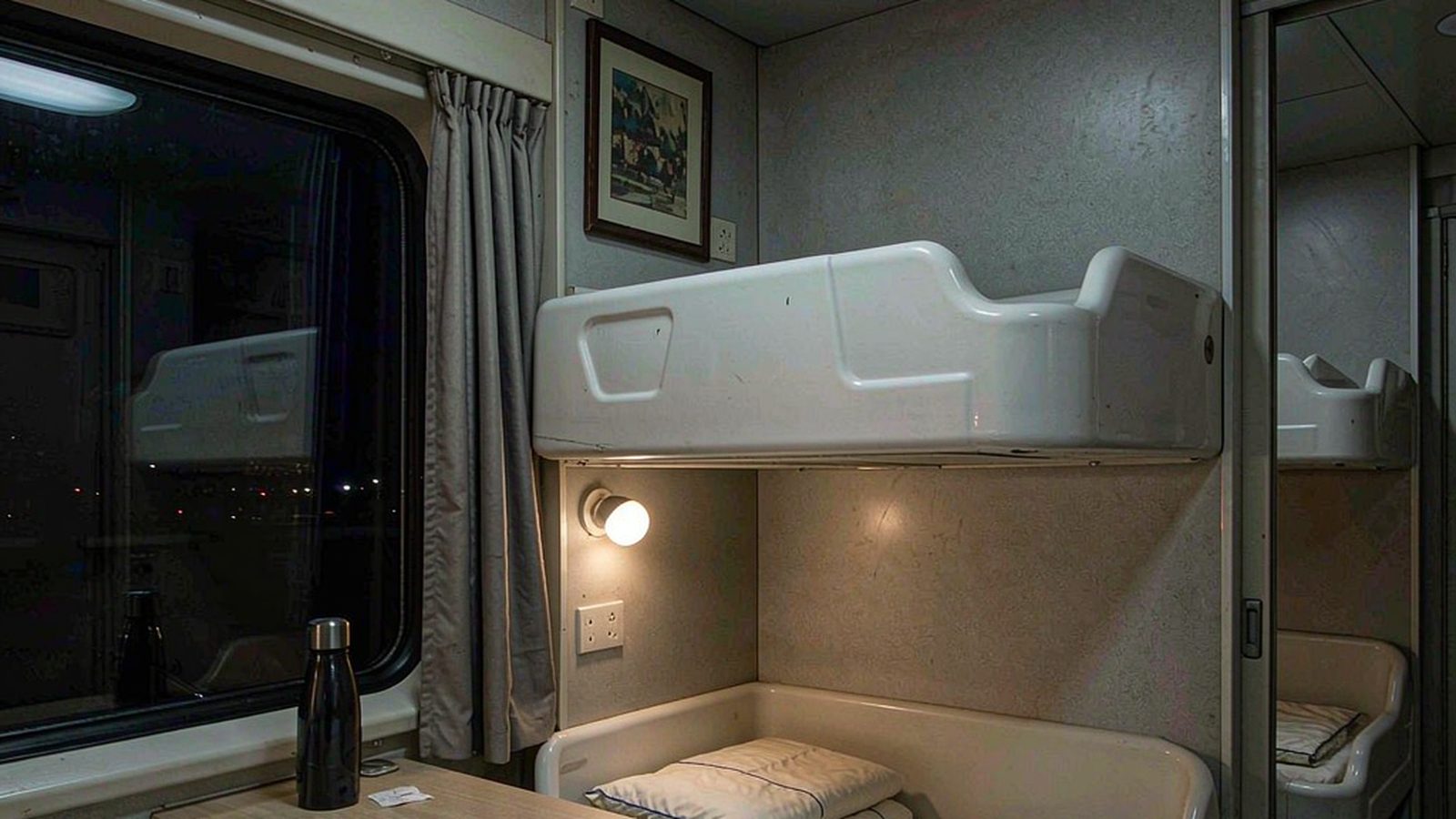
What hard, soft and high-speed sleepers really mean, how to pick a berth, buying tickets on a foreign passport, and overnight routes worth taking.
If your itinerary includes a leg of eight to fourteen hours — Beijing to Xi'an, Shanghai to Chengdu, Chongqing to Guangzhou — an overnight sleeper is often a better deal than a daytime flight. You save a hotel night, keep the full day for sightseeing, and can start your programme the moment you arrive. China's sleeper system has changed a great deal in recent years, above all through the spread of the high-speed sleeper D train, which turned "crossing half of China in one night" from a hardcore experience into a genuinely comfortable option.
This guide covers the sleeper classes, how to choose a berth, how foreigners buy tickets, what to expect on board, and a few overnight routes that suit international visitors.
1. First, the classes: what "hard" and "soft" actually mean
First-time buyers are often confused by the terms "hard sleeper" and "soft sleeper". The words have nothing to do with mattress firmness — they are historical labels, and the real difference is compartment layout and privacy. Four categories matter today:
| Class | Layout | Privacy | Train types | Best for |
|---|---|---|---|---|
| Hard sleeper | Open carriage, bays of six berths (two upper, two middle, two lower), no door | Low | Z / T / K conventional trains | Budget-first travellers comfortable with open bays |
| Soft sleeper | Private compartment, four berths (two upper, two lower), lockable door | Medium | Z / T / K conventional trains | Those who value privacy and a solid night's sleep |
| Deluxe soft sleeper | Two-berth compartment, lower berths only, private bathroom | High | A small number of Z trains | Maximum comfort, flexible budget |
| High-speed sleeper (D train) | Second class: open six-berth bays. First class: private four-berth compartment with a door | Medium to high | D-category high-speed units | Wanting high-speed speed and a night's sleep together |
Hard sleeper: the name is misleading
The berths are reasonably padded, with a pillow and a thick blanket — a night here is perfectly comfortable. The defining feature is the open bay: an aisle on one side, six berths on the other, no door. During the day, fellow passengers in your bay often sit on the edge of the lower berth to chat and eat. This is entirely normal on Chinese trains and, for many foreign visitors, one of the most memorable parts of the journey.
- Lower berth: the most expensive, easiest to get in and out of, and the only one you can sit up in — but it doubles as the bay's communal seat during the day.
- Middle berth: the compromise. Mid-priced, and quieter than the lower berth once lights go out.
- Upper berth: the cheapest and the most private when you are lying down, but it needs a short ladder climb and has the least headroom.
Soft sleeper: the mainstream choice for foreign visitors
A private four-berth compartment, two up and two down, with a door that closes. Inside there is a small table, a thermos of hot water and reading lights; washrooms and washing areas are at the end of the carriage. Luggage stays in the compartment, so both security and privacy are clearly better than hard sleeper — and the fare sits well below a first-class seat on the same high-speed route. For most international visitors, soft sleeper is the best-value overnight option.
One caveat: Chinese soft sleeper compartments are normally shared by passengers of the same sex, and the ticketing system tries to group same-sex travellers together. A family or a couple wanting a whole four-berth compartment must buy all four berths; otherwise other passengers may be assigned to your compartment.
High-speed sleeper: the biggest change of the past decade
The D-category high-speed sleeper is the most recommendable option today, especially for visitors short on time. It runs overnight at near-high-speed velocity, turning a long day of travel into "sleep and arrive". There are two tiers:
- Second-class sleeper: open six-berth bays, similar in shape to a hard sleeper but with wider berths (about 60cm against roughly 55cm on conventional trains), better ventilation, a USB port at every berth and newer rolling stock overall.
- First-class sleeper: a private four-berth compartment with a lockable door, berths around 65cm wide, memory-foam cushions, dimmable reading lights, two power sockets plus two USB ports, and better soundproofing than a conventional soft sleeper. Some services provide disposable slippers and bottled water.
Established high-speed sleeper routes include Beijing–Shanghai, Beijing–Xi'an, Shanghai–Shenzhen, Shanghai–Guangzhou and Beijing–Guangzhou. Schedules change with periodic timetable adjustments, so confirm on 12306 or a ticketing platform at the time of booking.
2. How foreigners buy Chinese train tickets
This is the step visitors care about most and where they most often get stuck. Three channels, in order of recommendation:
- Official 12306: China Railway's only official passenger service platform. The app and website both have English interfaces and support passport registration. No mark-up and the most accurate timetable data; but international card support is inconsistent, registration requires mobile or email verification, and it occasionally stalls.
- Third-party English platforms: international versions of major Chinese travel platforms accept foreign passports and foreign credit cards and provide English support. A modest service fee applies, but the process is far smoother — which is why most foreign visitors end up here in practice.
- Station counters: buy in person with your physical passport. Useful if you decide late or online payment fails, but sleeper berths on popular routes may already be gone.
A few practical points:
- How far ahead: the current advance booking window is 15 days including the travel date. On popular routes, soft sleepers and first-class high-speed sleepers frequently sell out on the day sales open. Book the moment your dates are fixed.
- Berth preference: you can note a preference for a lower berth, but the system does not guarantee it and will allocate automatically if your choice is gone.
- Entry and collection: most stations now allow you to board by scanning your passport directly, with no paper ticket needed. At some older stations, or where self-service gates do not read passports, exchange for a document at a staffed counter.
- Changes and refunds: available up until departure, with the fee rising as departure approaches. Chinese rules are tiered by time; the booking page shows the exact terms.
- Always carry the physical passport: Chinese rail operates under real-name rules, and documents may be checked on entry, on board and on exit. Photographs and photocopies are not accepted.
3. On board: practical details of a sleeper carriage
- Where the luggage goes: soft sleepers and high-speed sleeper compartments have racks inside, and large cases can go by the door or under the lower berth. Hard sleepers have overhead racks along the aisle — keep valuables with you on the berth.
- Hot water: both conventional trains and high-speed sleepers have boiling-water dispensers at the carriage ends, free of charge. This is a long-standing feature of Chinese rail travel: bring a thermos or instant noodles and you have drinks and a late supper sorted.
- Two kinds of toilet: some older carriages still mix squat and seated toilets; facilities on newer G, D and Z trains are kept in good condition. Bring your own tissues, as they are not always supplied.
- Power sockets: a soft sleeper compartment typically has one socket; hard sleeper sockets are concentrated at the carriage ends and are limited in number; high-speed sleepers have USB at every berth. A multi-port charger or a power bank makes life easier.
- Lights out: most sleeper carriages dim the lights by around 22:00 and staff walk through asking for quiet. Lights come back on and the arrival announcement is made roughly half an hour before your stop.
- Bring your own food: advisable. The dining car serves meals, but choice is limited and prices are high, and fellow passengers widely report the food is mediocre. Bread, fruit, instant noodles and nuts are common choices.
- Smoking: not permitted in sleeper compartments or corridors, and entirely banned on high-speed trains and on the pressurised trains to Tibet. Some conventional trains still tolerate smoking in the vestibules between carriages, but the rules continue to tighten.
4. Safety and belongings: plain but useful advice
The safety record of Chinese railways is among the best in the world, and the overwhelming majority of journeys pass without incident. What deserves attention is personal property, particularly while you sleep:
- Keep valuables on your person: passports, cash, bank cards and laptops should not be left on a compartment's shared table or on an aisle-side luggage rack.
- Close the compartment door: soft sleepers and first-class high-speed sleepers lock from the inside. Lock them overnight.
- Do not accept food or drink from strangers, and do not share more personal information than necessary.
- In the station, keep bags in sight, and watch zips and backpacks in crowded areas.
- Pack 15 minutes before arrival. Station stops are often only two to ten minutes, which is not enough time to sort out luggage calmly.
5. Is an overnight train worth it? Judging by trip type
- Worth it: a leg of eight to fourteen hours, both cities close to their stations, and a programme starting early the next morning. Beijing to Xi'an or Shanghai to Guangzhou are typical.
- Not worth it: a leg over sixteen hours, or a destination station far from the city centre — as is the case with some newer Chinese high-speed stations. A poor night's sleep plus an hour of commuting in is a net loss.
- Fly instead: if the leg takes under five hours by air and airport access is easy, or if daytime hours are not in short supply. A short flight plus a daytime programme is usually more efficient.
One frequently overlooked trade-off: an overnight train saves not just a hotel night but an entire daytime. On a tight itinerary, pushing long-distance movement into the night effectively manufactures an extra day. That is why many inbound travellers, after their first China trip, ask for more overnight legs next time.
6. Overnight routes that suit international visitors
- Beijing–Xi'an: a classic pairing. Arrive on the night train and go straight to the Terracotta Warriors and the city wall; no daytime lost. Both soft sleeper and high-speed sleeper are available.
- Shanghai–Guangzhou/Shenzhen: the Yangtze delta to the Pearl River delta in one overnight hop, avoiding airport transfers at both ends.
- From Chongqing toward Guangzhou or Beijing: long overnight services from Chongqing that let you link the southwest with the south or the north in a single line.
- Trains to Tibet: if your itinerary includes China's Tibet region, the Qinghai–Tibet line is a scenic route in its own right. A separate Tibet travel permit is required, so plan well ahead.
Note that China Railway adjusts its operating diagrams periodically, so services, timings and train types all change. The above are common approaches; check live information on 12306 or a ticketing platform when you actually book.
7. Pre-departure checklist
- Confirm the service and train category (G/D/Z/T/K) — that determines compartment layout and privacy.
- Watch the sales opening date at least 15 days ahead; soft sleepers and first-class high-speed sleepers on popular routes need to be bought early.
- Carry your physical passport and confirm how you will enter the station (passport scan or counter exchange).
- Bring a thermos, tissues, earplugs and an eye mask — fellow passengers inevitably make noise.
- Pack food that needs no heating, plus drinking water.
- Check your power bank is clearly labelled. China Railway requires a single unit rated at no more than 100Wh with legible markings; if the trip also includes a domestic flight, civil aviation has required a CCC mark since 28 June 2025, bans power banks from checked baggage and prohibits their use in flight.
- Keep valuables on your person and lock the compartment door at night.
- Set an alarm and start packing 15 minutes before your stop.
8. Let us build the overnight legs into your itinerary
Used well, overnight trains substantially increase the density of a trip. Jadetour's custom tour service plans which legs are best pushed into the night and which are better flown by day, then helps with ticket collection, station entry and the handover to that day's vehicle and guide on arrival. Our Chongqing-based team knows where the main stations actually sit and how long entry takes, so post-arrival transfers can be tight without being rushed. Send us your dates, group size and the cities you want (contact us) and we will build the rest.
Need help planning this trip?
Tell us your travel dates and group size — we reply within 24 hours.
WhatsApp +86 183 1705 8017 · WeChat 18317058017
Destinations in this guide

Beijing
Imperial Capital · Great Wall, Forbidden City & Hutongs

Shanghai
China's Modern Metropolis · The Bund & Classical Gardens

Chongqing
The 8D Mountain City · Gateway to the Yangtze Cruise

Chengdu
Home of the Pandas · Gateway to Western Sichuan

Xi'an
Thirteen Dynasties of Capital · Terracotta Army & City Wall
Related Tours



More Guides
Flying with a Pet to and from China: Cabin, Hold and Quarantine in 2026
Cabin, live-animal hold or cargo, plus quarantine certificates, the 21-day rabies rule and China entry requirements.
10/17/2026
Solo Female Travel in China: Safety, Night Transport and a 2026 Checklist
Registration, late-night rides, payments and emergency numbers: a practical 2026 checklist for women travelling alone in China.
10/17/2026
Student Travel in China: 2026 Rail Fare Rules and the Best Hands-On Activities by City
A practical guide to study tours in China: 2026 rail student fare scope, visa-free basis for camps, hands-on activities by city, and group safety standards.
10/16/2026