
Types of China Train: How to Read G, D, C, Z, T and K Services
G, D, C, Z, T and K trains explained: speeds, seat classes, fares and when to use each, plus China rail facts for 2026…
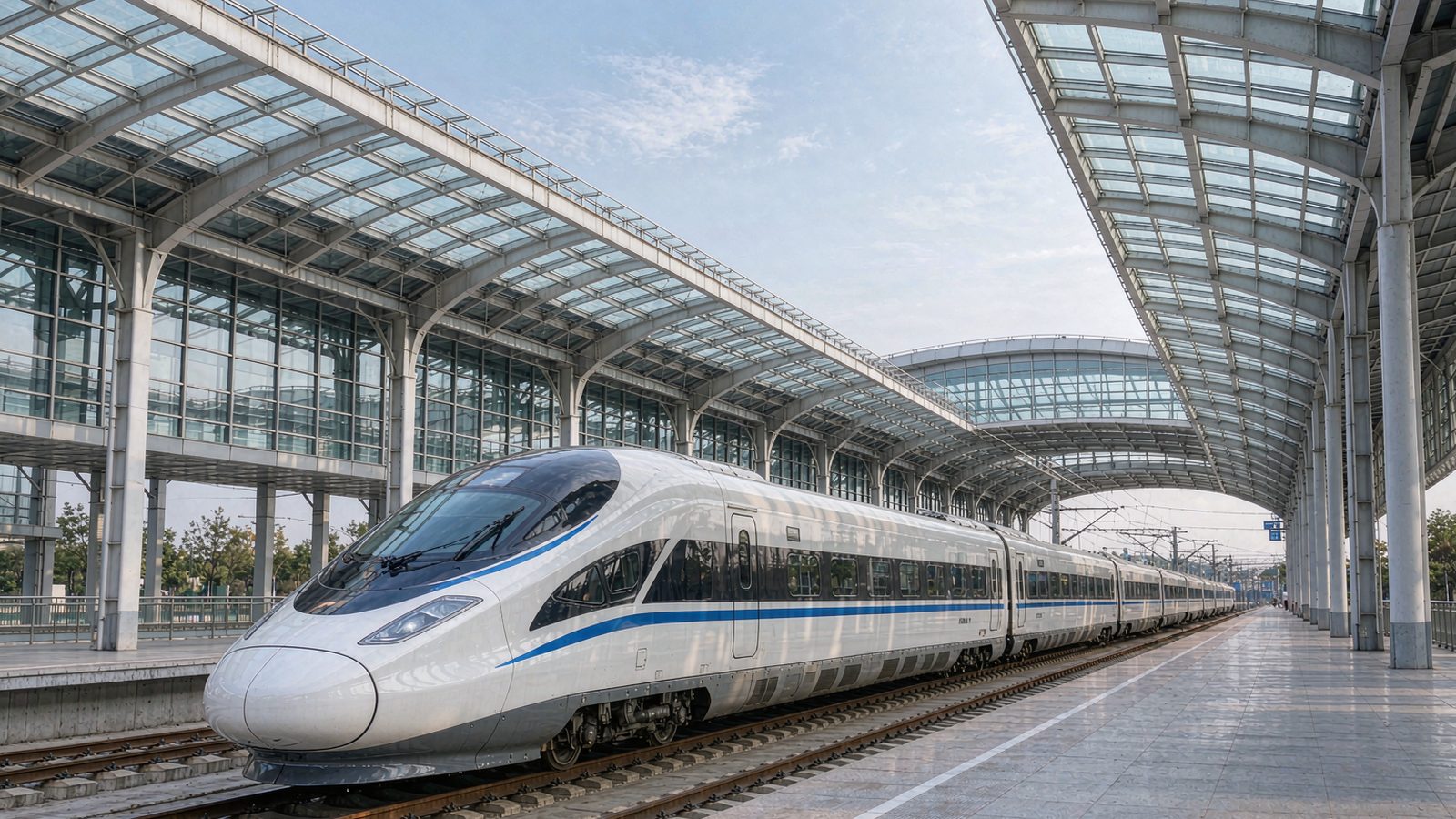
G, D, C, Z, T and K trains explained: speeds, seat classes, fares and when to use each, plus China rail facts for 2026 and ticket tips for visitors.
The hardest part of buying a train ticket in China is not the price - it is the letter in front of the train number. G1234, D316, K108, Z19: on the same route, a G train may take a little over four hours while a K train takes twelve, and the fares can differ several times over. Once you can read those letters, you hold the map for choosing the right train.
This guide covers every category of passenger train in China: how the three EMU types G, D and C differ, where conventional Z, T, K and four-digit trains fit, how large the network has become by 2026, how to pick a seat class, what foreign visitors need to know when buying and boarding, and three simple rules to avoid a bad choice.
1. The logic behind the letters
The numbering rule is straightforward: the first letter marks the train class, the digits that follow identify the specific service. In the order G, C, D, Z, T, K, the earlier the letter, the faster, the fewer the stops and the higher the fare. Trains with no letter at all - just four digits - are the basic conventional services.
Two points to keep in mind:
- The letter shows the class, not the hardware. A few G trains run on lower-grade lines and travel below 350 km/h, and Fuxing high-speed sets also operate some D services.
- Any train starting or ending at West Kowloon in Hong Kong, China uses a G number, regardless of the actual rolling stock.
2. Quick reference table
| Code | Class | Top speed | Best for |
|---|---|---|---|
| G | High-speed EMU | 250-350 km/h | Fastest and priciest. Long trunk routes such as Beijing-Shanghai, Beijing-Xi'an, Guangzhou-West Kowloon |
| C | Intercity EMU | 160-350 km/h | Short, frequent hops between neighbouring cities, e.g. Beijing-Tianjin |
| D | EMU | 160-250 km/h | The widest coverage and the best value, good for medium and long trips |
| Z | Direct express | 160 km/h | Very few stops, often overnight departures |
| T | Express | 140 km/h | Stops only at major cities and provincial capitals |
| K | Fast | 120 km/h | Cheap fares, more stops, reaches smaller cities |
| 4 digits | Regular fast / regular | 120 km/h or less | Stops almost everywhere, mostly on branch lines |
| S | Suburban | 120-200 km/h | Commuter lines around major cities |
| L | Temporary service | Varies | Extra trains added for Spring Festival and summer peaks |
| Y | Tourist train | Varies | Routes built around scenic areas |
3. The three EMU types: G, D and C
These are the classes international visitors use most, and the price gaps between them are the widest. All three use EMU sets, either Fuxing or Hexie.
- G (high-speed): designed for the 350 km/h class and running on dedicated high-speed lines. Newer carriages, wider seats, power sockets at almost every seat and Wi-Fi on some services. This is the option that compresses travel time the most.
- C (intercity): best described as a metro that happens to be a high-speed train. Dense frequencies and short runs between adjacent cities. On routes such as Beijing-Tianjin or Guangzhou-Shenzhen, a C train is often more flexible than a G because you can simply turn up.
- D (EMU): slightly slower than G but with the widest network reach. Many second- and third-tier cities and branch destinations are served only by D trains. D sets are also the backbone of overnight sleeper EMU services, which bring berths into high-speed carriages.
The rule of thumb: if a G train exists on your route, take it; for journeys over six hours, consider an overnight sleeper or a flight; D is the safe answer when you want comfort without chasing the fastest option.
4. Conventional trains: Z, T, K and four-digit services
- Z (direct express): 160 km/h with almost no intermediate stops, and many depart in the evening and arrive early the next morning. For travellers this is the classic way to save a hotel night - Beijing to Xi'an or Shanghai to Chengdu becomes a single night's sleep.
- T (express): 140 km/h, stopping only at major cities and provincial capitals. These are the older backbone services.
- K (fast): 120 km/h with more stops, the cheapest fares and the largest number of conventional services.
- Four-digit trains: the slowest category, stopping at nearly every station and mostly serving branch lines and remote regions. Some of these are public-service slow trains with very low fares that are an experience in themselves.
- L and Y: L services are temporary trains added during the Spring Festival and summer peaks; Y services are tourist trains routed around scenic areas.
5. Where the network stands in 2026
- Scale: at the start of 2026 China Railway reported 165,000 km of operating railway, of which high-speed lines passed 50,000 km, with more than eighty percent of the eight-vertical, eight-horizontal trunk corridors complete.
- Traffic: in 2025 the network carried 4.255 billion passenger trips, with a single-day peak of 23.13 million - both record highs.
- Technology: the new-generation CR450 EMU reached 453 km/h in single-unit tests and 896 km/h in crossing tests, and is scheduled to enter service after completing its remaining validation, targeting 400 km/h in operation.
- What it means for you: almost every provincial capital and major tourist city is now linked by direct high-speed services, with the biggest improvements in the southwest and northwest.
6. Choosing a seat class
| Class | Layout and features | Best for |
|---|---|---|
| Second class | Five seats per row; A and F by the window, C and D on the aisle, B in the middle | The default for most travellers |
| First class | Four seats per row, wider with more legroom | Trips over three hours when comfort matters |
| Business class | Reclining sofa seats, complimentary snacks and drinks, roughly three times the second-class fare | Business travel or a proper rest |
| Hard sleeper | Open bay with six berths on three levels | Budget overnight travel |
| Soft sleeper | Enclosed compartment with four berths on two levels and a door | Privacy and quiet on overnight trains |
| Sleeper EMU | Berths inside high-speed EMU sets, in second- and first-class versions | Overnight high-speed runs |
Two practical details: choose a window seat (A or F) to sleep and an aisle seat (C or D) if you want to move around; the middle B seat is the hardest to get out of. Some services also have a quiet carriage - tick the box asking to be assigned there, and keep noise to a minimum for the whole journey.
7. Buying and boarding as a foreign visitor
- Official channels only: the 12306 website and app, station ticket windows and ticket machines. Third-party platforms have no authority to change or refund tickets and carry risks of data leaks and mark-ups.
- Your passport works: foreign visitors can buy with a passport on 12306 or at a window. To pass the automated gates by scanning the document, you must first complete passport identity verification on 12306; if you have not, staffed lanes handle verification and boarding just as well.
- Sales open 15 days ahead: each station releases tickets at a different time between 08:00 and 18:00. Check the exact release time for your departure station under "My - Ticket release times" in the 12306 app.
- Sold out does not mean no ticket: join the official waiting list and the system queues your request automatically, confirming it the moment a cancellation or extra seat appears. The published success rate is above 70 percent.
- Carry the original document: the same document used at purchase is required at the gate and on board. Copies and phone photos are not accepted.
8. Three rules that keep you out of trouble
- Tight schedule: take a G train and keep your daylight hours for sightseeing.
- Want to save a hotel night without losing a day: book an overnight sleeper EMU or a Z service and wake up in another city.
- Budget first, scenery along the way: a K or conventional train, with low fares and frequent stops - the journey is the view.
One more habit worth adopting: do not schedule two distant cities on the same day. China's high-speed trains are quick, but the trip between station and city centre is almost always underestimated - in cities such as Chongqing and Chengdu, allow an hour at each end.
9. Fitting the right train into the whole trip
Reading the letters is only the first step. What really shapes a trip is deciding which legs suit a high-speed train, which should be pushed into the night and which are better flown. When Jadetour plans a route through its tailor-made itinerary service, the train class, departure and arrival times and station transfers are worked out together, so you never end up at a station with no onward connection or arriving on an overnight train with nowhere to go. Our local team in Chongqing knows the actual location and entry times of the main stations in southwest China and keeps connections tight without rushing.
Send us your travel dates, group size and the cities you want to see via the contact page and we will do the sequencing.
Need help planning this trip?
Tell us your travel dates and group size — we reply within 24 hours.
WhatsApp +86 183 1705 8017 · WeChat 18317058017
Destinations in this guide

Beijing
Imperial Capital · Great Wall, Forbidden City & Hutongs

Shanghai
China's Modern Metropolis · The Bund & Classical Gardens

Chongqing
The 8D Mountain City · Gateway to the Yangtze Cruise

Chengdu
Home of the Pandas · Gateway to Western Sichuan

Xi'an
Thirteen Dynasties of Capital · Terracotta Army & City Wall
Related Tours


More Guides
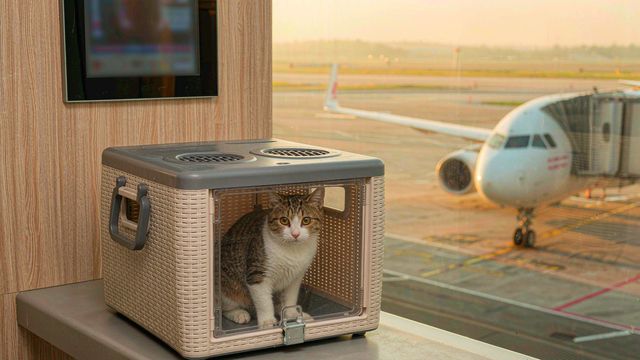
Flying with a Pet to and from China: Cabin, Hold and Quarantine in 2026
Cabin, live-animal hold or cargo, plus quarantine certificates, the 21-day rabies rule and China entry requirements.
10/17/2026
Solo Female Travel in China: Safety, Night Transport and a 2026 Checklist
Registration, late-night rides, payments and emergency numbers: a practical 2026 checklist for women travelling alone in China.
10/17/2026
Student Travel in China: 2026 Rail Fare Rules and the Best Hands-On Activities by City
A practical guide to study tours in China: 2026 rail student fare scope, visa-free basis for camps, hands-on activities by city, and group safety standards.
10/16/2026