
China's 240-Hour Visa-Free Transit in 2026: 57 Countries, 65 Ports, 10 Days
Transit visa-free is no longer 72 hours: citizens of 57 countries may enter via 65 ports and stay up to 240 hours in 24…
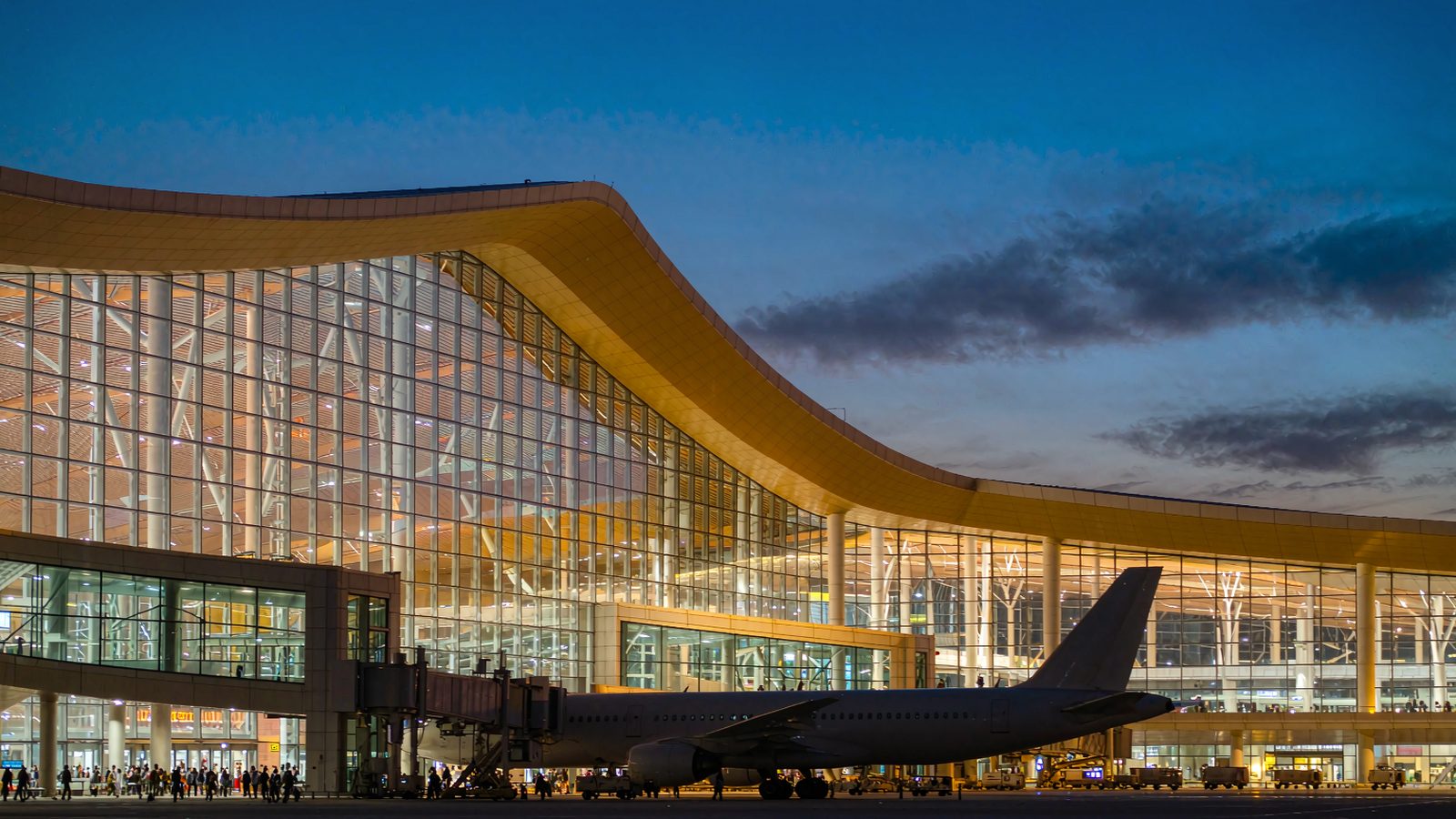
Transit visa-free is no longer 72 hours: citizens of 57 countries may enter via 65 ports and stay up to 240 hours in 24 provinces. Four hard conditions, how the clock runs, and three 10-day routes.
If you have found a page describing China's "72-hour visa-free transit", that information is six years out of date. Since 17 December 2024 China has extended visa-free transit from 72 and 144 hours to a uniform 240 hours (10 days), expanded the eligible ports from 39 first to 60 and then, in November 2025, to 65, and widened the permitted area from 19 provinces to 24. On 20 August 2026 the list of eligible nationalities grew from 55 to 57.
In other words, what used to be a policy for a brief stopover is now long enough to carry an entire China itinerary. It is also the policy most often misused, and nearly every case of denied boarding or refused entry traces back to the same misunderstanding: treating transit permission as if it were a visa waiver.
What follows sets out the rules as they stand: who qualifies, what you must hold, where you may stay, how the 240 hours are counted, how to choose between the different visa-free schemes, and three 10-day routes you can copy directly. Visa matters should always be confirmed against the latest notices from your nearest Chinese embassy or consulate and from China's National Immigration Administration; we do not process visas.

1. Two different policies, often confused
China operates two distinct visa-free transit schemes with very different rules:
- 24-hour visa-free transit. Open to citizens of all countries. Holding a valid international travel document and a connecting ticket with confirmed seats, you may transit through China by air, sea or rail to a third country or region, stay no more than 24 hours, and remain within the restricted area of the port. To leave that area you must apply at the port immigration inspection authority for a temporary entry permit.
- 240-hour visa-free transit. Open to citizens of 57 designated countries. Entry is permitted through any of 65 open ports across 24 provinces, with a stay of up to 240 hours in designated areas, during which tourism, business, visits and family visits are allowed.
Both schemes share one precondition: it must be genuine transit. The country or region you depart from and the one you are bound for must be different; the China leg is simply the middle of the journey. Flying from your home country to China, touring, and flying home again is not transit.
2. Who qualifies: the 57-country list
Under the list published by the National Immigration Administration, 240-hour visa-free transit covers 57 countries:
| Region | Number | Countries |
|---|---|---|
| Europe | 40 | Austria, Belgium, Czechia, Denmark, Estonia, Finland, France, Germany, Greece, Hungary, Iceland, Italy, Latvia, Lithuania, Luxembourg, Malta, Netherlands, Poland, Portugal, Slovakia, Slovenia, Spain, Sweden, Switzerland, Monaco, Russia, United Kingdom, Ireland, Cyprus, Bulgaria, Romania, Ukraine, Serbia, Croatia, Bosnia and Herzegovina, Montenegro, North Macedonia, Albania, Belarus, Norway |
| Americas | 6 | United States, Canada, Brazil, Mexico, Argentina, Chile |
| Oceania | 2 | Australia, New Zealand |
| Asia | 9 | South Korea, Japan, Singapore, Brunei, United Arab Emirates, Qatar, Indonesia, Vietnam, Kyrgyzstan |
If your nationality is not on that list, check the three regional schemes instead: Hainan's 30-day visa-free entry (61 countries, entry must be through a Hainan port), cruise visa-free entry (tour groups of two or more entering through 13 cruise ports, up to 15 days), and ASEAN tour group visa-free entry (Xishuangbanna in Yunnan and Guilin in Guangxi, up to six days).
3. Four hard conditions, all of which must be met
When applying for temporary entry at the port:
- A valid international travel document with at least three months' remaining validity. This is one of the most common reasons for refusal, and many travellers only discover it at check-in.
- A connecting ticket to a third country or region with confirmed date and seats, departing within 240 hours. A screenshot of a search result is not a ticket. If the onward booking is not confirmed before you arrive, the temporary entry procedure cannot be completed.
- A completed temporary entry arrival card. Since 20 November 2025 this can be filed online in advance through the National Immigration Administration website, its service platform, the "NIA 12367" app, or the WeChat and Alipay mini-programmes.
- Inspection and questioning by the immigration authority, including your itinerary, accommodation and onward plan.
Some travellers are excluded outright: passports bearing a refusal stamp from a Chinese visa authority; anyone with a record of illegal entry, illegal residence or illegal employment in China within the past five years; and anyone falling under other inadmissibility provisions in Chinese law.
4. Where you may stay: 65 ports across 24 provinces
Entry is possible through 65 ports spread across 24 provinces, autonomous regions and municipalities. Major airports include Beijing Capital and Daxing, Shanghai Pudong and Hongqiao, Guangzhou Baiyun, Shenzhen Bao'an, Chengdu Shuangliu and Tianfu, Chongqing Jiangbei, Xi'an Xianyang, Hangzhou Xiaoshan, Nanjing Lukou, Kunming Changshui and Zhangjiajie Hehua. Sea, rail and road ports include Shanghai, Tianjin, Dalian and Xiamen Wutong ferry terminals, Zhuhai Port, Hengqin, the Hong Kong-Zhuhai-Macao Bridge, Zhongshan Port, Shantou Port, the Mohan railway crossing, and Friendship Pass at Pingxiang.
In most cases the permitted area is the whole province. These six, however, are restricted — and this is where overstepping happens most often:
| Province | Permitted area of stay and activity |
|---|---|
| Shanxi | Taiyuan and Datong |
| Heilongjiang | Harbin |
| Jiangxi | Nanchang and Jingdezhen |
| Guangxi | 12 cities: Nanning, Liuzhou, Guilin, Wuzhou, Beihai, Fangchenggang, Qinzhou, Guigang, Yulin, Hezhou, Hechi, Laibin |
| Sichuan | 11 cities: Chengdu, Zigong, Luzhou, Deyang, Suining, Neijiang, Leshan, Yibin, Ya'an, Meishan, Ziyang |
| Yunnan | 9 prefectures and cities: Kunming, Yuxi, Chuxiong, Honghe, Wenshan, Pu'er, Xishuangbanna, Dali, Lijiang |
For all other participating provinces the permitted area is the entire provincial territory, and travel between provinces within these permitted areas is allowed.
Two operational points that matter:
- Sichuan's permitted area excludes Aba Prefecture, so Jiuzhaigou is not covered by visa-free transit. Tibet is not among the 24 participating provinces either. For either destination you need a visa, or a different visa-free scheme.
- Departure is also subject to the port list. Under the immigration authority's rules, both entry and exit should be through the 65 eligible ports; Guangdong offers an additional concession, allowing exit through any of its open ports. Always confirm with the immigration officers on duty.
5. Counting the 240 hours
This is the detail most often miscalculated. The rule: the stay is counted from midnight on the day after entry, for a maximum of 10 days.
So a traveller entering through Shanghai Pudong on 5 October 2026 starts the clock at 00:00 on 6 October and must leave through an eligible port before 24:00 on 15 October. The day of arrival does not count, which is why "10 days" often looks like 11 calendar days on an itinerary.
If you need to extend the stay or travel beyond the permitted area — for illness, force majeure or similar reasons — apply in advance to the exit-entry administration of the local public security bureau for a stay permit. Overstaying, travelling beyond the permitted area without a permit, or failing to complete accommodation registration will be penalised under Chinese law.
6. Choosing between the visa-free schemes
Where several apply, take the most generous one rather than defaulting to the 240-hour transit rule:
| Scheme | Who it covers | Maximum stay | Key constraint |
|---|---|---|---|
| 24-hour transit | All countries | 24 hours | Cannot leave the port's restricted area without a temporary entry permit |
| 240-hour transit | 57 countries | 240 hours | Genuine transit only; confirmed onward ticket; limited to designated areas in 24 provinces |
| Unilateral visa-free entry | Around 50 countries; list changes | 30 days | No transit requirement; policy validity is time-limited |
| Hainan 30-day entry | 61 countries | 30 days | Entry must be through a Hainan port; leaving Hainan requires a separate permit |
| Cruise entry | Foreign tour groups of 2+ | 15 days | Via 13 cruise ports; coastal provinces and Beijing only |
One guiding principle: if your country benefits from unilateral visa-free entry or a mutual visa exemption agreement with China, use that instead — it normally gives you 30 days, which is more generous than 240 hours. China currently grants unilateral visa-free entry of up to 30 days to around 50 countries and has full mutual visa exemption with 29. Note that unilateral arrangements are usually time-limited: for most countries the current notice runs until 31 December 2026, while Russia has been extended to 31 December 2027. Always check your own country's latest notice before booking.
7. Three obligations while you are in China
- Do not engage in activities inconsistent with your stated purpose. Tourism, business, visits and family visits are fine. Work, study and journalism still require a visa obtained in advance.
- Do not skip accommodation registration. Hotels register guests under their own rules; if you stay anywhere else, you or your host must report to the local police station within 24 hours of arrival.
- Do not overstay or travel outside the permitted area. These are the two most common grounds for penalties, and a record will affect your eligibility for five years.
8. Three workable 10-day routes
Ten days sounds tight, but it comfortably covers a full cross-province route. Three skeletons, all within permitted areas:
- In via Beijing, out via Shanghai (classic first visit, 9 days). Beijing for three days (Forbidden City, Great Wall, Summer Palace) — roughly 4.5 hours by high-speed rail — Shanghai for three days (the Bund, Yu Garden, Lujiazui) — two days in Suzhou or Hangzhou — depart from Shanghai. Beijing, Shanghai, Jiangsu and Zhejiang all participate, and cross-province travel is allowed.
- In via Chengdu, out via Chongqing (Sichuan-Chongqing, 8 days). Chengdu for three days (panda base, Kuanzhai Alley, Dujiangyan, Leshan) — about 1.5 hours by rail — Chongqing for three days (Hongya Cave, Ciqikou, Dazu rock carvings, Wulong) — depart from Chongqing. Remember that Sichuan's permitted area covers only 11 cities, and Jiuzhaigou is not among them.
- In via Guangzhou, out via Guilin (Lingnan, 8 days). Guangzhou for three days (morning tea, Shamian Island, Chen Clan Ancestral Hall) — Shenzhen for two days — about three hours by rail — Guilin and Yangshuo for three days — depart from Guilin. All of Guangdong and all 12 listed Guangxi cities qualify.
For shorter trips, two single-corridor options work well: Shanghai in, Xi'an out (four days in Shanghai, six hours by rail, four days in Xi'an for the Terracotta Army and the city walls), or Beijing in, Chongqing out (four days in Beijing, a three-hour flight, four days in Chongqing, pairing the Great Wall with the gateway to the Three Gorges).
9. Five misconceptions worth clearing up
- "I have 240 hours, so I can go anywhere in China." No. You are limited to designated areas within 24 provinces, and some provinces restrict you further to specific cities.
- "I'll buy the onward ticket after I arrive." No. The confirmed ticket must be in hand before entry.
- "I'm flying home via China, so that counts as transit." It does not. The origin and destination must be different countries or regions.
- "A side trip to Hong Kong, China or Macao, China resets the clock." Hong Kong, China, Macao, China and Taiwan, China can serve as the third region that establishes transit, but the clock is not automatically reset; you must exit and re-enter and meet every condition again.
- "If I don't qualify, I'll sort it out at the airport." The usual outcome is denied boarding or refused entry, at your own cost. Prepare the paperwork before departure.
10. Frequently asked questions
- Do I need to apply in advance? No. The 240-hour transit permission is granted at the port; but the onward ticket, accommodation details and arrival card should be prepared beforehand.
- Must the arrival card be filed online? It is not compulsory, but online filing noticeably shortens queueing at the port and has been fully available since 20 November 2025.
- Can I change my itinerary midway? Yes, provided you stay within the permitted area. Cross-province travel is explicitly allowed. Your departure port, however, must be one of the eligible ports.
- Who can I ask if I am unsure? China's National Immigration Administration operates a 24-hour hotline on 12367 (reachable internationally at +86-12367) in Mandarin, Cantonese, English, Russian, Japanese and Korean. The official site is www.nia.gov.cn.
The real value of 240 hours is not the visa fee it saves — it is that a stopover you would once have squeezed into two or three days can become a complete China route. If your flight already touches down somewhere in China, send us your dates and your arrival and departure cities and we will build an itinerary backwards from the 240-hour boundary, staying inside the permitted area without rushing: start with a custom tour or simply contact us. Jadetour has long specialised in inbound travel to China and knows the arrival procedures at the main hubs — Beijing, Shanghai, Chengdu, Chongqing and Guangzhou — particularly well.
Need help planning this trip?
Tell us your travel dates and group size — we reply within 24 hours.
WhatsApp +86 183 1705 8017 · WeChat 18317058017
Destinations in this guide

Beijing
Imperial Capital · Great Wall, Forbidden City & Hutongs

Shanghai
China's Modern Metropolis · The Bund & Classical Gardens

Chongqing
The 8D Mountain City · Gateway to the Yangtze Cruise

Chengdu
Home of the Pandas · Gateway to Western Sichuan

Xi'an
Thirteen Dynasties of Capital · Terracotta Army & City Wall

Guilin
Finest Karst Scenery Under Heaven · Li River & Rice Terraces

Hangzhou
Paradise on Earth · West Lake & Longjing Tea Hills
Guangzhou
A Thousand Years of Trade · Dim Sum & Lingnan Arcades
Related Tours



More Guides

Flying with a Pet to and from China: Cabin, Hold and Quarantine in 2026
Cabin, live-animal hold or cargo, plus quarantine certificates, the 21-day rabies rule and China entry requirements.
10/17/2026
Solo Female Travel in China: Safety, Night Transport and a 2026 Checklist
Registration, late-night rides, payments and emergency numbers: a practical 2026 checklist for women travelling alone in China.
10/17/2026
Student Travel in China: 2026 Rail Fare Rules and the Best Hands-On Activities by City
A practical guide to study tours in China: 2026 rail student fare scope, visa-free basis for camps, hands-on activities by city, and group safety standards.
10/16/2026